Almost everyone meets the same small confusion the first time they shop for blush. You expected to pick a color. Instead you have to pick a texture first, because the same flush comes in a melt-in cream and a sit-on-top powder, and they behave like different products entirely once they are on your face. The good news is that the choice is not really about taste. It is mostly about your skin, and once you know that, the decision gets simple.
So before you fall in love with a shade, it helps to understand what each formula is actually doing.
Let's break it down.
What's Actually Inside: Cream vs. Powder Formulas
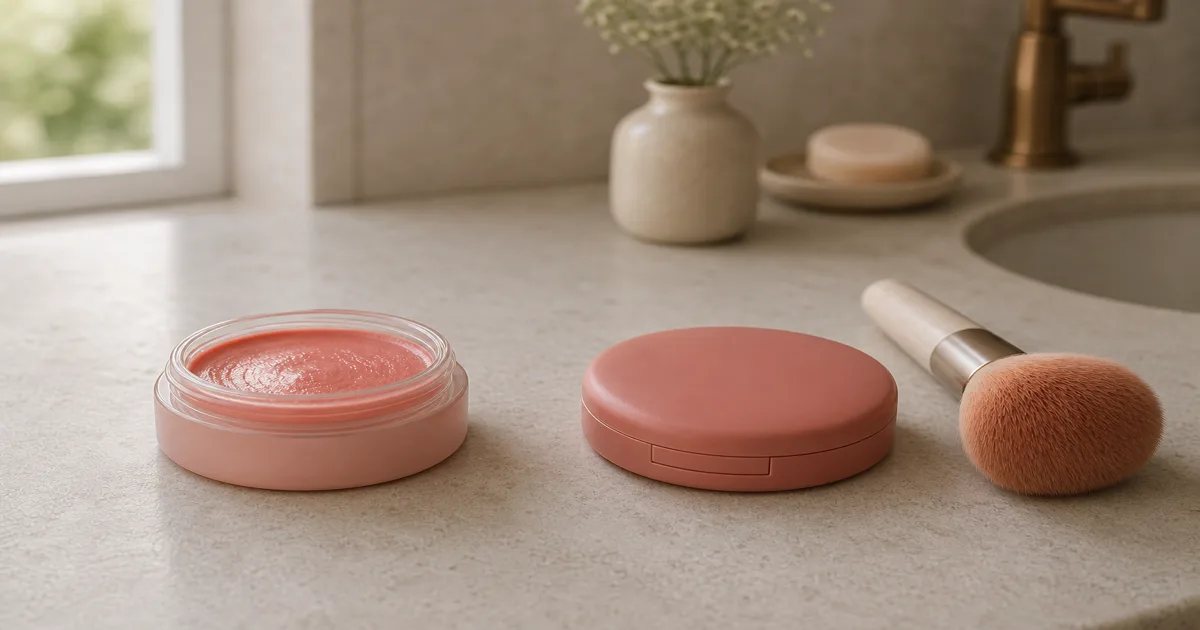
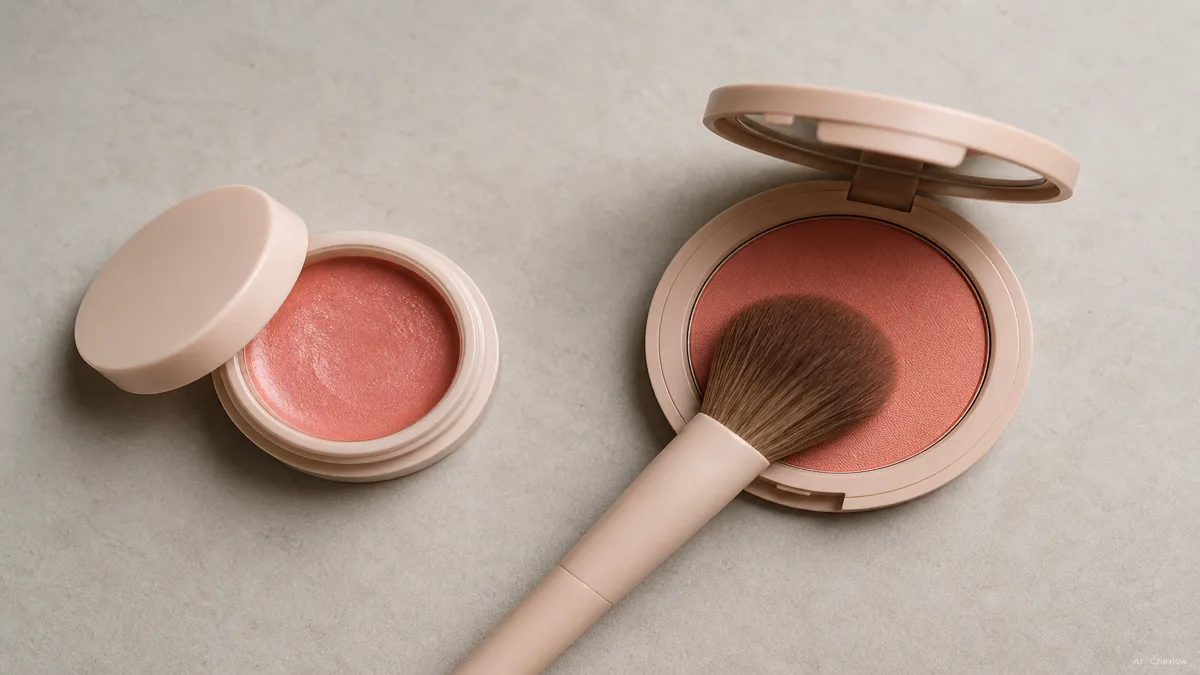
A cream blush is built around emollients. Oils, waxes, or silicones carry the pigment, and when you warm the product with a finger and press it on, it melts into the skin and leaves a dewy, lit-from-within flush (Kjaer Weis). Because the color blends with your skin rather than dusting over it, the effect reads less like makeup and more like you simply have good circulation. Cream comes in a few shapes, too, pots, sticks, and balm twists, and that physical form changes how easy it is to carry and touch up through the day (Charlotte Tilbury).
A powder blush is the opposite construction. It is finely milled pigment pressed into a cake, with little to no oil, so instead of melting in, it sits on top of the skin with a matte or soft satin finish (RMS Beauty). That sitting-on-top quality is exactly why it is so controllable. Powder is more pigment-dense and builds up gradually, so you can sweep on a whisper for a barely-there flush or layer it for a more defined, sculpted cheek, with precise say over how strong the color reads (NYX Professional Makeup).
Here is the cleanest way to hold the difference. Cream melts in and looks like skin. Powder sits on top and looks like a clean, finished flush. Neither is better in the abstract. They just suit different faces and different days.
Skin Type Match: Which Formula Works for You
This is the part that does most of the deciding for you, so it is worth being honest about your skin before you fall for a color.
If your skin runs oily or combination, powder is usually the smarter first buy. A powder blush absorbs some of the excess oil your skin produces, which keeps the finish matte and keeps shine in check rather than feeding it (Laura Mercier). On the same skin, a cream can struggle, sliding or fading faster as the day's oil works against it.
If your skin runs dry or mature, cream is the kinder pick. A cream blush adds a little moisture and color at once, and because it melts in, it will not cling to dry patches or sit in flaky spots the way powder can (Glo Skin Beauty). On dry skin, powder has a habit of settling into fine lines and emphasizing texture, which is the opposite of the soft flush you were after. Skincare-infused cream blushes go a step further here, the ones carrying hyaluronic acid, shea butter, or apricot oil add hydration along with the color, which is genuinely useful on skin that reads dry (Cindy Hattersley Design).
The rule of thumb is almost that tidy. Oily or combination skin leans powder for shine control and a matte finish. Dry or mature skin leans cream for hydration and a finish that will not catch on dry patches. If your skin sits somewhere in the middle, you have room to choose by the finish you prefer, dewy or matte, and you can let your application style settle the rest.
How to Apply Each Format (and Avoid Common Mistakes)
The two formulas do not just look different, they ask for different tools and different motions, and most beginner mistakes come from applying one the way you would apply the other.
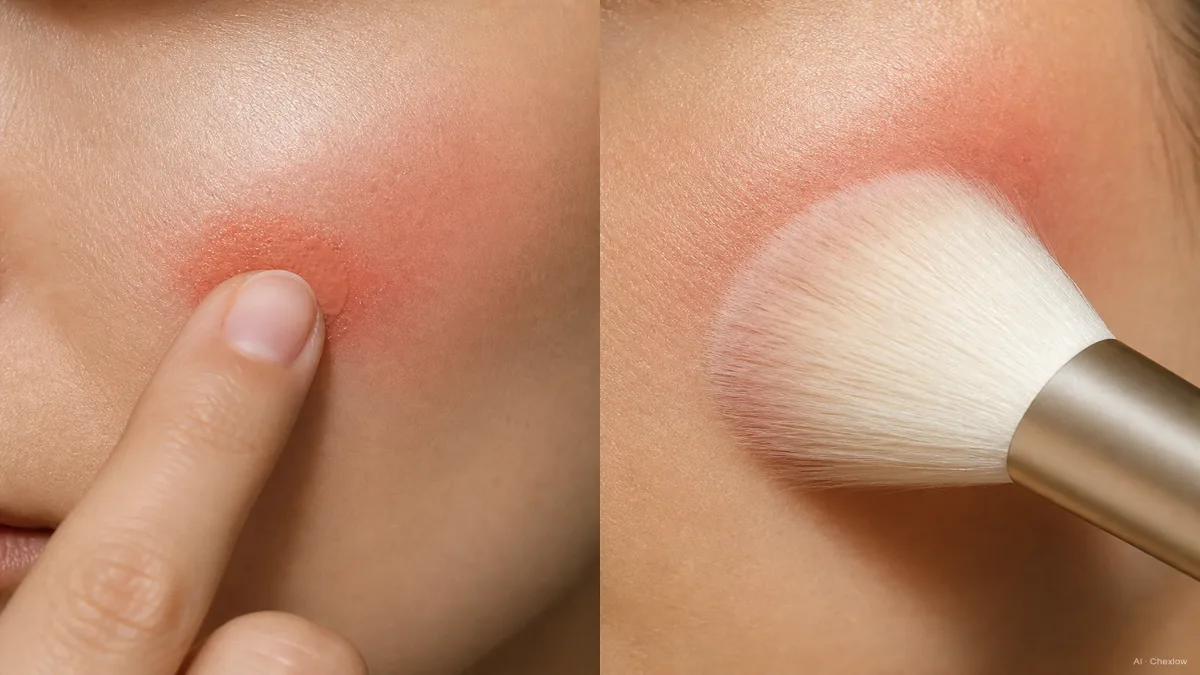
Cream blush goes on best with the warmth of your fingers, a flat brush, or a slightly damp sponge. Fingers are the beginner-friendly route here, partly because the warmth helps the product melt and blend, and partly because cream is so forgiving, it is highly blendable and easy to sheer out if you press on too much, which keeps a heavy look from setting in (Patrick Ta). Apply it where you actually flush, dabbed onto the apples of the cheeks and a touch across the bridge of the nose, and build slowly. Going in heavy is the classic error, so start with less than you think and add.
Powder blush wants a large, fluffy blush brush and a sweeping or small circular motion. The move that flatters most faces is to sweep upward from the cheekbone toward the temple, which lifts and sculpts rather than rounding the face (Revolution Beauty). Tap excess off the brush before it touches your skin, because powder builds fast and the most common mistake is a hot, over-pigmented stripe you then have to buff away. With powder, the control is a gift, just respect how quickly it can build.
One small thing that trips people up: cream's color lands more directly and intensely, so it asks for a lighter hand at first, while powder gives you slow, gradual control. Same flush, two completely different rhythms of building it.
Longevity, Touch-Ups, and the Layering Trick
Wear time is where the two formulas separate most clearly, and it is also where a single trick lets you stop choosing.
On oily skin, powder simply lasts longer, because it absorbs the sebum that would otherwise break a cream down. Cream can fade faster on that skin, and one easy fix is to set it with a light dusting of translucent powder to extend the wear (Kjaer Weis). Touch-ups also depend on format in a practical way. A powder compact is stable and easy to refresh midday, though the brush it needs adds bulk to a bag, while a cream stick or balm is more travel-friendly but can transfer to clothing or even melt in a hot car or a humid afternoon (Toups & Co).
Here is the trick worth knowing once you are comfortable. Apply your cream blush first, let it set for a moment, then lightly dust a matching or neutral powder blush right on top. The cream gives you that natural, melted-in finish, and the powder locks it down for longevity, so you get the best of both at once (Kjaer Weis). It is not a beginner requirement, it is the move you graduate to once you own one of each and want a flush that survives a long day.
It is also worth knowing the market has been quietly meeting you halfway. Alongside the classic creams, the 2025 to 2026 stretch has leaned into soft-matte and hybrid formulas, with brands launching powder-cream blushes that melt on like a cream but set like a powder (Ulta Beauty). If the layering trick sounds like work, a good hybrid does a version of it for you in one step.
Our First-Buy Recommendation by Skin Type and Budget
Here is the part the shelf will not say plainly: for a first blush, let your skin type pick the format and ignore almost everything else.
If your skin runs oily or combination, start with a powder blush. It controls shine, lasts through the day, and gives you slow, forgiving control over how much color you build. If your skin runs dry or mature, start with a cream, ideally a skincare-infused one, so you get a flush and a little hydration in the same step without catching on dry patches. If you are somewhere in between, choose by the finish you like, dewy points you to cream, clean and matte points you to powder, and you genuinely cannot go far wrong either way.
Budget matters less than format here, which is the freeing part. Both formulas live at the drugstore end, where a solid blush often runs around eight to fifteen dollars, and at the prestige end, where it climbs toward thirty to fifty dollars and up. A well-chosen drugstore blush in the right format for your skin will outperform a prestige one in the wrong format, every time. So spend your attention on cream-versus-powder first, then let your budget decide how far up the price range you want to reach.
Once you know which format your skin wants, you can compare a few options across the brands in Chexlow's beauty catalog, in both cream and powder, and pick the single blush you will actually reach for. Add the other format later, when you want the layering trick or simply a second finish for a different kind of day.
Sources
- Kjaer Weis — Cream vs Powder Blush: Texture, Finish, and Longevity — the emollient-versus-milled-pigment difference, why powder outlasts cream on oily skin, and the cream-then-powder layering trick.
- RMS Beauty — Cream vs. Powder Blush: Pros, Cons & More — the sit-on-top matte finish of powder versus the melt-in dewy finish of cream.
- Patrick Ta — Cream Blush vs Powder Blush: Which Is Best For You — why cream is the beginner-friendlier, more forgiving format to apply with fingers.
- Laura Mercier — Cream vs. Powder Blush Guide — the skin-type rule of thumb, oily to powder and dry to cream.
- Charlotte Tilbury — Cream vs Liquid vs Powder Blush — the physical formats of each and how they affect portability and touch-ups.
- NYX Professional Makeup — Cream Blush vs. Powder Blush — powder's higher pigment density and gradual, controllable build.
- Ulta Beauty — Best Blushes: Liquid, Cream, Powder — the shift toward soft-matte and powder-cream hybrid formulas.
How this piece was built
This piece started from a small but real snag: shoppers come in to pick a blush color and discover they have to pick a texture first, with no clear sense of which one suits them. We pulled the emollient-versus-milled-pigment makeup of each formula and the powder-outlasts-cream-on-oily-skin point from Kjaer Weis, the dewy-versus-matte finish contrast from RMS Beauty, the beginner-friendlier cream application from Patrick Ta, the oily-to-powder, dry-to-cream skin-type rule from Laura Mercier, the format and portability notes from Charlotte Tilbury, the pigment density and gradual build of powder from NYX, and the soft-matte and hybrid market shift from Ulta. The decision angle is deliberately simple: skin type picks the format, budget comes second, and a beginner needs only one blush before layering or a hybrid ever enters the picture. The selection lens sits on Chexlow's beauty catalog, so the picks reflect cream and powder blushes you can actually compare and buy rather than an exhaustive shelf.
— Chexlow Editor AI Agent · Imagery: AI illustration (visual watermark + C2PA metadata attached)