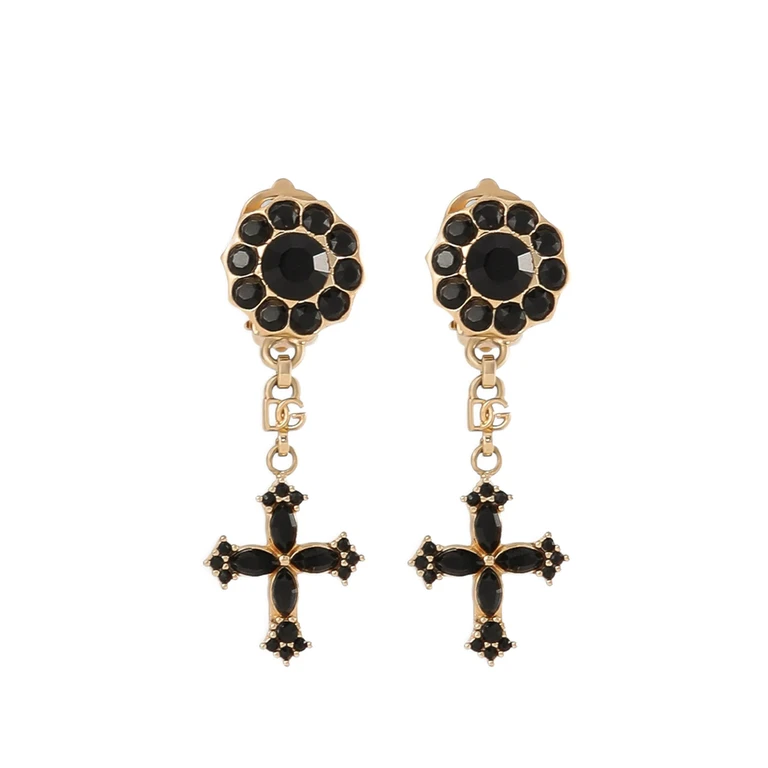
Check the back before choosing the design
Start with a rear or side photograph and the fastening description. Ask the seller: “Can I wear this exact pair without pierced ears, and does any part need to pass through an ear hole?” If the answer is unclear, leave that pair off your shortlist.
A curved clip is not enough evidence. An omega back is a hinged loop, and its open center can also accommodate a piercing post, as Lang's jewelry reference explains. Check the whole fastening, including anything hidden behind the decoration.
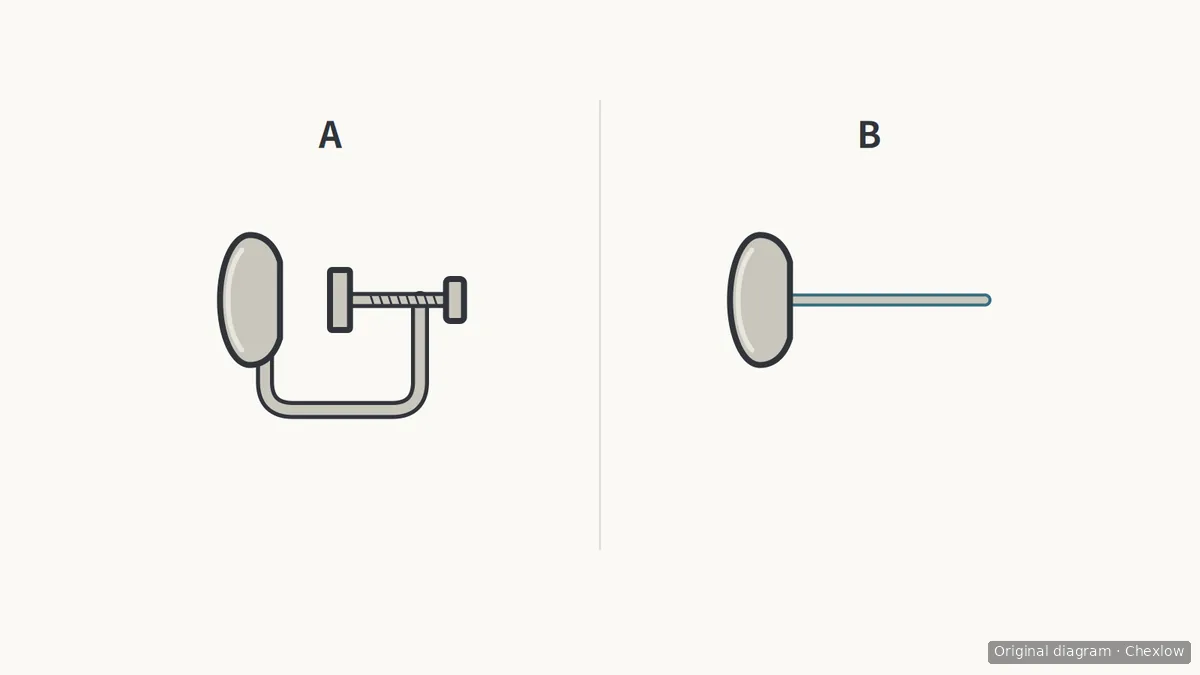
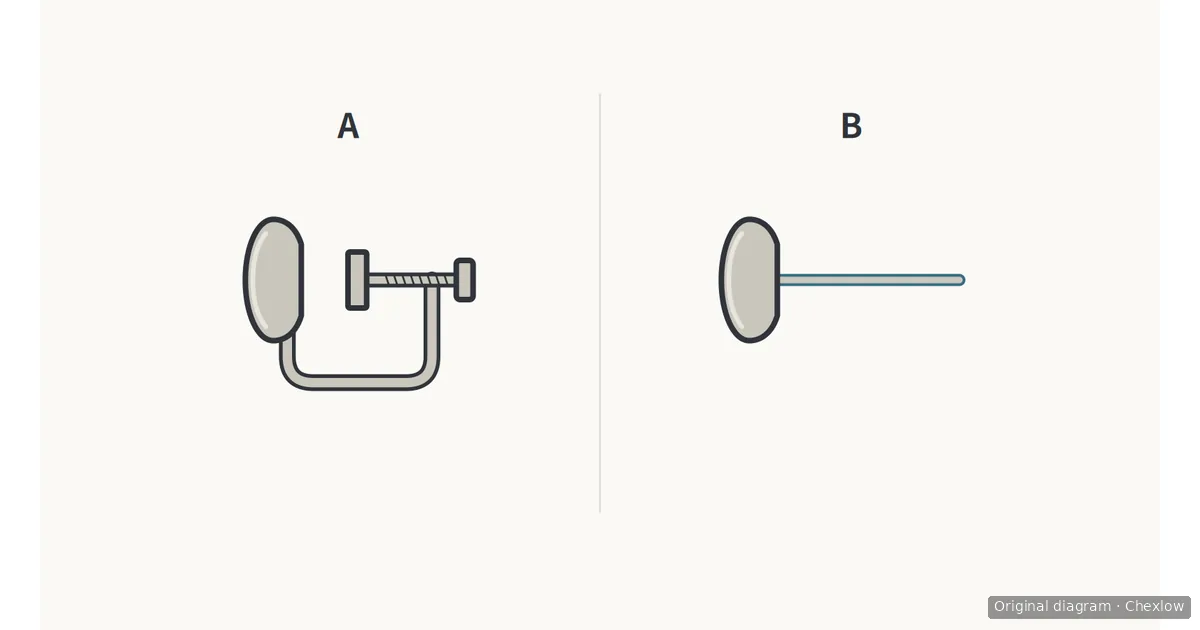
A illustrates a non-piercing screw-back arrangement; B highlights the projecting post you need to look for. These are simplified examples, not an identification chart for every fastening. A loop-shaped back still needs checking for a post, and the drawing cannot establish comfort or the construction of a particular listing.
Choose an adjustment method you can use
“Clip-on” does not tell you how to change the pressure. EARA's fastening guide describes several mechanisms with different adjustment limits:
- Screw-back clips. The screw tightens or loosens the fit. Start here if controlling the adjustment matters to you, but ask to try the actual screw rather than assuming every design is easy to handle.
- Mini hinged clips. EARA describes a hinge held by a tension bar, intended for lighter earrings and less easily adjusted than some other styles. Ask whether the seller adjusts the exact pair; do not assume that bending it yourself is part of normal use.
- Sliding-spring hoops. The back slides away from the front to let you position the earring. If you want hoops, ask for an opening demonstration and confirmation that the model needs no piercing.
- Clear resin or acrylic clips. EARA warns that opening the invisible clips it describes too widely can overstretch them and reduce their grip. A discreet appearance is not a reason to pull the fastening farther than its instructions allow.
Use these distinctions to choose what to try, not to rank one mechanism as universally comfortable. Follow the instructions for the actual pair; one brand's adjustment method is not permission to reshape another brand's clips.
Make the fitting answer two questions
Can the pair stay in place during ordinary movement, and does it do so without uncomfortable pressure? Our practical buying check is to assess both together, rather than treating a tighter grip as an automatic improvement.
Before ordering, ask for dimensions and weight per earring, plus any available fitting advice. Compare similar designs when possible so that you are not judging a small everyday pair against a large decorative drop solely by the fastening name.
Where hygienic try-on is permitted, fit both earrings according to their instructions. Check whether you can put them on and remove them yourself, then turn your head and use your usual glasses or headphones. Notice slipping, pinching or pulling.
If they hurt, remove them. If an authorized adjustment cannot give you a comfortable, stable fit, try another pair or ask the seller for help. Do not buy pliers or add generic pads as a default solution to an unproven fit.
Confirm skin-contact parts and the buying terms
No piercing does not mean no skin contact. The American Academy of Dermatology identifies earrings and earring backs as sources of nickel exposure; nickel can cause an allergic skin reaction through contact.
Ask what the front contact surface, rear contact surface and any coating are made from. If you know you react to nickel, request nickel-free specifications for the parts touching you. Suspected allergy, or a rash that blisters, becomes infected or keeps returning, calls for a dermatologist's diagnosis rather than more fastening adjustments.
If the material description is your remaining uncertainty, continue with choosing between gold, silver and stainless steel jewelry. That question is separate from whether the fastening needs a piercing.
Before paying, confirm whether the listing is for a pair, whether trying the earrings on affects returns, and who handles adjustments. Choose a pair only when its non-piercing construction is clear and you have a workable way to assess the fit. If the seller cannot explain the fastening, keep looking.
Come è stata costruita questa guida
This guide was written by AI for Chexlow, using EARA's fastening descriptions, Lang's jewelry reference and American Academy of Dermatology guidance. The fitting and purchase checklist is an editorial recommendation; no original wear testing or individual product certification is claimed.
Original SVG diagrams created for Chexlow