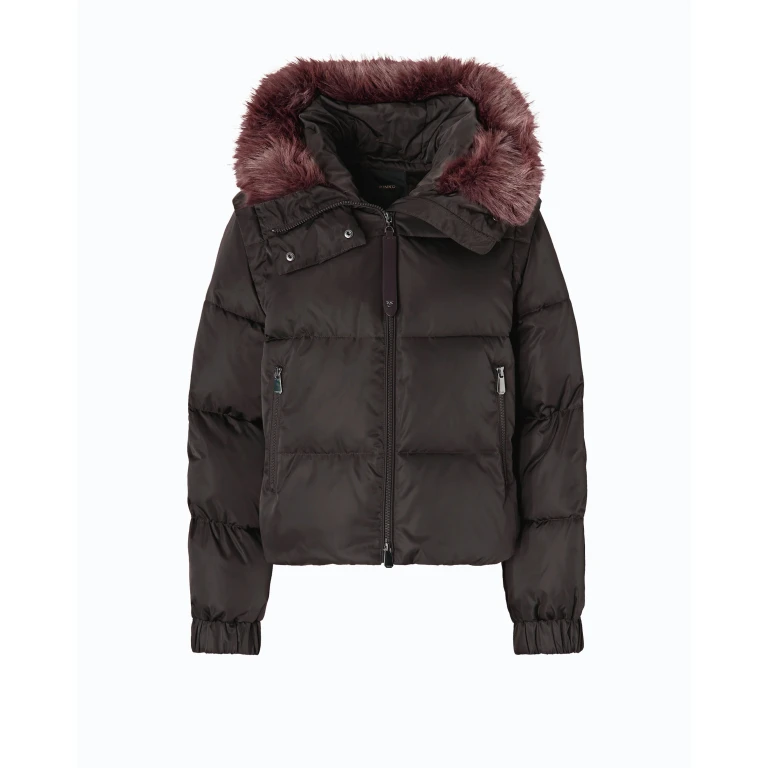
Front-loading machine vs. hand wash — what each does to the down
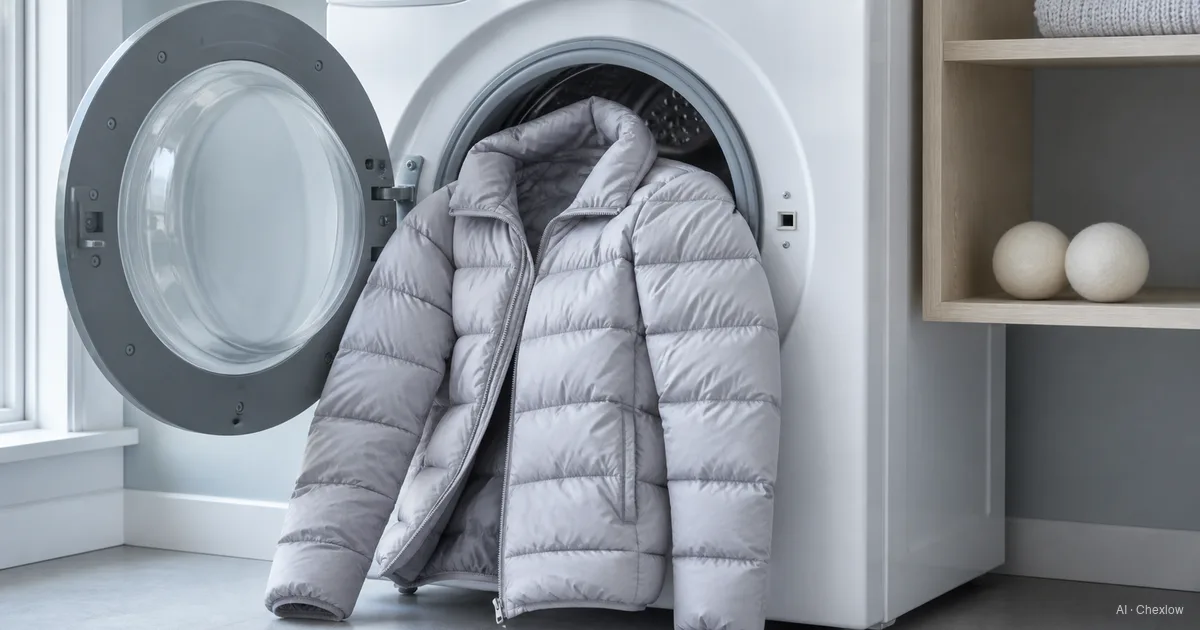
The standard recommendation for washing down at home is a front-loading machine on the gentle cycle with cold water. Front-loaders work by tumbling clothes in a rotating drum with a small amount of water. They do not have an agitator — the central post in a top-loading machine that drives a propeller-like paddle. An agitator creates much stronger mechanical shear forces than a front-loader drum. For down jackets, those forces can torque the baffles — the internal chambers that hold the fill — and force fill through the baffle seams or damage the baffle stitching. After several top-load washes, a down jacket can develop uneven fill distribution that does not recover (REI Co-op, How to Wash a Down Jacket).
If you only have access to a top-loading machine, use the delicate cycle with cold water and add a second rinse cycle. Select the lowest spin speed. Avoid filling the machine more than one-third full so the jacket can move freely. A front-load machine at a laundromat is worth the trip for an expensive jacket.
Hand washing is the safest option and takes about twenty minutes. Fill a clean bathtub or large basin with cold or cool water. Add the appropriate dose of down wash (see below). Submerge the jacket and press it repeatedly beneath the water to wet the fill thoroughly — down clusters repel water initially and need sustained pressure to saturate. Work the garment gently for five to ten minutes. Drain and refill with clean cold water for the first rinse. Repeat the rinse at least twice, pressing out water each time rather than wringing or twisting (Patagonia, How to Wash Down).
To remove the jacket from the tub without tearing the baffles, support it from underneath with both hands and lift as a single heavy mass — do not pick it up by the collar or one side. Wet down is surprisingly heavy and the baffles cannot support that weight at a single attachment point.
Down-specific detergent — why ordinary detergent causes clumping
Down clusters are held together by a network of natural oil residues that keep the filaments soft and springy. Regular laundry detergent is engineered to emulsify and remove fats and oils. Applied to down, it does exactly what it is designed to do — and the result is fill that comes out of the wash stripped of the oils that give it loft and resilience. The clusters that once expanded three-dimensionally now stick together in flat mats. The jacket feels stiff in the baffles and takes much longer to loft when removed from its stuff sack (Nikwax Down Wash Direct).
Down-specific detergents, such as Nikwax Down Wash Direct or Granger's Down Wash, are formulated to clean the outer shell and the baffle interiors without stripping the down's natural oils. They are pH-balanced for protein fibers, do not contain optical brighteners or enzymatic cleaners that attack natural oil residues, and rinse cleanly without leaving a surfactant film that would mat the fill.
Use the dose printed on the bottle, not less. Underdosing means the detergent does not have enough surfactant to lift dirt from the shell, which means multiple washes are needed — each adding mechanical wear. Avoid all-purpose "eco" or "natural" formulas that contain citrus oils or enzymatic boosters. These are still aggressive toward the proteins and oils in down. Dish soap, hand soap, and shampoo should never be used — the surfactant concentrations are too high and far too aggressive for down fill.
Drying with tennis balls — the mechanics of loft restoration
Wet down clusters mat together and dry in that matted position unless something physically separates them while the fill dries. The tennis ball trick works because clean tennis balls tumbling in a dryer hit the jacket repeatedly from random angles, breaking up clumps and re-fluffing the clusters as they dry. Without the balls, a down jacket left to tumble on its own tends to develop hard packed regions in the lower baffles where fill has migrated and matted (The Adventure Junkies, How to Store a Down Jacket).
Use two to three clean, dry tennis balls. New tennis balls work best — older balls that have gone flat do not have the same impact. Place the jacket in the dryer with the balls and run on the lowest heat setting, labeled "low" or "delicate" depending on the machine. Do not use the "medium" or "high" settings, even briefly. Down jackets frequently have a shell fabric treated with a durable water repellent (DWR) finish that delaminate or melts at sustained medium-heat dryer temperatures.
The drying process takes longer than most people expect — typically two to three hours for a mid-loft jacket in a standard home dryer. Stop the dryer every thirty minutes, remove the jacket, and shake it vigorously. Then manually break up any remaining clumps by pressing the baffles between your palms. This intermediate breaking-up step significantly reduces the total drying time and prevents clumps from fully setting as the fill dries (Patagonia, How to Wash Down).
The jacket is dry when all baffles feel uniformly full and no area feels cold or damp when you press it against the inside of your wrist. If a baffle still feels dense or cool, the fill in that chamber is still wet. Return the jacket to the dryer for additional cycles with the balls. A jacket put away before the fill is completely dry will develop a mildew smell within a day or two that is extremely difficult to remove.
Recovering clumped fill after an incorrect wash
If a down jacket has already been washed with regular detergent and the fill is now clumped and flat, a recovery wash can restore some of the loft. The goal is to rehydrate the clumped clusters gently and then dry with mechanical agitation to break them apart (Gear Aid, Restoring Down Loft).
Wash the jacket twice in succession using a down-specific detergent, with an extra cold rinse after each wash cycle. The first wash loosens and lifts the detergent or fabric softener residue that is coating and binding the clusters. The second wash with fresh detergent works on the clusters themselves. An extra rinse after each cycle removes all surfactant before it can re-deposit.
After the double wash, dry with tennis balls as described above. Check the jacket after the first hour of drying: if clumps are breaking up and the baffles are starting to fill out, the recovery is working. If the fill remains in hard dense mats after ninety minutes of low-heat drying with ball agitation, the cluster filaments may have been physically damaged by previous high-heat drying or aggressive mechanical washing. In that case, partial recovery is likely the realistic outcome — the jacket will have somewhat better loft than before the recovery wash but will not return to original performance.
A jacket that has been correctly washed with down detergent from the start but has simply lost loft from long-term use (not detergent damage) benefits from the same double-wash-and-dry protocol: the fresh detergent cleans residues from years of use, and the tennis ball drying re-separates clusters that have slowly settled over time.
Off-season storage — why compression kills down over time
The most common mistake in down jacket storage is keeping the jacket compressed for months. A stuff sack is a transport solution, not a storage solution. When a down cluster is held compressed for more than a few days, the physical pressure bends the three-dimensional filament connections. Short-term, this is reversible — shake out the jacket and the clusters expand back. Sustained over weeks and months, the bending loads fatigue the filament connections at their weakest points. The result is a jacket that comes out of storage in the fall lofting slightly less than it did when it went into storage in the spring — and that cumulative annual loss compounds over years (The Adventure Junkies, How to Store a Down Jacket).
Store a down jacket in one of three ways: hanging in a closet on a padded hanger, stored loosely in a large breathable storage bag (cotton or non-woven polypropylene, not sealed plastic), or placed on a shelf or in a drawer without compression weight on top. All three of these preserve the cluster architecture. The breathable bag prevents dust accumulation while allowing any residual moisture to escape — sealed plastic traps humidity and can cause mildew in down fill even after a wash that seemed thorough.
Before storage, verify the jacket is completely dry. Check every baffle by pressing firmly — any coolness indicates remaining moisture. If in doubt, run the jacket through one more low-heat dryer cycle with tennis balls before putting it away.
Clean the jacket before storing. A jacket with body oil or light soiling that sits for six months will emerge with oxidized stains and an embedded odor that is much harder to remove than fresh soil. The correct cycle is: final-season use, then wash with down detergent, then dry completely with tennis balls, then store loose in a breathable bag.
Sources
- How to Wash a Down Jacket, REI Co-op — front-load vs. top-load, agitator damage
- How to Wash Down, Patagonia — hand wash technique, tennis ball drying, intermediate break-up step
- Down Wash Direct, Nikwax — detergent chemistry, oil-stripping risk
- Restoring Down Loft, Gear Aid — recovery double-wash protocol
- How to Store a Down Jacket, The Adventure Junkies — compression fatigue mechanism, storage formats