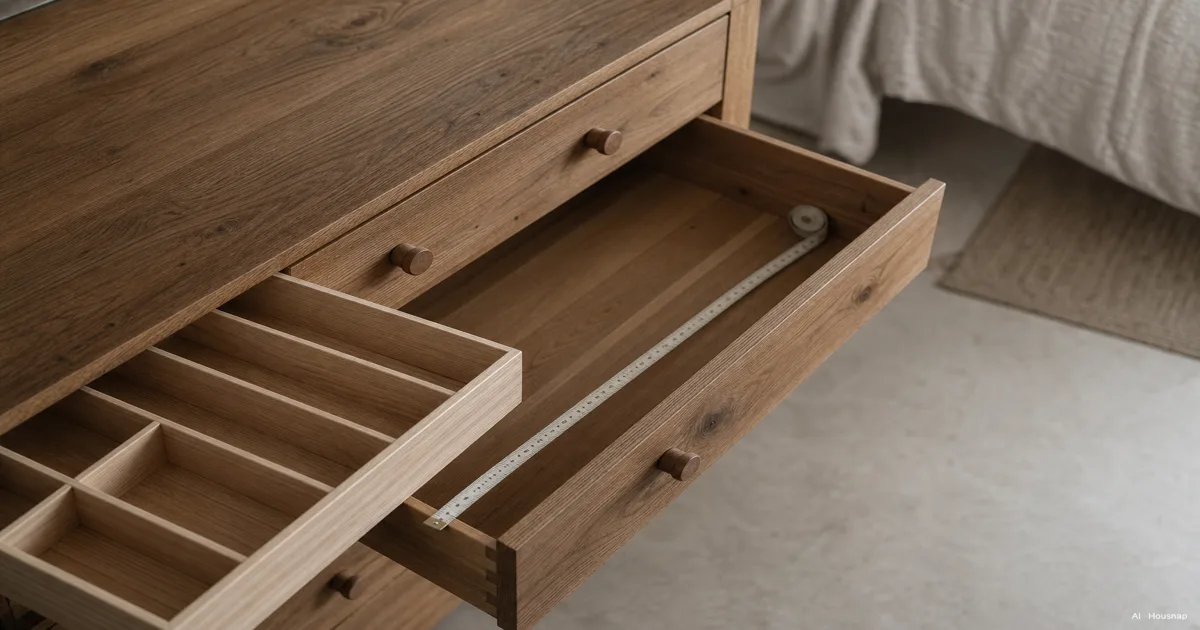

Choose the compartments before the material
Empty one drawer and group only the things you intend to keep there. Use those groups to choose a format, rather than buying a large matching set first.
- Fixed tray: consider it when its existing compartments match your cutlery or stationery. Check the longest item against the inside of its compartment, not the tray's overall length.
- Modular bins: consider them when small items need different-sized spaces. Some connect: Joseph Joseph Blox trays clip together on all sides. Check how the assembled layout fits.
- Adjustable dividers: consider them for rows of folded clothing or longer items that need separated areas rather than individual cups. Check the supported length range and attachment method; “adjustable” does not mean every drawer.
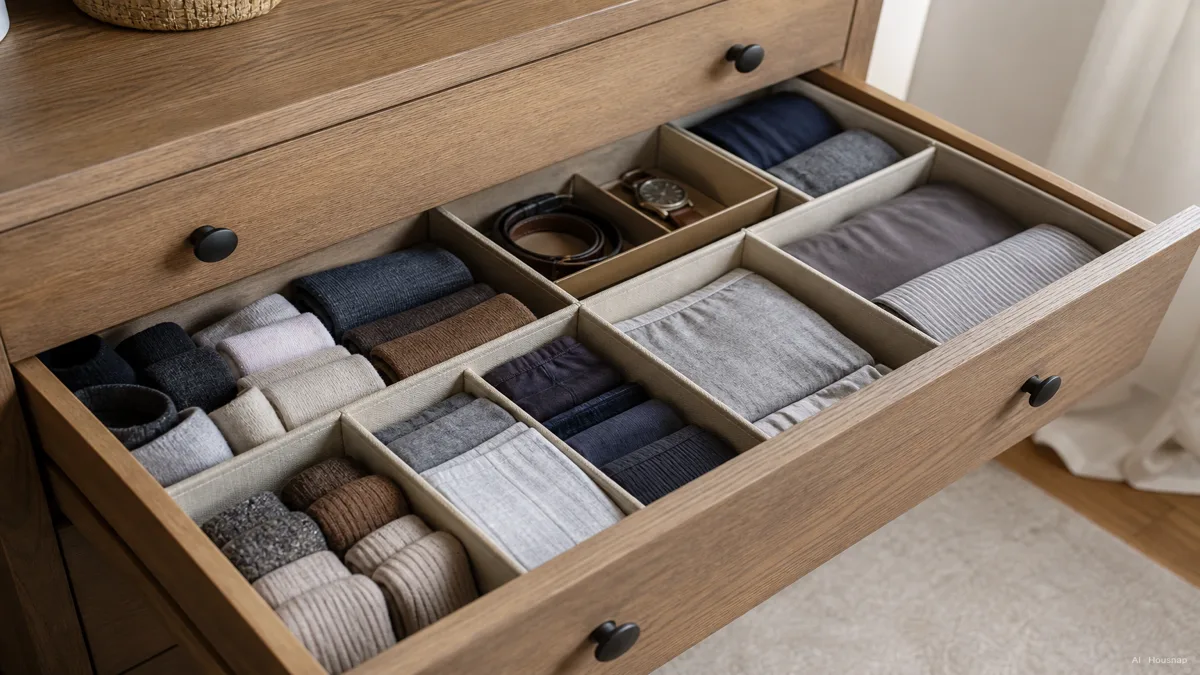
Kitchen knives need a separate storage decision. If they share this drawer, compare knife blocks, magnetic strips and in-drawer holders before choosing an ordinary cutlery layout.
Check the drawer fit and the contents fit
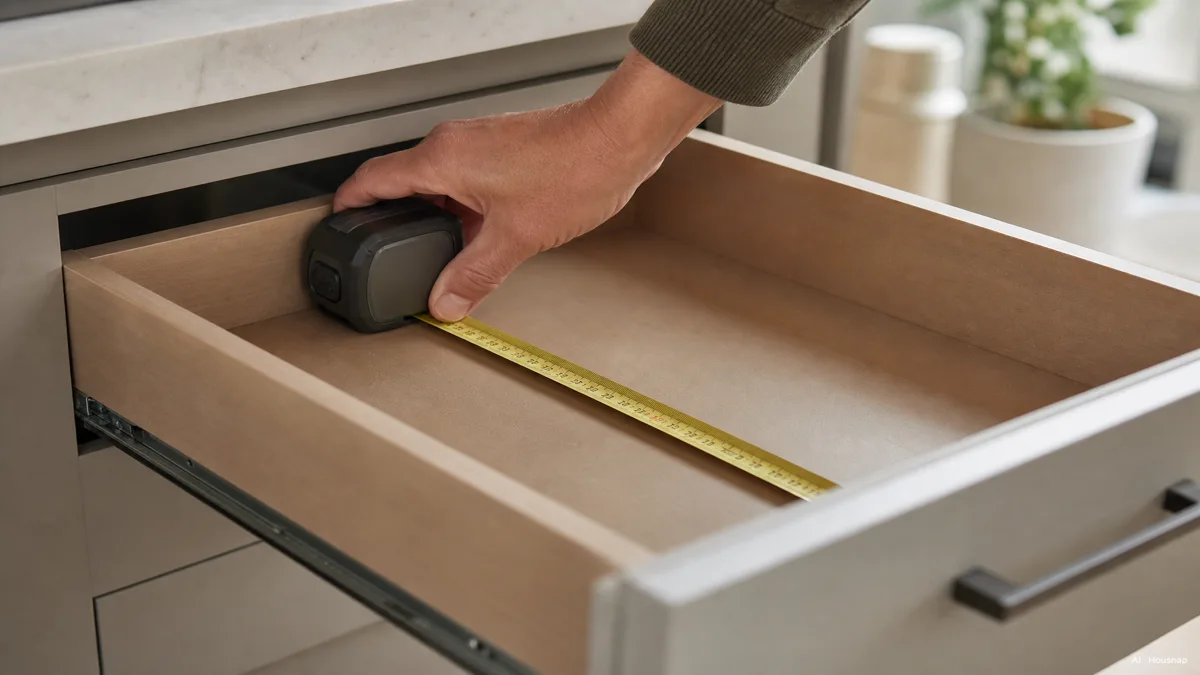
Measure the inside width, front-to-back depth and usable height with the drawer closed. Note screws, sloping walls and any narrow opening the organizer must pass through. Organize My Drawer recommends measuring at several positions and allowing installation clearance; follow the chosen product's requirements rather than assuming an exact wall-to-wall fit.
A paper outline helps you compare layouts before paying: Homes & Gardens describes making a template of the drawer base. Mark the proposed bins on it, then place your own items within those outlines.
Check compartment dimensions separately from external dimensions. For an expandable tray, check its full footprint at your intended setting. For a divider, check both ends of its adjustment range. Include the height of bottles or folded clothes, not just the empty organizer.
Match the cleaning instructions to your routine
The material name is only a starting point. Look at the base, coating and care instructions before deciding how you will clean it.
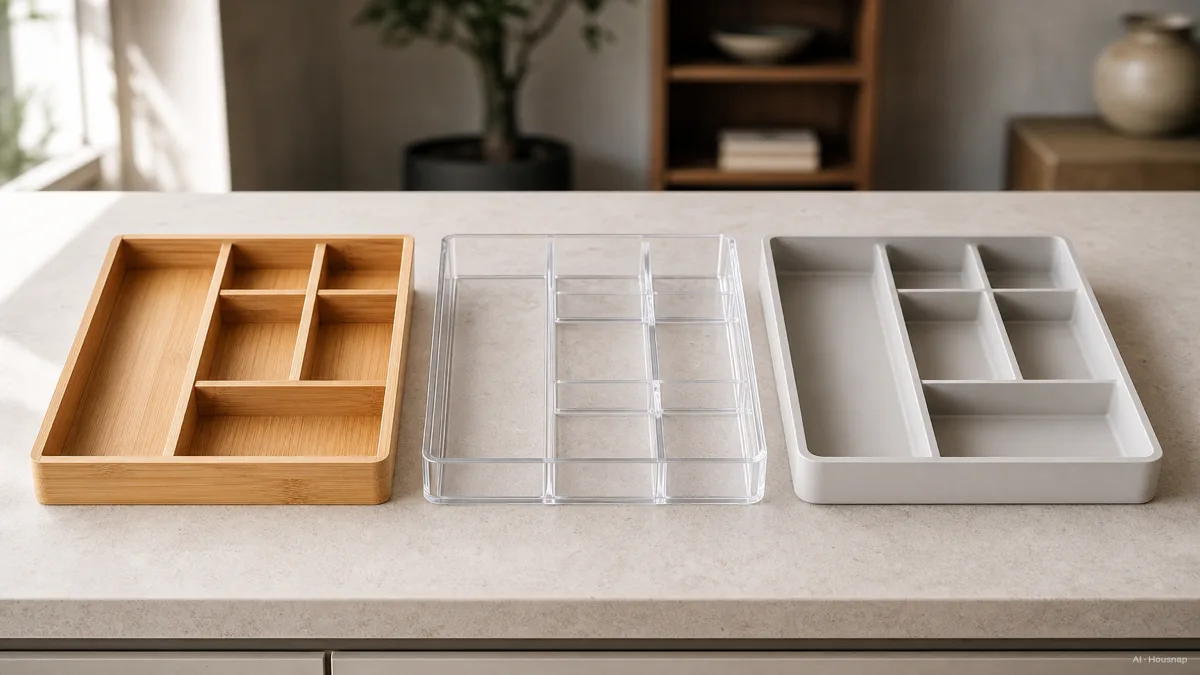
- Bamboo: check the construction. IKEA's UPPDATERA tray has a fiberboard-and-bamboo-veneer bottom and instructions to wipe with a mild cleaner and dry afterward. A bamboo appearance does not establish that an organizer can be soaked.
- Clear acrylic: check cleaner compatibility. MUJI's acrylic storage instructions exclude alcohol disinfectants. That is a product-specific warning, not a cleaning rule for every clear tray.
- Plastic: verify the actual care method. Blox specifies a damp-cloth wipe; a plastic label alone is not dishwasher permission.
If bathroom spills are likely, choose a model whose stated cleaning method suits them. Do not infer waterproof construction from a room label or photograph.
Pay for features you will actually use
Choose grip features when keeping the layout in place matters. OXO's expandable dividers use foam pads to grip drawer walls; this is a feature of that design, not a promise that every divider will stay put in your drawer.
Layering is useful only if you can still reach what is underneath. OXO's deep-drawer organizer includes a removable shallow tray. Before buying a layered system, decide where you will put the upper tray while accessing the lower area.
- Buy when: the overall dimensions, usable compartments and care instructions all fit your plan. For a multipack, count the pieces you can actually place.
- Ask before buying: if compartment sizes, expansion limits or cleaning instructions are missing, request them from the seller.
- On arrival: try the layout empty, then with your belongings. Close the drawer slowly without forcing it. Reposition or return pieces that obstruct closure or make everyday items awkward to retrieve.
Sources
- Organize My Drawer measurement guidance
- Homes & Gardens paper-template method
- IKEA UPPDATERA materials and care
- Joseph Joseph Blox product instructions
- MUJI acrylic storage precautions
- OXO expandable dividers
- OXO deep-drawer organizer
Come è stata costruita questa guida
Written by AI for Chexlow, using manufacturer material and care instructions, custom-organizer measurement guidance and Homes & Gardens' paper-template method. The format recommendations are editorial guidance for a first purchase, not results of hands-on product testing.
Curato dal team Chexlow · Le immagini sono illustrazioni generate dall’IA