


Choose for the days you actually have
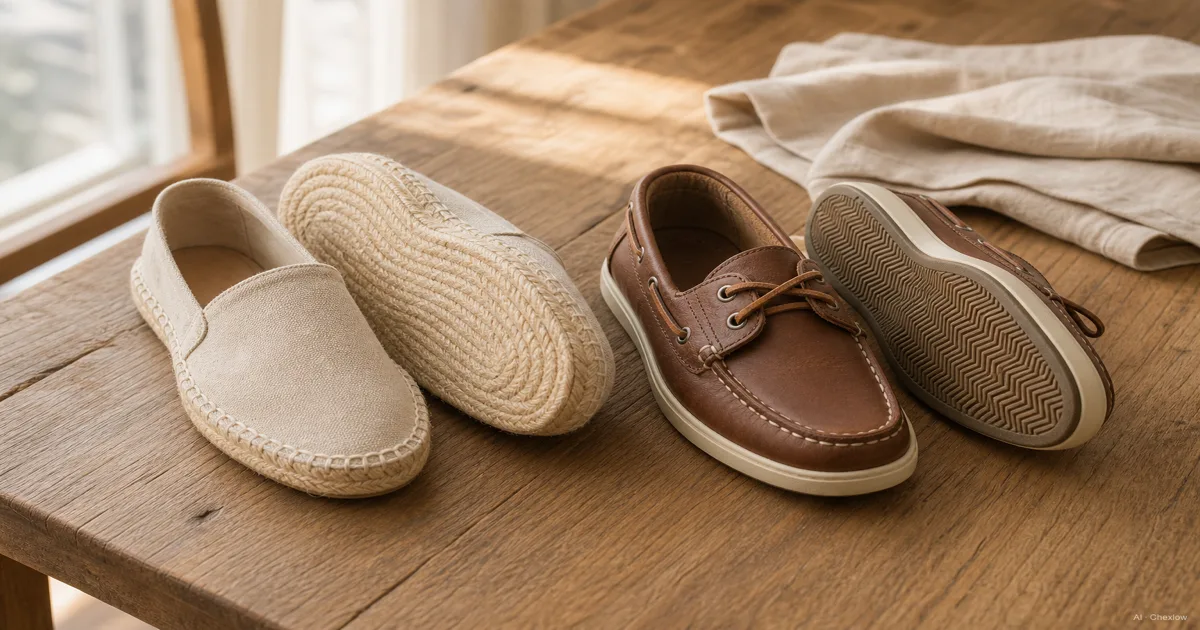
Picture the outing you want this purchase to cover: a dry café terrace, everyday errands, or time aboard a boat. This comparison focuses on closed-toe flat espadrilles and classic boat shoes, rather than wedges or sandals.
- Dry, relaxed days. Start with an espadrille if its simple slip-on shape is what you want. Keep it out of your water-shoe shortlist: Castañer advises against immersion and machine washing. (Castañer care guide)
- Everyday wear with adjustable fastening. Start with boat shoes if you want to tighten the fit with laces. You do not need to go sailing to choose them.
- Actual boat use. Check the outsole specification before buying. Wet-surface traction and waterproofing are separate: Sperry says its leather boat shoes, including the Authentic Original, are not waterproof and will not keep feet dry. (Sperry’s water guidance)
If you really want an open-toe summer shoe, the more useful next comparison is leather sandals versus slides. Check water suitability on the individual pair there too.
Look underneath, then check the lining
A rope edge does not tell you everything underfoot. Castañer’s Pablo combines cotton and jute with a rubber sole and sheepskin lining. That is one concrete reason to read both the outsole and lining fields, rather than assume a canvas-looking shoe is unlined. (Pablo construction details)
The checked Sperry Authentic Original 2 EYE specifies non-marking rubber, razor-cut Wave-Siping for wet/dry traction, and adjustable 360-degree lacing. Siping means the fine cuts in the rubber; the laces run around the shoe. Use those features as a checklist, not as a promise attached to every boat-shaped shoe. (Authentic Original specifications)
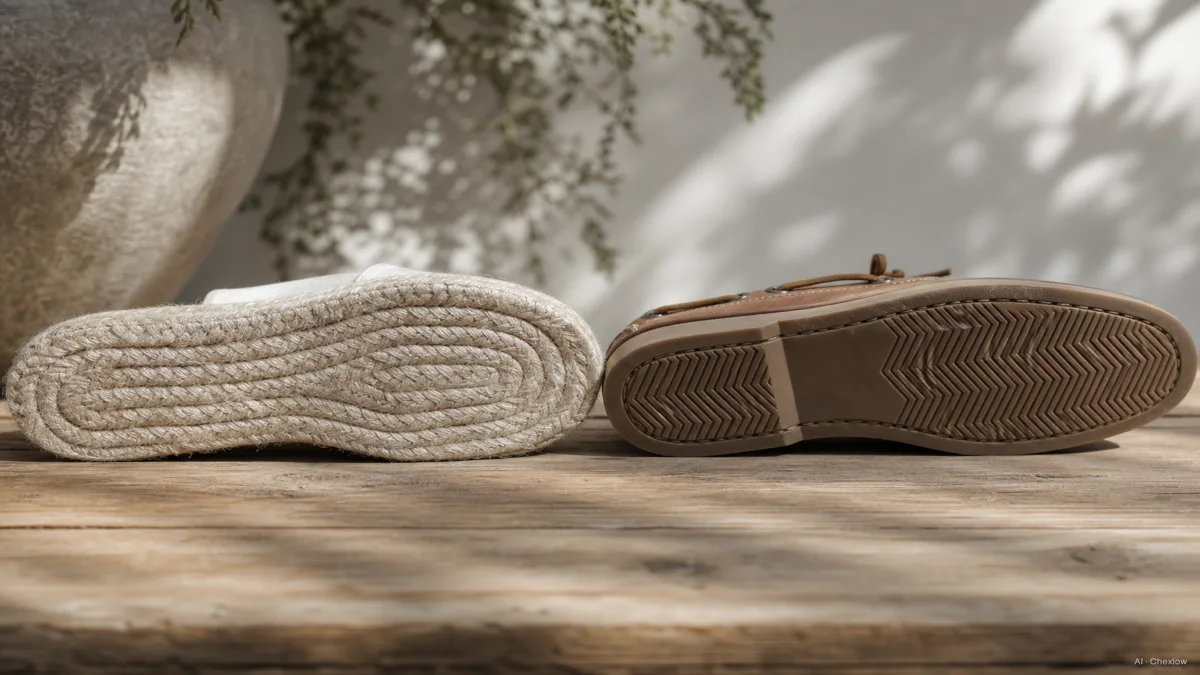
Use this close-up to distinguish rope texture from cuts in rubber. For a purchase, ask for the actual underside photo and material description. A similar-looking tread alone is not evidence that two shoes perform alike.
Try each shape with an outfit you already wear
For a starting outfit, try a plain espadrille with linen shorts or loose summer trousers. Try a brown boat shoe with chinos and a shirt if you want the laces and stitched front to be more visible. These are styling suggestions, not dress-code rules.
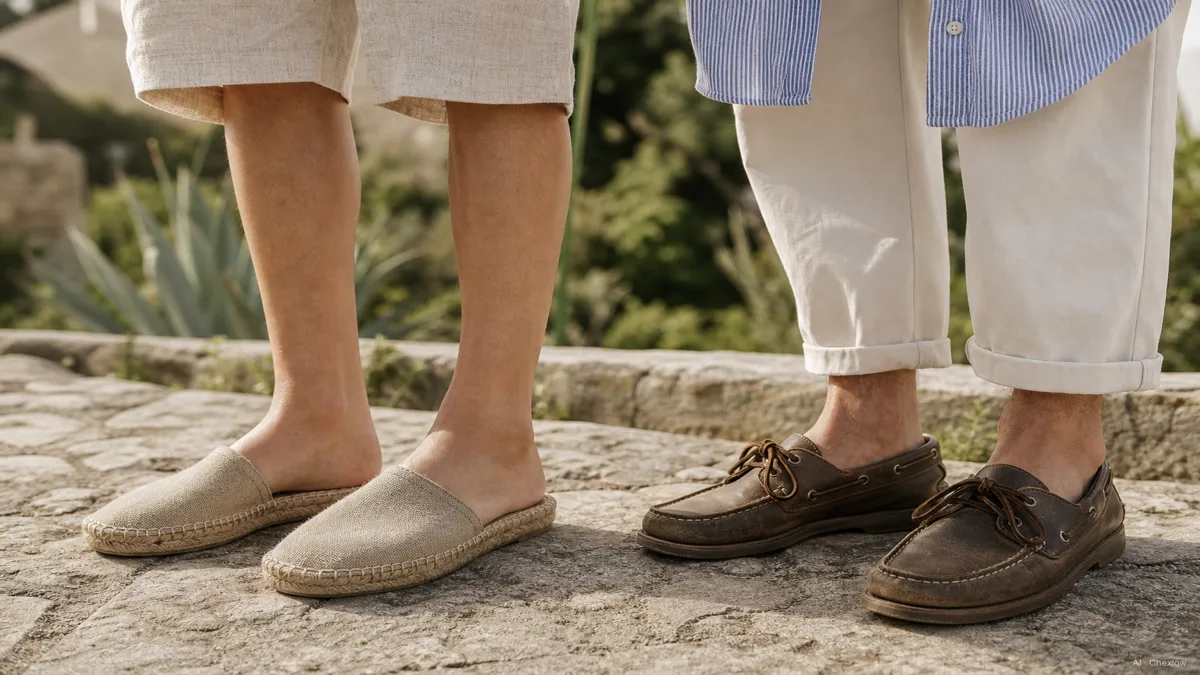
Compare the two with the same trousers before deciding on colour. If both work, let fit settle the choice. The bare ankles in the illustration are a styling example, not a requirement to go without socks.
Make the final choice in the fitting room
- Find a starting size. Measure from heel to longest toe and use the chosen model’s chart. Viscata notes that espadrille sizing varies with style and manufacturer, so a blanket “always size down” rule is unhelpful. (Viscata sizing guide)
- Check both feet while walking. Try your intended socks, if any. Reject a pair that crowds your toes or repeatedly slips off your heel rather than buying it on the hope that wear will fix it.
- Separate snugness from insufficient length. Sperry says leather break-in changes width, not length, and advises leaving room for socks. Do not apply one brand’s size adjustment to every boat shoe. (Sperry fit guide)
Buy the pair that fits and covers your main outing. If neither passes those checks, try another model within the preferred category; you do not need to buy both to solve an uncertain fit.
Come è stata costruita questa guida
AI wrote this guide for Chexlow using Castañer’s product and care information, Sperry’s construction, water and fit guidance, and Viscata’s sizing advice. It compares flat espadrilles and classic boat shoes for a first summer purchase; the outfit suggestions and order of checks are editorial judgments, not hands-on product tests.
Curato dal team Chexlow · Le immagini sono illustrazioni generate dall’IA