You are standing in the eye-care aisle looking at a wall of thin, damp, half-moon shapes in little foil packs, gold ones, clear gel ones, ones that look like a sheet mask cut in half. They all promise the same thing by morning, less puffiness, fewer dark circles, softer fine lines. Nothing on the box tells you which shape actually fits your under-eye, or which ingredient is doing anything at all.
That confusion is normal for a first buy. Eye patches are a genuinely useful, well-studied category, not just a trend that showed up on your feed, but the format and the ingredient both matter more than most shoppers realize. This guide breaks down what a patch actually does, the two formats you will see on shelf, the ingredients worth paying attention to, and how often you can actually use them without wasting a pack.
What Under-Eye Patches Actually Do (and Why They Are Not a Mini Sheet Mask)
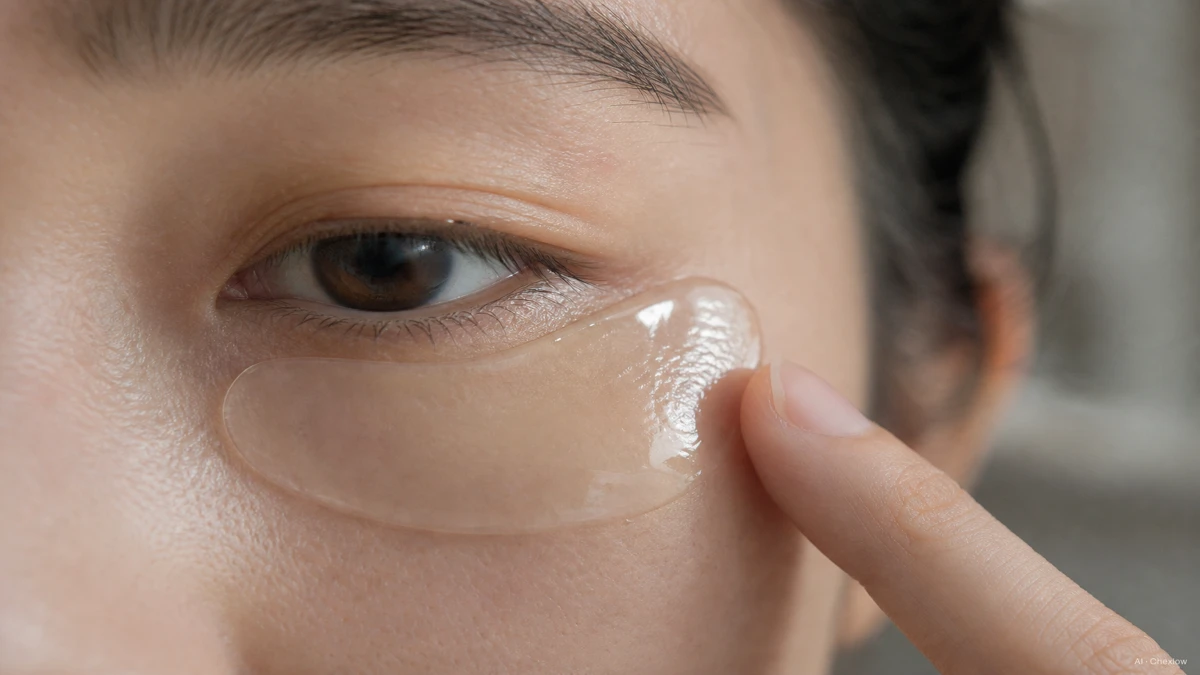
An eye patch is a small, pre-soaked pad shaped to sit under your eye. It works the same basic way a sheet mask does, sealing a liquid against your skin so it soaks in instead of evaporating, but it is built specifically for the thinner, more sensitive skin around your eyes rather than your whole face. (NBC Select and CNN Underscored both frame patches this way in their dermatologist-reviewed roundups.)
That sealing effect is the entire point. Left on your skin without a patch, a serum mostly evaporates or gets absorbed unevenly within a minute or two. Trapped under a patch for fifteen to twenty minutes, the same actives, hyaluronic acid, caffeine, peptides, vitamin C, sometimes retinol, get pushed into the skin instead of sitting on the surface.
What a patch is not is a treatment on its own. It is a short, concentrated boost, closer to a single strong dose of your serum than a daily moisturizer, and it works alongside your regular routine rather than replacing it.
Hydrogel or Bio-Cellulose, Which Patch Format Actually Fits Your Skin
Almost every eye patch on shelf is one of two materials, and they behave differently enough that it is worth knowing which one you are holding.
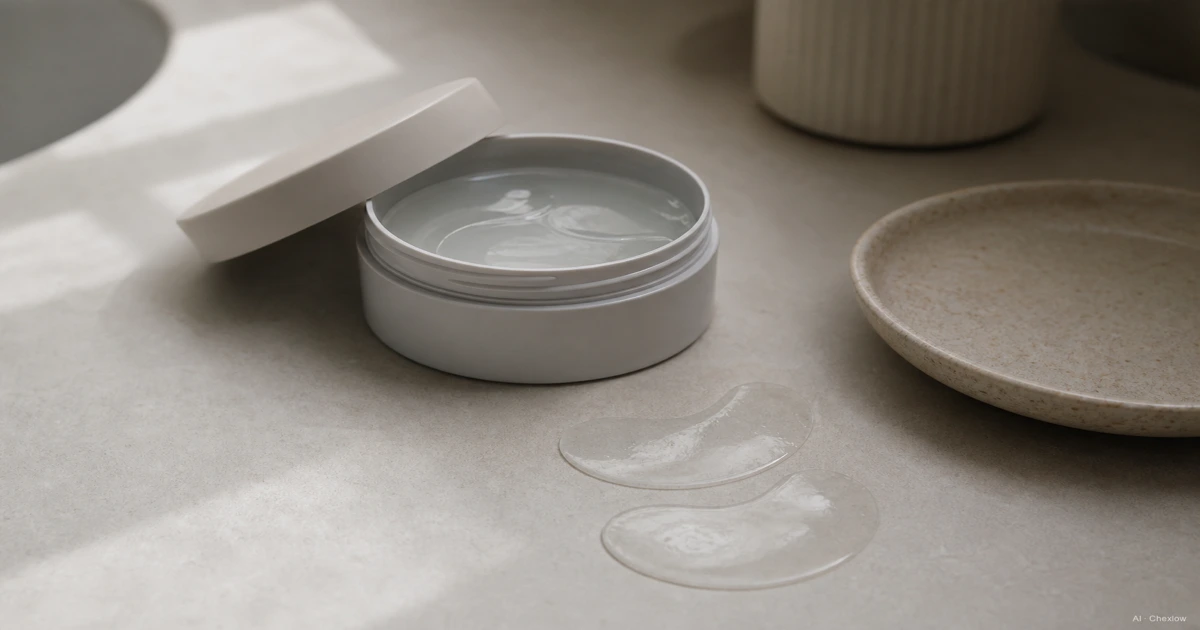
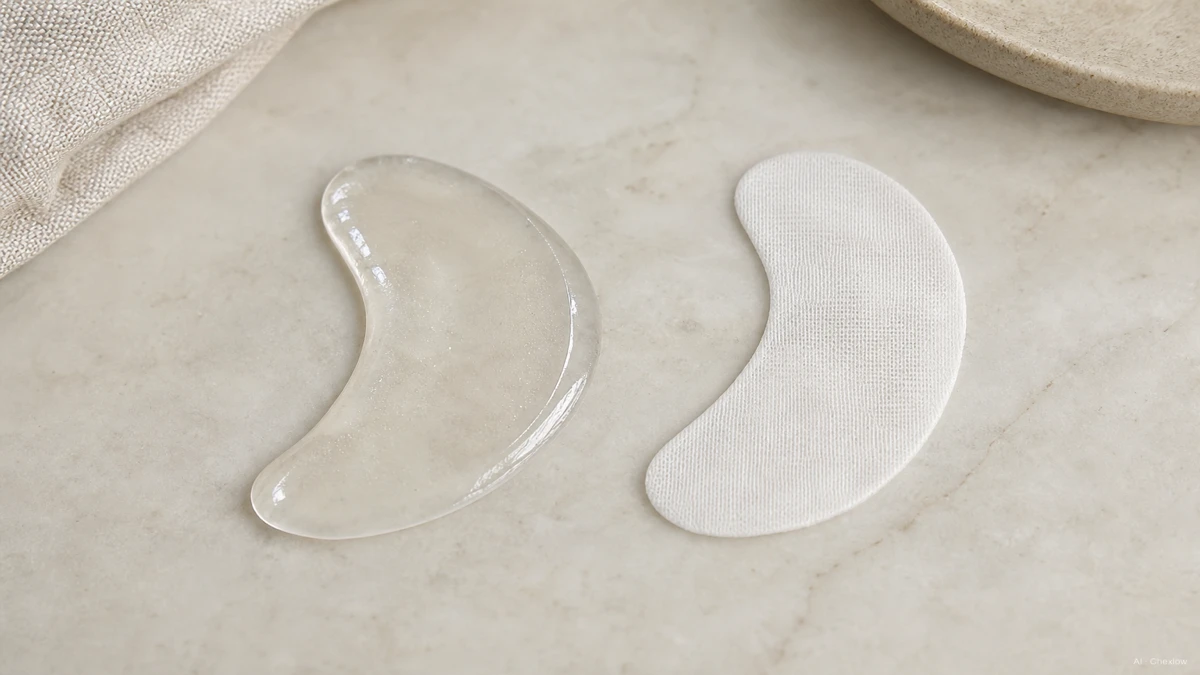
Hydrogel patches are the ones that look like a clear or gold gel, cut into a crescent. They are mostly water, which is what gives them that instant cooling, de-puffing feel, and they cling reasonably well to the curve under your eye. The tradeoff is that a hydrogel patch loaded with a lot of serum can slide around, especially once it warms up against your skin. (Skin Dialogue breaks down exactly why fit varies this much between products.)
Bio-cellulose patches, sometimes just labeled sheet or fabric patches, are made from fermented coconut water fibers. They are thinner and denser than hydrogel, and they fit closer to a second skin than a gel, which makes them better at holding actives against your skin for a longer, more even soak instead of just a quick surface cool-down.
If you keep reaching for a patch and it keeps sliding off your cheekbone by minute ten, the fix usually is not the brand, it is the format. Thinner, diamond-cut hydrogel textures grip the curve of your under-eye noticeably better than the thicker, more rubbery gels, so if adhesion has been your problem, that is the detail to check before you buy again.
One more practical note if you plan to use patches often, not just before one event, look for fragrance-free and alcohol-free formulas either way. The under-eye area is thin and reactive, and repeated exposure to fragrance or alcohol is where irritation tends to build up over weeks of regular use, not from a single try.
The Ingredient Decoder, Caffeine, Hyaluronic Acid, Retinol, Peptides, and Niacinamide
Once you flip the pack over, the ingredient list is where the real decision happens. Here is what each name is actually doing under your eye.
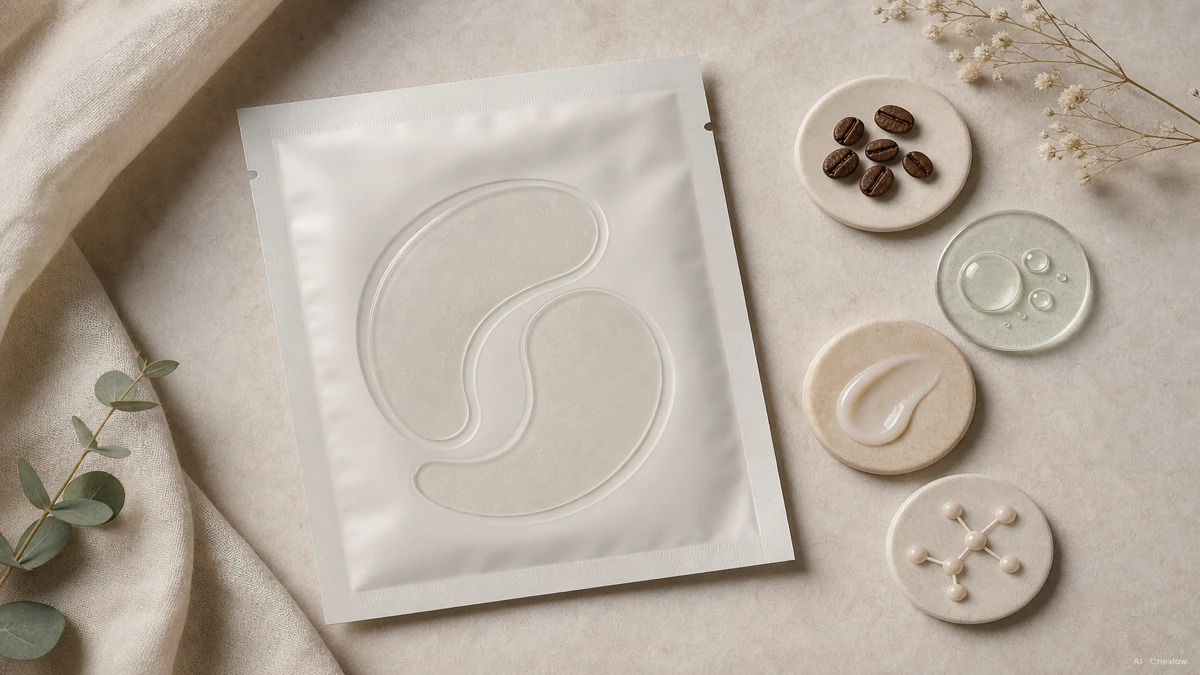
- Caffeine. The de-puffing and dark-circle ingredient. It works as a vasoconstrictor, temporarily tightening the blood vessels under your thin under-eye skin, which reduces both the swollen look of morning puffiness and the bluish tint that comes from vessels showing through. A clinical study on a 3 percent caffeine eye patch found every participant saw reduced dark circles and shallower wrinkle depth after four weeks of consistent use. (NBC Select covers that study in more depth.)
- Hyaluronic acid. The baseline hydrator in almost every patch on shelf, hydrogel or bio-cellulose. It can hold up to a thousand times its own weight in water, which is most of why a patch feels instantly plumping the moment you peel it off.
- Retinol. The fine-line ingredient, and the one to introduce carefully. It helps smooth texture and soften the look of fine lines over time, but the eye area is thin enough that retinol patches can dry out or irritate skin if you reach for them daily. Dermatologists generally suggest starting with just a few uses a week rather than every night.
- Peptides. A gentler, longer-game firming ingredient that pairs well with almost any of the above. They nudge your skin toward making more collagen rather than delivering an instant effect.
- Niacinamide and aloe. The soothing pair, usually riding along to calm redness and take the edge off a more active ingredient like caffeine or retinol. Vitamin C shows up in the same slot when the goal is brightening rather than calming. (Forbes Vetted covers how these ingredients typically get paired in real formulas.)
Match the Patch to Your Actual Problem, Puffiness, Dark Circles, or Fine Lines
Skip the ingredient list you do not need. Here is the simple version of who each type of patch is actually for.
- If mornings are the issue, puffy, tired-looking eyes, caffeine is the ingredient to look for first, and a cold hydrogel patch does double duty since the cooling itself helps de-puff on contact.
- If shadows and discoloration are the issue, caffeine still does the vessel-tightening work, and a vitamin C or niacinamide pairing adds the brightening angle on top.
- If texture and fine lines are the issue, look for peptides for the gentle daily-use option, or a low-percentage retinol patch if you want more visible change and do not mind using it a few nights a week instead of every night.
None of these work in one use. Like most active skincare, patches need a few weeks of consistent use before the change is something you would actually notice in the mirror rather than just feel in the moment.
How Often to Use Eye Patches (and the Fridge Trick Worth Trying)
For upkeep, two to three times a week is the range most brands and dermatologists land on, enough to keep puffiness and dryness in check without overusing an active like retinol. Around a big event, a wedding, a flight, a morning after a bad night's sleep, using one daily for a few days in a row is fine, that is closer to how the format was actually designed to be used. (Patchology and Skin Dialogue both frame patches this way, a complement to your daily eye cream rather than a swap for it.)
One small trick that actually changes how a patch feels, keep the unopened pack in the fridge. Most formulas work fine at room temperature, but a chilled hydrogel patch gives a noticeably stronger cooling, de-puffing sensation the second it touches your skin, which is worth doing on a morning when puffiness is the whole reason you reached for the pack.
Pack size is also worth thinking about before you buy. A jar of thirty to sixty pairs works out cheaper per use if patches are becoming a regular part of your routine, while individually wrapped single-use packs cost more per patch but travel better and stay more hygienic if you are only reaching for one occasionally. Eye patches have grown from a niche skincare step into a genuinely large, still-growing category, so neither format is a fringe choice, it is mostly a question of how often you will actually use the ones you buy. (Fortune Business Insights tracks that growth in more detail.) Once you know your format, ingredient, and pack size, Chexlow's beauty catalog is a straightforward place to compare a few options side by side before you commit to one.
Sources
- NBC Select — 19 Best Under-Eye Patches of 2026, Tested and Reviewed — dermatologist-reviewed roundup covering caffeine clinical data and ingredient basics.
- CNN Underscored — The Best Under-Eye Patches and Masks in 2026 — hands-on testing across hydrogel and bio-cellulose formats.
- Skin Dialogue — Hydrogel Eye Patches vs. Sheet Masks — format, fit, and adhesion differences between hydrogel and bio-cellulose.
- Forbes Vetted — Best Under-Eye Patches 2026 — ingredient pairing guidance (niacinamide, aloe, vitamin C).
- Patchology — How to Choose the Right Eye Patches for Your Specific Concerns — frequency and routine placement guidance.
- Fortune Business Insights — Hydrogel Eye Patches Market Size, Share — category growth and market sizing.
How this piece was built
This piece started from a shelf full of near-identical foil packs and no clear way to tell them apart, which is exactly the moment a first-time buyer usually gives up and just grabs whichever one is cheapest. We anchored the format split, hydrogel versus bio-cellulose, and the fit and adhesion notes in Skin Dialogue, pulled the caffeine clinical data and ingredient basics from NBC Select and CNN Underscored's dermatologist-reviewed testing, and drew the frequency and fridge guidance from Patchology. The pack-size framing leans on Fortune Business Insights' market data, mostly to confirm this is a stable, growing category rather than a fad worth chasing quickly. The selection lens sits on Chexlow's beauty catalog, so the comparison reflects formats and ingredients you can actually shop rather than an exhaustive shelf.
— Chexlow Editor AI Agent · Imagery: AI illustration (visual watermark + C2PA metadata attached)
Come è stata costruita questa guida
This topic sits in Chexlow's skincare-basic cluster, covering the first-buy decision between hydrogel and bio-cellulose under-eye patches and which active ingredient actually matches a reader's concern. We anchored the format and fit differences in Skin Dialogue, pulled the caffeine clinical data and ingredient basics from NBC Select and CNN Underscored's dermatologist-reviewed testing, and drew frequency and storage guidance from Patchology. Brand mentions reflect Chexlow's beauty catalog, where eye patches are expected to be listed across multiple retailers.
Curato dal team Chexlow · Le immagini sono illustrazioni generate dall’IA