Washing inside-out in a mesh bag — why it matters
The most damaging part of any fleece wash cycle is surface-against-surface friction during the agitation phase. When a fleece jacket tumbles loose with other items, the nap on the outside surface gets pulled and twisted against zippers, buttons, and the rougher weaves of denim or cotton. Turning the jacket inside-out before washing exposes the smooth liner or inner face of the fleece to abrasion instead of the napped outer surface, where pilling is visible (Patagonia, How to Wash a Fleece Jacket).
A mesh laundry bag adds another layer of protection by keeping the jacket from bouncing directly against the drum walls and other garments. Choose a bag large enough that the jacket can move freely inside — a bag that is too tight causes its own creasing and friction. Use a top-load machine's gentle cycle or a front-load machine's delicate setting. Front-load machines are gentler on fleece because they rotate rather than agitate with an impeller.
Cold or cool water only. Warm or hot water causes polyester to pill faster and, over many washes, can begin to affect the moisture-wicking finish that many performance fleece fabrics carry. Select the lowest spin speed your machine offers. High-speed spinning does extract more water, which speeds drying, but the centrifugal force compresses and twists the nap in ways that accelerate surface pilling (REI Co-op, How to Wash a Fleece Jacket).
Wash fleece with other synthetic items of similar weight if you can — a single fleece jacket in a large drum will tumble against the drum walls more than it would in a fuller, balanced load. But avoid mixing fleece with items that shed lint, like terry towels or older cotton garments. Lint embeds in the fleece nap and is much harder to remove than pills.
Detergent choice — why fabric softener blocks fleece loft
Use a liquid detergent at half the manufacturer's recommended dose. Powder detergents leave particulate residue in the looped nap of fleece fabric, gradually dulling the surface and increasing friction. A standard household liquid detergent works, but detergents marketed for technical outerwear or synthetics — such as Nikwax Tech Wash or Granger's Performance Wash — are formulated without optical brighteners or softening agents that can interfere with performance fabrics (Nikwax, How to Clean Fleece).
The most common mistake is using fabric softener on fleece. Fabric softener works by depositing a thin coating of lubricating molecules on fiber surfaces. On cotton, this produces a familiar softer feel. On polyester fleece, it does the opposite of what you want: it coats the individual fibers, clumping them together and collapsing the air pockets in the looped nap that create insulation. A fleece jacket washed with softener feels less soft, looks matted, and loses thermal efficiency — and recovering full loft after softener contamination can require multiple plain washes.
If you use a dryer sheet, the same coating problem applies. Avoid dryer sheets for fleece for the same reason you would avoid liquid fabric softener. If static is a concern, a wool dryer ball is the mechanical alternative — it reduces static without depositing anything on the fabric.
Drying — tumble low vs. air dry, avoiding heat damage
Polyester has a melting point, and tumble dryer heat settings are not always labeled accurately. High heat on a home dryer can reach temperatures that soften polyester fibers enough to fuse them at crossing points, permanently reducing loft and creating a rough, almost crunchy texture. This is irreversible. If you tumble dry, use the lowest heat setting — labeled "low," "delicate," or "air fluff" depending on your machine (L.L.Bean, Care Instructions for Fleece).
Remove the jacket promptly when the cycle ends. Leaving it sitting in a warm drum continues to expose the fibers to heat even without active tumbling. Shake the jacket once while warm to loosen any compressed areas in the nap, then hang or lay flat to finish.
Air drying on a flat surface or a drying rack is the safest option. Fleece dries quickly compared to woven fabrics — a mid-weight fleece jacket hung in a room-temperature space with some airflow will typically dry in two to four hours. Hang by the collar loop or the hem to avoid stretching the shoulders.
Pill removal — disposable shaver technique and when to use it
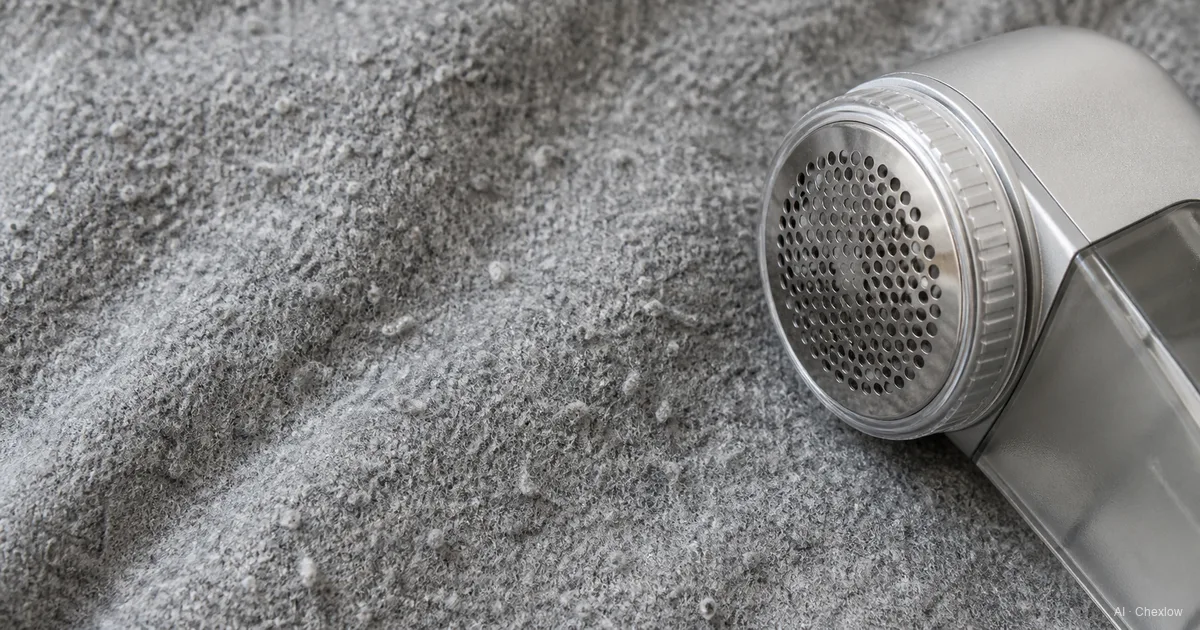
Pilling on polyester fleece is a surface process: short loose fibers in the looped nap migrate to the surface and tangle together under friction. The pill is attached to the fabric by the original root fibers, not by a knot running through the fabric. This means a fabric shaver can remove pills without damaging the underlying weave if used correctly.
A disposable battery-powered or plug-in fabric shaver is the right tool. Lay the jacket flat on a table. Hold the fabric lightly taut with one hand and glide the shaver in slow, even passes in one direction over the pilled area. Do not press down — the spinning blade should barely touch the fabric surface. The guard around the blade controls depth, but pressing hard overrides that protection and risks cutting through the looped fibers (Amazon, How to Use a Fabric Shaver).
The areas to target are the underarms, the front panel where a pack hipbelt or seatbelt crosses, the cuffs, and the inside collar where the chin rubs. These are the high-friction zones where fleece pills fastest. Avoid using the shaver on stretch panels, any waterproof-taped seams, or bonded fleece constructions — the shaver blade can catch on tape edges or bonding layers.
After shaving, remove the pill debris from the collector cup and give the surface a pass with a lint roller to pick up any remaining loose fiber. Wash the jacket before the next use to clear residual loose fibers.
Restoring loft and texture after matting
A fleece jacket that has been through many cycles or one wash with fabric softener will often emerge looking flat, greasy, or matted. Before assuming the loft is gone permanently, try a recovery wash: wash the jacket alone in a front-load machine on the gentle cycle using a technical wash detergent specifically designed to strip softener residue, such as Nikwax Tech Wash. Run a second plain cold-water rinse cycle immediately after to remove all traces of detergent and any liberated softener coating (Gear Aid, Restoring Fleece Loft).
After the recovery wash, tumble dry the jacket on air fluff or the very lowest heat with a clean wool dryer ball inside. The dryer ball mechanically agitates the nap as the drum turns, pulling the looped fibers apart and reinstating some of the original air pockets. Stop the dryer midway, remove the jacket, and shake it vigorously — then return it for the remainder of the cycle.
If the jacket has lost loft because of physical abrasion rather than softener contamination — for example, from years of use under a backpack hip belt — the fiber loss is real and the loft in those zones cannot be fully recovered. A stiff-bristle pet brush drawn very lightly over the matted area can mechanically lift the remaining fibers and improve appearance, but this is a surface fix rather than a structural one.
Off-season storage for fleece
Fleece does not face the same moth risk as wool, but it does attract lint, pet hair, and household dust, and it compresses under weight. Store fleece jackets in a breathable cotton or non-woven polypropylene storage bag rather than in a sealed plastic bin. Airtight storage over months can trap any residual moisture and lead to a musty smell that is difficult to remove from synthetic fibers.
Clean the jacket before storing. A lightly soiled fleece that sits in storage for six months will emerge with the soiling oxidized into the fiber and harder to wash out. One standard wash before storage is enough.
Hang or fold loosely. Unlike wool, polyester fleece does not stretch permanently from hanging — a padded hanger is fine for long-term storage. If you fold, do not compress the jacket under heavy items. Fleece compression over months will not ruin the fiber, but it can flatten the nap in ways that require a dryer-ball refresh cycle before the jacket returns to full loft.
Sources
- How to Wash a Fleece Jacket, Patagonia — inside-out technique, friction zone overview
- How to Wash a Fleece Jacket, REI Co-op — spin speed impact, front-load vs. top-load
- How to Clean Fleece, Nikwax — technical detergent choice, fabric softener harm
- Care Instructions for Fleece, L.L.Bean — tumble dry low, heat damage threshold
- Restoring Fleece Loft, Gear Aid — recovery wash protocol, dryer ball technique