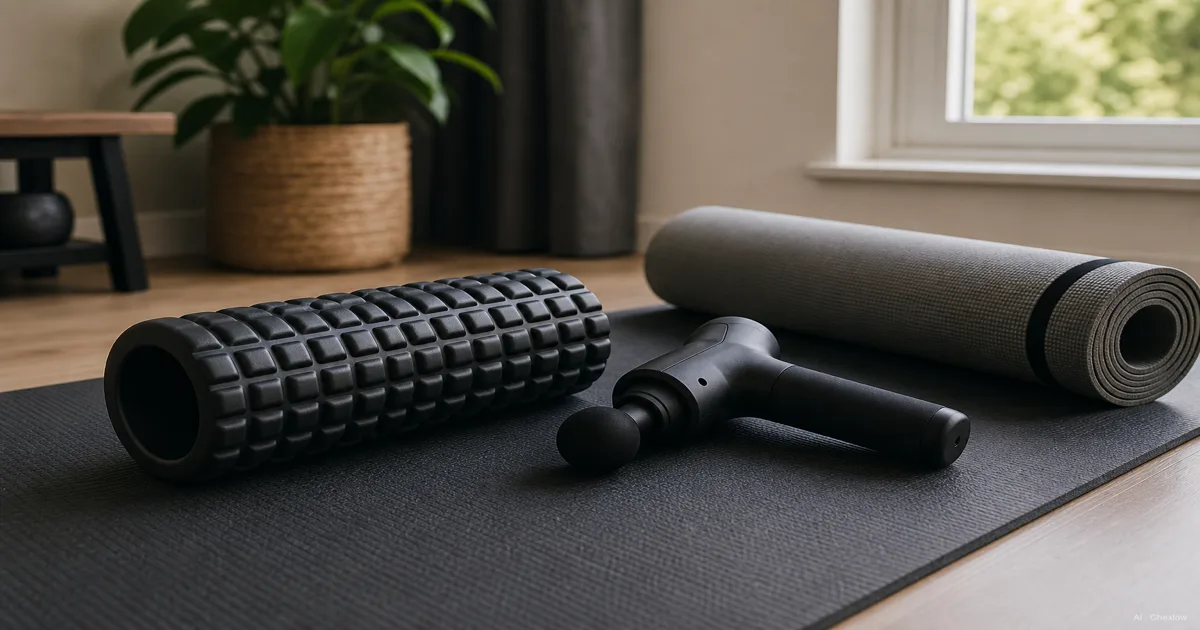

Choose the movement you can comfortably repeat
A foam roller applies pressure through your bodyweight as you roll; a massage gun supplies percussion through a powered head. That makes posture and reach useful buying criteria. (Foam-rolling review, Hyperice device description)
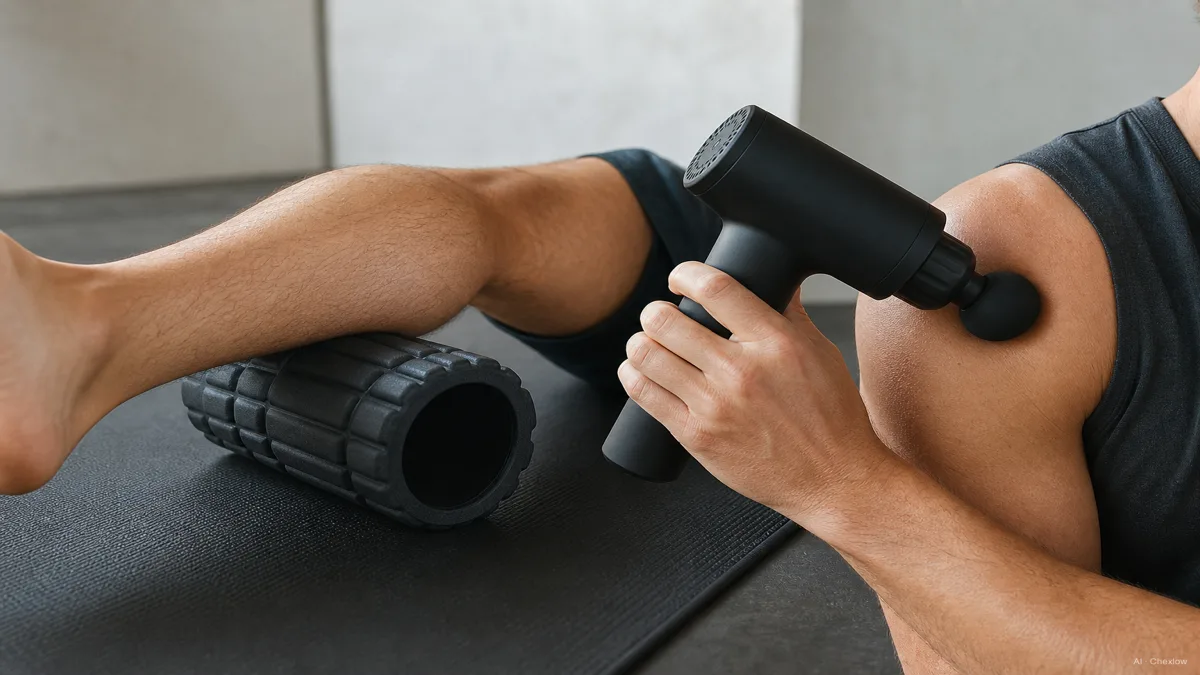
- Choose the roller if you can get down, support yourself and adjust your weight comfortably. Before buying, try the position you would use for your calves or thighs.
- Choose the gun if seated use is more appealing and you can hold the device steadily against the intended muscle. Check the actual reach: a handheld tool does not automatically make your back accessible.
- Still undecided? Compare the total cost of a basic non-powered roller with a gun you can comfortably hold. Pay extra only if the easier setup solves a real obstacle for you.
The illustration compares approaches; it is not an anatomical placement guide. Keep a massage gun away from the head and neck, as identified in Therabody's precautions.
Set a realistic goal and check whether to pause
Expect a possible short-term change in comfort or movement, not proof that a muscle has healed. A foam-rolling meta-analysis found generally small benefits. A massage-gun review found possible flexibility gains but inconsistent performance results.
That is not a sound reason to buy the strongest motor or to treat a gun as a guaranteed pre-workout performance booster.
If injury or unexplained symptoms are driving the purchase, get clinical advice before choosing either tool. For percussion specifically, Therabody calls for medical advice with thrombosis or blood-thinning medication. Read the exact model's restrictions; a lower setting does not settle those questions.
Check control and comfort before extra features
If you choose a roller
Start by comparing softer, smooth options. Longer rollers favour stability; shorter ones favour carrying and storage. Those are practical trade-offs in REI's selection guide, not a reason to buy the hardest surface available.
Check its dimensions against your usable floor space. If a gym has a suitable roller, try it before deciding that ridges or vibration are worth paying for.
If you choose a massage gun
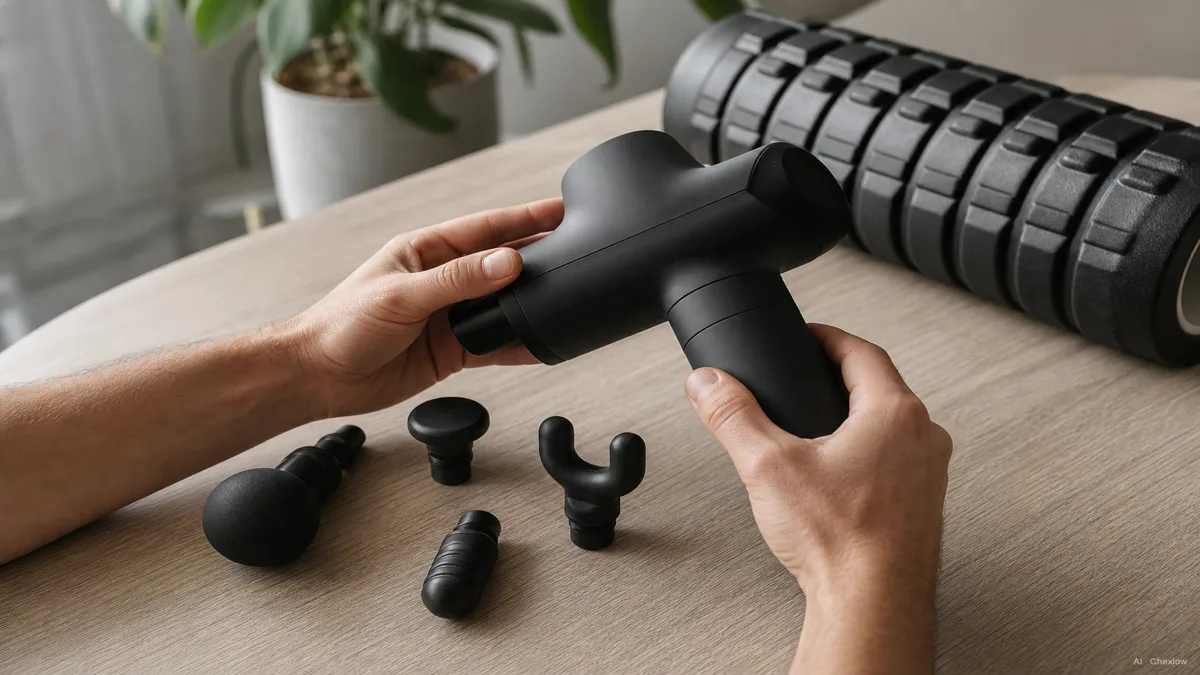
Hold it in your intended position and check whether the controls remain reachable. Compare comfort at the lowest setting, grip, attachment fit, charging instructions and return terms before counting speeds or heads. Do not press harder just to test the motor's limit.
Hypervolt Go instructions specify light, moving pressure on soft tissue and stopping for pain; bruising can occur even at low pressure. Follow your own model's instructions for attachments, clothing and duration rather than borrowing another device's routine.
Buy one, then identify what is actually missing
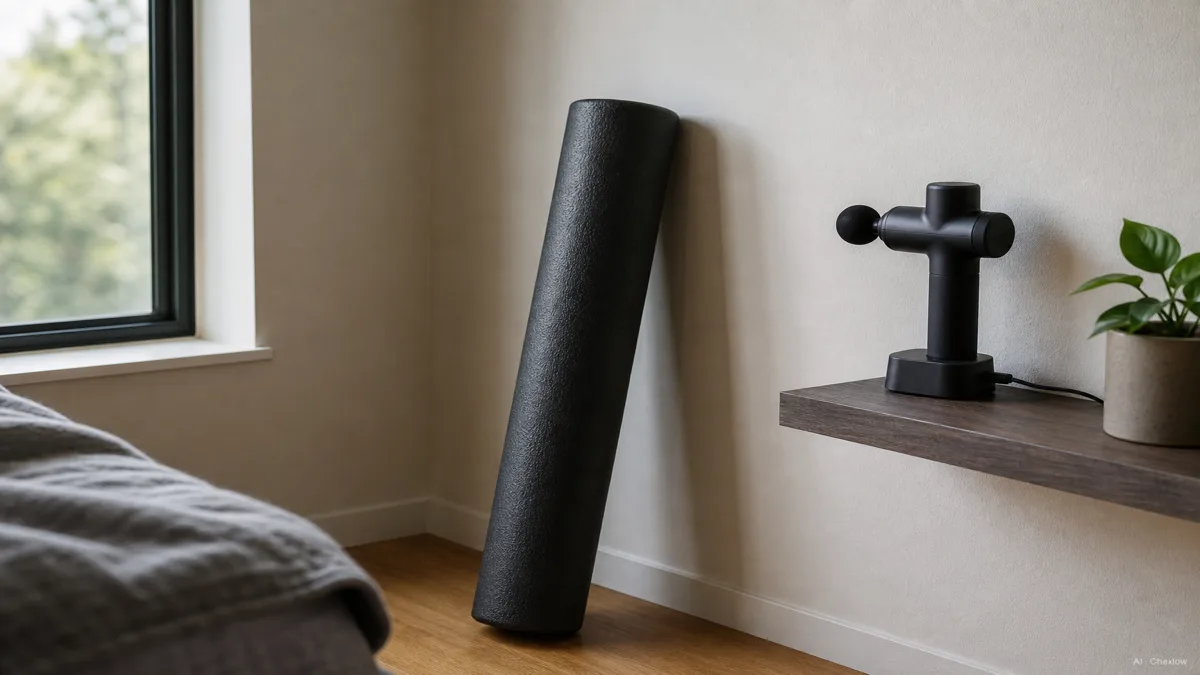
You do not need to recreate this two-device setup. Start with the tool that passed your posture, comfort and safety checks.
- Keep one if you use it comfortably and it meets the purpose you bought it for.
- Consider the other only when you can name a remaining practical problem, such as avoiding floor setup or preferring rolling to holding a device.
- Pause the shopping if you are chasing stronger pressure to deal with ongoing symptoms. Reconsider the problem with a clinician instead of escalating the equipment.
If you are also setting up a floor area for rolling and stretching, the next purchase question may be how to choose a yoga mat's thickness and material. That is an optional setup decision, not a requirement to own both recovery tools.
Sources
- Foam-rolling meta-analysis, Frontiers in Physiology
- Massage-gun systematic review
- REI foam-roller selection guide
- Therabody precautions
- Hypervolt Go safety instructions
Come è stata costruita questa guida
Written by AI for Chexlow, using published research, REI's selection guidance and manufacturer safety instructions. This comparison helps you choose a first tool by usability and realistic expectations; it does not report hands-on product testing or provide an individual treatment plan.
Curato dal team Chexlow · Le immagini sono illustrazioni generate dall’IA