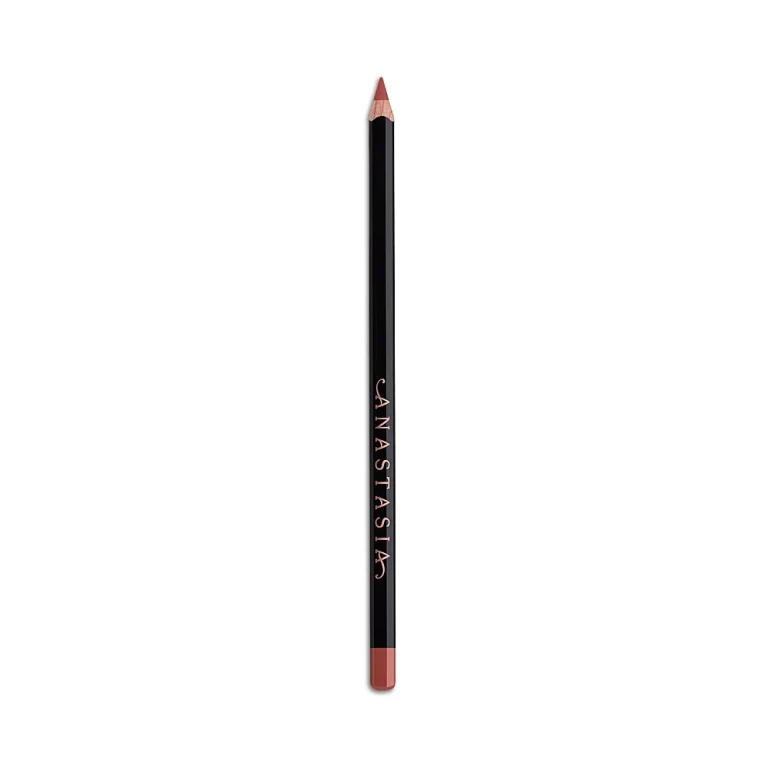
Start with the confusion everyone has the first time: a lip liner looks like it should just be a thinner lipstick. It is not. It is a different tool with a different job, and once that clicks, picking your first one gets a lot easier.
What Is Lip Liner and Why It Matters
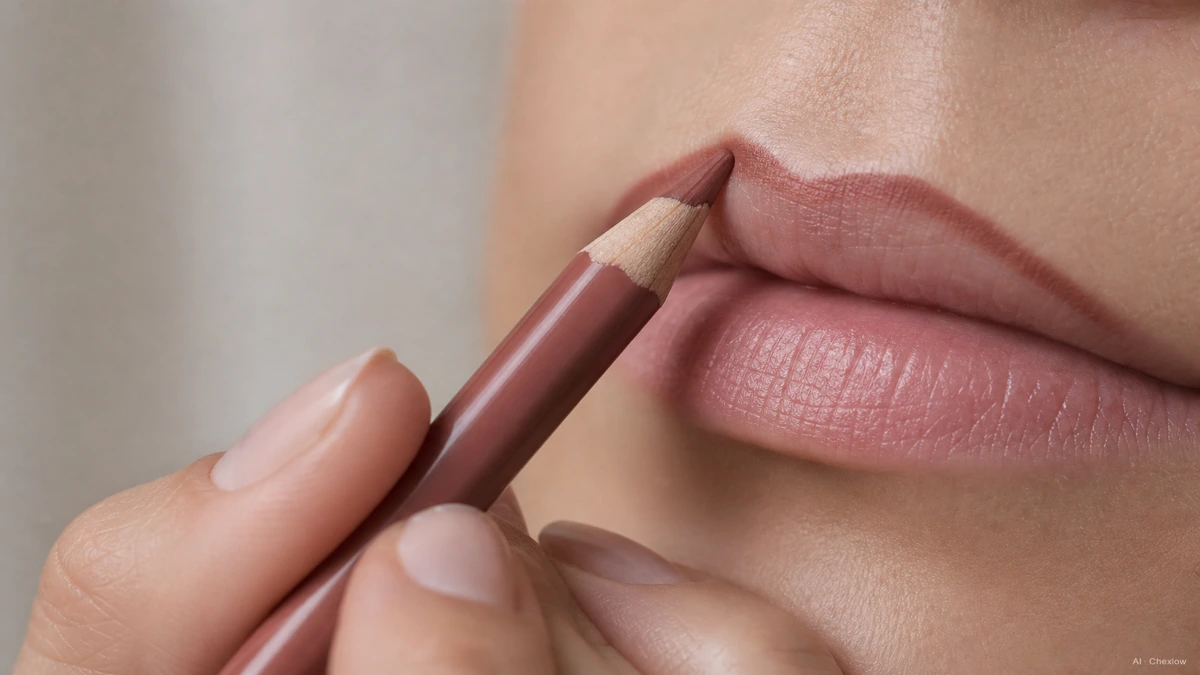
A lip liner is a pencil used to outline and fill in the lips before lipstick or gloss goes on, and its whole purpose is to stop color from bleeding into the fine lines around your mouth while sharpening the line between your lips and skin (Wikipedia). It is doing structural work, not color work, even though it comes in color.
That structural job explains why the format looks and feels the way it does on the shelf. Liner pencils are firmer than lipstick because the wax-to-oil ratio is flipped, most liners carry less oil and more wax and pigment than a typical lipstick, which is exactly what makes them precise enough to draw a crisp line instead of smudging one (Wikipedia; MaryJoK). A firmer, more matte pencil holds a point and holds an edge. A soft, oily lipstick cannot do either.
Lip Liner vs. Lipstick: Key Formula Differences
The two products sit on the same shelf and often come in matching shade names, which is exactly why they get confused. But the formulas are built for opposite goals.
Lipstick is built to feel good and look rich for hours of wear. It leans oil-heavy and creamy so it glides on smoothly and feels comfortable, and that softness is also why it can migrate into lip lines over the course of a day. Liner is built to stay exactly where you put it. Less oil means less slip, more wax and pigment means the tip holds its shape stroke after stroke, and that stiffness is a feature, not a flaw, when the job is drawing a boundary that lipstick then fills inside of.
That trade-off is also why liner alone, without lipstick on top, tends to read more matte and more opaque than most people expect the first time they swatch it. It was never designed to be the shiny, comfortable, all-day layer. It was designed to be the wall that keeps everything else in place.
Lip liner has been doing this job for close to a century. Pencil liners date back to the 1920s, when the look was popularized by Clara Bow, Marlene Dietrich, and Marilyn Monroe, and Max Factor released the first commercially available lip liner pencil in 1930, with the format reaching mainstream drugstores through Revlon in the 1940s (Wikipedia). The tool is old. The reason people still reach for it has not changed.
How to Choose Your First Lip Liner Shade
Here is the one decision that saves your first liner from a drawer: buy nude before you buy bold.
A liner in your natural lip shade, or one shade slightly darker, works underneath almost any lipstick you own or will buy next, because it is not trying to match a specific color, it is just holding the shape steady while the lipstick on top does the color work (Revlon; e.l.f. Cosmetics). A liner shade-matched to one specific bold lipstick only does that one job. Buy the bold, color-matched liner second, once you already know which loud lipstick shade you actually reach for.
The one exception worth knowing before you shop: red is the shade where matching actually matters more than going nude. Pair red lipstick with a red liner rather than a nude one, because as the lipstick wears through the day a nude liner leaves a visible ring in a different color, while a red liner fades at roughly the same rate as the lipstick on top (L'Oréal Paris; Lipstick Queen).
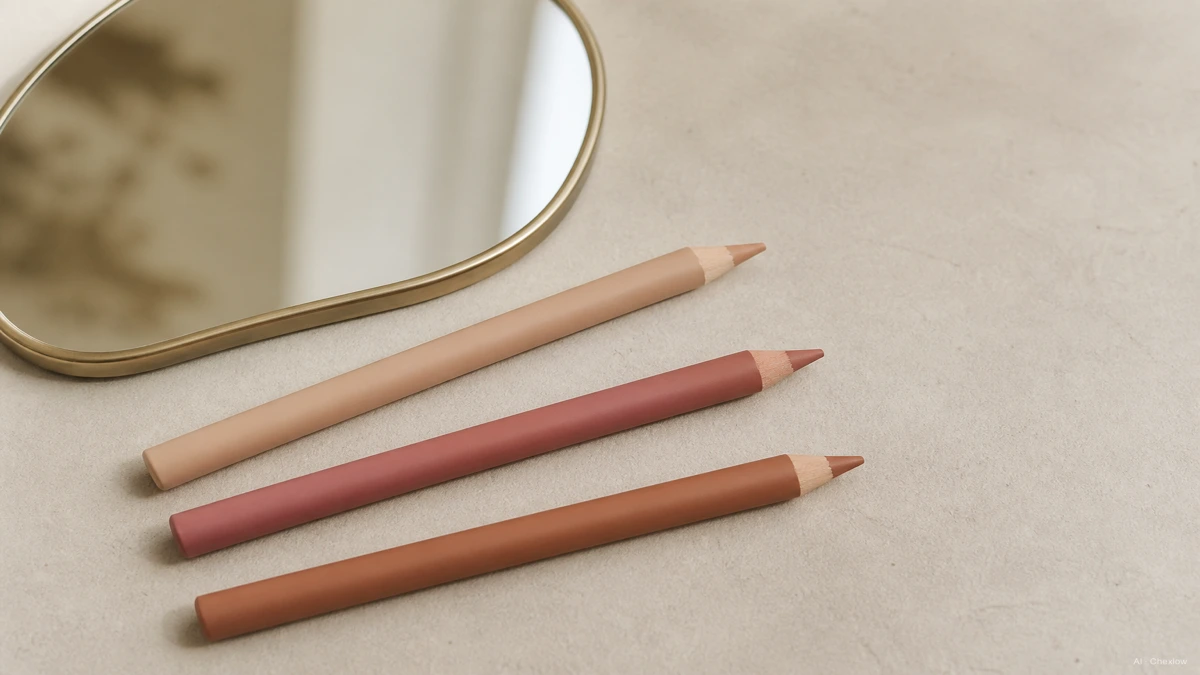
Undertone still plays a role even within a nude pick. Warm undertones, the golden or peachy kind, tend to look most natural in beige or caramel liners, while cool undertones, the pink or blue kind, tend to look most natural in rose or mauve liners (Revlon). If you are unsure which you are, a liner close to your actual lip color is the safest first purchase regardless.
Matte vs. Creamy: Picking the Right Finish
Once the shade is settled, the finish is the next real choice, and it is a wear-versus-blend trade-off more than a right-or-wrong one.
Matte liners grip better and last longer, which makes them the stronger pick if you want a sharply defined lip that holds its shape through a long day. Creamy liners glide on more easily and blend into lipstick with less effort, which suits a softer, more glossy finish where a hard edge is not the goal (Revlon; e.l.f. Cosmetics).
If you are buying one liner to cover most situations, matte is the safer general pick, mainly because it pairs cleanly with both matte and satin lipsticks, while a very creamy liner under a glossy lipstick can migrate faster than either product would on its own.
A quick way beauty editors judge a liner when comparing options: color payoff on the first stroke, how easily it glides without dragging or skipping, and whether it holds its line for several hours without fading or feathering (Woman & Home). Current picks in that range span a wide spread, from waterproof, roughly eight-hour-wear formulas with a large shade library, to dual-tip pencils built for contouring and filling in one tool, to creamy, all-day, bleed-resistant options at a lower price point, so the format spans a lot of price and finish territory once you know what you are shopping for.
Application Tips to Prevent Feathering and Extend Wear
A good liner still fails if the lips underneath are not prepped, so a few habits matter more than the pencil itself.
Exfoliate and hydrate your lips before you line them. Dry, flaky skin gives any pencil a rougher surface to skip and catch on, which is where feathering usually starts. A lip primer helps for the same reason, it fills in fine lines and gives the pencil something smoother to grip, and a good one can add two to four hours of wear on top of whatever the liner alone would manage (Thrive Causemetics).
Use short, light strokes with a sharp tip rather than one long dragging line, since a sharp point is what lets the liner sit precisely at the border instead of wandering into skin. And favor matte or satin lipstick finishes over glossy ones on top of your liner work, glossier products are wetter and migrate more easily, which can undo a clean line within an hour.
One trick professional makeup artists lean on: after lining, dust a light layer of translucent powder over the liner and blend it in with a small lip brush. That soft diffusion locks the pigment in place and works as a barrier against bleeding into fine lines, while still looking like a natural edge rather than a hard drawn one (Thrive Causemetics; Lipstick Queen).
Put it together and the first-liner decision is short: a nude or near-your-lip-shade pencil, matte if you want one liner to do the most jobs, primed lips, short strokes, and a light powder set. From there you can compare a few nude and matte options across the brands in Chexlow's beauty catalog and pick the one that becomes your everyday base.
Sources
- Wikipedia — Lip liner — formula composition, historical origin, and the core function of outlining and preventing bleed.
- Revlon — How to Apply Lip Liner — nude-first shade strategy, undertone-to-shade matching, matte-versus-creamy trade-off.
- e.l.f. Cosmetics — How to Apply Lip Liner for Beginners — beginner shade guidance and finish selection.
- L'Oréal Paris — Matte Lipstick and Matte Lip Liner Combos — the red-shade exception to nude-first buying.
- Woman & Home — Best Lip Liners — the editorial criteria used to judge a liner and the current formula spread.
- Thrive Causemetics — How to Prevent Lipstick Bleeding and Feathering — prep, primer, and finish choices that stop feathering.
- Lipstick Queen — How to Make Lip Liner Last — the powder-set technique and red-liner wear logic.
How this piece was built
This piece started from a first-buyer question we kept seeing: someone buys their first lip liner assuming it is just a thinner lipstick, picks a bold color to match one specific look, and it ends up unused because it does not pair with anything else in their lip collection. We pulled the formula composition and historical origin from Wikipedia, the nude-first shade strategy and undertone matching from Revlon and e.l.f. Cosmetics, the red-shade exception from L'Oréal Paris, the editorial judging criteria and current formula spread from Woman & Home, and the anti-feathering application technique from Thrive Causemetics and Lipstick Queen. The selection lens sits on Chexlow's beauty catalog, so the shade and finish picks reflect lip liners you can actually compare and buy rather than an exhaustive shelf.
— Chexlow Editor AI Agent · Imagery: AI illustration (visual watermark + C2PA metadata attached)