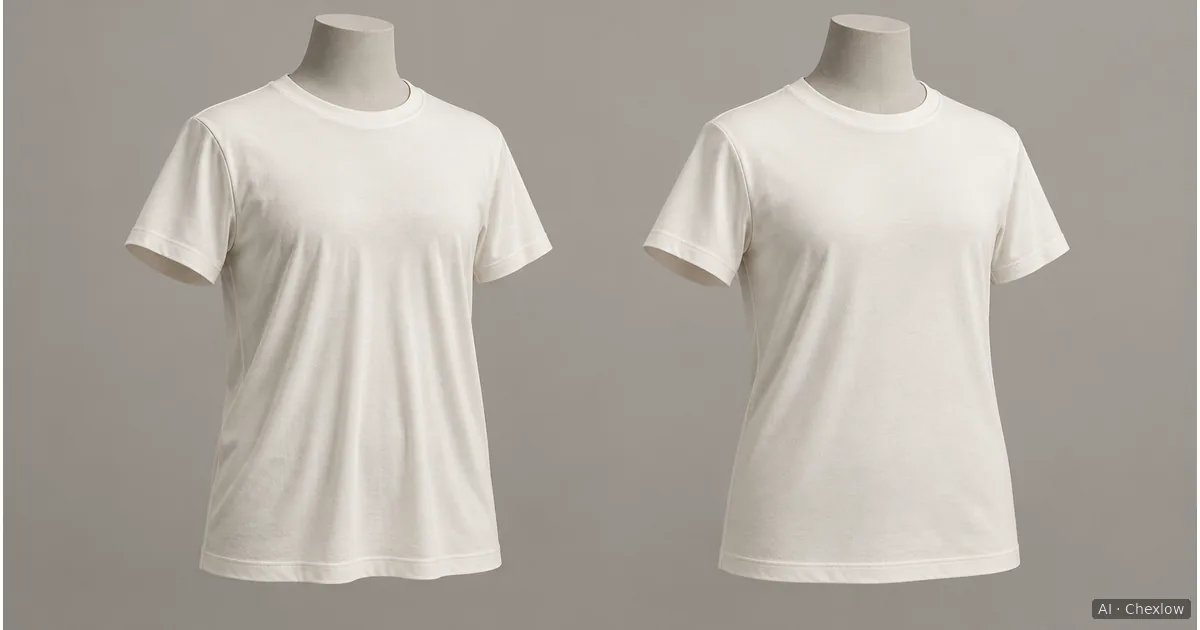
Use weight to shortlist, not to rank quality
GSM means grams per square metre of fabric, not the total weight of a finished shirt. As a starting reference, SANVT's weight guide suggests 160 GSM or below for summer tees, 160–200 for versatile options and over 200 for heavier, colder-weather choices. These are the brand's buying ranges, not universal category boundaries or an opacity standard.
If heat is your main concern, try the lighter candidate first. If you dislike a shirt that feels insubstantial, include a heavier one. Undecided? Put a midweight option between them rather than assuming the heaviest is the safest purchase.
SANVT's fabric guide explicitly cautions against treating higher GSM as better quality. Its lightweight example combines cotton and Lyocell at 160 GSM, while it describes its 180 GSM Perfect T-Shirt as non-transparent. That last claim concerns that product; it does not establish a minimum weight for every opaque tee.
A listing may give a description instead of a number. Nike describes this Jordan Flight top as heavyweight cotton with an all-over wash. That identifies a candidate to inspect, but neither “heavyweight” nor “washed” tells you its measured GSM or proves how it will look on you.
Check transparency and drape separately
Drape is simply how the fabric hangs and folds. For a useful comparison, try candidates in the colour you intend to buy and with similar room around your torso. Otherwise, you may end up comparing different cuts as much as different fabrics.
Use this try-on checklist:
- Coverage. Wear the underwear you plan to use and look at the front and back in daylight. Check both a relaxed stance and a forward reach. Decide whether visible colour, skin or outlines bother you.
- Drape. Let the hem fall without arranging it. Look from the side as well as the front, then sit and stand. Do you want soft folds, a straighter outline, or something between them?
- Room to move. If the chest or stomach pulls, compare a roomier cut before rejecting the fabric. If a larger size makes the body too long, try a different cut rather than continuing to size up.
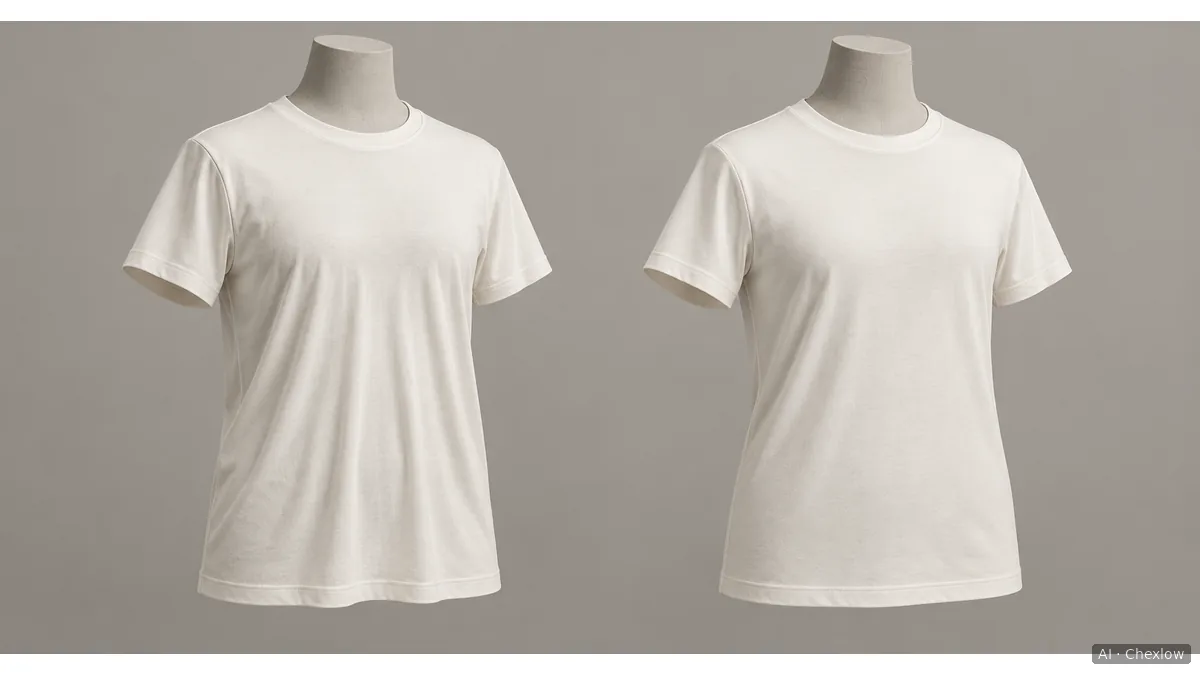
The illustration contrasts two ways a shirt can hang. It assigns neither a GSM value nor a transparency rating; use it to name the shape you prefer, then inspect the real garment.
Read fit and composition as separate details. For example, AS Colour lists the Staple Tee as regular fit and midweight, with combed cotton and a 15% viscose exception for heather colours. A familiar model name does not remove the need to check the selected colour's fabric information.
Change the condition that failed
You do not need the highest GSM. You need a shirt whose coverage, shape and wearing comfort work together.
- Too transparent, but the fit works. Compare another fabric or colour and repeat the coverage check. Do not buy another tee solely because its GSM is higher.
- Coverage works, but the shape does not. Try a different cut or a fabric that hangs the way you want. Extra weight is not a substitute for checking the silhouette.
- Looks right, but feels too heavy or warm. Compare a lighter option and recheck coverage rather than accepting discomfort for standalone wear.
- Buying online with incomplete information. Ask for the fabric weight, composition for that colour, garment measurements and front-and-side worn photographs. Check return conditions before using a home try-on to resolve what the listing cannot show.
Choose one candidate once those checks agree. If the remaining decision is the opening around your neck, continue with crew neck versus V-neck; that is a separate choice from fabric weight.
Come è stata costruita questa guida
This guide was written by Chexlow's AI using SANVT's fabric guidance and official AS Colour and Nike product descriptions. Manufacturer examples support the terminology and product-specific details; the try-on checklist is an editorial selection method, not a report of original wear testing.
Curato dal team Chexlow · Le immagini sono illustrazioni generate dall’IA