Decide whether the robe needs to dry you
Picture when you will put it on: straight after the shower, or after drying yourself with a towel? That distinction gives you a better starting point than the words “spa”, “luxury” or “bathrobe”.
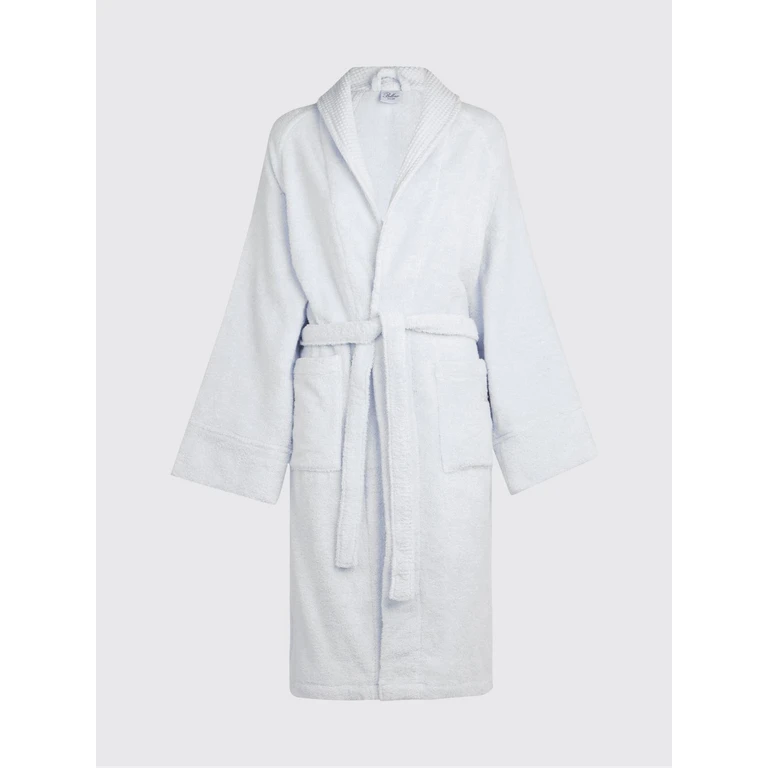
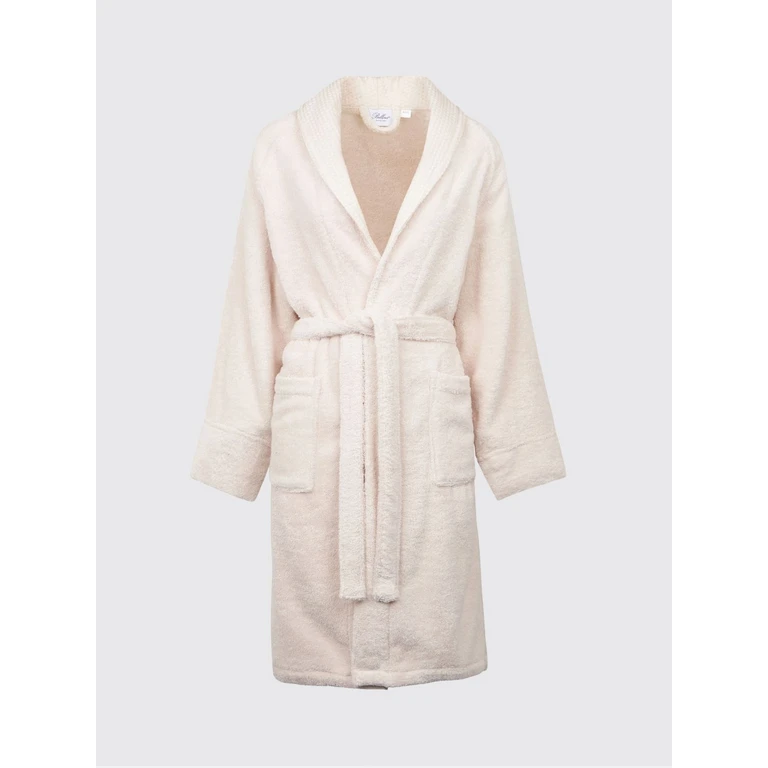
- You want it to take up water. Start with robes whose makers identify an absorbent construction and an after-bathing use. Tekla describes its terry bathrobes as absorbent towelling for comfort after bathing.
- You will dry yourself first. Choose the feel, coverage and freedom of movement you want while relaxing. Water pickup need not be the deciding feature.
Decoration does not settle the question. The grey Missoni Giacomo described here combines a chevron pattern with cotton terry. A patterned robe can still have a towelling construction; equally, a photograph of a robe beside a bath is not an absorbency specification.
Treat product cards as candidates to inspect. When the description gives only appearance and softness, ask whether the exact robe is intended to absorb water from wet skin before choosing it for that job.
Look inside, especially when the outside is smooth
Terry is the looped, towel-like surface. Velour can have a smooth, sheared surface, but that need not describe both sides of the garment. Monarch Cypress explains a velour construction with a sheared finish and a looped terry inside.
That example is a reason to inspect the inside, not to assume every velour robe has the same construction.
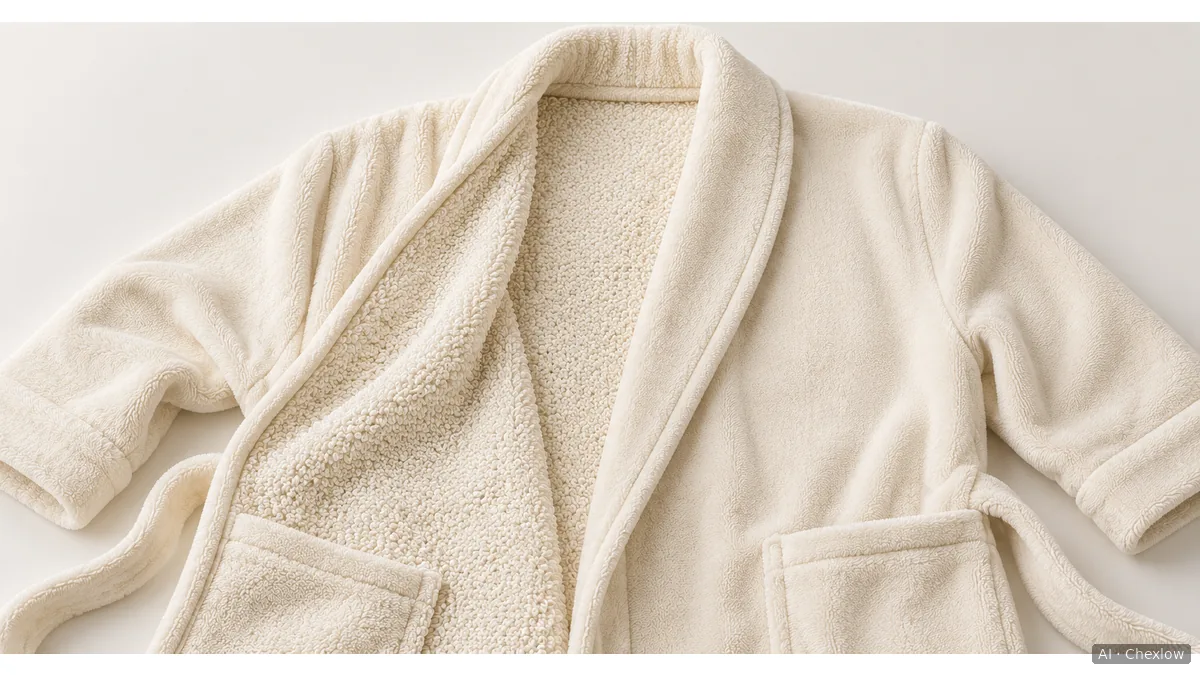
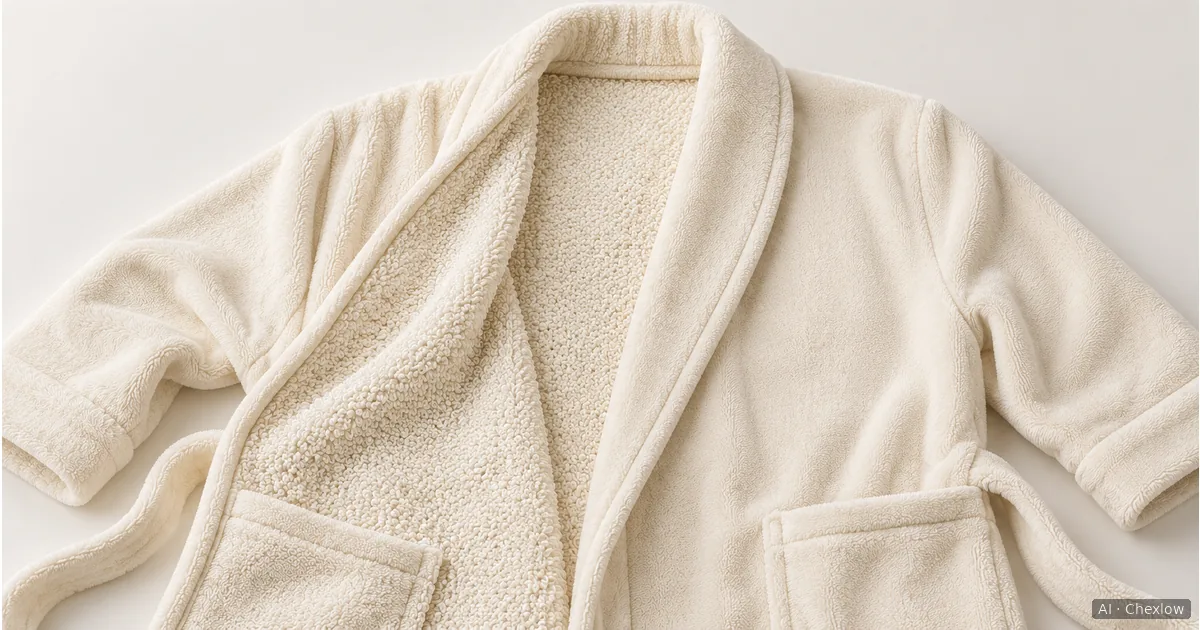
The illustration shows the two surfaces to compare, not a particular model or a measured drying result. Check the actual product’s inside photographs and fabric description together.
- Ask which material touches your body, including any separate lining.
- Check whether the description distinguishes the outer fabric from the inner surface, rather than giving only one fibre name.
- If the inside is not shown, request a photograph or written construction details before ordering for wet-skin use.
A smooth exterior alone is not a reason to reject a robe. An unexplained interior is a reason to hold the decision.
Make the care instructions part of the purchase
Ask for the exact robe’s washing and drying instructions before paying. Confirm that you can follow them with your usual laundry setup and provide somewhere for the robe to dry fully between uses.
Tekla’s guidance illustrates why the details matter: it says to let its bathrobes dry completely, avoid fabric softener because it prevents absorption, and line dry where possible or tumble dry on low heat. It permits washing up to 60°C while recommending lower temperatures and a low spin cycle. Those are instructions for its collection, not settings to transfer to an unrelated robe.
Fit also deserves a direct check. Tekla describes its cut as oversized, so do not assume the same size letter means the same amount of room elsewhere. Use the candidate’s size guide and, if you can try it on, sit and reach forward to check coverage and movement.
Keep the candidate only when three things are clear: it suits your wet-skin or dry-skin use, you know what the inside is made of, and its care routine is practical. If information is missing, ask for it rather than treating “soft” as an answer.
If the reason you started shopping is that your existing bath towel no longer dries you well, first check the towel absorbency and washing guide. That is a separate care problem, and buying a robe need not be the first response.
Hoe deze gids is opgebouwd
Chexlow used AI to write this guide from Tekla’s bathrobe care instructions, Missoni’s product description and Monarch Cypress’s fabric explanation. The purchase checklist is editorial guidance; no original absorbency or wear testing was performed.
Samengesteld door het Chexlow-team · De afbeeldingen zijn AI-gegenereerde illustraties