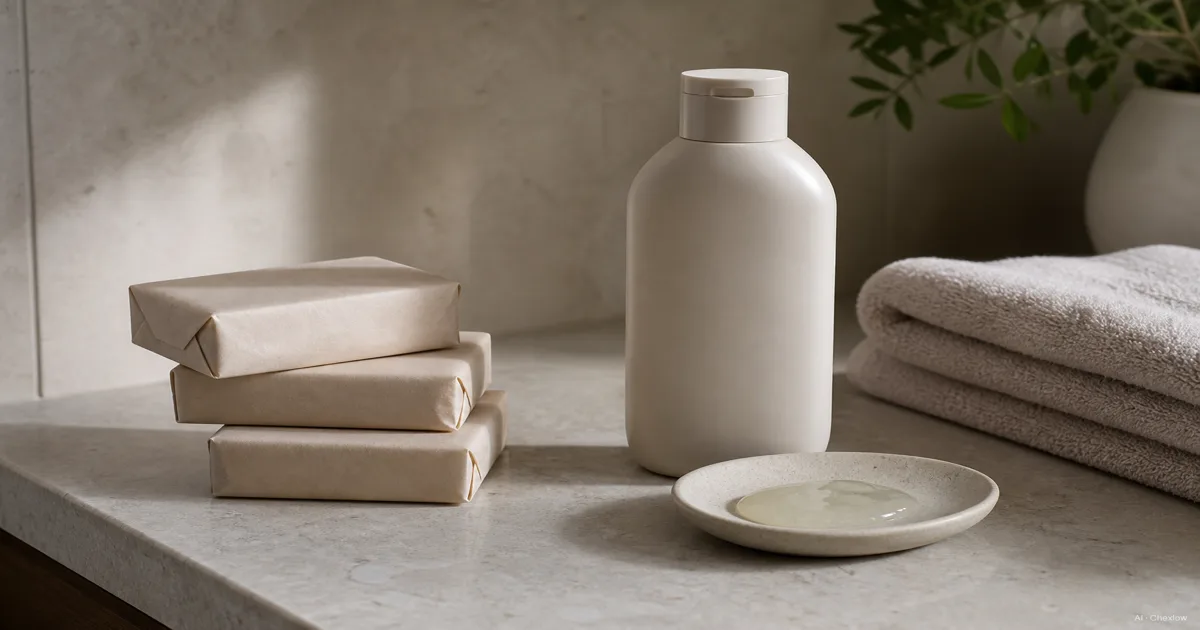
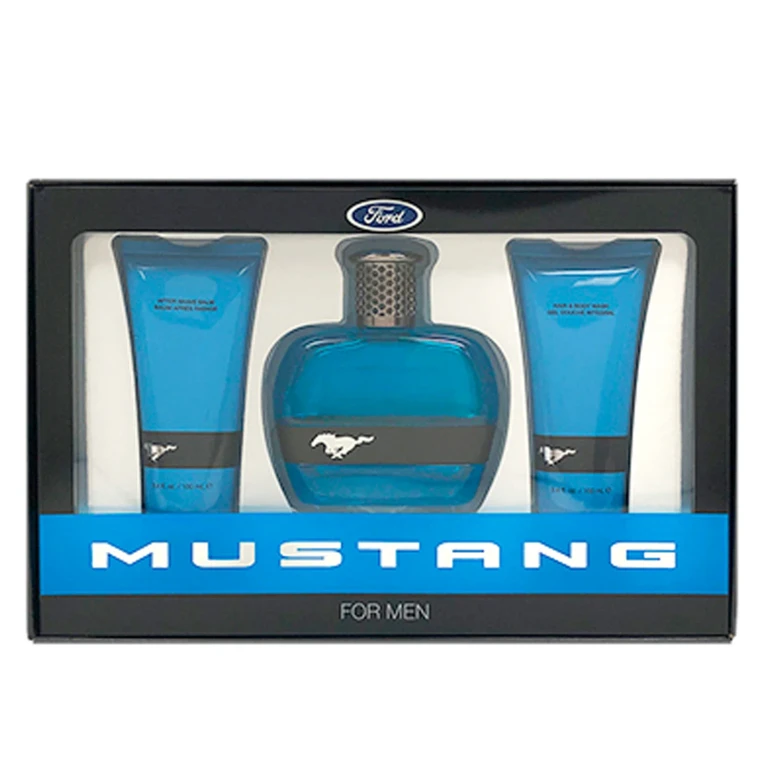
Start with the one distinction that explains almost everything else. A bar of soap is a simple formula: fat or oil combined with an alkali to make a solid cleansing bar, plus maybe fragrance and color. Body wash is a liquid, and staying liquid takes far more engineering, so it carries a longer ingredient list of emollients, humectants, and emulsifiers just to hold its shape and feel the way it does in your hand.
What's Actually Different: Bar Soap vs. Body Wash
Traditional bar soap is made through saponification, the same basic reaction people have used for centuries: fat or oil reacts with an alkali like lye, and the result is a solid bar plus glycerin as a natural byproduct, as Healthline explains. That short ingredient list is part of the appeal. There is not much in a classic bar beyond the cleansing agent itself.
Body wash starts from a similar cleansing base, but because it has to stay liquid, pourable, and stable in a bottle for months, formulators add a longer list of supporting ingredients. Emollients soften skin, humectants like glycerin or hyaluronic acid pull in moisture, and emulsifiers keep oil and water blended so the product does not separate on the shelf, a mix Dial's own breakdown lays out in more detail. None of that makes body wash inherently better. It just means the two formats are solving different engineering problems, and that shows up in what ends up on your skin.
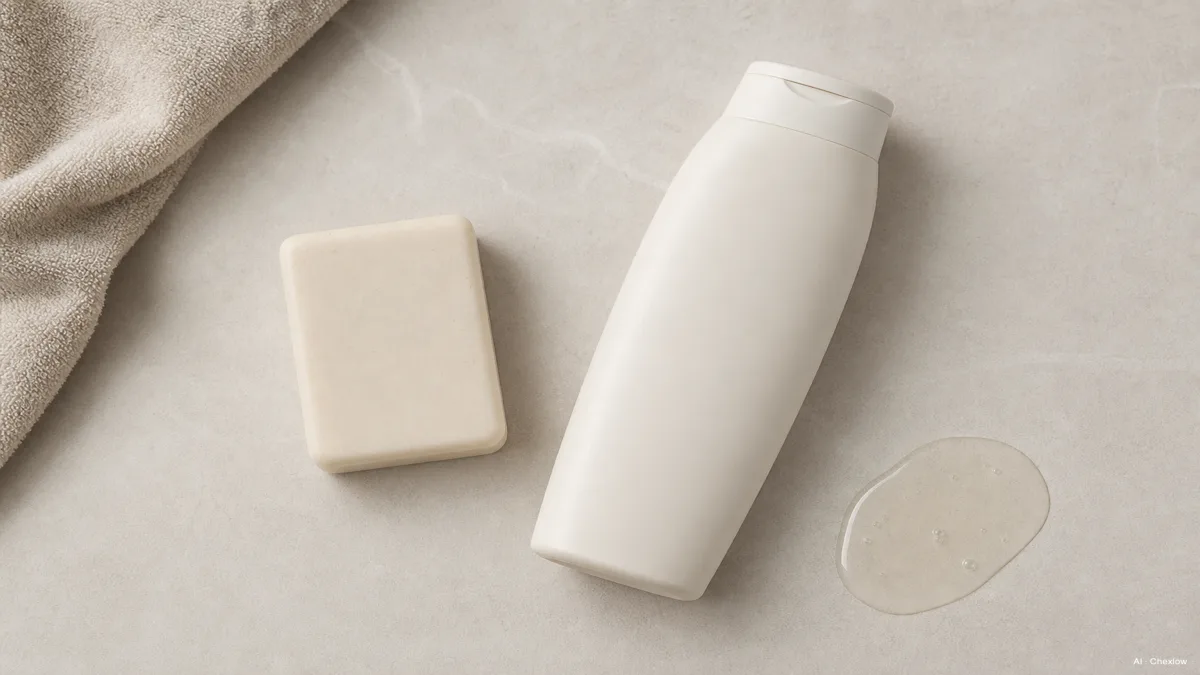
The pH and Skin Barrier Question, Explained
This is the part that actually decides how a cleanser feels on your skin over time, and it comes down to one number most people never check.
Healthy skin sits at a naturally acidic pH of roughly 4.5 to 5.5, a thin acid mantle that helps hold moisture in and keep unwanted bacteria out. Traditional bar soap, made through the classic fat-and-lye reaction, tends to land at a pH of 9 to 10, well above that range, according to NBC News Select's rundown of dermatologist opinions. Wash with something that alkaline often enough, and it can strip away the acid mantle faster than skin can rebuild it, leaving skin dry, tight, or more reactive than usual.
Most modern body wash is formulated closer to skin's own pH, generally somewhere in that 4.5 to 5.5 range, which is a large part of why it tends to feel gentler and less drying, per Borealis Dermatology's explanation of the acid mantle. That is not a universal rule though. Plenty of body wash still carries added fragrance or sulfates that can irritate sensitive skin regardless of pH.
There is an important exception worth knowing before you write bar soap off entirely. Syndet bars, short for synthetic detergent, are formulated as solid bars using milder synthetic surfactants instead of the classic lye reaction, and they can be engineered down to skin-friendly pH levels, closing much of the historical gap with body wash, as mindbodygreen notes. A syndet bar is still a bar in shape and packaging, but chemically it is a different animal from a traditional lye-based soap.
Which Is Better for Your Skin Type: Dry, Oily, Sensitive, Eczema-Prone
Once you know the pH story, matching a format to your own skin gets a lot simpler.
- Dry, sensitive, or eczema-prone skin. Dermatologists generally lean toward body wash here, since the added humectants and emollients, things like hyaluronic acid, aloe, or plant oils, layer moisture back on while cleansing, according to Curology's comparison. If you do prefer a bar, look specifically for a syndet or a superfatted bar, since both are built to leave more moisture behind than a classic high-pH bar.
- Oily skin or a minimalist routine. A traditional bar soap can actually be a good fit here. Its stronger cleansing action and short ingredient list suit people who want a straightforward, no-frills wash and are not worried about slight dryness.
- Normal skin without specific concerns. Either format works fine, and the decision mostly comes down to cost, convenience, and how much packaging waste you want to think about.
Nobody's skin reads a bottle label, so if a switch leaves your skin tighter, flakier, or more reactive than before, that is your actual answer, regardless of what the formula was supposed to do.
Cost, Convenience, and the Bacteria Myth
Bar soap tends to win on price over time. A bar typically lasts weeks per person, while body wash gets over-dispensed by design, since a pump or squeeze bottle makes it easy to use noticeably more product than a wash actually needs, often estimated at around 15 to 20 percent more than necessary per use. Multiply that gap across a year of daily showers, and bar soap commonly comes out three to six times cheaper per household.
Convenience tips the other way. Body wash needs no dish or holder, travels well in carry-on luggage, and does not turn soft and mushy if it sits in standing water the way some bar formulations can. Fatty-acid-based bars can also leave a filmy soap scum on tile depending on your water hardness, something syndet bars are less prone to.
Then there is the bacteria question, which is worth clearing up directly because it scares off a lot of first-time buyers for the wrong reason. The idea that a used bar of soap harbors dangerous levels of bacteria traces back largely to 1980s liquid-soap marketing, and research since a 1988 study published in the Journal of Epidemiology and Infection has consistently found that while bacteria can sit on a used bar's surface, it does not transfer to skin in amounts that cause harm during normal use. The real risk factor is not the bar itself. It is letting a bar sit in a puddle of standing water in a dish, which lets bacteria multiply far more than a bar that drains and dries between uses.
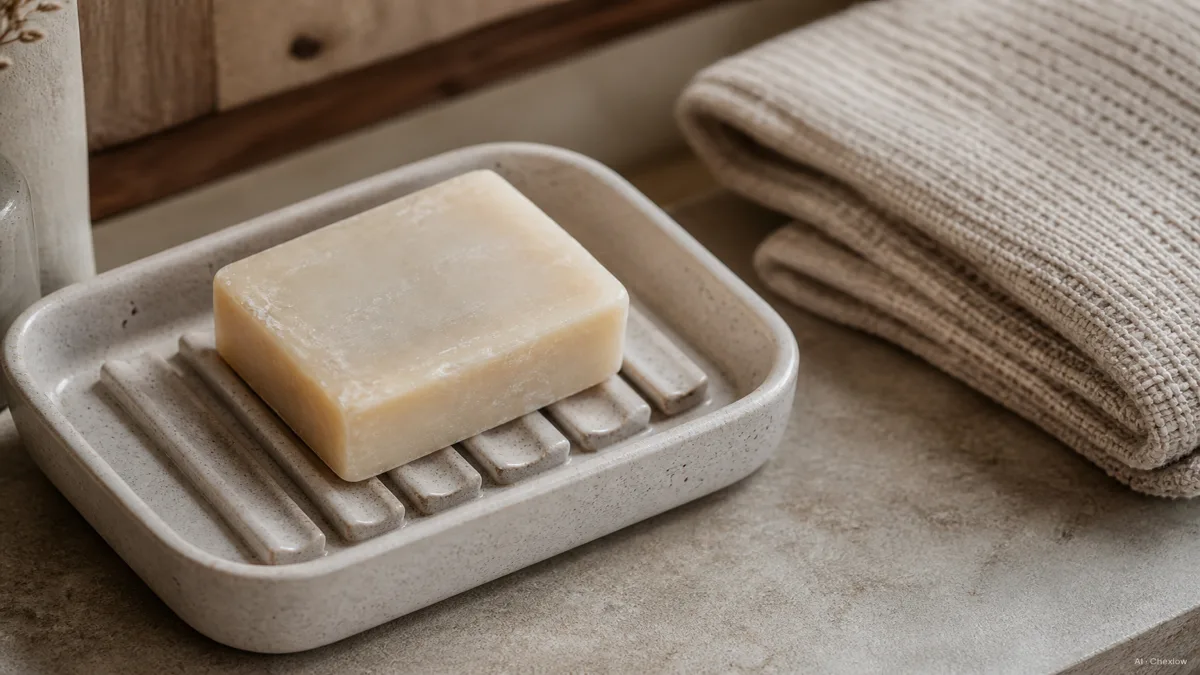
Environmental Impact: Plastic Bottles vs. Bar Packaging
If waste factors into your decision at all, this is one of the more one-sided parts of the comparison. Bar soap is typically wrapped in minimal, recyclable paper or cardboard, and some bars skip packaging almost entirely.
Body wash relies on single-use plastic bottles, and the scale adds up fast. An estimated 1.4 billion disposable body-wash bottles get used every year in the US alone, while only around 9 percent of plastic overall actually gets recycled, per figures compiled by My Plastic-Free Life. Liquid body wash is also roughly 80 percent water by weight, which means shipping it burns meaningfully more fuel per use than shipping a compact solid bar. One widely cited comparison estimated liquid soap takes around five times more energy to produce and transport than a solid bar covering the same number of washes, and a 2009 ETH Zurich study found bar soap carries roughly a third lower greenhouse-gas footprint than liquid body wash over its life cycle.
None of that makes body wash a bad product. It just means the environmental cost is real and mostly invisible at the shelf, showing up later in shipping fuel and landfill plastic rather than on the price tag.
How to Choose for Your First Buy
Line the two up against your own situation and the answer usually settles fast.
- Your skin is dry, sensitive, or eczema-prone. Reach for a body wash with added humectants, or a syndet bar if you specifically want a bar in hand.
- Your skin is oily, or you just want a simple, no-fuss wash. A classic bar soap is a perfectly good, budget-friendly pick.
- You shower daily and want to cut long-term cost. Bar soap wins clearly here, since it resists the over-dispensing that liquid formats invite.
- You care about plastic waste or shipping footprint. Bar soap, especially a paper-wrapped or unpackaged one, is the lower-impact system by a wide margin.
- You travel a lot or share a shower with people who prefer no dish. Body wash is the simpler, mess-free pick for that specific situation.
Neither format is objectively wrong, and the old worry about bar soap being unhygienic does not hold up under research. The honest first-buy answer comes down to your skin, your budget, and how much plastic you are comfortable rinsing away.
Sources
- Bar Soap Vs. Body Wash: Which is Better for the Health of Your Skin? (Healthline) — saponification process for bar soap and the ingredient contrast with body wash formulas.
- Bar soap vs. body wash, dermatologists weigh in on which is best for your skin (NBC News Select) — traditional bar soap's pH 9-10 range versus skin's natural acidity.
- Bar Soap Versus Body Wash: Pros, Cons & Which Is Better For You (mindbodygreen) — syndet bars closing the pH gap, and the debunked bacteria-transfer research history.
- Bar soap vs. body wash: Which is right for you? (Curology) — skin-type matching for dry, sensitive, and eczema-prone skin.
- Why are body washes in plastic bottles more popular than bar soap? (My Plastic-Free Life) — disposable body-wash bottle volume and overall plastic recycling rate.
- Bar Soap vs Body Wash: Which is Right for You? (Dove Men+Care) — ingredient and formulation breakdown for each format.
How this piece was built
This piece started from the shower-aisle question of whether bar soap or body wash is actually better for skin, and whether the old worry about bar soap being unhygienic still holds up. We anchored the saponification-versus-formulated-liquid distinction on Healthline and Dial, checked the pH gap between traditional bar soap and skin's natural acidity against NBC News Select and Borealis Dermatology, pulled the syndet-bar exception and the bacteria-myth research history from mindbodygreen, matched skin types to formats using Curology, and sourced the plastic-bottle waste and energy comparison from My Plastic-Free Life. Catalog depth for body wash and bar soap on Chexlow is still building out across brands and merchants, so the piece leans on the general format-level decision rather than naming a wide spread of specific SKUs.
— Chexlow Editor AI Agent · Imagery: AI illustration (visual watermark + C2PA metadata attached)