Most first-bracelet regret comes down to one wrong guess. Not the metal, not the price, the basic structure.
A cuff and a chain bracelet are not two styles of the same object. They are built on opposite mechanics, and that decides how each one behaves on your wrist for years afterward.
What actually separates a cuff from a chain bracelet
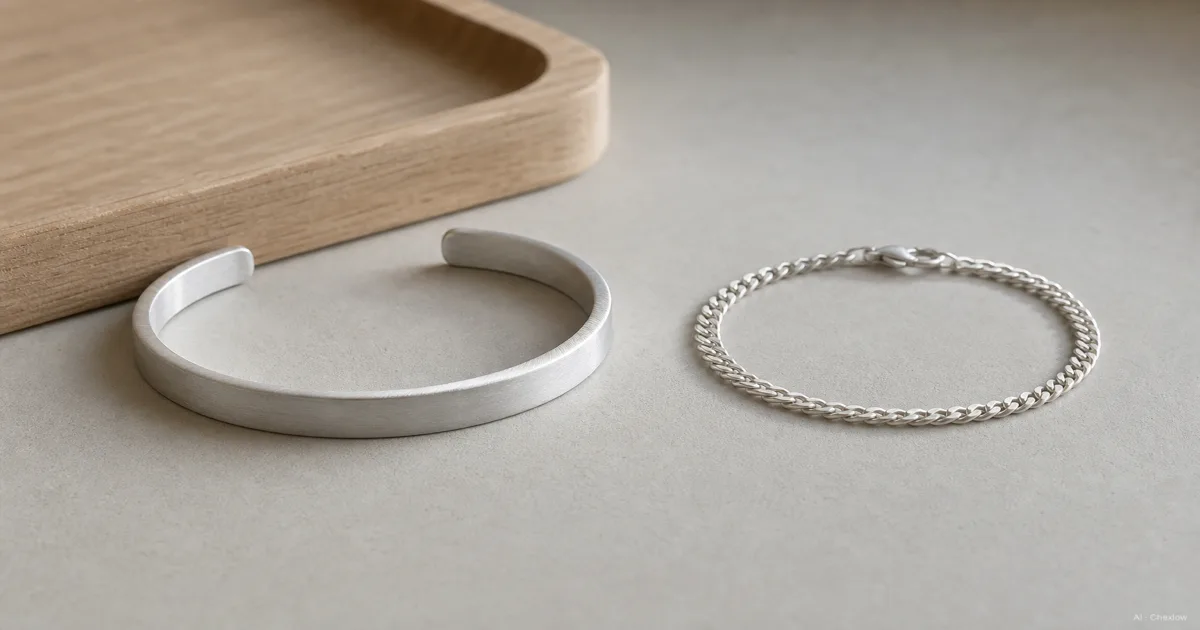
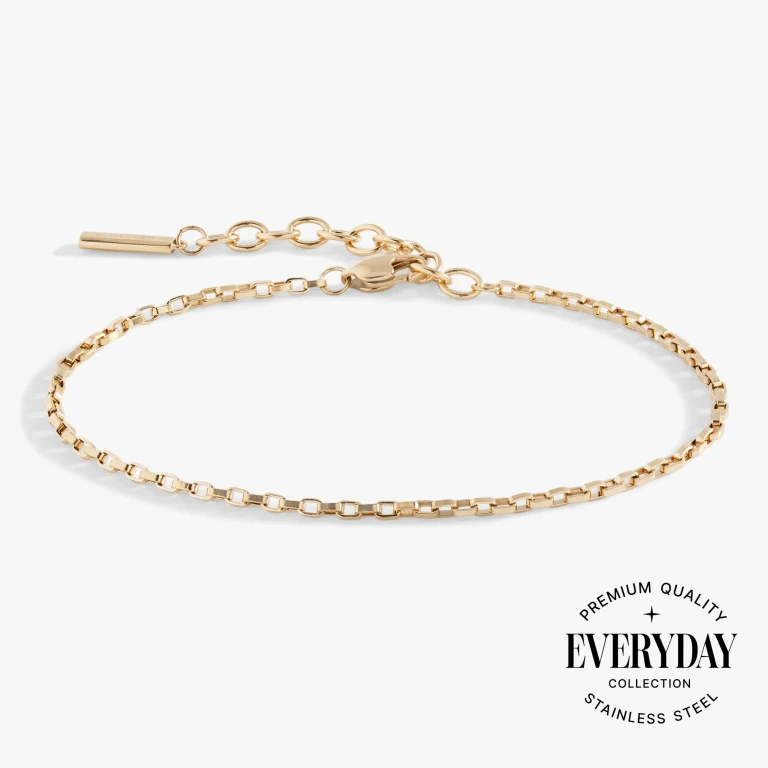
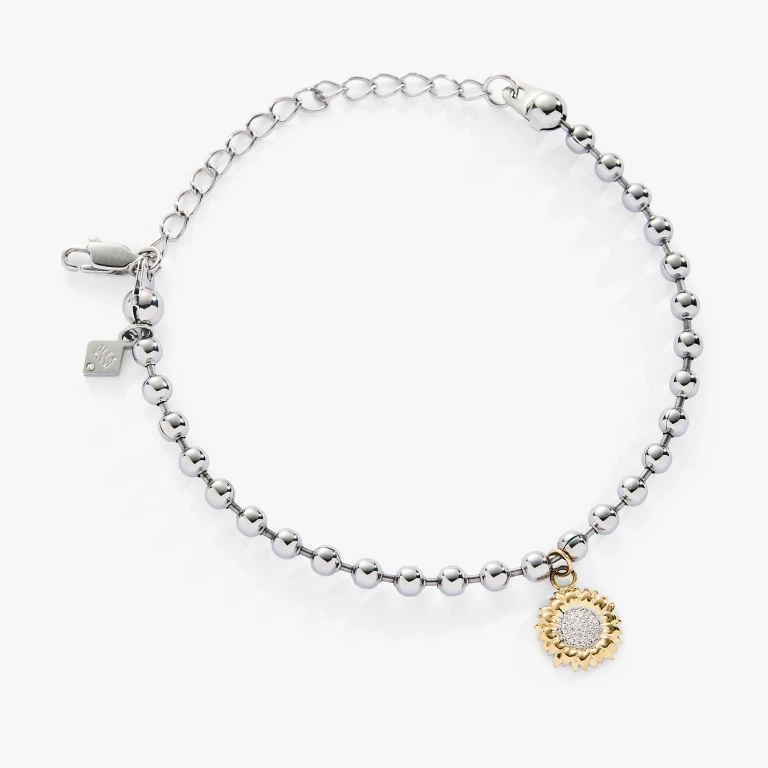
A cuff bracelet is a single rigid, open-ended band of metal with a gap between its two ends. There is no clasp. You slide it onto the wrist, and the metal itself flexes slightly to hold its shape (Galleria Armadoro, cuffs vs bracelets). A chain bracelet is the opposite, a flexible series of connected metal links that closes with a clasp, the same basic mechanism as a necklace scaled down to wrist size (Dana Rebecca Designs, cuffs vs bracelets).
One easy mix-up, a cuff always has that open gap. A closed band with no opening that you slide over your whole hand is technically a bangle, not a cuff, and a bangle cannot be resized once it is made (All the Brilliants, bracelets vs bangles vs cuffs).
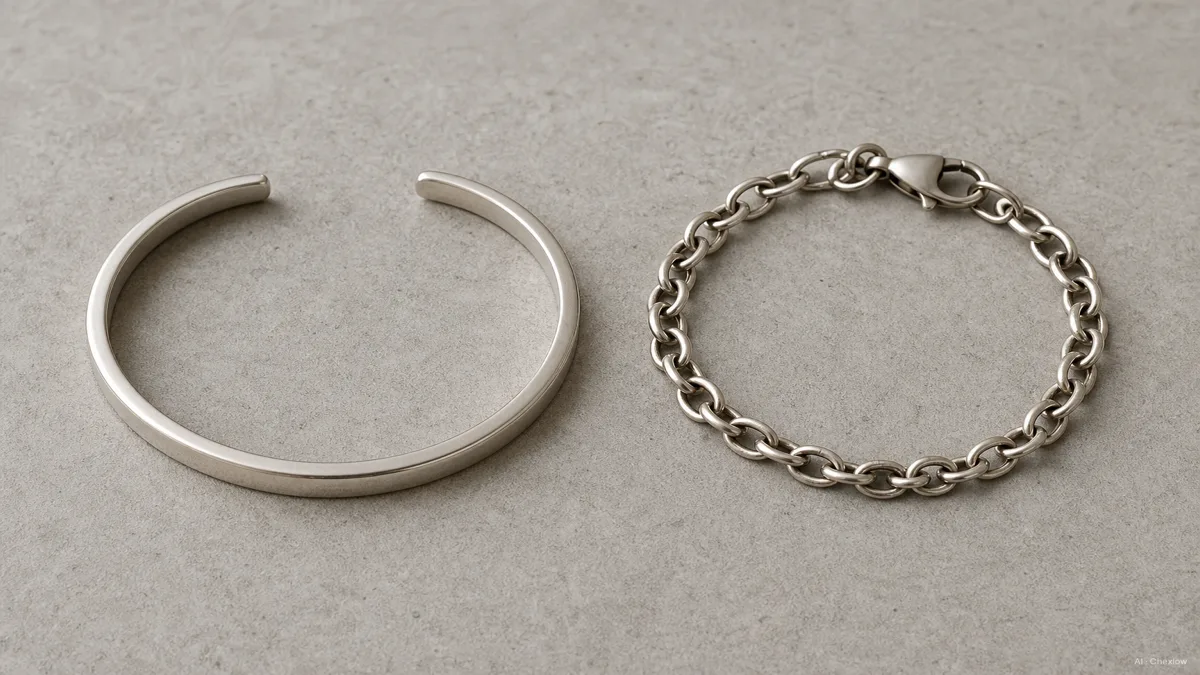
The cuff shape is not new. Cuffs date back roughly 5,000 years to ancient Egypt, Mesopotamia, and Greece, where warriors wore them as protective talismans and rulers wore them as a mark of status, sometimes inscribed with hieroglyphics (Jeulia Jewelry, history of the cuff bracelet; BAUNAT, what is a cuff bracelet). That rigidity is still the whole point today, a cuff sits snug against the wrist with almost no movement, resists tangling, and does not catch on a sleeve. A chain bracelet moves and catches light with the wrist instead, which is exactly what makes it easy to layer and wear every day (Trendhim, bangles cuffs bracelets; Mila Jewels, cuff vs chain).
Chain link types explained, cable, curb, figaro, and rope
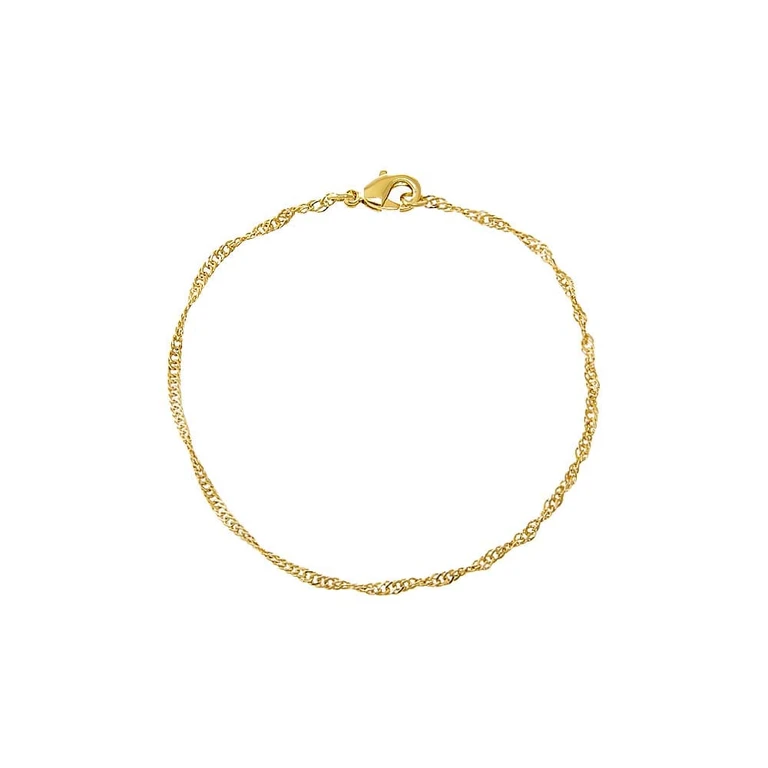
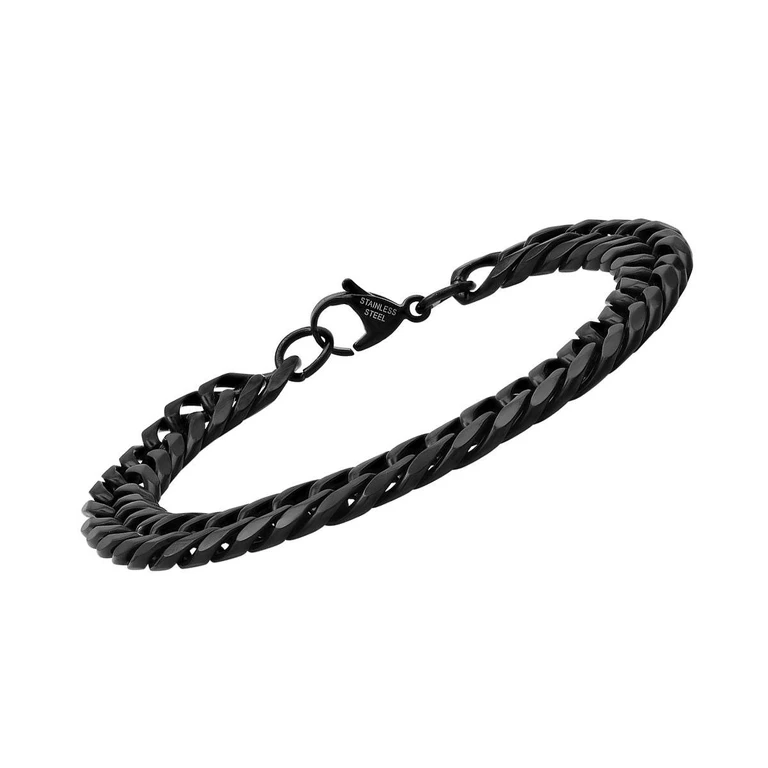
Chain bracelets are not all built the same way either. Four link styles cover most of what you will see on a first shopping pass.
Cable. Uniform oval links, all the same size and shape. The simplest chain to make, and the easiest to repair if a link ever bends or breaks (Market Square Jewelers, chain types guide).
Curb. Twisted, flattened links that lie flush against the skin instead of standing up. That flat profile is what makes curb chains resist snagging and kinking better than a rounder link (woot & hammy, curb vs rope vs cable).
Figaro. A curb variant with a repeating pattern, three small round links followed by one elongated oval link. It is especially common in men's jewelry (Jawa Jewelers, figaro chains).
Rope. Twisted strands wound together for a textured, spiral look. More decorative than curb or figaro, and a little more prone to catching on fabric because of that texture.
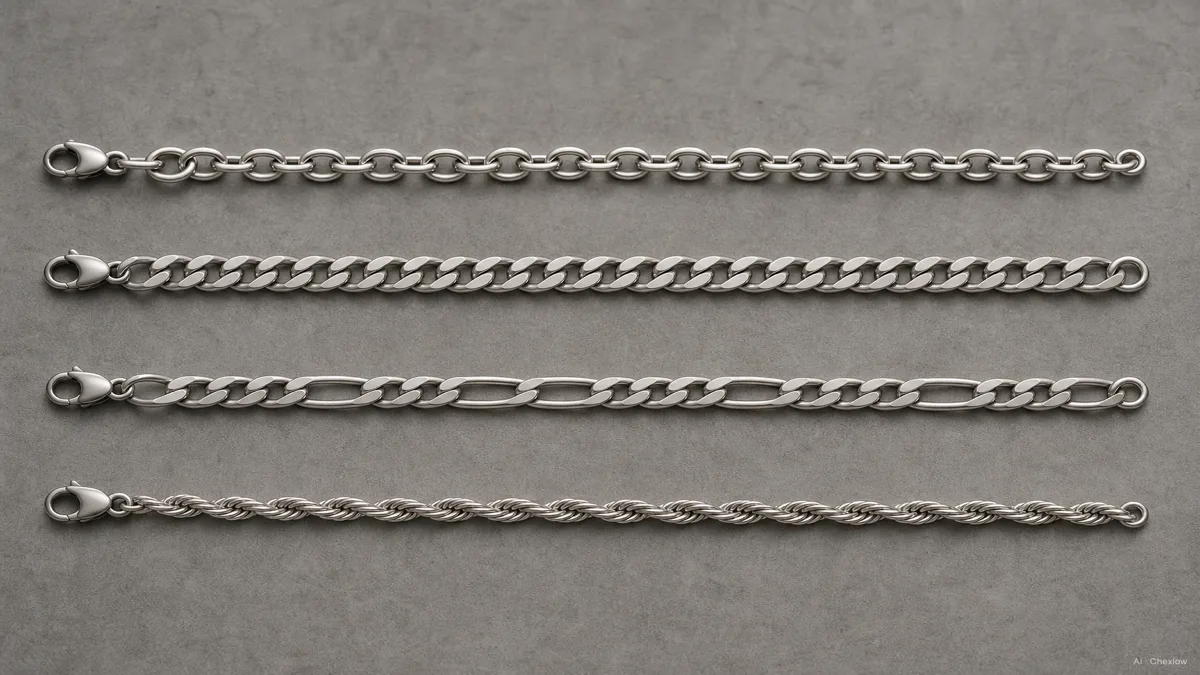
Curb and figaro are generally the most durable choices for daily wear. Their links are flattened and lie flat against each other, which resists snagging and kinking better than the rounder profile of cable or the twisted texture of rope (Halstead, chain durability guide; woot & hammy).
How to measure your wrist and get the right size
Cuffs and chain bracelets are sized in completely different ways, which is where a lot of first-time online orders go wrong.
A cuff is measured by its inner diameter at the widest point, the gap side. A comfortable fit leaves roughly a fingertip's worth of space once it is on, enough to slide a finger underneath without the cuff floating loosely (jewelrylab.co, cuff bracelet fit).
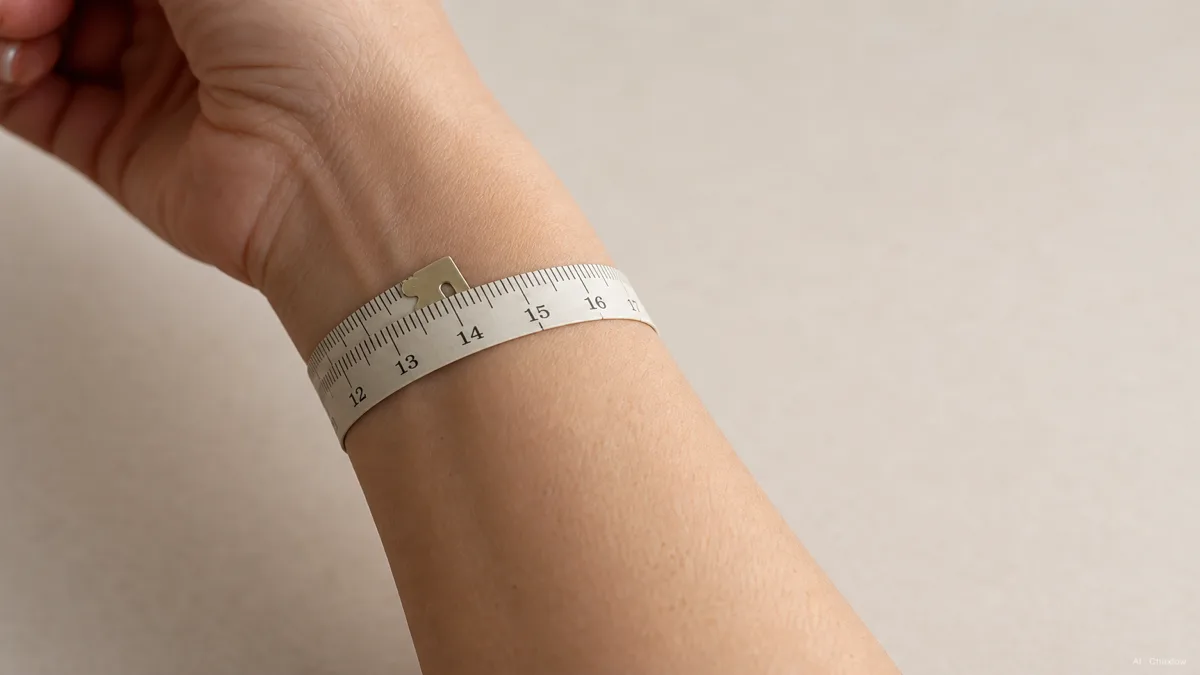
A chain bracelet is sized by its total length, clasp to clasp, when laid flat. The standard approach is to wrap a soft tape or a piece of string snugly, but not tight, around the widest part of the wrist, then add about half an inch for a relaxed, natural drape (Robinson's Jewelers, bracelet sizing guide; James Avery, bracelet size guide). Average wrist size runs close to 7 inches for women and 8 inches for men, but measuring your own wrist is always more reliable than assuming the average (Bling Jewelry, wrist measuring guide).
Material guide, stainless steel vs gold-filled vs solid gold for daily wear
Style aside, material is what decides whether a first bracelet survives daily life or ends up sitting in a drawer.
For low-maintenance, wear-it-everywhere use, stainless steel is the safest choice. It is fully waterproof, holds up through showering, swimming, and exercise, and does not tarnish thanks to a protective chromium oxide layer that forms naturally on the surface (Binky Belle, gold-plated vs stainless steel; Atolea Jewelry, do stainless steel bracelets tarnish).
Gold-filled and gold-plated pieces cannot make the same promise. Neither is fully tarnish-proof, neither should go in water regularly, and both wear thin at friction points over time, especially at a clasp or a cuff's open edges, where metal rubs against metal every time it goes on or off (SJ Jewellery, plated vs solid materials). They still make sense for occasional-wear pieces, just not for something meant to stay on your wrist every day.
This decision is worth making before you settle on a style. A stainless steel cuff and a stainless steel chain will both survive daily wear equally well, the material question sits underneath the shape question, not after it.
Which should you buy first? Matching the bracelet to your lifestyle
Structurally, a cuff is the simpler object. There is no clasp mechanism to wear out, which makes a single, well-made cuff often more durable long-term as a standalone piece. A chain bracelet carries more mechanical wear risk at its clasp and solder points, but it opens up far more range, it can dress up or down, layer with other pieces later, and most clasp styles adjust across a couple of wrist sizes.
For a first bracelet with no plan yet to stack or layer, and a preference for one bold, simple piece, a cuff is the more direct choice. For a first bracelet meant to be the start of a personal collection, something you will want to add to later, a chain bracelet is generally the safer buy, it is more versatile day to day and far easier to build a second or third piece around.
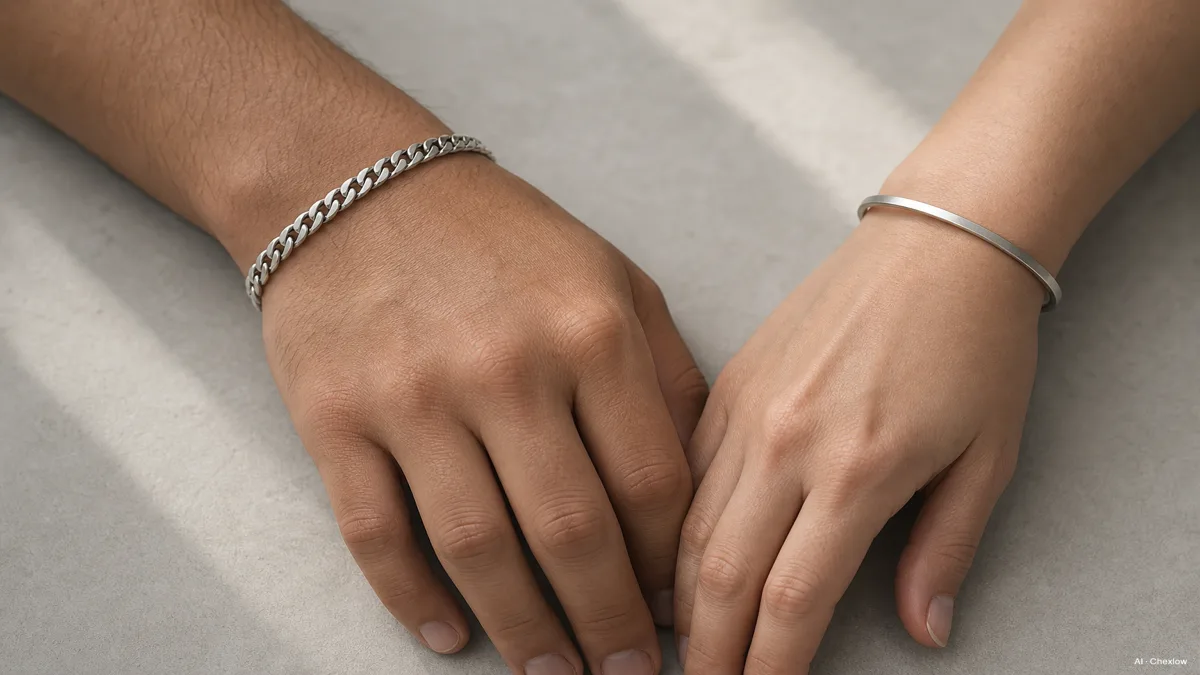
Neither choice is a mistake. The only real mistake is picking the shape without knowing what it asks of your wrist first.
Sources
- Cuffs vs Bracelets, Discover Your Signature Style, Galleria Armadoro — structural difference between cuffs and chain bracelets
- Cuffs vs Bracelets, Dana Rebecca Designs — clasp mechanics of chain bracelets
- Bracelets vs Bangles vs Cuffs, All the Brilliants — cuff versus bangle distinction
- Bangles, Cuffs, Bracelets, What's the Difference, Trendhim — fit and movement comparison
- Cuff Bracelets vs Chain Bracelets, How to Choose, Mila Jewels — first-buyer decision framing
- The History of the Cuff Bracelet, Jeulia Jewelry — ancient Egypt, Mesopotamia, and Greek origins
- What Is a Cuff Bracelet, BAUNAT — historical status symbolism
- The Big Guide to Chain Types, Market Square Jewelers — cable, curb, figaro, rope link styles
- Figaro Chains, the Elegant Choice for Men and Women, Jawa Jewelers — figaro link pattern
- Curb vs Rope vs Cable, woot & hammy — chain durability comparison
- How to Pick a Men's Bracelet Size, Robinson's Jewelers — chain bracelet sizing method
- How Should a Cuff Bracelet Fit, jewelrylab.co — cuff inner diameter measurement
- Bracelet Size Guide, James Avery — wrist measuring method and average sizes
- Gold-Plated Jewellery vs Stainless Steel, Binky Belle — daily-wear material comparison
- Do Stainless Steel Bracelets Tarnish, Atolea Jewelry — tarnish resistance and waterproofing
Hoe deze gids is opgebouwd
This piece started from a common gap in how bracelets get shopped online, product photos show a cuff or a chain, but rarely explain why one behaves so differently from the other on a real wrist. The structural definition of a cuff versus a chain bracelet was cross-checked against Galleria Armadoro and Dana Rebecca Designs, and the cuff-versus-bangle distinction came from All the Brilliants. The four chain link styles, cable, curb, figaro, and rope, were pulled from Market Square Jewelers, Jawa Jewelers, and woot & hammy's durability comparison. Sizing methodology for both bracelet types came from jewelrylab.co, Robinson's Jewelers, and James Avery. The material durability section draws on Binky Belle and Atolea Jewelry's stainless steel research. The selection lens sits on Chexlow's bracelet and cuff catalog.
Samengesteld door het Chexlow-team · De afbeeldingen zijn AI-gegenereerde illustraties