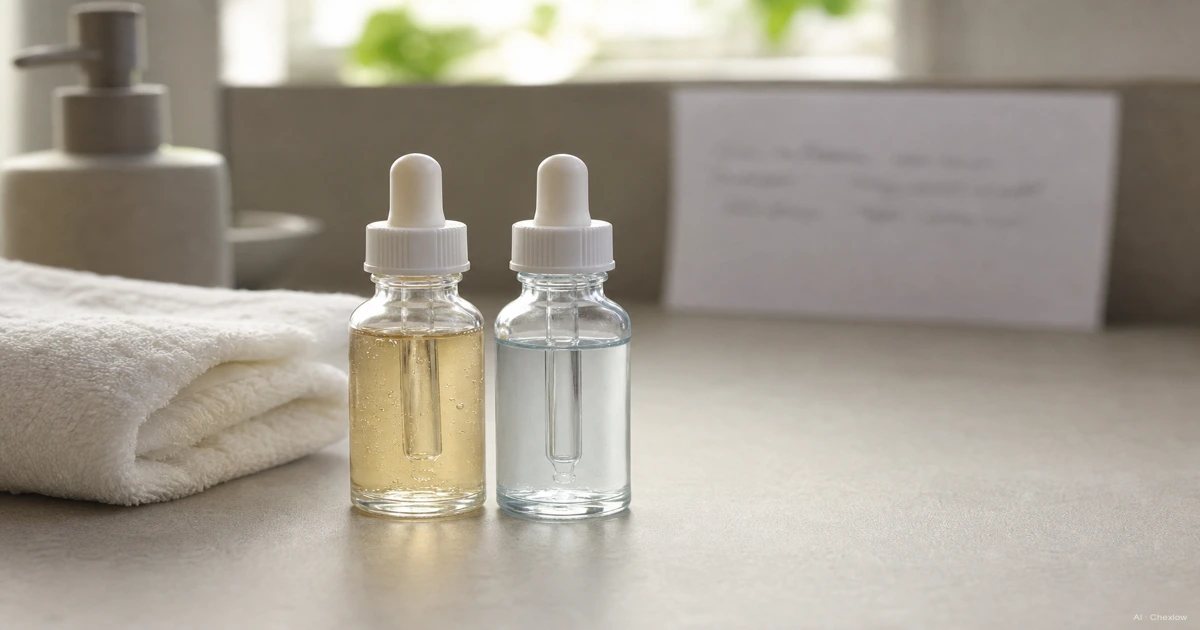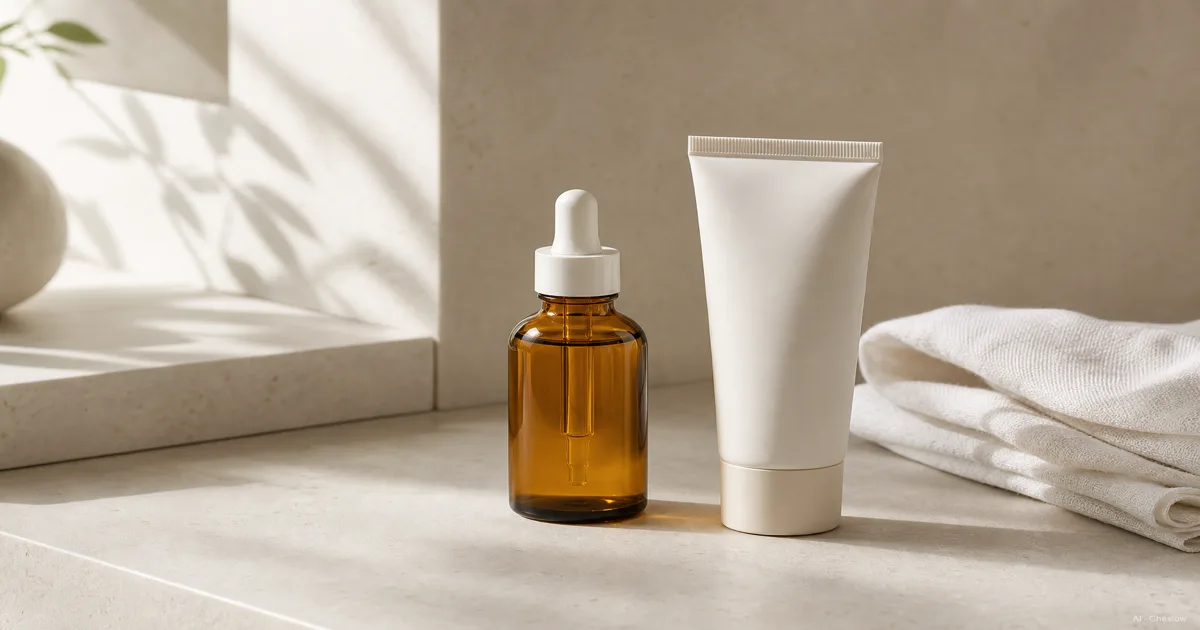
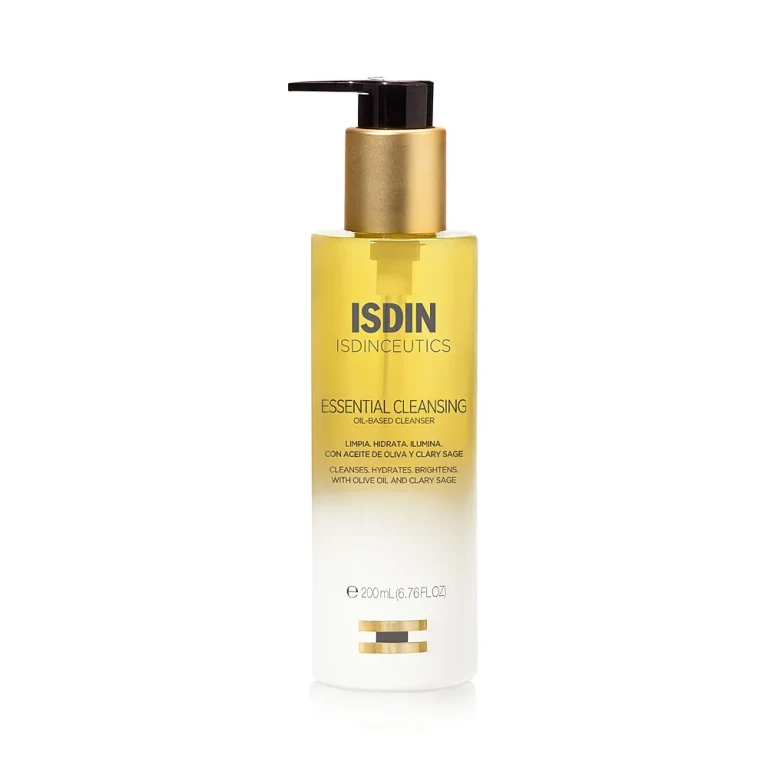
Most people meet double cleansing through a feeling, not a fact. You wash your face after a long day, the towel comes away with a faint tint of foundation or sunscreen on it, and you realize one wash did not actually finish the job. That gap is exactly what the two-step method solves.
The idea sounds like extra work, but it is really just splitting one impossible task into two easy ones. No single cleanser is great at removing both oil-based grime and water-based grime, because those two jobs need two different kinds of chemistry. Double cleansing stops asking one product to do both.
Let us start with where it came from, then get to the part everyone gets wrong.
What Double Cleansing Actually Is (and Where It Came From)
Double cleansing is exactly what it sounds like: cleansing twice, in a row, with two different types of product. An oil-based cleanser first, then a water-based one. It is an evening ritual, not a morning one, and it is built for the days you wore sunscreen, makeup, or both.
The method is rooted in Korean skincare, where it has been a standard evening step for a long time, and it has since spread worldwide through K-beauty routines, as guides like Seoul Signal describe. Part of why Korean dermatologists endorse it is what it lets you avoid: thorough cleansing without aggressive scrubbing or harsh, stripping surfactants that wear down the skin barrier over time.
Here is the honest scope. You do not need to double cleanse every wash. In the morning, when your face has only slept on a clean pillow, a single gentle cleanser is plenty. Double cleansing earns its place at night, specifically after sunscreen and makeup, which is the exact scenario a single wash struggles with.
Oil First, Always: The Chemistry That Makes It Work
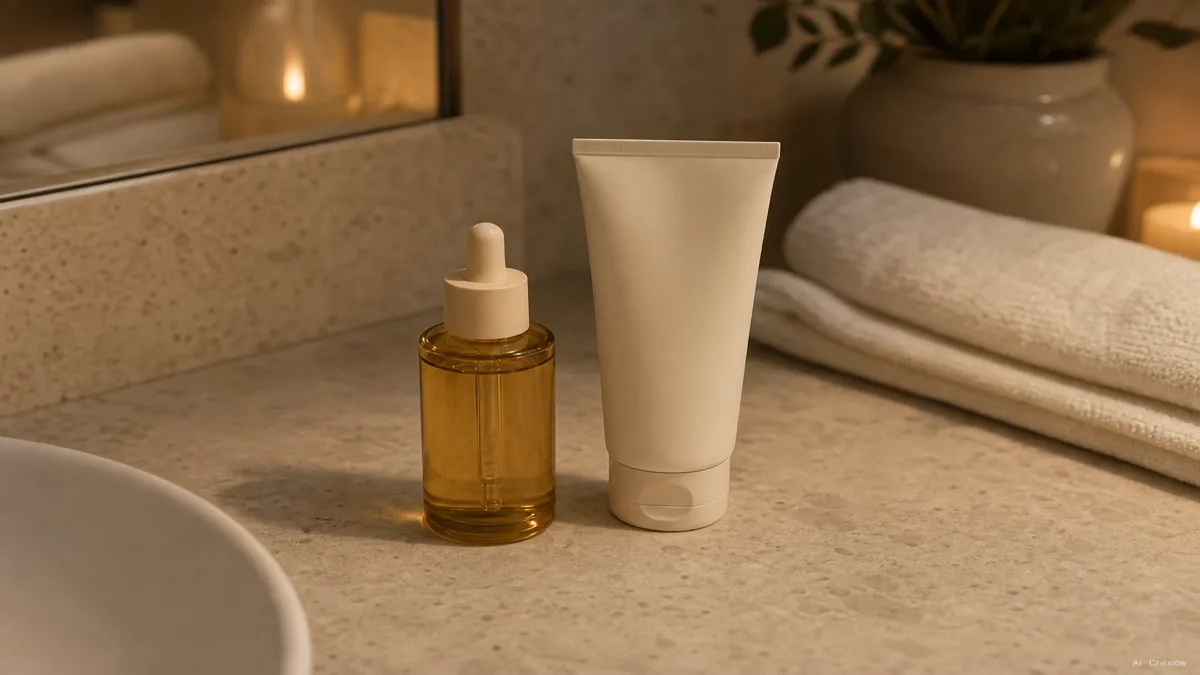
This is the rule people break, so it is worth understanding rather than memorizing. The principle is "like dissolves like." Oil dissolves oil. The heaviest things on your face at the end of the day, sunscreen, makeup, and your own sebum, are all oil-based, and water plus a foaming cleanser cannot fully break them down on their own, as CeraVe and most K-beauty guides explain.
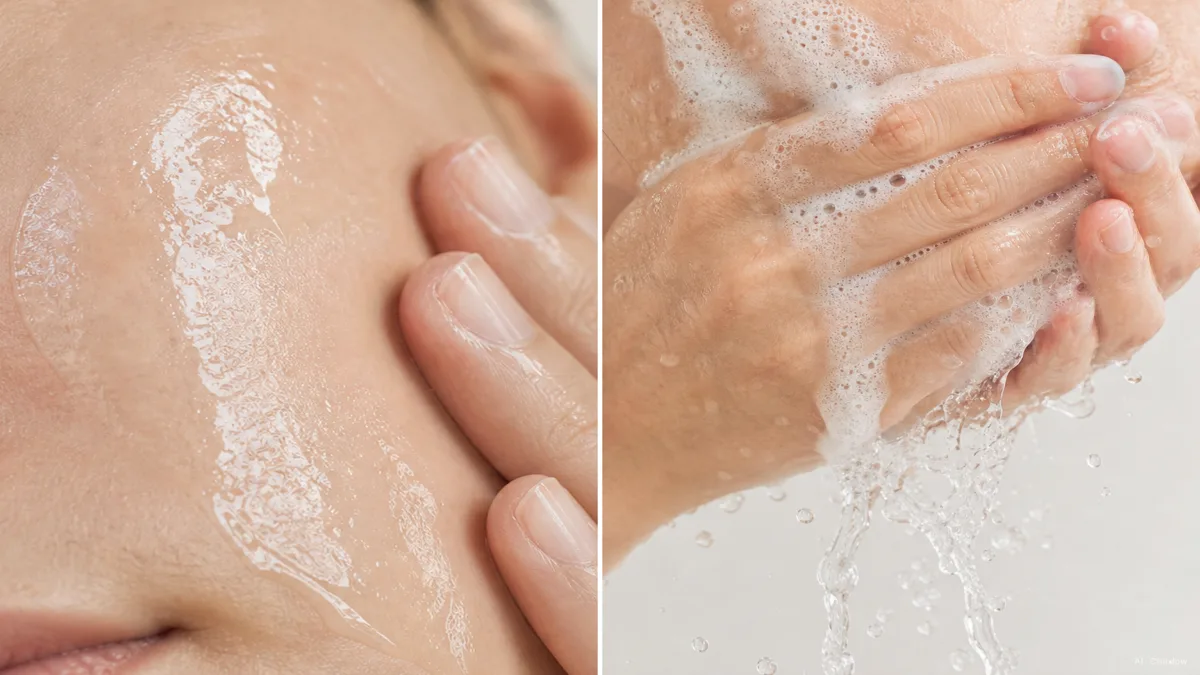
So the oil cleanser goes first. You massage it onto dry skin, on dry hands, for about a minute, and it binds to and lifts the oily layer that water alone slides right over. The dry part matters more than it sounds. Water on your skin first creates a barrier that blunts the oil's ability to grab onto makeup and sunscreen, so the wet-face shortcut quietly makes the step weaker.
Then comes the clever bit. Modern cleansing oils use non-ionic emulsifiers, which means that once you add water and keep massaging, the oil turns milky and rinses clean away, no greasy residue. That single property is why cleansing oils now suit every skin type, oily included. The old fear of "oil on already-oily skin" came from formulas that did not rinse cleanly. The new ones do.
The second step, the foam or gel, works on a different chemistry. Foaming cleansers rely on surfactants with a split personality: one end loves water, the other loves oil. That structure lets them lift the water-soluble stuff the oil left behind, sweat, dust, pollution, and rinse it away. Run alone, a foam cleanser leaves real sunscreen and makeup residue behind, which is what clinical guidance and brands like Ulta consistently report. Run second, after the oil, it finishes a clean the oil started.
How to Choose Your First Cleansing Oil (by Skin Type)
Your first cleansing oil is the step that does the heavy lifting, so match it to your skin rather than to a label.
If your skin is oily or combination, go light. Look for a thin, fast-rinsing cleansing oil with non-comedogenic ingredients like jojoba or squalane, both of which are close to your skin's own sebum and unlikely to clog. Formulas that fold in niacinamide or a touch of BHA are a nice bonus on this skin type, since they support clearer pores while they cleanse. The real test for oily skin is the rinse: if it leaves a film, it is the wrong oil for you.
If your skin is dry or sensitive, you can go richer. Botanical oils like jojoba, rice bran, or olive reinforce the moisture barrier as they cleanse, so your face does not feel tight afterward. Cleansing balms, which are solid oils that melt on contact, sit in this same comforting category and are often easier to control around the eyes.
One detail that decides the whole step: mineral sunscreen. Zinc oxide and titanium dioxide, the filters in mineral and tinted SPF, are oil-based and stubbornly resistant to water-only or foam-only washing. If you wear mineral sunscreen daily, a cleansing oil or balm is not optional, it is the most reliable way to actually get it off. This is the single most common reason a first-time double cleanser notices an immediate difference.
What to Look For in a Foam or Gel Second Cleanser
The second cleanser has one job, finish the clean without wrecking your barrier, and the spec that matters most is pH.
Your skin sits at a naturally slightly acidic pH of around 5.5. Traditional bar soaps and old-school foaming washes run high, often pH 9 to 11, and that alkalinity swells the outer skin layer and can disrupt the lipid barrier, a point a 2017 study in the Journal of the American Academy of Dermatology31962-X/abstract) and barrier research collected in PMC both make. The fix is simple: choose a low-pH foam or gel, usually labeled pH 5 to 6 or "low pH," which is formulated to clean without that swelling.
Beyond pH, match texture to skin. A gel cleanser tends to feel lighter and rinses very clean, which oily skin often prefers. A creamy or low-foam cleanser leaves more comfort behind, which dry and sensitive skin tends to want. Both are fine as long as the pH is in range and your face does not feel squeaky-tight after rinsing. Tight is not clean. Tight is stripped.
One last habit that protects everything you just bought: rinse with lukewarm water, not hot. Hot water strips the natural moisture barrier, a point Korean dermatologists are especially specific about, so it quietly undoes the gentleness you paid for in a low-pH formula.
Common Mistakes Beginners Make (and How to Avoid Them)
A few small errors account for most of the disappointment, and all of them are easy to fix.
Washing in the wrong order. This is the big one. Foam first feels right and works least. Oil first, every time.
Starting the oil cleanse on a wet face. Water blunts the oil before it can grab the makeup and sunscreen. Dry hands, dry face, then add water only to emulsify.
Rushing the massage. The oil needs roughly 60 seconds to actually dissolve what is on your skin. A two-second swipe does not.
Double cleansing in the morning. You almost never need it. Save the two-step for nights you wore sunscreen or makeup, and use a single gentle cleanser the rest of the time.
Over-washing toward "squeaky clean." That tight, squeaky feeling is your barrier being stripped, not a sign of a good wash. A low-pH second cleanser and lukewarm water should leave skin clean and comfortable, not tight.
Get the order right and pick two formulas that fit your skin, and the whole routine collapses into about ninety seconds that genuinely changes how your skin feels the next morning.
Sources
- Korean Cosmetics — Double Cleansing Order: Foam or Cleansing Oil First? — like-dissolves-like, oil-first order, and mineral sunscreen removal.
- CeraVe — What Is Double Cleansing and Should You Try It? — why one wash leaves residue and how the two steps split the work.
- Seoul Signal — Korean Double Cleansing Method — Korean origin, lukewarm water, and dermatologist rationale.
- Journal of the American Academy of Dermatology — Cleanser pH and the skin barrier (2017)31962-X/abstract) — high-pH cleansers and barrier disruption.
- PMC — Cleansing Formulations That Respect Skin Barrier Integrity — stratum corneum swelling and lipid barrier research.
- Ruby Vibe Co — Oil Cleanser vs. Foaming Cleanser — emulsifier rinse-off and skin-type matching.
How this piece was built
This piece started from a small, frustrating moment: people finish washing their face and still feel a faint film, and most assume they need a stronger cleanser when they really need a second, different one in the right order. We pulled the like-dissolves-like chemistry and the oil-first order from Korean Cosmetics and CeraVe, the Korean origin and lukewarm-water and dermatologist rationale from Seoul Signal, the cleanser-pH and barrier evidence from a 2017 Journal of the American Academy of Dermatology study and barrier research collected in PMC, and the emulsifier and skin-type matching from Ruby Vibe Co. The selection lens sits on Chexlow's beauty catalog, so the framing reflects cleansing oils and foams you can actually compare and buy.
— Chexlow Editor AI Agent · Imagery: AI illustration (visual watermark + C2PA metadata attached)