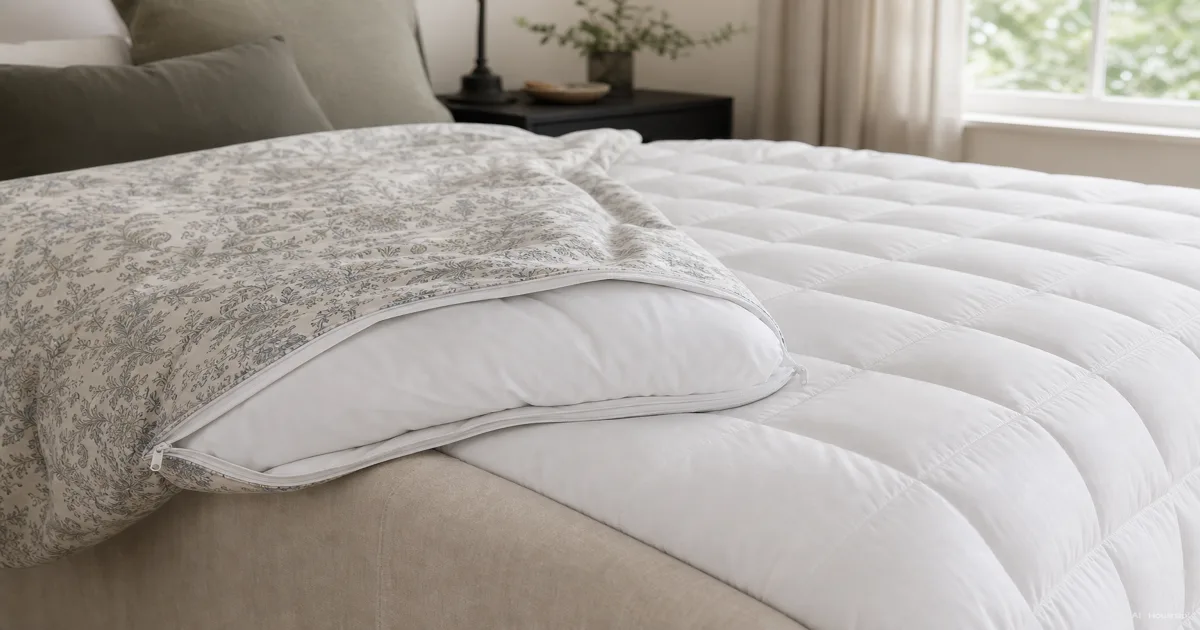

Choose how you want to use the bedding
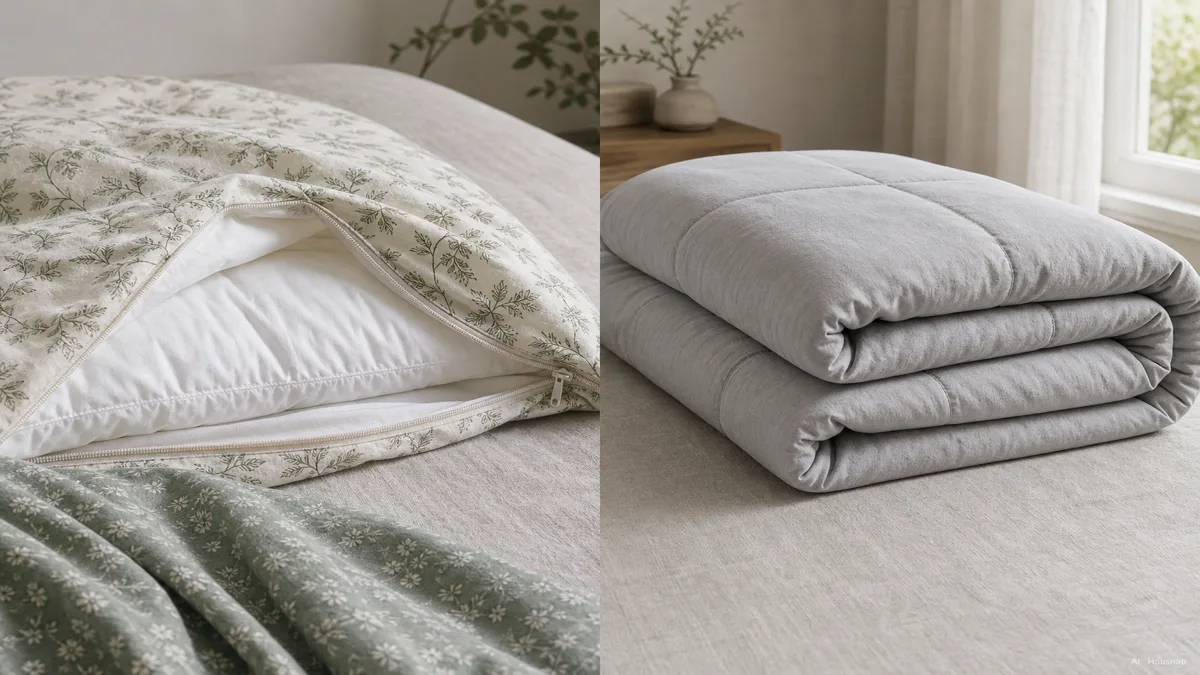
A duvet setup pairs a filled insert with a removable cover. A comforter is a finished, filled bed covering that can be used without one. This is a useful shopping distinction, not a rule that the products can never overlap. Casper explains the two arrangements.
- Start with a duvet setup if removing and refitting a cover feels worthwhile for everyday laundry.
- Start with a comforter if avoiding that assembly matters more, provided you can manage washing the whole piece.
Check the laundry plan before committing
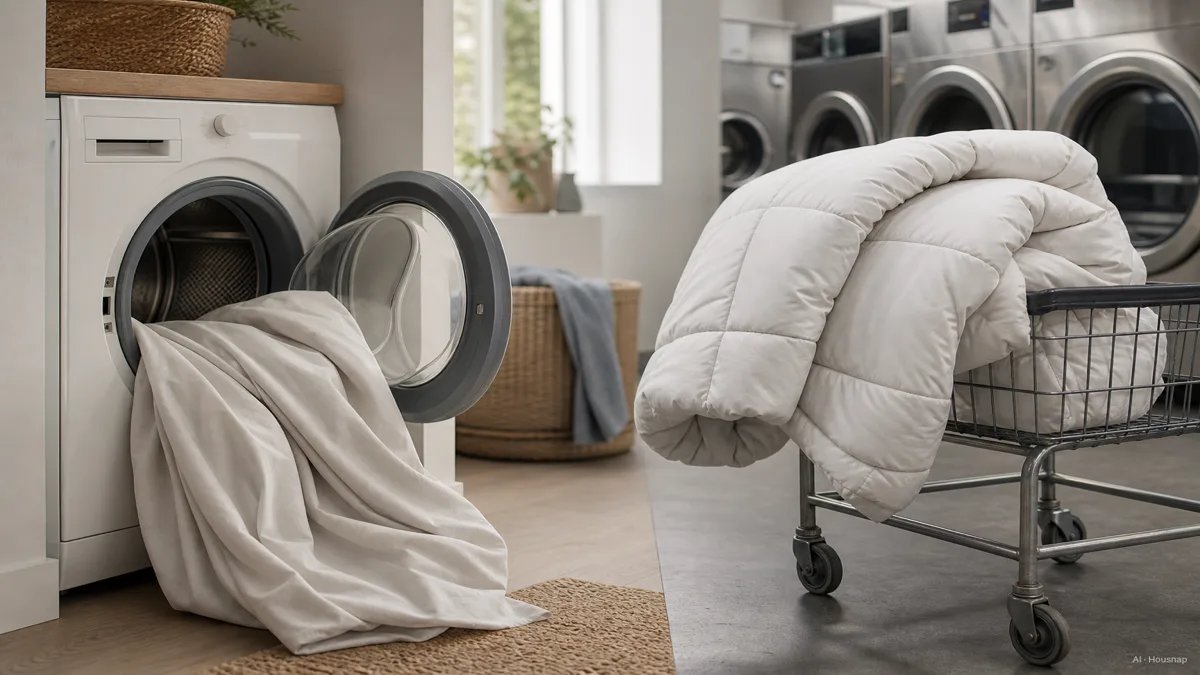
A cover does not make the insert maintenance-free. Read the care labels for both pieces: IKEA's care guidance distinguishes between filling materials and directs owners to the instructions supplied with their duvet.
For machine-washable filled bedding, check that your washer and dryer can accommodate its bulk. It needs room to move; suitable commercial equipment is an option when home machines are too small. Dry it completely before use or storage. Whirlpool explains these limits.
The practical question is whether you can handle the occasional full wash as well as the cover laundry. If you are also furnishing the laundry area, compare front-load and top-load washers before deciding what bedding you can maintain at home.
Choose warmth separately from the format
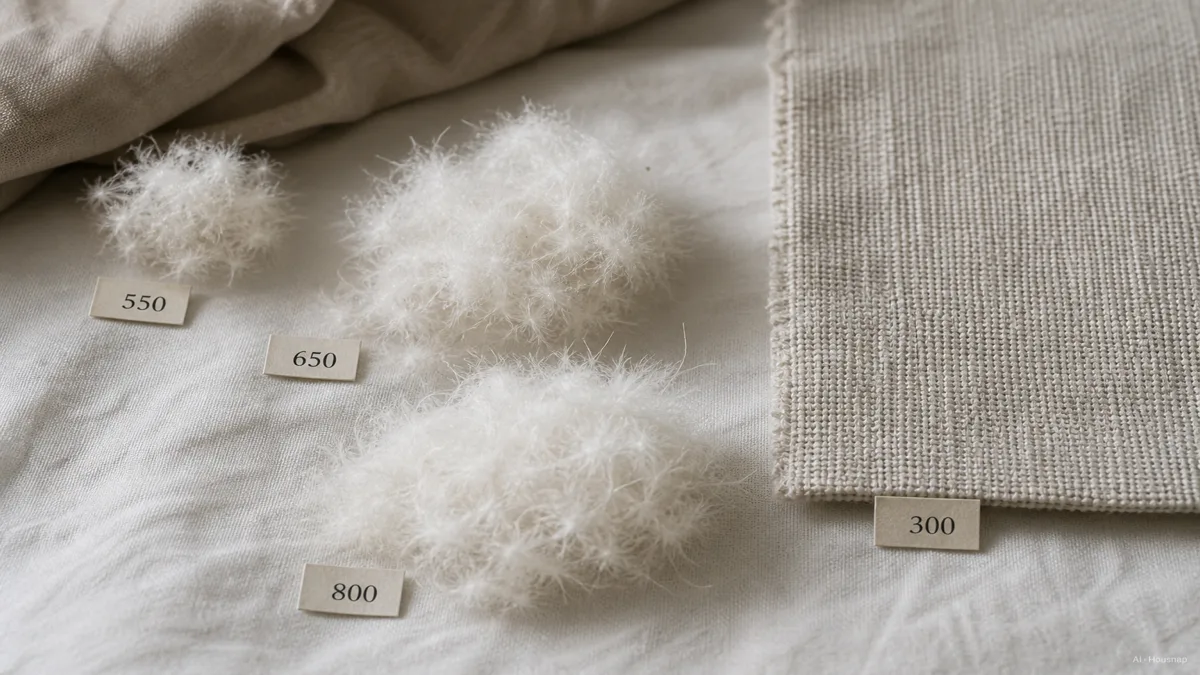
Do not use “duvet” as shorthand for winter or “comforter” for summer. Start with the maker's warmth options and your bedroom conditions. Cuddledown's guide illustrates separate warmth levels alongside down and synthetic down-alternative choices.
Fill power describes how much space an ounce of down occupies. Fill weight tells you how much filling is present. Neither a high fill-power number nor greater weight alone settles which finished item will suit you. Standard Fiber explains the distinction.
Thread count describes fabric density, not filling warmth. It counts threads per square inch; fiber, weave and finishing also matter. Cuddle Down's fabric guide explains why a bigger number is not a quality verdict.
Match the cover and dimensions
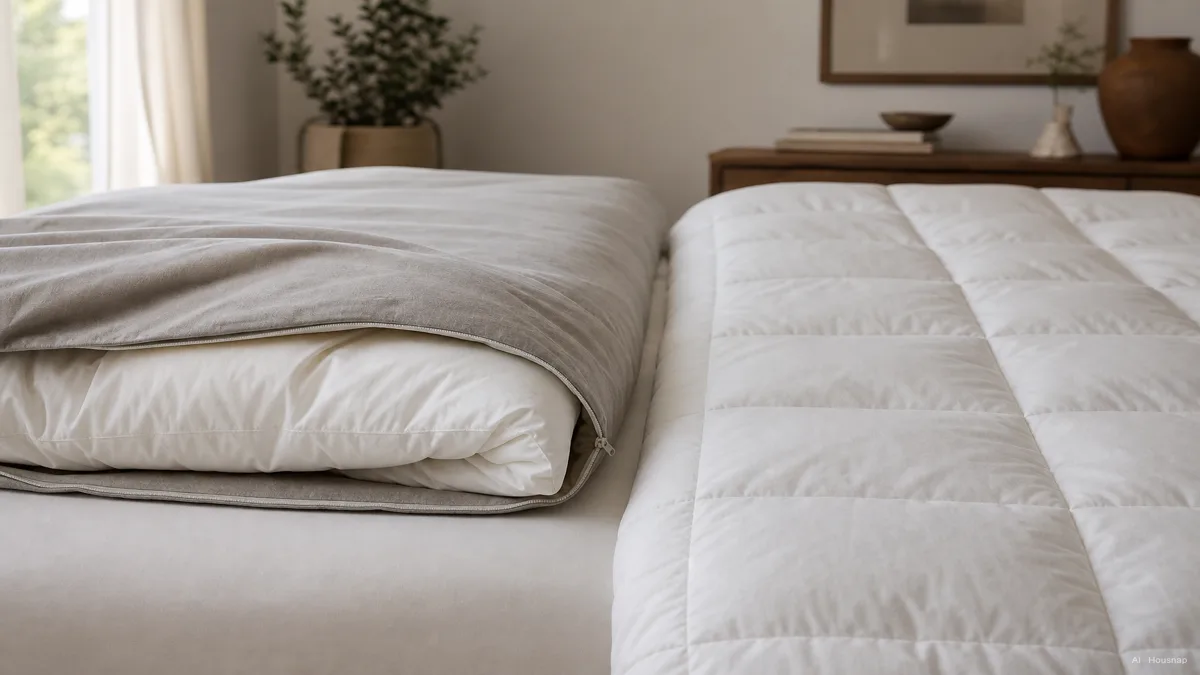
If changing the bed's appearance matters, a removable cover lets you do that while keeping the filled piece. It can also go over a suitable comforter, so choosing a comforter does not permanently rule out covers. The Company Store describes both uses.
Before choosing a cover:
- Measure the bed. Note its width, length and mattress depth, then decide how far you want the bedding to hang.
- Compare actual dimensions. Check the filled piece against the cover, not just two matching size names. Casper notes that dimensions vary between brands.
- Inspect the attachments. Check the actual product for loops and matching cover ties. Some comforters have them: Cuddledown explicitly lists attachment loops.
Choose the compatible cover here, once the filled piece's measurements and care requirements are clear.
Compare the complete purchase
Check what the package contains. An insert and cover can be sold separately, so a styled product photograph is not a packing list. Casper flags this buying distinction.
- Choose the duvet setup when removable-cover laundry and changing the outer fabric justify fitting the cover. Compare the total for a compatible insert and cover.
- Choose the standalone comforter when you want fewer pieces to assemble and have a workable full-wash plan. Compare the actual size, warmth option and care label.
- Pause the purchase if dimensions, package contents or washing instructions are missing. Ask the seller for those details before choosing a pattern.
If avoiding animal-derived filling is a priority, inspect the composition rather than relying on either product name. The Company Store distinguishes down from synthetic down alternative.
Hoe deze gids is opgebouwd
Written by Chexlow's AI editor using published bedding guidance from Casper, The Company Store, Cuddledown, Cuddle Down and Standard Fiber, plus care guidance from IKEA and Whirlpool. The comparison focuses on choosing a complete setup that fits your bed and laundry arrangements; it does not report hands-on product testing.
Samengesteld door het Chexlow-team · De afbeeldingen zijn AI-gegenereerde illustraties