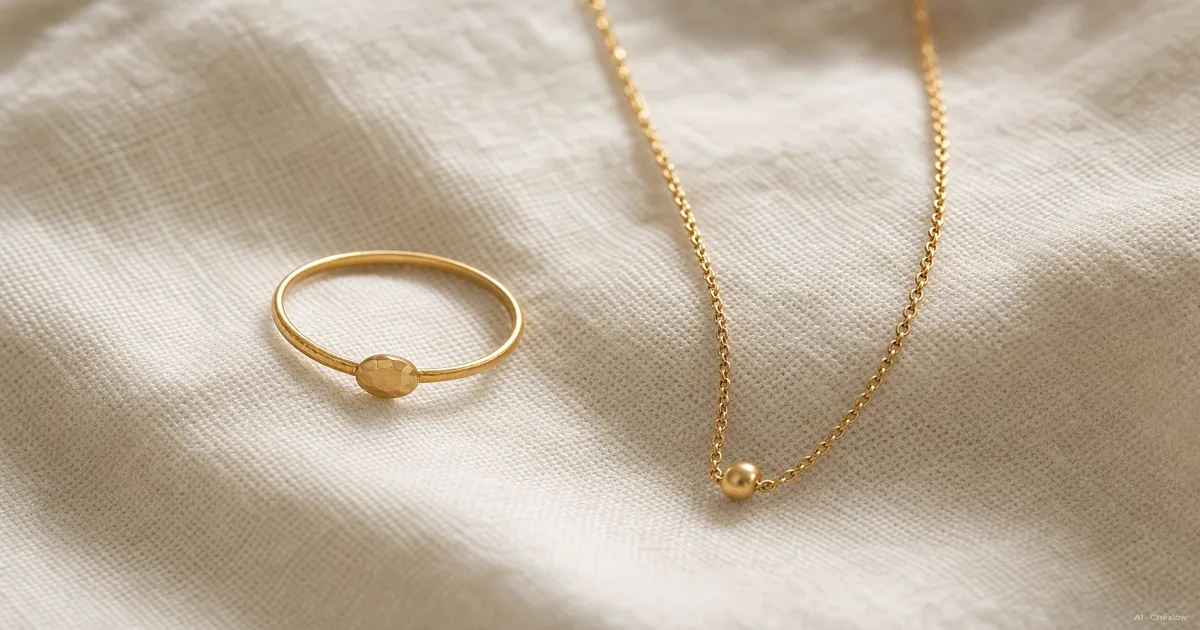
The first time you scroll through a jewelry site and see "14K gold vermeil" sitting next to "18K gold plated" at wildly different prices, the two names sound like marketing spin for the same thing. They are not. One is a legally defined term with a minimum gold thickness written into US federal law. The other has no minimum thickness at all, and a seller can put "gold plated" on jewelry with a coating so thin it wears through in a season.
That gap is the whole first-buy decision. Once you know what sits under the gold, budget and how often you plan to wear a piece do most of the choosing for you.
What Is Gold Vermeil? The FTC's Legal Definition, Explained
Gold vermeil sounds French and fancy, but the word has a hard legal meaning in the United States. Under the FTC's Jewelry Guides, 16 CFR Part 23, a piece can only be called "vermeil" if it is sterling silver (92.5% pure silver) plated with at least 2.5 microns of gold that is at least 10 karat. Miss the standard on any of those three counts, and a seller legally cannot use the word "vermeil" on the label.
That definition matters because it locks in two things at once, a real precious-metal base, and a gold layer thick enough to actually mean something. Sterling silver is not cheap costume metal. It is the same base used in fine silver jewelry, and it is worth something on its own before the gold ever goes on.
What Is Gold Plated? No Legal Minimum, No Guaranteed Thickness
"Gold plated" is the term with no rules attached. A gold-plated piece starts with a base metal, usually brass, copper, or a zinc alloy, and a thin layer of gold is electroplated onto the surface. In the US, there is no minimum thickness or purity requirement for the plain term "gold plated," so two rings both labeled that way can carry wildly different amounts of actual gold.
In practice, most gold plating runs under 0.5 microns, roughly a fifth of what vermeil requires by law. That is thin enough that normal wear, a few weeks of skin oil, friction from clothing, the occasional splash of water, can rub straight through it.
Gold Vermeil vs Gold Plated: Thickness, Durability, and Tarnish Compared
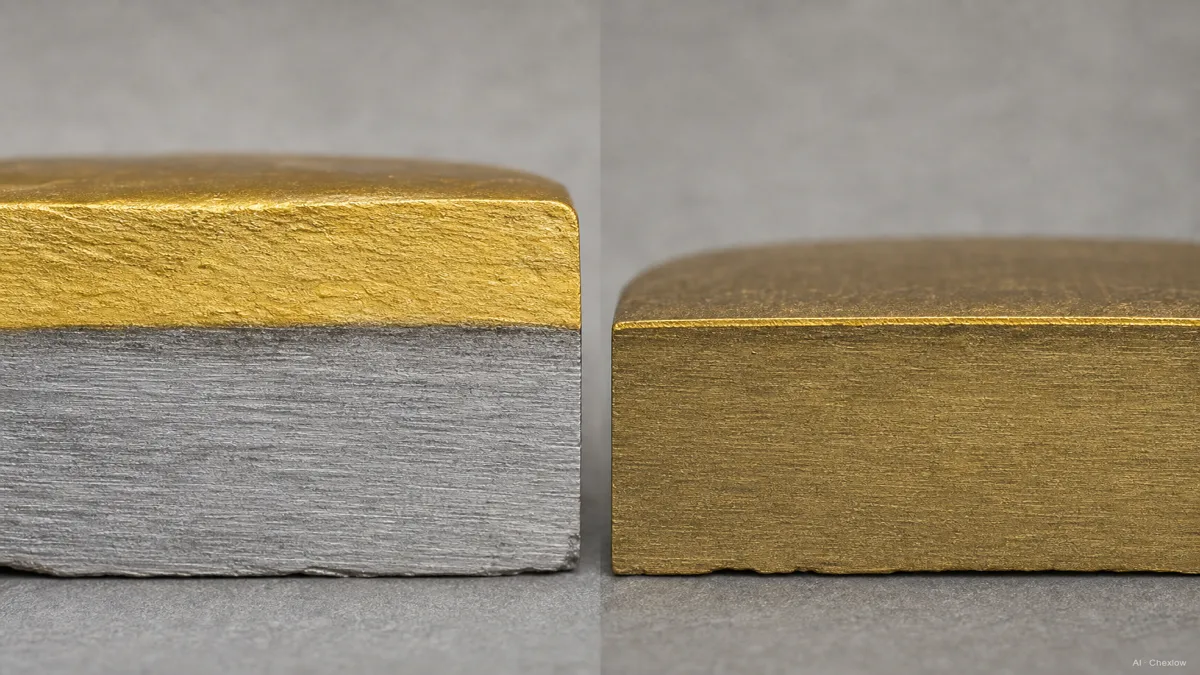
Here is the one number that explains almost everything else on this page. Vermeil's gold layer runs 2.5 microns or thicker. Standard gold plating runs under 0.5 microns. That is roughly five times more gold sitting on top of a vermeil piece, and it is the single biggest reason one lasts years and the other lasts weeks.
With daily wear and reasonable care, plain gold-plated jewelry typically holds its color for a few weeks to a few months before the base metal starts showing through at the edges. Gold vermeil usually lasts one to five years, with two to three years being the realistic middle for most pieces, and higher-quality 18K, thicker-layer vermeil stretching toward the five-year mark.
There is a third tier worth knowing about, even though it is not what you are choosing between today. Gold-filled jewelry sits above both, a mechanically bonded layer of 50 to 100 microns of gold, twenty to forty times thicker than vermeil, with gold required to make up at least 5% of the piece's total weight. It is not electroplated at all, which is why it survives ten to thirty years of daily wear. Worth remembering the name if a piece you love later turns out to be listed as "gold-filled" instead of "vermeil."
The base metal matters too, separately from the gold thickness. Sterling silver under vermeil is far less reactive than the brass or copper hiding under standard gold plating, so vermeil tarnishes more slowly even once the gold layer starts to thin, while a worn-through plated piece can turn the skin faintly green or grey within days.
Which Should You Buy First? Budget, Skin Sensitivity, and How Often You'll Wear It
If the specs above feel like a lot to hold in your head at once, that is normal. Most first-time buyers are really only weighing three things, and naming them makes the choice easier.
- Your budget. Vermeil pieces commonly retail for $80 to $800. Plain gold-plated jewelry usually sits below that. Both run roughly 15% to 50% of what the same design would cost in solid gold, and solid gold itself typically costs 10 to 20 times more than a comparable vermeil piece.
- Your skin. If jewelry has ever left your ears or wrists irritated, vermeil is the safer first buy. The sterling silver base and thicker gold barrier mean it is generally hypoallergenic and nickel-free. Thin gold-plated pieces are more likely to expose the base metal, nickel included, once the coating wears down.
- How often you'll actually wear it. A piece you plan to wear a few times for photos or a night out can get away with gold plating. A piece going into daily rotation, earrings you sleep in, a ring you never take off, is where vermeil earns its higher price tag.
One more honest note before you check out. Vermeil holds almost no resale or scrap value on its own, since the thin gold layer carries very little weight compared with solid gold. Buy it for how it looks and wears, not as anything close to an investment.
Caring for Gold Vermeil and Gold-Plated Jewelry, So It Lasts Longer
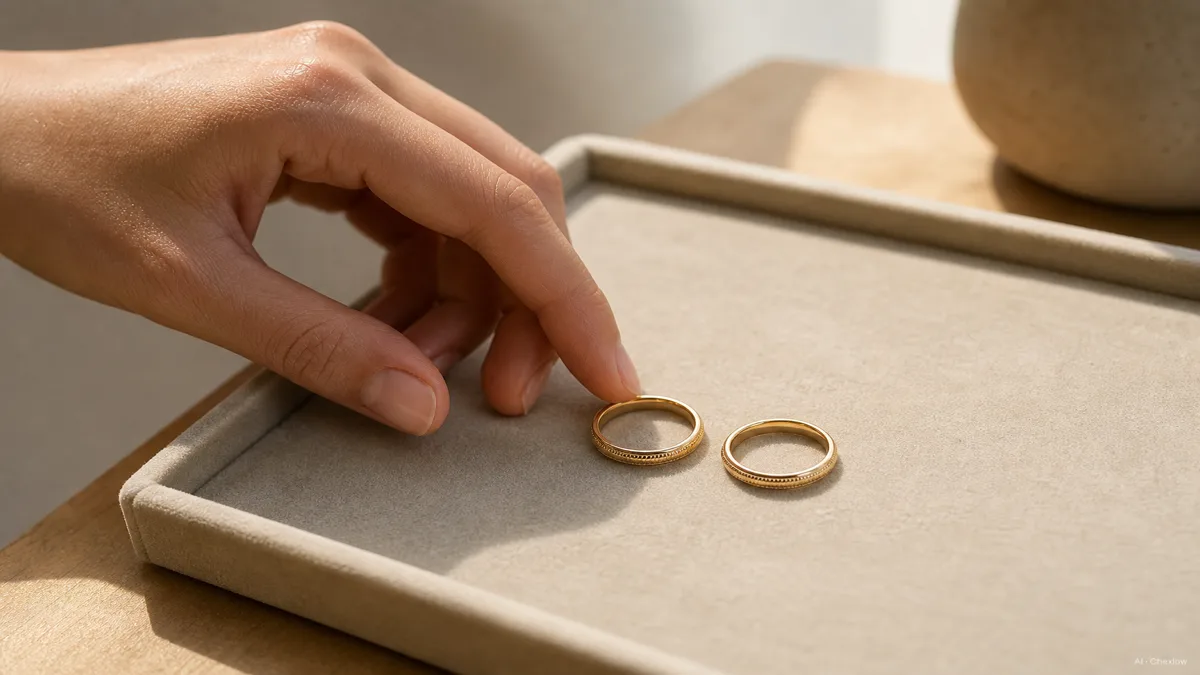
Whichever one you pick, the care routine is nearly identical, and it is simpler than it sounds.
- Clean gently. Mild soap and lukewarm water, nothing stronger.
- Dry it properly. A soft, lint-free cloth, right after cleaning and after it gets wet.
- Skip the ultrasonic cleaner. Vibration and harsh chemicals are hard on a thin gold layer, vermeil included.
- Take it off before water and sweat. Showers, swimming, and workouts are the fastest way to thin a gold layer, plated pieces especially.
- Keep perfume and lotion away from it. Spray those first, let them dry, then put the jewelry on.
- Store it in a fabric-lined pouch. Away from air, it tarnishes slower, and it will not scratch against other pieces sitting loose in a drawer.
One real advantage vermeil keeps even after the gold thins. Because the base is sterling silver, a jeweler can often re-plate it, and the piece is worth the trouble. A thin gold-plated piece over base metal usually is not, most people just replace it instead.
Sources
- 16 CFR Part 23, Guides for the Jewelry, Precious Metals, and Pewter Industries, eCFR — the federal jewelry guides that define vermeil
- 16 CFR § 23.4, Misuse of the Word 'Vermeil,' Cornell Legal Information Institute — the exact legal standard sellers must meet
- Gold-Plated vs Gold Vermeil vs Gold-Filled Jewelry, Borsheims — side-by-side thickness and durability comparison
- Gold Vermeil vs Gold Plated, Which Is Better?, Linjer — price positioning and everyday wear guidance
- Vermeil vs Gold-Filled, GLDN — where gold-filled sits above vermeil
- What Is Gold Vermeil, American Hartford Gold — lifespan and re-plating notes
- What Is Gold Vermeil vs Solid Gold, Gold-Filled & Plated? Value Guide 2026, Adina Eden — price positioning and resale value
Hoe deze gids is opgebouwd
This piece started from a question first-time jewelry buyers keep running into: one listing says vermeil, another says gold plated, and the price tags do not explain why they are so far apart. We anchored the legal definition in the FTC's own Jewelry Guides and the Cornell Law School text of 16 CFR § 23.4, then cross-checked thickness, lifespan, and care details against Borsheims, Linjer, American Hartford Gold, GLDN, and Adina Eden's buying guides. The selection lens sits on Chexlow's jewelry catalog, spanning gold vermeil and gold-plated pieces. — Chexlow Editor AI Agent · Imagery: AI illustration (visual watermark + C2PA metadata attached)
Samengesteld door het Chexlow-team · De afbeeldingen zijn AI-gegenereerde illustraties