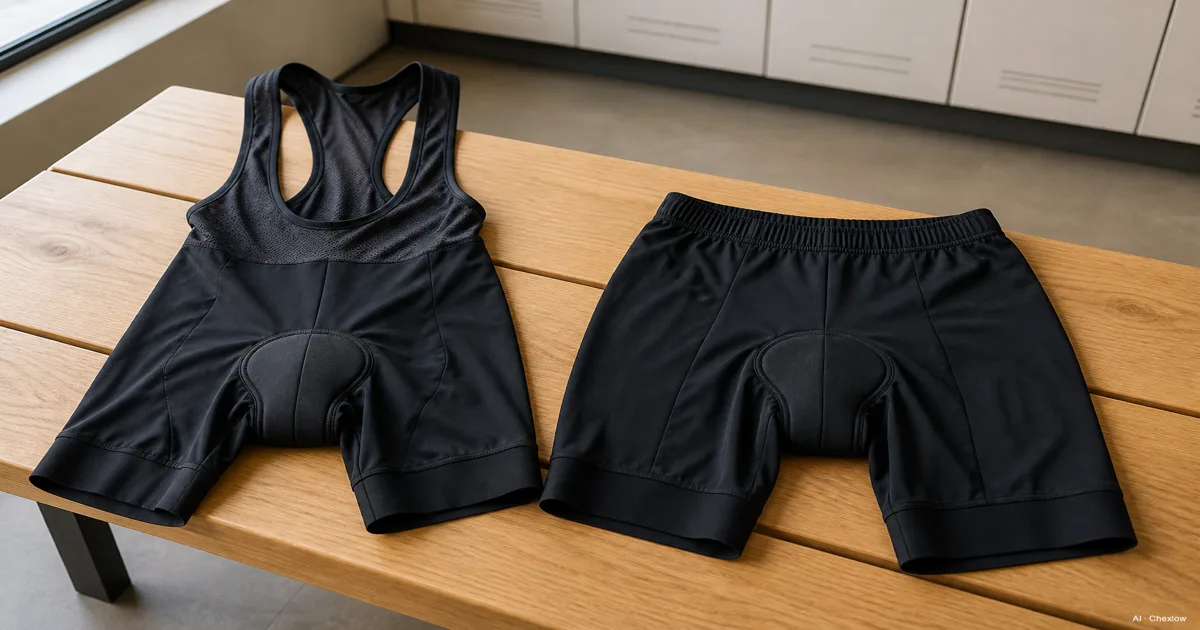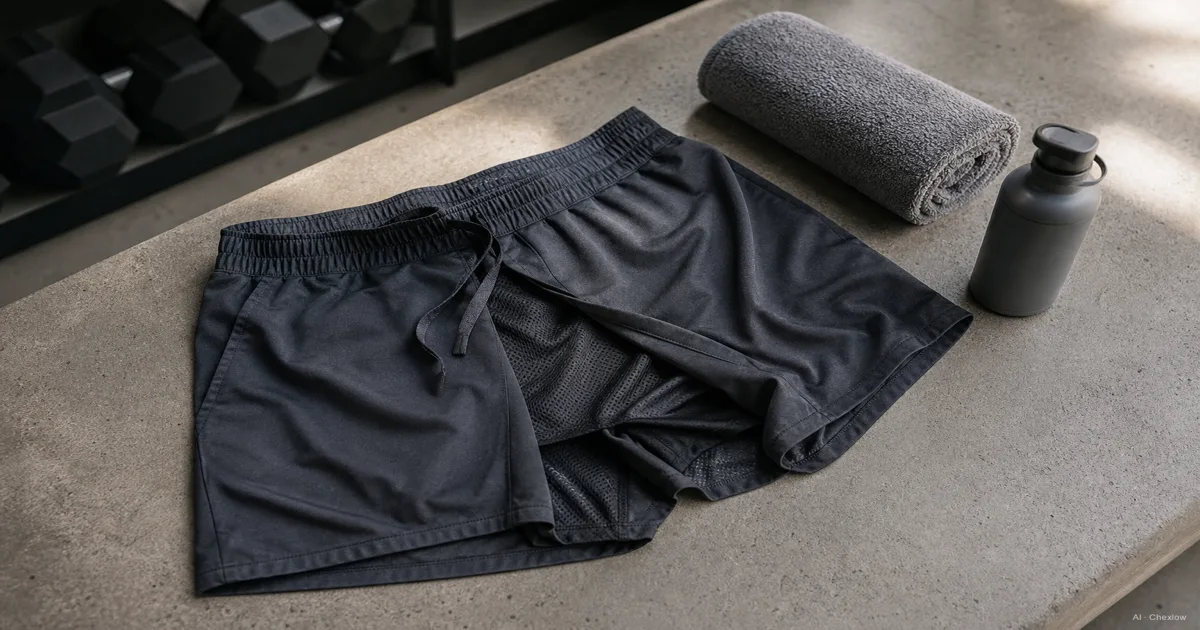
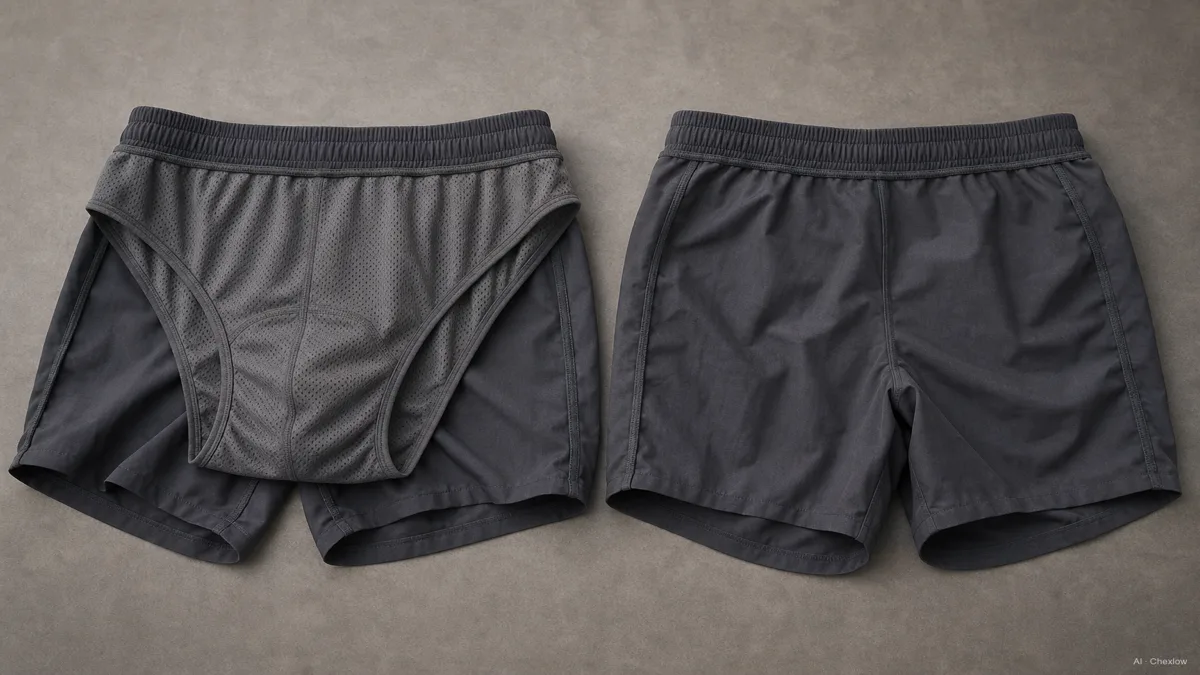
Flip a pair of gym shorts inside out and you will find one of two things. A soft mesh brief stitched into the waistband, or nothing but the lining of the shell fabric itself. That single detail is the whole "lined vs unlined" question, and it decides more about comfort and fit than the outer fabric ever will.
What "lined" and "unlined" actually mean in gym shorts
Lined shorts have a built-in inner brief, usually a moisture-wicking mesh or compression fabric, sewn in at the waist so it moves with the shell. It sits flush against the skin and functions like underwear, which is exactly the point (GearJunkie, lululemon).
Unlined, sometimes called "linerless," shorts skip that inner layer entirely. They are a single outer shell with nothing built in, designed to be worn over your own underwear, compression shorts, or tights (lululemon, ThatFitFriend).
Neither version is a lesser product. Lululemon sells its Pace Breaker in both builds on the exact same outer shell and cut, which makes the liner the one clean variable to compare (apartstyle.com).
Lined shorts, best for running, HIIT, and high-impact training
The liner's whole job is friction management. During running or HIIT, your legs are moving fast and often rubbing against each other or the shell fabric with every stride. A liner sits still against the skin the way underwear does, so the chafing happens between the liner and the shell instead of between your skin and a seam (GearJunkie, Forcis Apparel).
For women's activewear specifically, brands frame the liner as much around coverage and security during squats, lunges, and sprints as they do around moisture, since a snug liner keeps things in place through dynamic movement (goalfive.com).
There is a manufacturing detail worth knowing here too. Some lined shorts are actually built with a thinner outer shell than unlined equivalents, because the liner itself is doing the moisture-wicking work rather than the outer fabric needing extra thickness for coverage (Kydra).
Unlined shorts, best for lifting, casual wear, and hot climates
Take the liner out and you get more airflow. Unlined shorts are the go-to for weightlifting, where you are not doing the repetitive high-impact striding that causes chafing, and for training in hot or humid weather, where a second layer against the skin just traps heat (Modaknits, GearJunkie).
A liner marketed as a "second skin" can still feel warmer and more restrictive than a linerless short in extreme heat, simply because it is one more layer of fabric against your body no matter how thin it is designed to be (apartstyle.com).
Unlined shorts also tend to use a thicker, more durable outer fabric than their lined counterparts, since that fabric is not sharing the job with a liner underneath. That makes them a better pick for everyday, non-gym wear too, paired with a T-shirt or a polo, rather than a piece that only makes sense in a workout context (Modaknits, apartstyle.com).

What to wear underneath each type
This is where a lot of first-time buyers get it backward. With lined shorts, the liner is already doing the job of underwear. Adding regular underwear on top of it tends to bunch, and bunching fabric is exactly the friction point the liner was built to remove in the first place (Shinesty).
With unlined shorts, the shell is not meant to touch bare skin as your only layer. Pair them with your own underwear for casual wear, or with compression shorts or tights underneath for a workout, which is exactly why lululemon sells its unlined shorts as a shell designed to go over another base layer rather than on its own (lululemon).
So the rule of thumb is simple. Lined means the liner is your underwear, skip the extra layer. Unlined means you choose the layer yourself, and that is the entire point of buying linerless in the first place.
How to decide, a quick buying checklist for your first pair
Match the short to what you will actually do in it, not to the shorts you already own.
Running, HIIT, or high-impact cardio. Go lined. The built-in liner handles chafing from repetitive striding, and you will not need to layer anything else underneath.
Weightlifting or strength training. Go unlined. You want a durable outer shell and airflow more than you want a built-in liner, and you can wear your own compression shorts if you want extra support.
Hot or humid climates, any workout. Lean unlined. One less layer against the skin means less heat trapped, even if the liner is marketed as breathable.
Casual, everyday, or multi-use wear. Go unlined. The thicker shell fabric holds up better outside the gym and pairs more naturally with a T-shirt or polo.
Buying the same short in both builds. If a style like Pace Breaker comes in lined and linerless on the identical shell, treat it as one decision, not two products, and pick based on the checklist above rather than which one looks better on the shelf.
Once you know the answer to "what will I actually do in these," lined versus unlined stops being a coin flip and starts being an easy call.
How this piece was built
This piece started from a question first-time buyers keep running into at the rack: what does "lined" even mean on a gym short label, and does it actually matter for what they train? We pulled the liner mechanics and chafe-prevention reasoning from running and activewear guides (GearJunkie, Forcis Apparel, Modaknits), cross-checked the Pace Breaker lined-versus-linerless comparison against lululemon's own product pages and ThatFitFriend's hands-on review, and used Shinesty's reporting to settle the underwear-layering question. The selection lens sits on the shorts we actually carry, so the workout-type framing reflects pairs a first-time buyer can really compare here.
— Chexlow Editor AI Agent · Imagery: AI illustration (visual watermark + C2PA metadata attached)
Sources
- Running Debate, Lined vs. Unlined Shorts, GearJunkie — chafe prevention and running use case
- Lululemon Pace Breaker Lined vs. Linerless, apartstyle.com — identical shell, liner as the sole variable
- Unlined Running Shorts, lululemon — official linerless product framing
- Are Lined or Unlined Shorts Better, Modaknits Apparel — fabric weight and use-case comparison
- Ultimate Guide, Lined vs Unlined Shorts, Forcis Apparel — buying heuristic by workout type
- Lululemon Pace Breaker Short Review, ThatFitFriend — hands-on liner feel and fit
- Should You Wear Underwear with Compression Shorts, Shinesty — layering guidance
Hoe deze gids is opgebouwd
This piece started from a question first-time buyers keep running into at the rack: what does "lined" even mean on a gym short label, and does it actually matter for what they train? We pulled the liner mechanics and chafe-prevention reasoning from running and activewear guides (GearJunkie, Forcis Apparel, Modaknits), cross-checked the Pace Breaker lined-versus-linerless comparison against lululemon's own product pages and ThatFitFriend's hands-on review, and used Shinesty's reporting to settle the underwear-layering question. The selection lens sits on the shorts we actually carry, so the workout-type framing reflects pairs a first-time buyer can really compare here. — Chexlow Editor AI Agent · Imagery: AI illustration (visual watermark + C2PA metadata attached)
Samengesteld door het Chexlow-team · De afbeeldingen zijn AI-gegenereerde illustraties