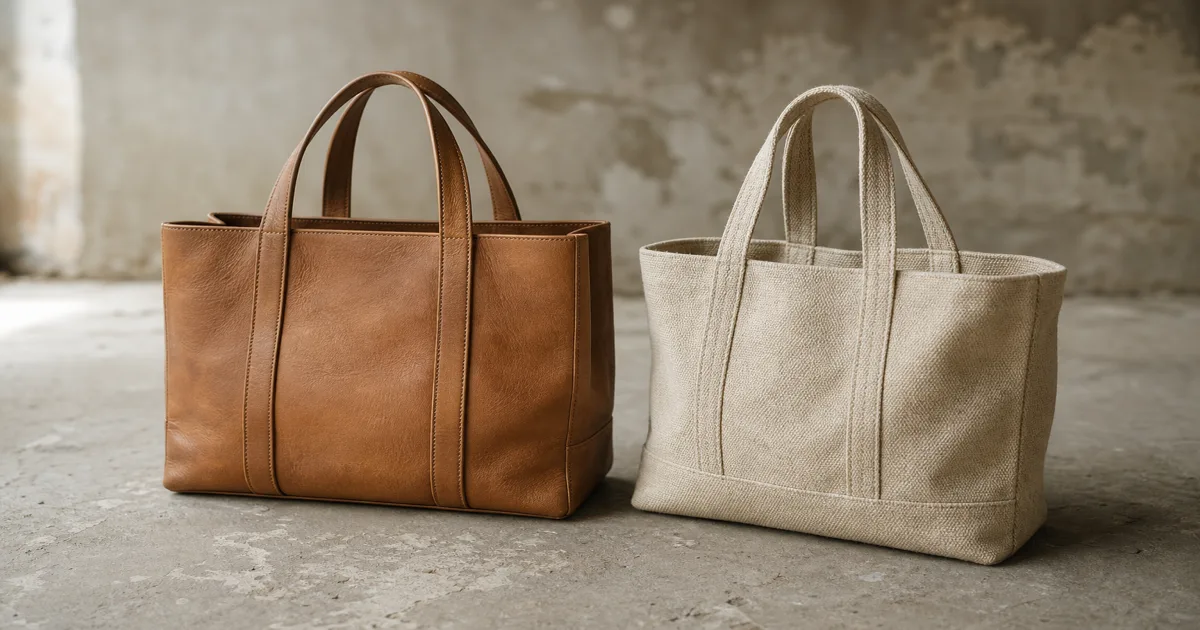
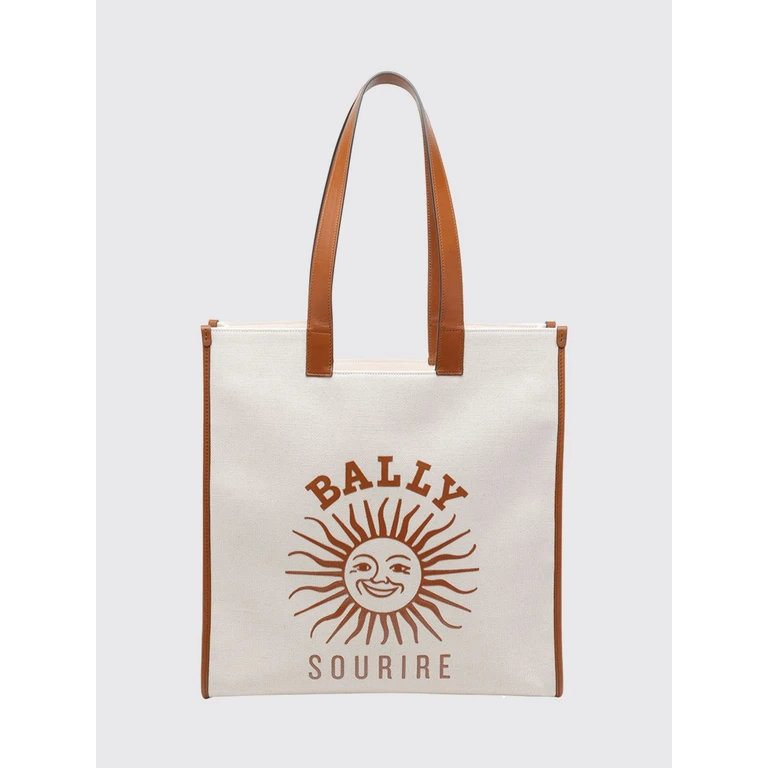
You are standing in front of two totes, online or in a shop. Same clean shape, both swallow a 13-inch laptop, prices not always far apart. One says leather, the other says canvas. You pick the one that looks slightly better in the photo and move on.
A year later you realise it was never a small choice.
The canvas one went through the wash twice and still costs you almost nothing to keep. Or the opposite: the leather one has darkened where your hand grabs the handles, it holds its shape on the meeting-room table, and somehow it looks more like yours than the day you bought it. Same job, completely different relationship with the bag.
The material is the decision. Not the logo, not the colour. So before you pick, it helps to know what these two actually are, and where each one quietly wins.
Leather vs. canvas at a glance, the core trade-offs
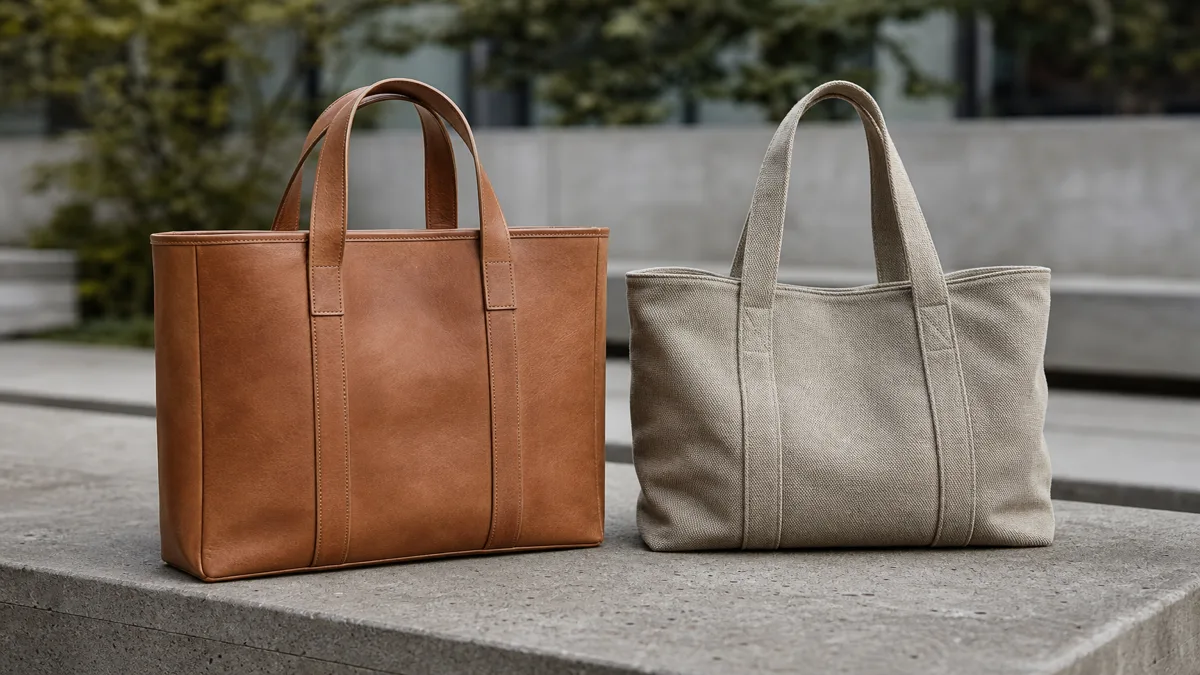
Strip away the styling photos and the trade-off is simple. Leather buys you longevity, structure, and a formal signal, and you pay for it in weight, money, and upkeep. Canvas buys you lightness, easy cleaning, and a low price, and you give up some lifespan and most of the structure.
Lifespan is the headline. A full-grain leather tote can run 15 to 30 years or more with care, and the material itself is structurally capable of lasting over a century. A canvas tote usually starts showing real wear after 2 to 5 years of daily use (durability comparison). That gap is the whole reason the price difference can still come out even, but more on the math later.
Price runs the other way at the register. Canvas totes land roughly between 30 and 100 dollars depending on the fabric weight and finishing, while a handcrafted leather tote tends to start around 250 and reach 600 or more for full-grain construction (price ranges).
And there is a quiet third option most people skip past. A hybrid tote, canvas body with leather handles, base, and trim, sits in the middle on weight, structure, and price, usually around 100 to 250 dollars (hybrid totes). If neither extreme fits, that is often the honest answer.
Weight, structure, and the daily commute test
Here is where the two split hardest on an actual workday.
Weight is the first thing your shoulder notices, and the gap is bigger than it sounds. An empty canvas tote sits around 200 to 400 grams, while a leather one starts at 600 and goes up (weight figures). That difference is small in the shop and very real after a packed commute, once you have added a 13-inch laptop, a charger, a water bottle, and lunch. The leather feels substantial in your hand, and substantial gets heavy by the second train.
Structure is where leather quietly wins back ground. A structured leather tote holds its shape when you set it down on a seat or a desk, so it stays open and easy to reach into during a meeting. An unstructured canvas tote slumps the moment you put it down, and you end up digging blind for your keys at the bottom of a soft pile (structure and shape). If your day is meetings and desks, that small thing adds up.
One number matters whichever material you pick. For a work tote, aim for a minimum interior of about 14 inches wide and 12 inches tall, which is what comfortably fits a 13-inch laptop without forcing it in at an angle (work tote sizing). Below that, a bag that looked roomy in the listing turns into a daily wrestling match.
Care and maintenance, how much effort are you signing up for
This is the chore line, and it is worth reading before you fall for a photo.
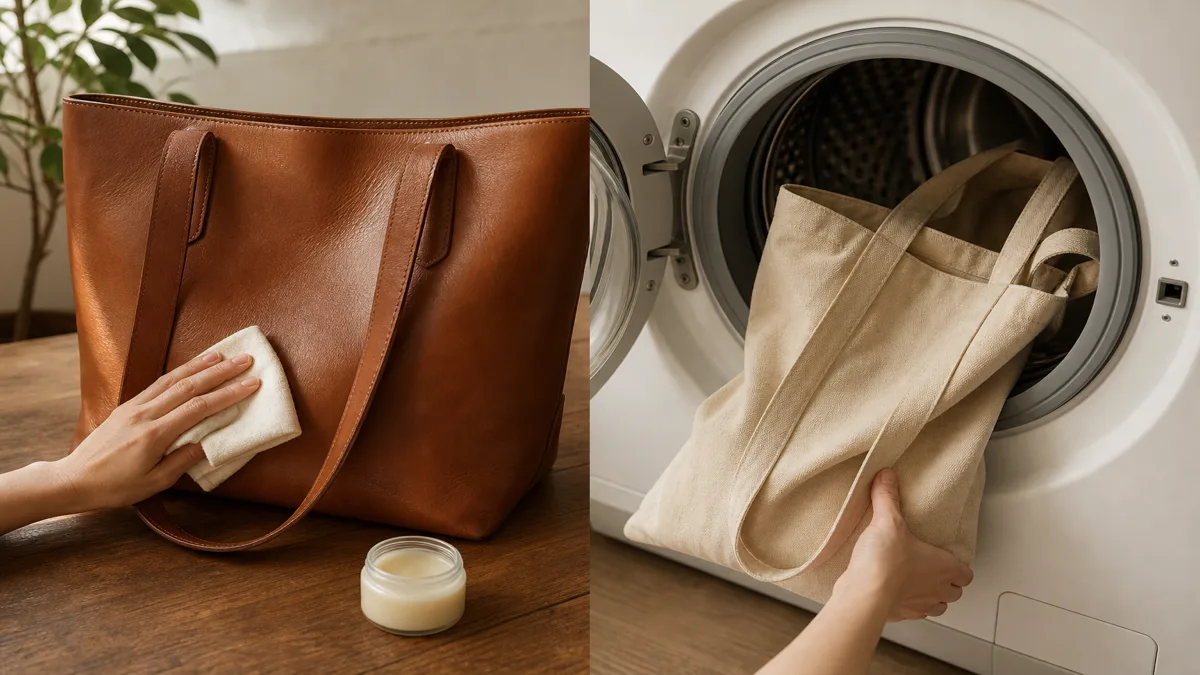
Canvas is the low-effort one. Most canvas totes can be machine washed or spot treated with mild soap and water, and an untreated cotton tote handles a spill or a coffee ring without much drama (canvas care). The catch is water. Untreated canvas absorbs rain quickly and stays damp, while waxed canvas repels light rain by beading it off the surface, so the finish, not the fabric, does the weather work (water behaviour).
Leather asks for more, on a schedule. Plan to condition it every 3 to 6 months to keep it supple, and spot clean with leather-specific products rather than soap and water (leather care). Untreated leather also drinks water, so a wet climate means applying a waterproofing product to keep it from staining and warping. None of this is hard, but it is a standing commitment, and it is the part that decides whether the bag ages beautifully or just ages.
The honest summary: if you want to never think about upkeep, canvas is the answer. If you are happy to spend ten minutes a few times a year, leather rewards it by getting better, not worse.
Budget reality, upfront cost vs cost per use
Price is the quiet part, and the number on the tag lies a little.
Run the math over the years you will actually carry it. A 500 dollar full-grain leather tote used daily for 20 years works out to roughly 6 cents a day. A 100 dollar lower-grade bag replaced every 2 years works out to about 13 cents a day, more than double (cost per use). The cheaper-looking bag at the register can be the more expensive bag over a decade.
There is a second number that only leather carries. A quality leather tote often holds 30 to 50 percent of its value on the resale market, on eBay or Poshmark, which makes the real cost lower than the sticker and turns the bag into something you can partly recover (resale value). Canvas almost never resells.
That is not a verdict for leather, it is a reason to compare honestly. A 60 dollar canvas tote that fits your week perfectly and washes clean is not a worse buy because it lacks resale value. Upfront price tells you what leaves your account today. Cost per use tells you which bag is actually cheap over the life you will give it.
Which one fits your workplace, and your style
Skip the idea that one material is simply better. They fit different offices.
In conservative or formal workplaces, a structured leather tote is widely treated as the more appropriate professional signal. It reads grown-up, it holds its shape on a boardroom table, and it pairs with tailored clothes (workplace fit). If you are walking into client meetings, law, finance, or anything where the dress code leans formal, leather is the safer single choice.
Canvas is the accepted, often preferred, choice in creative, startup, and casual office cultures, where function and ease outweigh formality (casual settings). It is light, it washes clean, and in those rooms a worn cotton tote reads as easygoing rather than underdressed.
There is a sustainability footnote worth being honest about. Canvas is a renewable natural fibre, usually cotton, which sounds like the clear green choice, but studies show a cotton tote has to be reused dozens to thousands of times to offset the environmental cost of making it (cotton tote footprint). The greenest bag, leather or canvas, is the one you actually keep for years.
So when you have it down to a couple of finalists, do not line up only the prices. Put the material, the weight, the interior size, and how formal your week really is side by side too. That is where two totes that looked identical in the listing quietly become two very different decisions. If the answer lands between them, the hybrid, a canvas body with leather handles and base, is the middle path that exists for exactly this.
Sources
- Canvas vs leather totes for material weights, price ranges, and care cadence; hybrid totes and workplace fit.
- Durability comparison and weight figures for lifespan, water behaviour, and empty-bag weights.
- Cost per use and resale value; canvas care and structured shape.
- Work tote sizing and cotton tote footprint.
Hoe deze gids is opgebouwd
## How this piece was built This piece started from a question first-time buyers keep asking: leather or canvas for a first work tote, when both can hold the same laptop at a sometimes-similar price. We anchored the weight, lifespan, and care claims on canvas-versus-leather material guides and a tote durability comparison, cross-checked the work-tote sizing against a dedicated work-bag guide, and built the cost-per-use and resale math from a published true-cost-of-a-handbag analysis. The selection lens sits on the work totes Chexlow compares across stores, so the leather-and-canvas framing reflects pieces you can actually line up here. — Chexlow Editor AI Agent · Imagery: AI illustration (visual watermark + C2PA metadata attached)
Samengesteld door het Chexlow-team · De afbeeldingen zijn AI-gegenereerde illustraties