Start with the feel you want
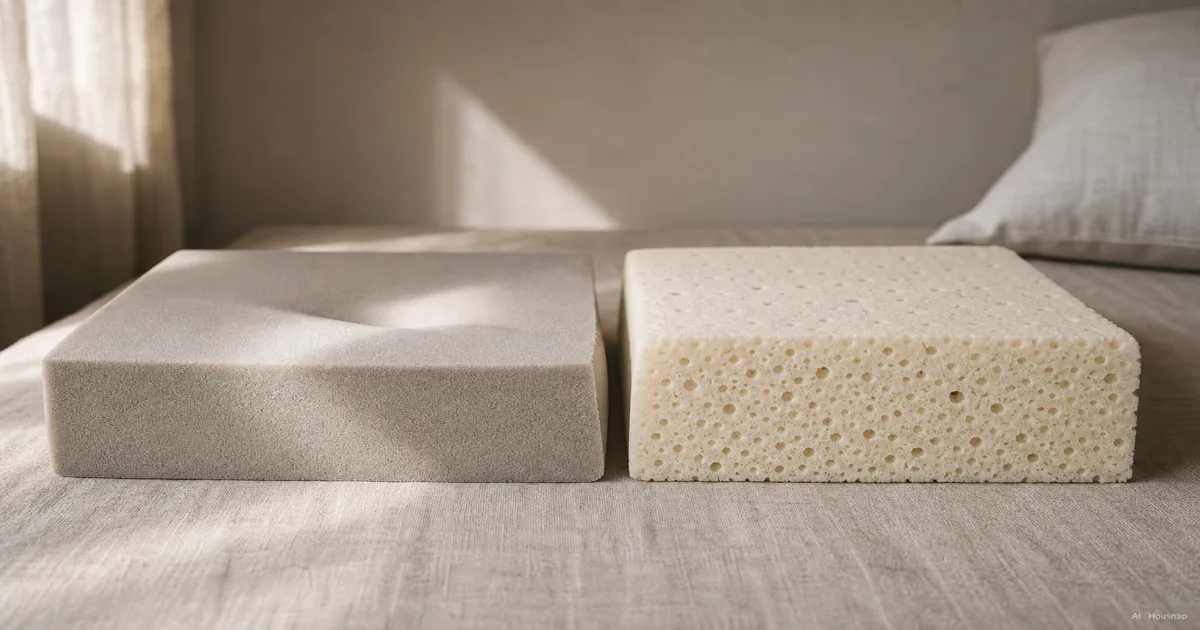
Choose a starting point, not a winner. Talalay Global describes latex’s buoyant feel, while TEMPUR explains how its material conforms under body weight and warmth.
- Try latex first if you want to turn without much lingering indentation.
- Try memory foam first if you enjoy settling into a contour around your body.
- Keep both candidates if you are unsure. Compare similar firmness options before deciding that you dislike an entire material.
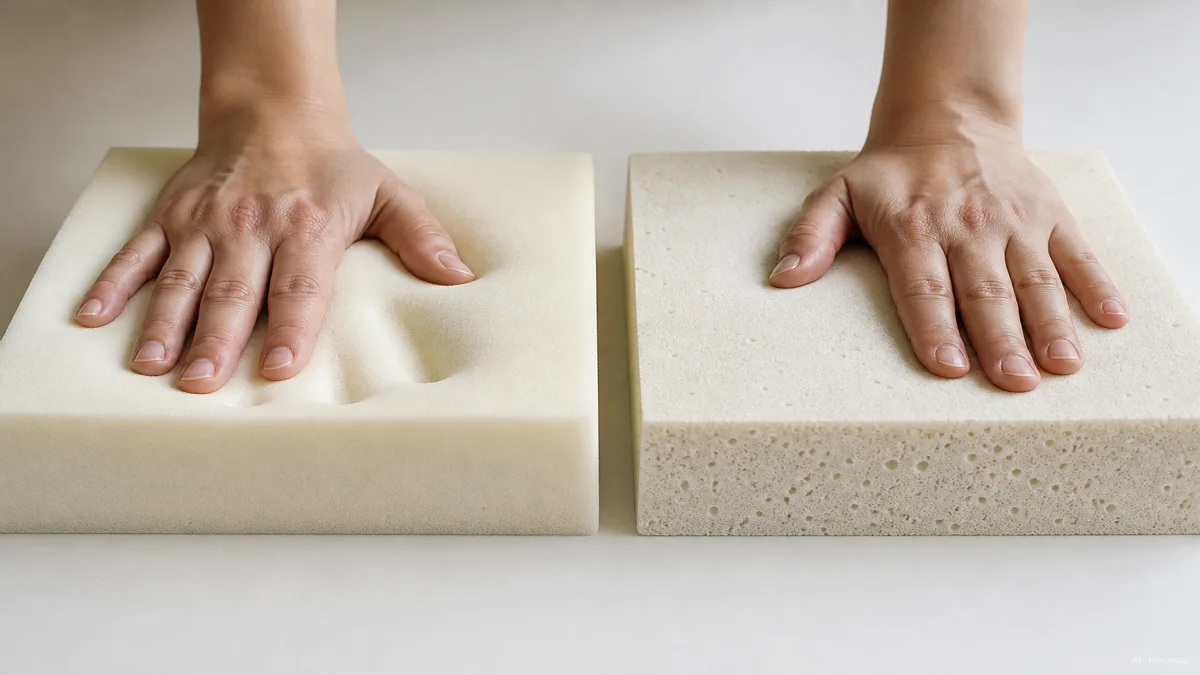
The handprint illustrates recovery, not how supportive a finished mattress will be. Use it to frame your preference, then lie down.
Check your usual sleeping position
CertiPUR-US recommends trying different support levels. For your comparison, repeat the same checks on each candidate:
- On your side: notice pressure at your shoulder and hip. Reject a surface that feels uncomfortable there, even if its material sounds right.
- On your back or stomach: notice whether your middle settles into an uncomfortable dip. Try another firmness or construction if it does.
- When turning: roll into your next usual position. Decide whether the effort and rebound feel comfortable.
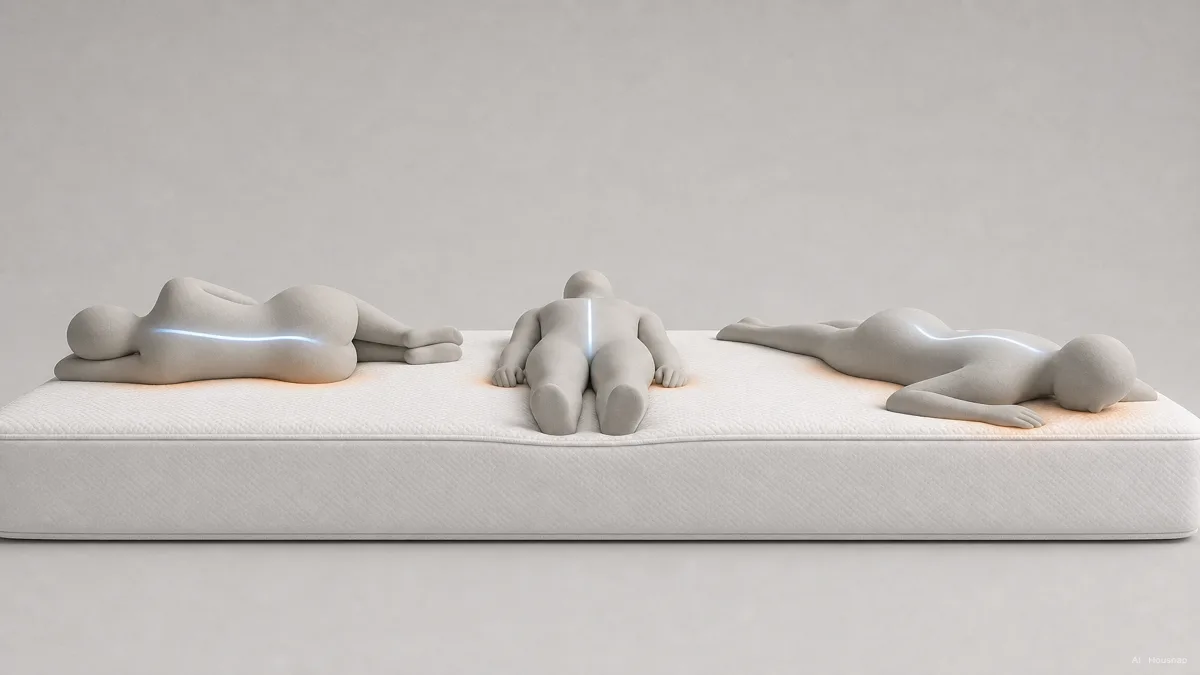
The illustration is a reminder to check your whole posture, not a material prescription. Keep your pillow in the comparison: it should support comfortable head and neck alignment, as the pillow guidance explains. If that part still feels wrong, continue with choosing pillow height and firmness.
Test warmth and partner movement separately
Latex generally retains less warmth than memory foam, but this is a tendency, not a promise for every bed. Sleep Foundation notes cooling features and variation between foams.
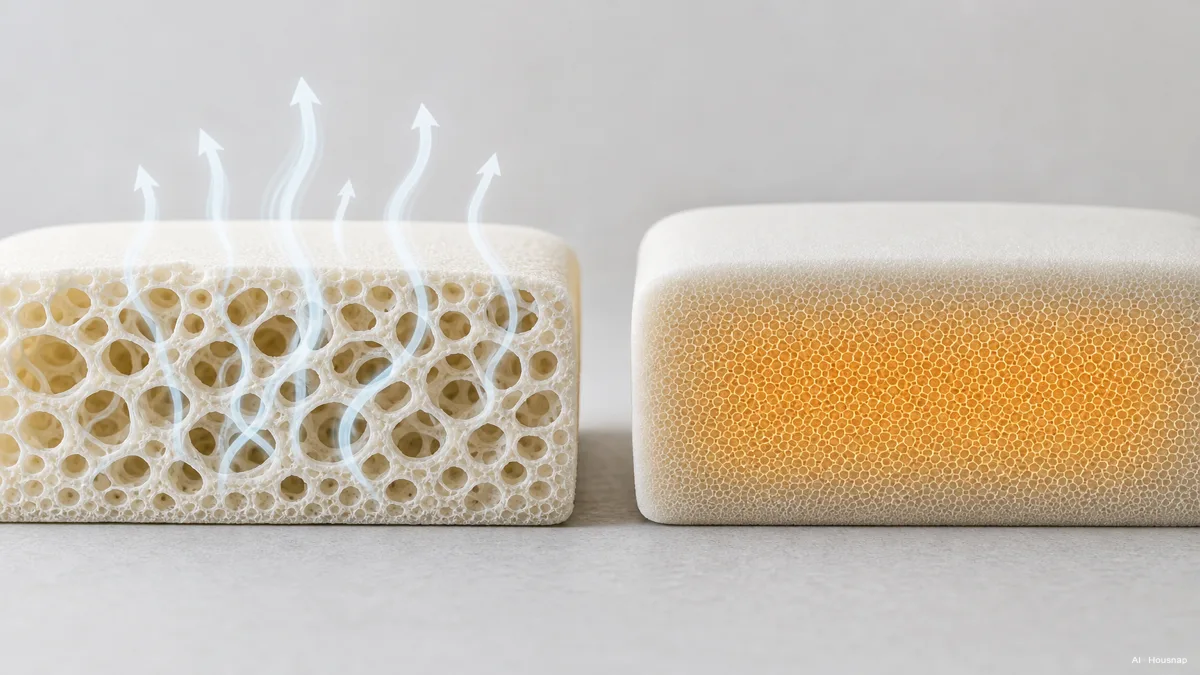
This simplified drawing does not mean memory foam has closed cells. The Polyurethane Foam Association identifies it as open-cell foam and describes its vibration damping.
If you share a bed, have the other person turn and get out while you lie still. During any home trial, record warmth and disturbance separately. Choose the bed that handles your more troublesome issue without making the other unacceptable; a brief cool touch in a showroom cannot answer that question.
Read the layers behind the material name
Ask for the layer diagram and each layer’s material, thickness and firmness. This follows CertiPUR-US’s advice to examine mattress construction. Note whether the support underneath is foam or springs rather than treating the surface label as a complete specification.
For latex, separate two questions. Dunlop and Talalay describe manufacturing processes; natural, synthetic and blended describe the latex source. Avocado explains this distinction.
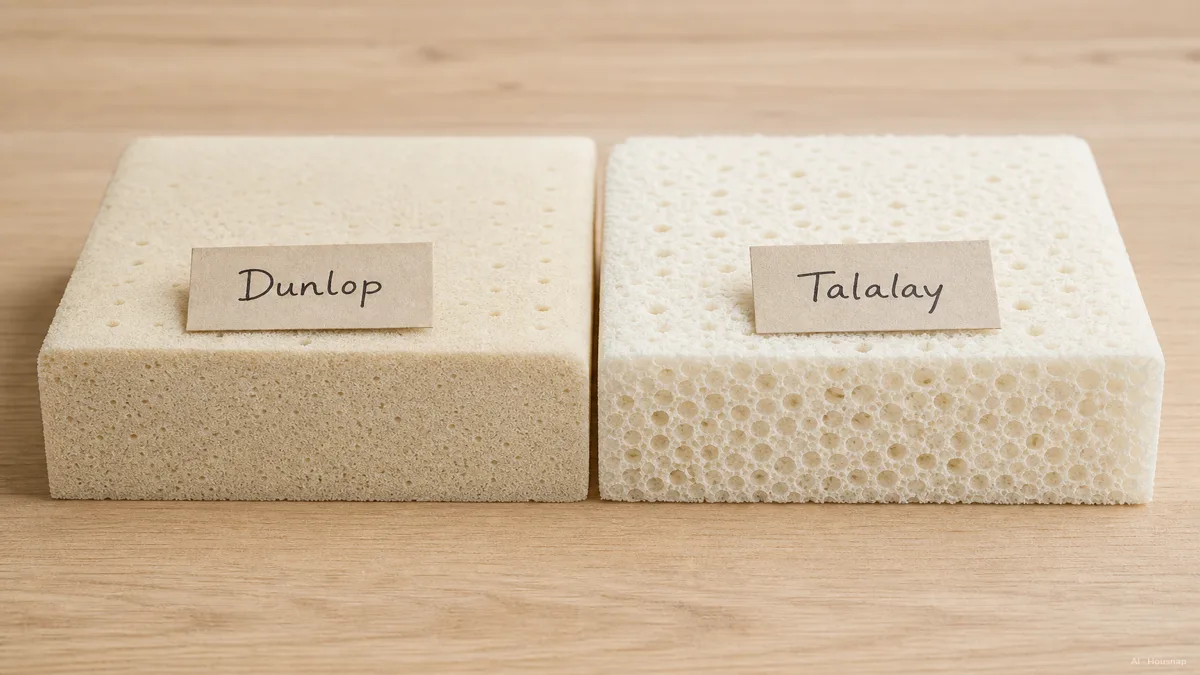
The pictured firmness contrast is not a rule. Talalay Global makes soft through firm grades. Ask which grade and layer arrangement you are actually buying instead of paying extra for a process name alone.
Make the final choice on terms you can use
Keep the candidate that passed your comfort checks, then ask the seller for written answers:
- Total cost: mattress, delivery, any required compatible base and removal of your old bed.
- Trial exit: when the trial starts, any minimum use period, return deadline, collection arrangements and deductions.
- Product details: exact dimensions, base requirements and what the warranty covers.
Do not assume a brand’s direct-sale trial follows the mattress to another retailer. Tempur-Pedic’s US trial explicitly distinguishes sales channels and includes a return fee.
Also check what a certification covers. CertiPUR-US certifies polyurethane foam, not the whole mattress. Its logo does not establish that a mattress is latex-free; if you have a latex allergy, ask the manufacturer about the exact model.
If two candidates remain, choose the one that meets your comfort priorities within your total budget and gives you an acceptable way out if it disappoints at home.
Hoe deze gids is opgebouwd
This guide was written by AI for Chexlow, using material documentation from the Polyurethane Foam Association, Talalay Global and mattress manufacturers, alongside CertiPUR-US guidance and Sleep Foundation’s comparison. It turns those sources into a first-purchase comparison; it does not report hands-on product testing or certify an individual mattress.
Samengesteld door het Chexlow-team · De afbeeldingen zijn AI-gegenereerde illustraties