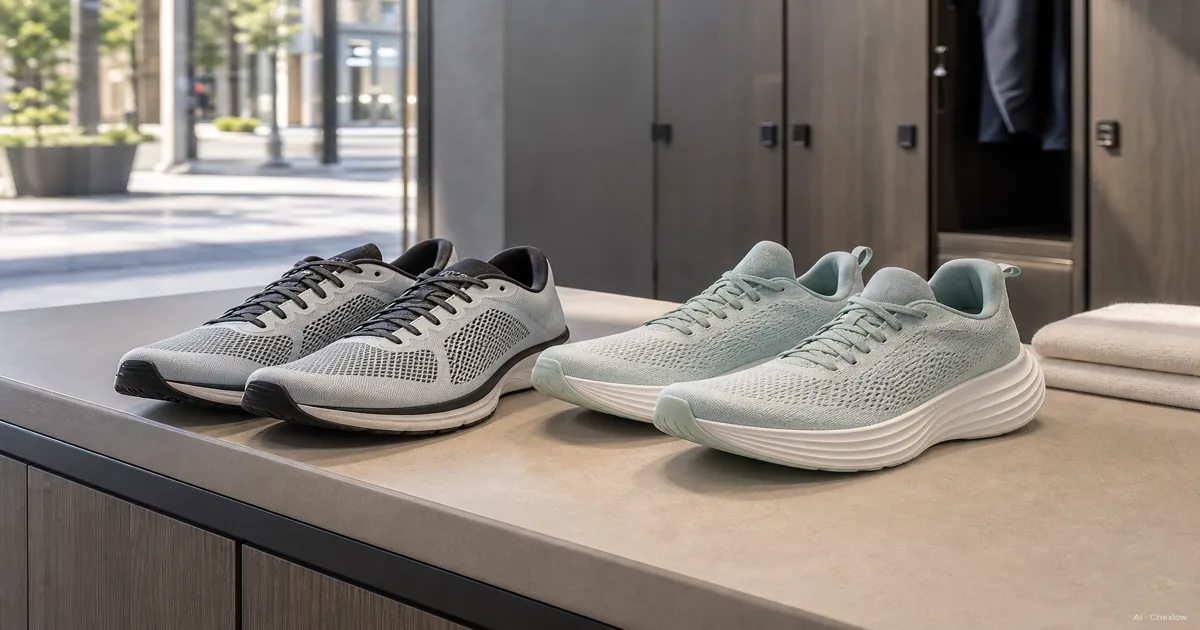
Check the version before choosing a side
For regular running, put a numbered road Pegasus and a running Ultraboost on your shortlist. Nike describes Pegasus 42 as an everyday shoe for varied paces, while adidas positions Ultraboost 5 and 5X for everyday runners. Starting your try-on with Pegasus is an editorial starting point, not evidence that it beats every Ultraboost.
Check the full product name before comparing prices. The Ultraboost 1.0 FAQ describes a lifestyle model, formerly called DNA. If you mainly want a running shoe, don't treat that listing as interchangeable with Ultraboost 5 or 5X. Likewise, keep Pegasus Trail separate from the road models; Nike distinguishes those variants.
Write down each candidate's version and intended use. A discount only becomes useful once you're comparing shoes for the same job.
Compare construction, then interpret the numbers
The midsole is the cushioning layer under your foot. The useful distinction here is how each version builds that layer:
- Pegasus 41. ReactX foam with separate forefoot and heel Air Zoom units. Its engineered-mesh upper has a lacing-linked midfoot band. Nike's construction details.
- Pegasus 42. ReactX with a curved, full-length Air Zoom unit. A description of the 41's two units does not describe this version. Nike's model announcement.
- Ultraboost 5. LIGHT BOOST cushioning and a Primeknit knitted upper. Try this against Pegasus if the way the upper wraps your foot is a deciding factor. adidas construction details.
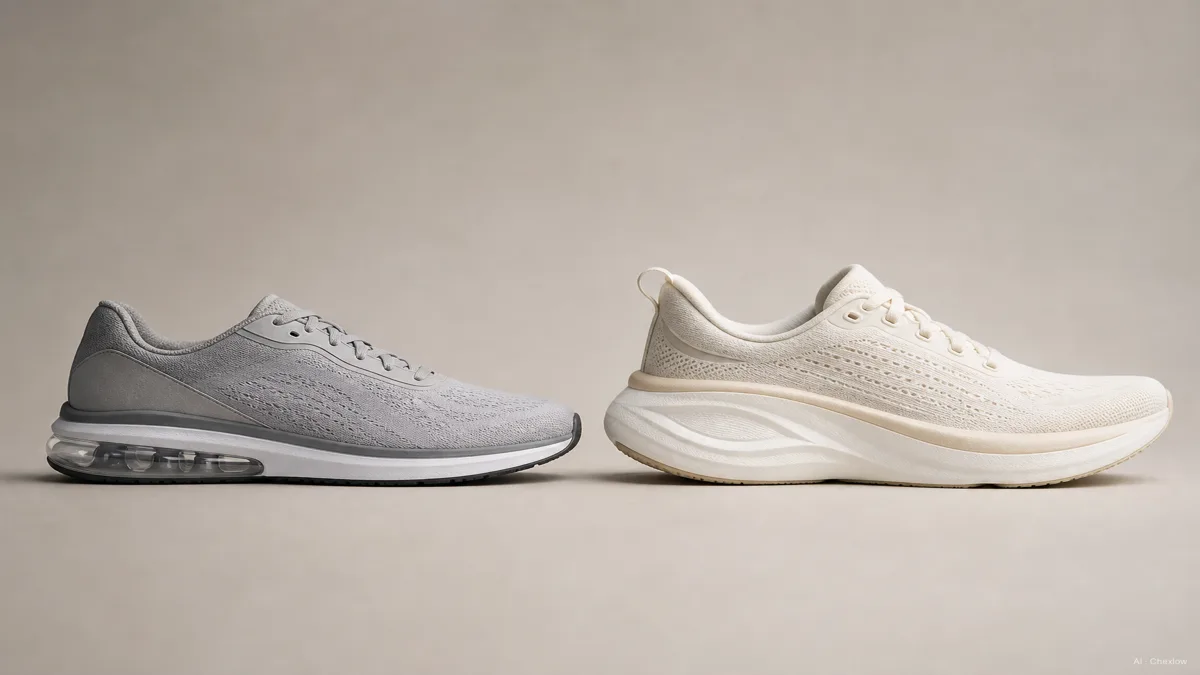
This conceptual illustration contrasts sole shapes. It is not a product photograph or a measured Pegasus–Ultraboost comparison; the visible air window is not a specification for either candidate.
Keep total sole height separate from drop, the heel-to-forefoot height difference. One Ultraboost 5 specification lists 39 mm at the heel and 29 mm at the forefoot: 39 − 29 = 10 mm drop. That number does not tell you which shoe feels softer. If those measurements are confusing, read how heel drop differs from cushioning height.
The same listing gives 292 g in UK 8.5. Compare weight only after checking the reference size and version, rather than assuming these two families always differ by a fixed number of grams.
Let fit decide between the two
Bring your running socks and try both shoes on both feet. REI recommends fitting the larger foot and checking for a snug, not tight, heel and midfoot.
- Check length. Use roughly a thumb's width ahead of the big toe as a starting point, following Nike's fitting guidance. Don't automatically add half a size.
- Check the upper. Lace each pair normally. Compare pressure across the instep and sides rather than treating either brand as universally wide or narrow.
- Check movement. Walk, then jog if the shop permits. Which pair stays comfortable without heel movement distracting you or the upper pressing into your foot?
Prefer the Ultraboost if its fit works better during that comparison. Prefer the Pegasus if it does. If neither feels right, leave both behind rather than buying the apparent winner on paper.
Buy the pair that passes, then compare the total cost

Use your intended everyday run as the final reference. For easy jogging, don't reject a comfortable running Ultraboost because of a blanket claim that it is only a recovery shoe. For varied runs, Pegasus is a reasonable starting candidate, but its name cannot compensate for a poor fit.
- One pair passes the fit check. Choose that version, then confirm the seller's size designation and return conditions.
- Both pass. Compare the delivered price and return costs. Pay more only for a difference you actually prefer.
- Neither passes. Keep looking; buying accessories to rescue an uncomfortable first choice is not the next step.
There is no established lifespan winner in the specifications cited here. Don't turn foam names into promised replacement mileage or a cost-per-mile calculation. Buy on fit, intended use and the actual purchase terms.
Hoe deze gids is opgebouwd
AI wrote this Chexlow guide using Nike and adidas model documentation, adidas's Ultraboost 1.0 FAQ, and Nike and REI fitting guidance. The try-on order and buying decisions are editorial judgments based on those sources, not results of a comparative wear test. Existing illustrations are conceptual, not photographs of the specified models.
Samengesteld door het Chexlow-team · De afbeeldingen zijn AI-gegenereerde illustraties