Choose the compromise you can live with
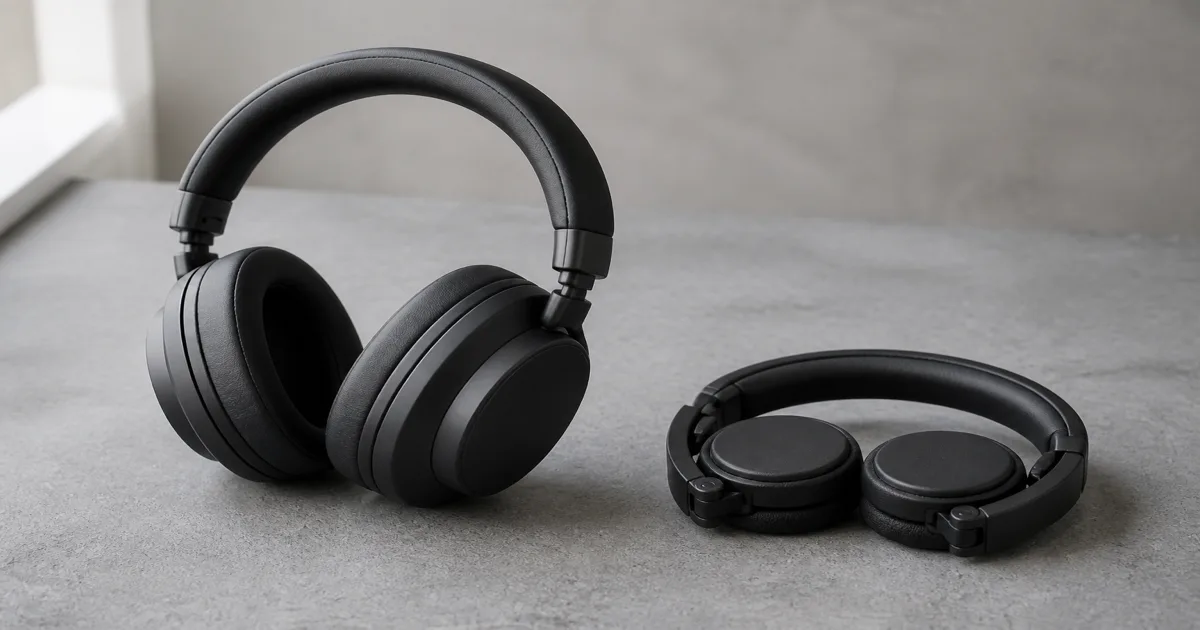
Over-ear pads surround your ears; on-ear pads rest on them. Those names describe the fit, not a sound-quality ranking. Soundcore explains the two fits.
Start your shortlist with the inconvenience you most want to avoid:
- Pressure on your ears. Try an over-ear pair first, then check whether your ears actually fit inside the cushions.
- Too much to carry. Try an on-ear pair, but compare its packed shape with a folding over-ear option.
- A noisy journey. Make noise reduction a requirement before deciding on either fit. Small size alone is not a good reason to choose a commuter headphone.
Keep one candidate of each type if you are undecided. The next checks should eliminate a poor match, not persuade you to tolerate it.
Let the fit veto the spec sheet
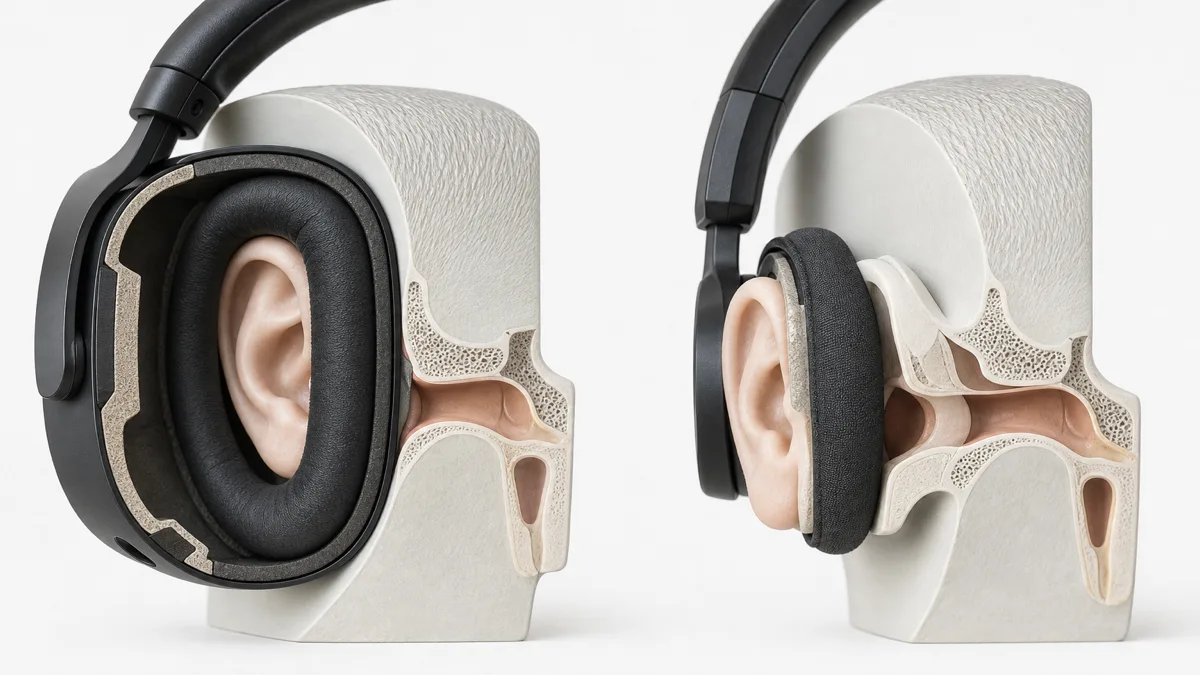
On-ear pressure can become uncomfortable; over-ear cups can feel warm. Neither gives everyone a comfortable long session. Soundcore’s comfort comparison is a useful starting point, but try the actual pair.
Adjust the headband, wear your usual glasses and sit in your normal working position. With over-ears, check the cushion opening and depth; with on-ears, notice where the pads press. For either type, check the top of your head and turn gently from side to side.
If pressure is already distracting, try another fit instead of assuming it will disappear. If you cannot try before buying, read the seller’s conditions for returning opened headphones.
Glasses can also interrupt the seal and change the bass, as RTINGS explains. Listen with them on if that is how you will use the headphones.
Check quiet separately from sound
Passive isolation is the physical barrier; active noise cancellation, or ANC, adds electronically generated opposing sound. It handles steady noise more readily than voices. Bose explains the distinction.
For a demo, pause the music and switch ANC on and off. Then play a familiar track at a comfortable level. Judge the remaining background sound and the music separately; do not turn it up just to make a poor demo seem convincing.
An over-ear fit does not necessarily mean a closed shell. Open-back over-ears can isolate less than closed-back on-ears. That exception is covered in RTINGS’ comparison. If you share a room or are considering home listening, check open-back versus closed-back headphones before finalizing the shortlist.
For sound, choose by listening rather than treating cup size as a score. Compare a familiar voice, bass line and busy passage, without making one pair noticeably louder.
Check the packed pair and the connection
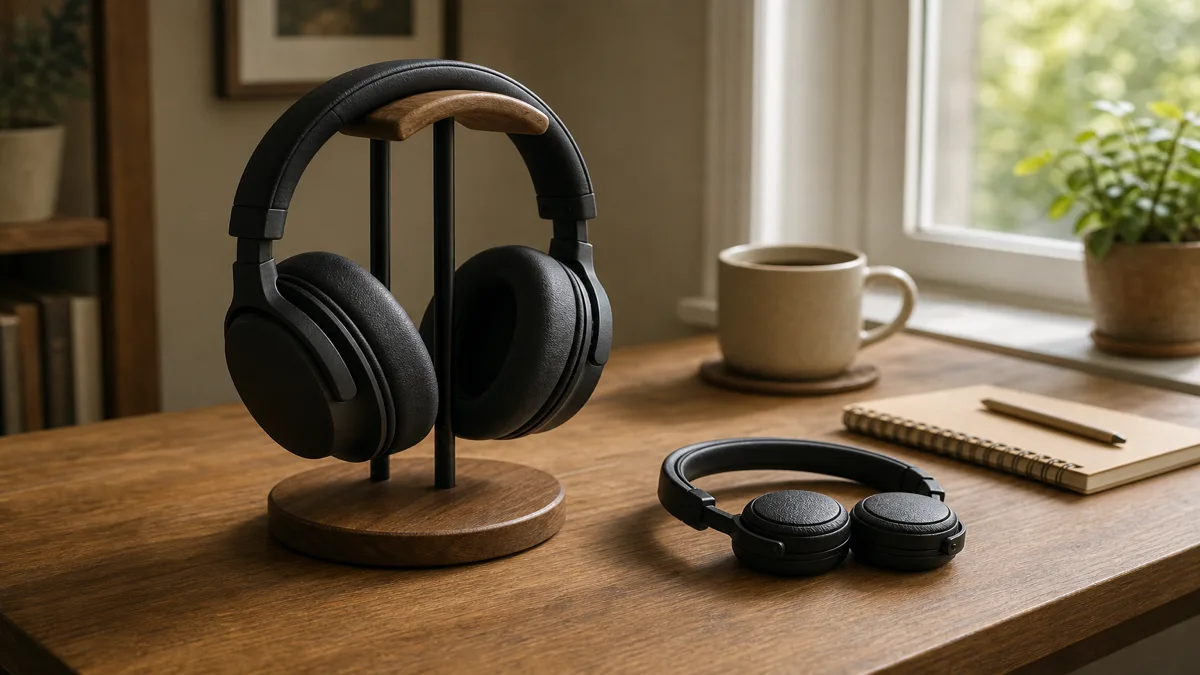
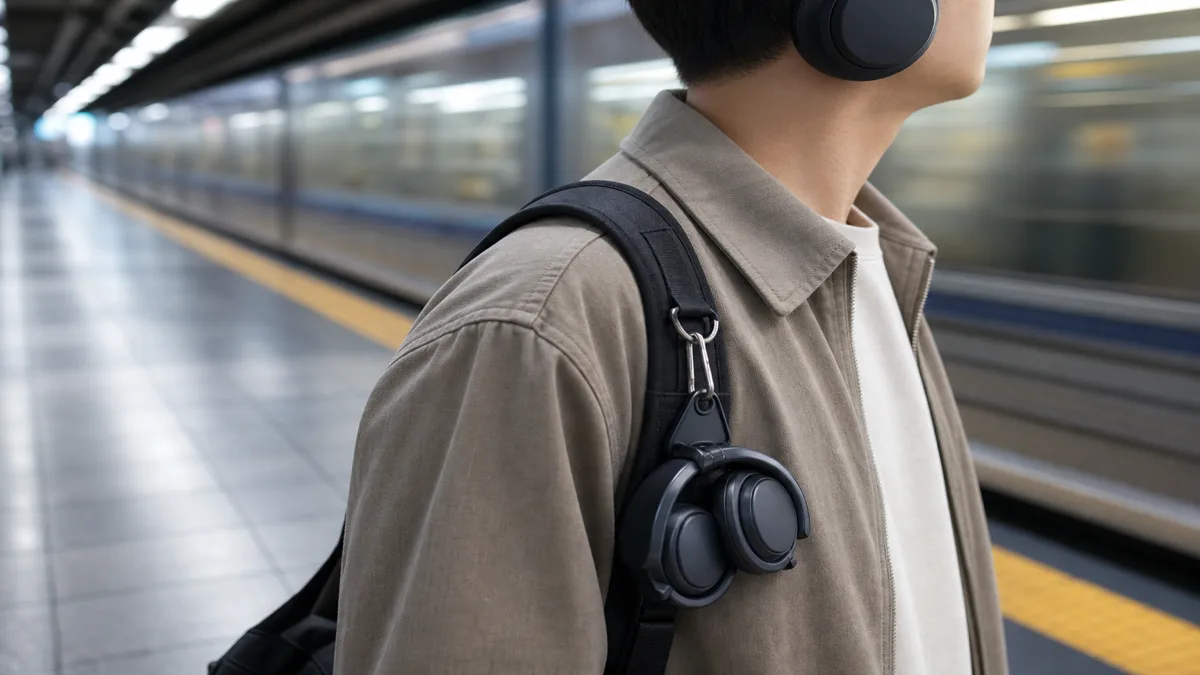
Put the headphones in their intended case and compare that package with the space in your bag. Check the hinge instructions rather than assuming every compact pair folds. For example, Beats Solo 4 is an on-ear model that folds and includes a case; that is a model-specific feature.
Before paying, give each remaining candidate three final checks:
- Your device. Confirm the connection you intend to use. Solo 4 supports USB-C audio and battery-free 3.5 mm playback, according to Beats; look for equally explicit documentation for another model.
- Your settings. Compare battery ratings under the modes you will use. Sony rates WH-1000XM6 at up to 30 hours with noise cancellation on and 40 off.
- Your deal-breaker. Reject a pair that fails the comfort, quiet or bag-space requirement you chose first. Compare prices only among the pairs that remain.
If you have settled on an ANC over-ear pair and want to compare two named options, continue with Sony WH-1000XM6 versus Bose QuietComfort Ultra. Check the exact generation when comparing listings.
Hoe deze gids is opgebouwd
Written by Chexlow’s AI editor using Soundcore’s fit explanation, RTINGS’ comparison, Bose’s ANC guide and official Beats and Sony specifications. The shortlist and try-on sequence are editorial guidance for first buyers, not results of hands-on product testing.
Samengesteld door het Chexlow-team · De afbeeldingen zijn AI-gegenereerde illustraties