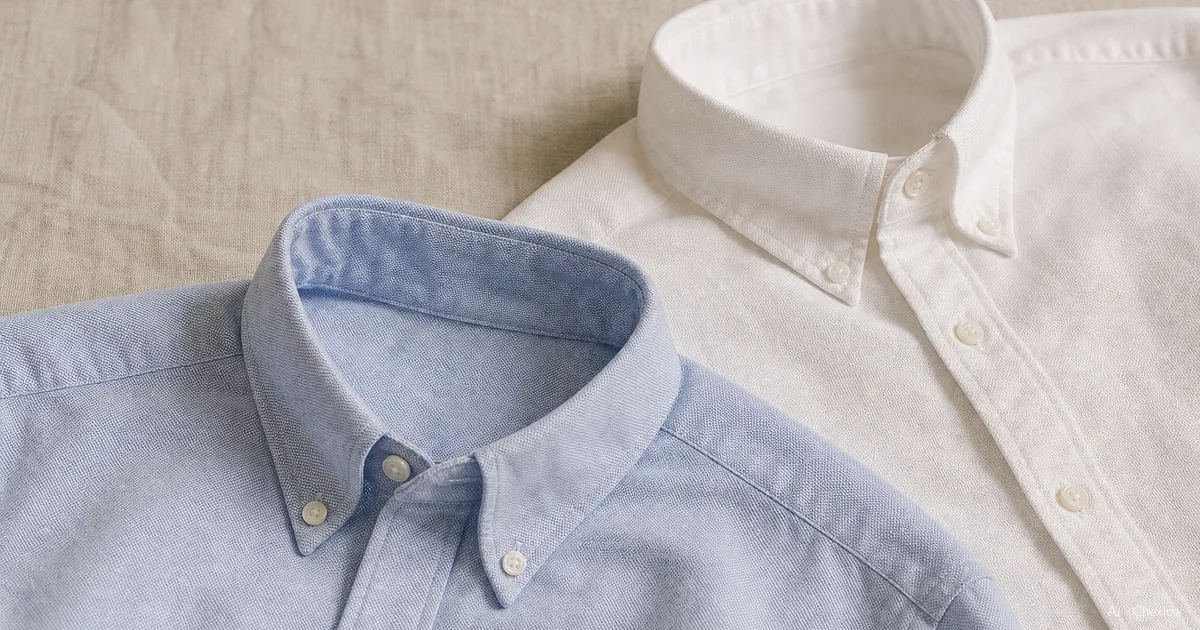
Two white oxford button-downs, same cotton, same price, hang side by side and look like the same shirt. Then you button the collar. One arcs into a soft, easy curve. The other lies flat and a little stiff. That curve has a name, the collar roll, and it is the single thing that decides whether an oxford button-down looks like the one you pictured or a cheaper copy of it.
Most first buyers never look at it. They pick a color, check the price, and miss the detail that the shirt is actually built around.
A quick bit of history explains why it matters. In 1896 John Brooks watched English polo players button their collars down so the points stopped flapping in the wind, brought the idea back to Brooks Brothers, and by 1900 the button-down oxford was on American shelves (Robb Report, History of the OCBD). By the 1950s it was the Ivy League uniform, worn by everyone from Gregory Peck to John F. Kennedy. The shirt earned its reputation on that soft rolling collar, not on the fabric alone.
So this is not a guide to oxford versus poplin versus twill. That is a fabric question. This is about the garment: the collar, the care, and which oxford button-down actually earns a spot as your first.
What makes an oxford button-down an OCBD
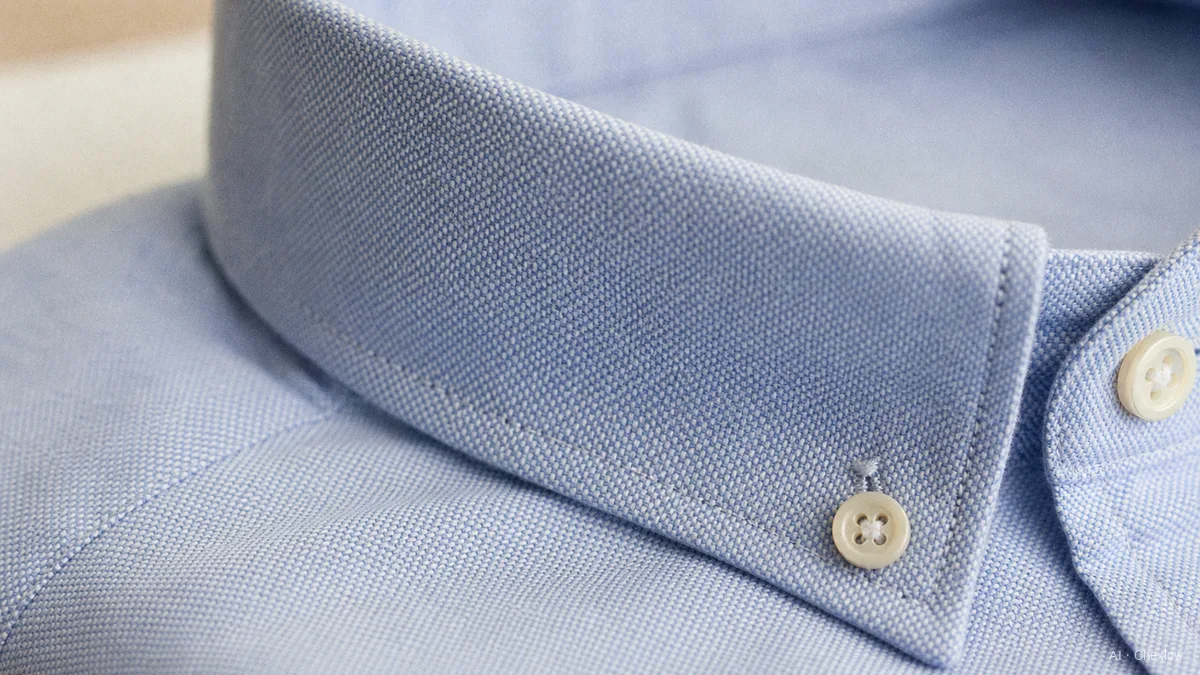
Strip it down and only two things define the shirt collectors mean when they say OCBD. It is made of oxford cloth, and it has a soft button-down collar with no interlining (Gentleman's Gazette, OCBD Guide). That is the whole definition.
The oxford cloth part gives you the texture and the forgiving hand you already expect: a slightly heavy, woven surface that shrugs off wrinkles better than a smooth shirt. The collar part is where the shirt is won or lost, and it is the half people skip.
Everything else you will read about is house detail, not a rule. The flap pocket is a J. Press signature. The little loop on the back yoke and the extra button under the collar are Gant details, from the era when these shops dressed students right next to Yale and Harvard (Styleforum, OCBD Guide). Nice to have, but none of them makes or breaks the shirt. The collar does.
The collar roll, and the lined versus unlined decision
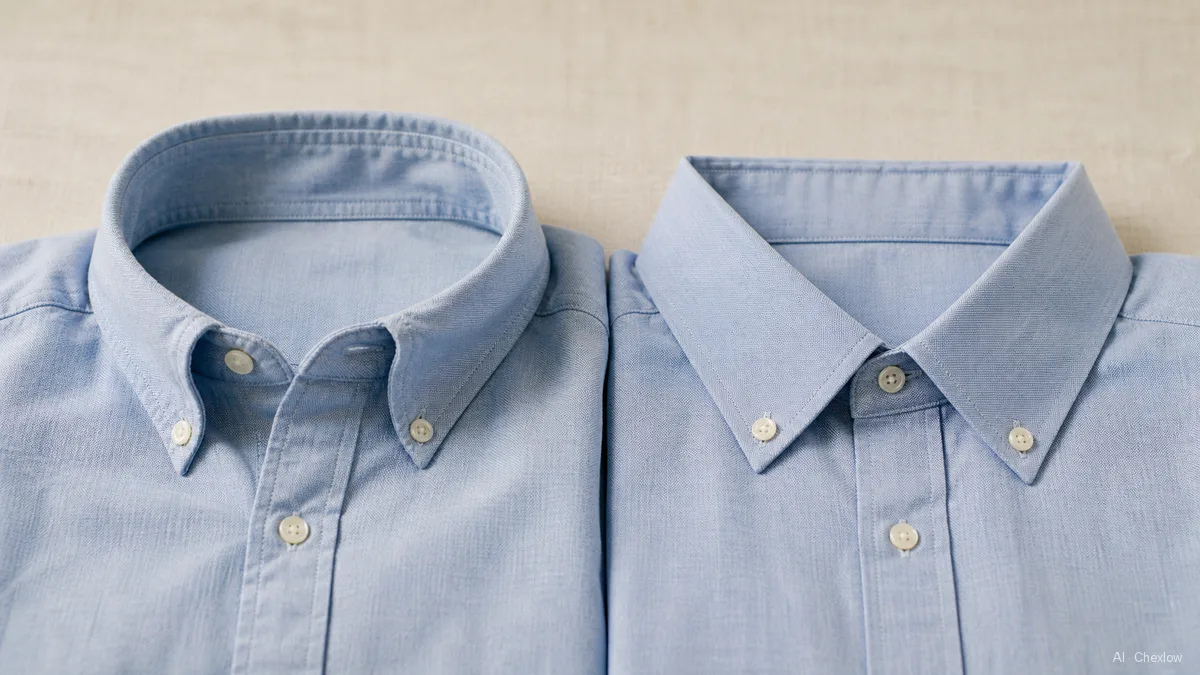
The roll is the soft S-curve the collar makes when you button it down. It happens for two reasons. The collar has no fused lining inside, so the fabric bends on its own instead of standing to attention. And the collar points are cut long enough, with the buttons set close enough, that the collar has to arc up rather than lie flat. A traditional soft-roll collar runs a bit over three inches at the point; Mercer & Sons famously cut theirs at 3 7/16 inches (Gentleman's Gazette, OCBD Guide).
This is the real decision when you buy, and it hides behind the word lining.
A lined, fused collar sits flat and clean. It looks crisp on the rack, but it loses the roll entirely and can pucker along the seam after a few washes. An unlined collar rolls beautifully and feels soft from day one, but it wrinkles more at the collar and cuff. Neither is wrong. But if you want the shirt that made the OCBD famous, you want unlined (Styleforum, OCBD Guide).
Brooks Brothers makes the point better than any spec sheet. Their oxford was unlined and unfused for decades, and that roll was so much a part of it that the shirt turns up in mid-century fiction as shorthand for a certain kind of man. In the late 1980s the company quietly switched to a lined, fused collar and the distinctive shape vanished, then in 2016 they brought the unlined collar back and dropped the fused version entirely (Ivy Style, The Brooks Brothers Oxford). When a maker with more than a century in the shirt treats the roll as the whole identity, it is worth turning the collar over before you pay.
One practical note if you wear ties. A collar with a bit more open space between the points rolls better, because a fat knot fights the collar's ability to bend. Reach for a slim four-in-hand knot rather than a big Windsor, and let the collar do its thing (Ivy Style).
Must-iron or non-iron, the care choice that changes the shirt
Once the collar is sorted, the next question is how much you want to fight wrinkles, and it genuinely changes what you are buying.
A pure cotton, must-iron oxford breathes, feels soft, and gets better with age. The good news is that oxford cloth is thick and textured, so it does not crease as badly as a fine dress shirt, and a little rumple is honestly part of the look (Art of Manliness, Guide to the Oxford Shirt). You can wear it slightly relaxed and it reads intentional rather than sloppy.
Non-iron is a different object. It is a resin finish, usually formaldehyde-based, heat-cured onto the cotton so the fibers hold their shape. It fights wrinkles well, but it feels stiffer, breathes less, and the treatment shortens the shirt's life; Consumer Reports has put the loss at roughly twenty to twenty-five percent (Rave Fabricare, Non-Iron Shirts). Reputable makers keep the chemistry conservative, well under textile safety limits (Proper Cloth, Formaldehyde in Clothing), so this is about feel and longevity more than worry.
The decision is simple. If you will iron, or you like a lived-in shirt, pure cotton is the better one. If it is a travel shirt or you refuse to own an iron, non-iron is a fair trade, with one catch: a fused non-iron collar has usually given up the roll anyway, so you are choosing convenience over the detail that makes the shirt special.
Which one to start with, and reading brand character
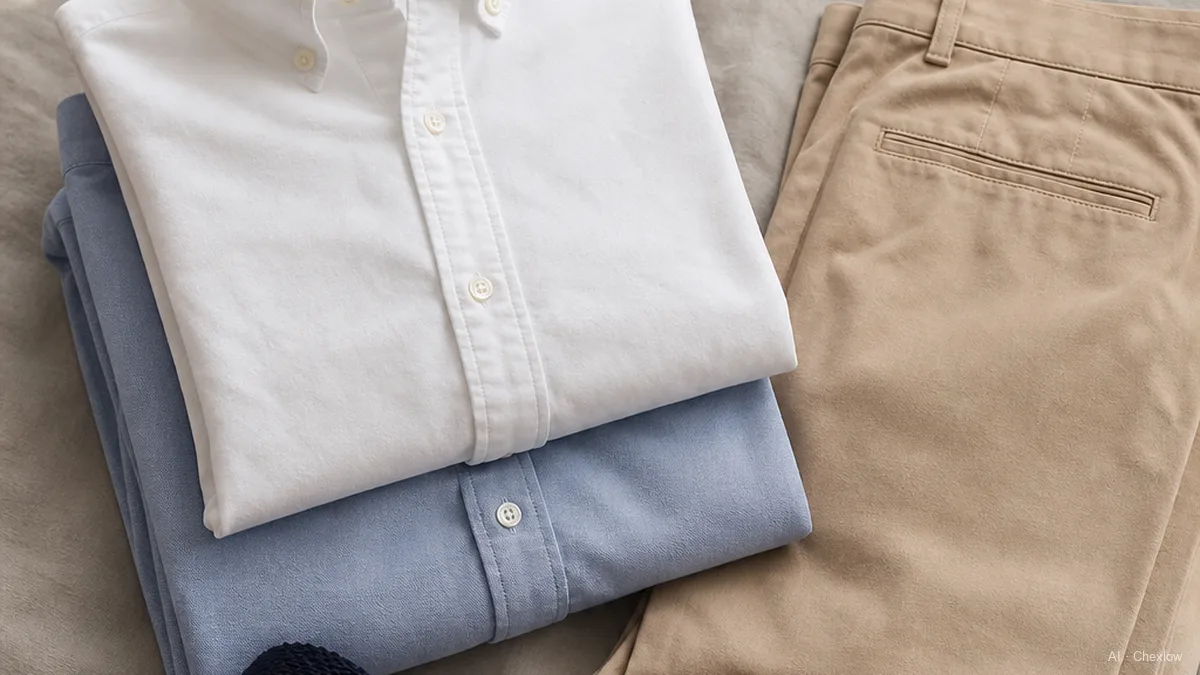
Start with one shirt, and make it light blue or white. Light blue is the more useful first color. It reads a touch less formal, hides a long day, and works with almost anything. White is the cleaner, dressier anchor, the one that goes under a blazer without a second thought. If you can only buy one, blue does more of the week.
Then let the shirt do its job, which is a wide one. The oxford button-down is technically a dress shirt but behaves like a sports shirt. It goes untucked with jeans on the weekend, tucked into chinos with a knit tie for smart casual, and under a navy blazer for the Ivy look it was born into. The one place traditionalists leave it out is under a formal suit, where its softness fights the suit's sharpness (Art of Manliness, 5 Ways to Wear an OCBD).
It also helps to know that the same white OCBD is cut very differently from maker to maker, so match the cut to your build before you fuss over the collar. Brooks Brothers runs fuller and roomier and owns that American roll. Kamakura cuts noticeably trimmer, with mother-of-pearl buttons and a slightly sharper collar, at around eighty dollars. J. Press keeps the old trad details like the flap pocket, and Gant still carries the locker loop and back collar button it helped make famous (Styleforum, OCBD Guide).
Pick the cut that fits your shoulders, choose the collar you actually like, and decide how you will wash it before you buy. The fabric only tells you the shirt is oxford. The collar tells you whether it is an OCBD worth keeping.
Sources
- Robb Report, How the Oxford Cloth Button-Down Became a Staple — 1896 polo origin, Brooks Brothers 1900, Ivy League adoption and cultural icons
- Gentleman's Gazette, Oxford Cloth Button Down Shirt Guide — OCBD definition, unlined collar, collar roll and point length
- Ivy Style, The Strange Trajectory of the Brooks Brothers Oxford — unlined-to-fused history and 2016 return, tie space and roll
- Styleforum, OCBD Complete Guide — lined vs unlined, house details, maker cut and collar differences
- Art of Manliness, A Man's Guide to the Oxford Shirt — pure cotton feel, formality position, how to wear
- Proper Cloth, Formaldehyde in Clothing and Rave Fabricare, Non-Iron Shirts — non-iron resin treatment, feel and longevity tradeoff
Hoe deze gids is opgebouwd
This guide started from a detail that decides how an oxford button-down actually looks and yet almost never appears on a spec sheet: the collar roll. We pulled the OCBD definition, collar construction, and lined-versus-unlined mechanics from menswear references at Gentleman's Gazette, Styleforum, Ivy Style, and Art of Manliness, cross-checked the Brooks Brothers collar history and the non-iron care tradeoff against Robb Report, Proper Cloth, and Rave Fabricare, and kept the framing on shirts you can actually compare and buy through Chexlow. Brand cuts and prices are mentioned as reference points and shift over time.
Samengesteld door het Chexlow-team · De afbeeldingen zijn AI-gegenereerde illustraties