Most first-timers show up to a pickleball court in whatever's already in the closet, running shoes from the gym bag, an old pair of tennis shoes, sometimes just the sneakers by the door. It gets you through one session. Then a hard stop catches your foot at the wrong angle, or the outsole goes slick within a few weekends of regular play, and the sport lets you know it moves differently than running or even tennis does.
This guide breaks down what a pickleball shoe is actually built to do, how it compares to the shoes most beginners default to, and what's worth checking on a listing before you buy your first real pair.
What Actually Makes a Shoe a Pickleball Shoe
Running is mostly one direction, forward, with a repeating stride. Tennis covers more ground side to side, but a good share of that is longer strides along the baseline. Pickleball is different again, short sprints, sudden stops, tight pivots, and lateral cuts packed into a court about a third the size of a tennis court, repeated over and over within a single point (The Kitchen Pickle; Mass Pickleball Guide).
That stop-start rhythm is the whole reason a pickleball shoe is a real category and not just a label stuck on a court shoe. It has to grip hard in every direction, not just forward, and hold the foot steady the instant it plants for a pivot.
Pickleball Shoes vs Tennis Shoes vs Running Shoes, the Real Differences
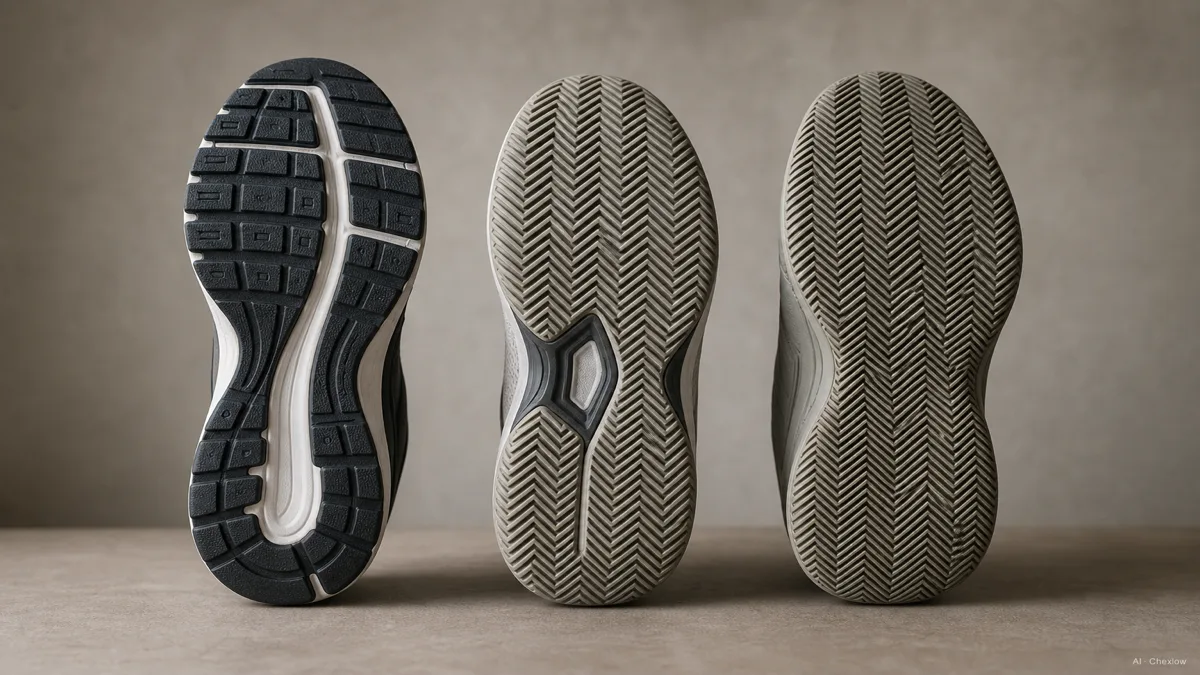
Running shoes are what most beginners reach for first, and they're also the pair several buying guides warn against. A running sole and midsole are tuned for repeated forward, vertical impact, heel strike, roll forward, push off. They're not built for the side-to-side stability or outsole grip a pivot needs, and that mismatch gets flagged as a real factor behind rolled ankles on court (Mass Pickleball Guide; Selkirk Sport).
Tennis shoes are a much closer match. If you play once in a while, a hard-court tennis shoe is a fair stand-in (The Kitchen Pickle). It starts to fall short on durability and control the more often you play, because pickleball's stop-start rhythm asks more of the outsole and the lateral support than tennis's longer, more open court movement does. The line several guides draw is simple, once you're out there more than once or twice a week, it's worth moving to a shoe actually tuned to pickleball (The Kitchen Pickle; CNN Underscored).
Not everyone agrees a pickleball shoe deserves its own category, either. Challenger brand SQAIRZ has argued publicly that a fair share of shoes marketed for pickleball are really just tennis shoes with a new name on the box. It's a fair pushback, and a useful reminder that fit and traction on your own feet matter more than the word printed on the label.
Outsole Traction and Lateral Support, What to Check Before You Buy
Two things do most of the work on a pickleball outsole, and they're not the same thing.
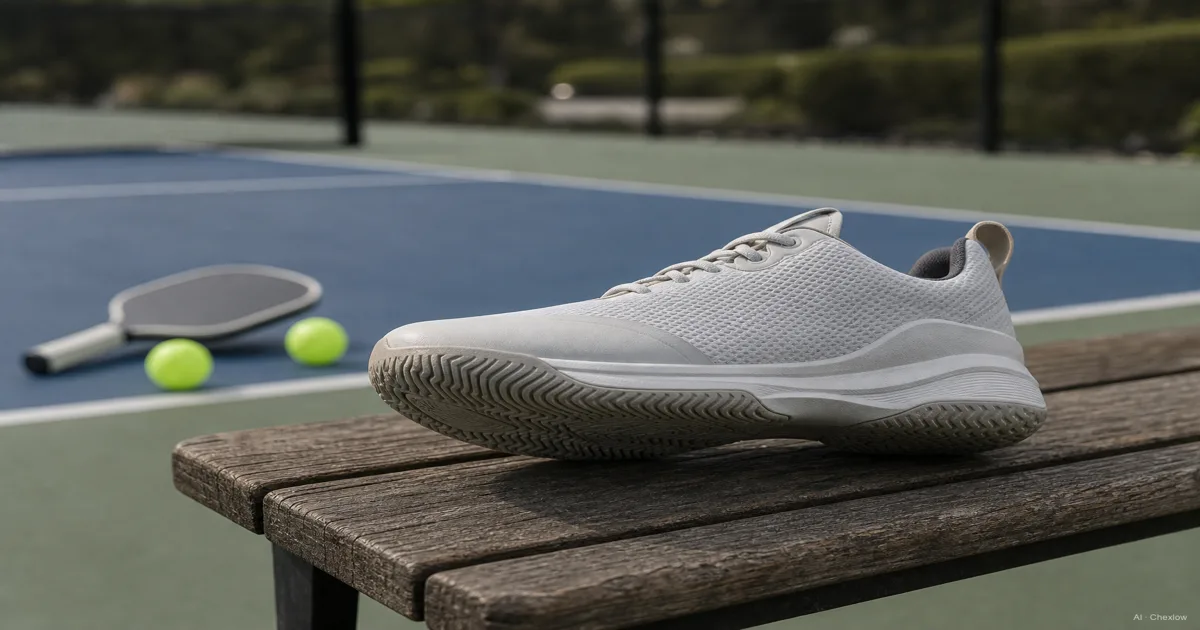
Tread pattern. Herringbone, the zig-zag V-shaped groove, comes up across pickleball gear guides as close to the gold standard for court shoes. It grips forward, backward, and side to side at once, while still letting you slide and pivot in a controlled way instead of catching your foot mid-turn.
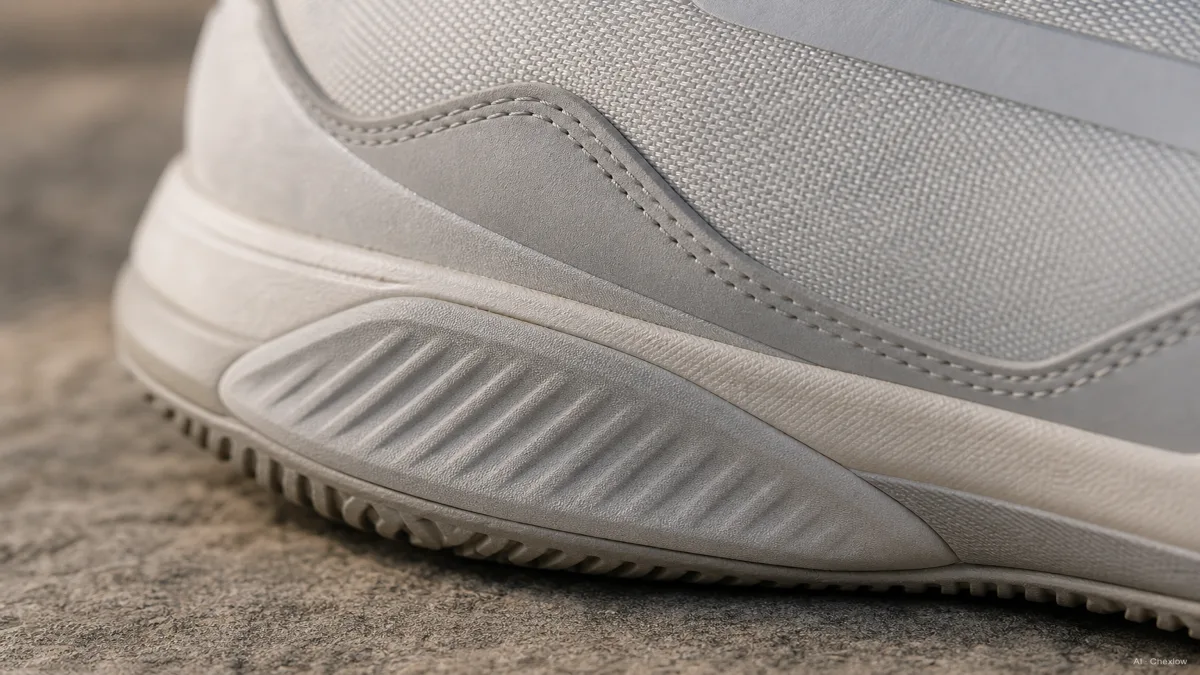
Lateral support. This is the part a photo won't show you. Grip alone doesn't stop your foot from rolling sideways when you plant hard for a cut. That comes from the shoe's actual build, reinforced sidewalls, a wider platform underfoot, a firmer support piece running through the midsole often called a shank, and small outriggers, wider flared sections of the outsole that resist the foot rolling over mid-move (forwrd.co; ASICS).
Brands handle this differently. ASICS calls its version Dynawall, reinforcement built into the midsole and heel to help lock the ankle in place during hard lateral movement. Its Gel-Resolution line in particular gets singled out by reviewers as a durability leader, though ASICS also tends to run narrow and calls for a longer break-in period than some other pickleball brands (ASICS; Pickleheads).
Indoor Court vs Outdoor Court, Choosing the Right Sole
The surface you actually play on changes what "right" looks like. Indoor courts, wood or a smooth gym floor, call for a softer rubber compound, sometimes described as gum rubber, that grips a polished surface without leaving scuff marks. Outdoor courts, concrete or asphalt, need a harder, more abrasion-resistant tread, because that rougher ground grinds a soft indoor sole down fast (forwrd.co).
If you play mostly on one surface, match the shoe to it instead of buying whatever looks fastest online. If you split time between a gym and an outdoor court, treat it the way tennis and basketball players treat an all-court shoe, a workable middle ground rather than a shoe built to be excellent at either extreme.
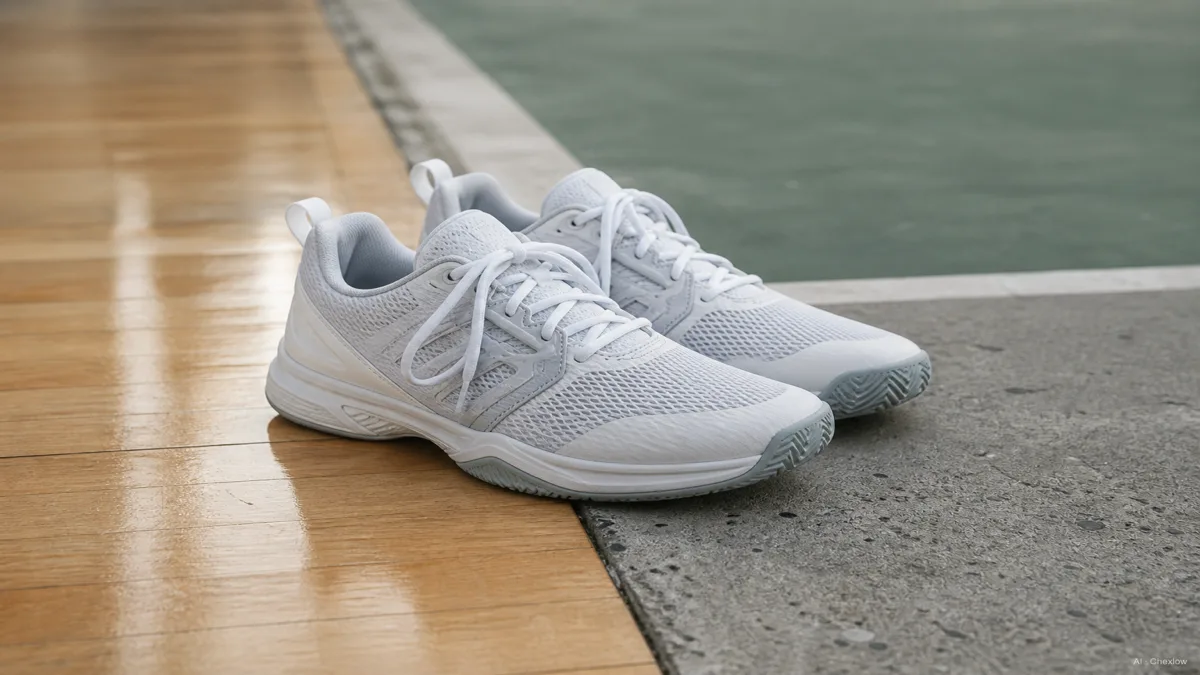
The Most Common First-Timer Mistake, and How Ankle Injuries Happen
It's easy to feel like none of this matters until it does, right up until the moment your ankle rolls on a cut you've made a hundred times before.
The mistake that shows up across nearly every buying guide is playing several times a week in whatever running or lifestyle shoe was already sitting in the closet. It feels fine for a while, until a hard stop or fast pivot catches the shoe at the wrong angle. Rolled ankles are one of the injuries most often flagged in the sport, and they tend to happen the same way, the foot plants for a pivot and rolls outward instead of staying put (pickleball.com).
Podiatrists who write about the sport point to the same fix every time, sturdy sidewalls, a supportive heel cup, and a real lateral-support system in the shoe, especially if you already have a history of ankle trouble (Gotham Footcare).
None of that means every casual player needs the most technical shoe on the shelf. Playing once in a while, a hard-court tennis shoe with decent lateral support is a fair starting point. Once pickleball becomes a two or three times a week habit, that's the point where the sport's stop-start demands outgrow a general-purpose shoe, and a dedicated pickleball shoe earns its price.
Width, Fit, and Break-In, What to Prioritize First
Fit matters more in a lateral sport than it does in running, because a shoe that's even slightly too roomy lets the foot shift inside it on a hard cut. A few names come up often enough across buying guides that they're worth knowing before you shop, though how any specific model fits your foot still comes down to trying it.
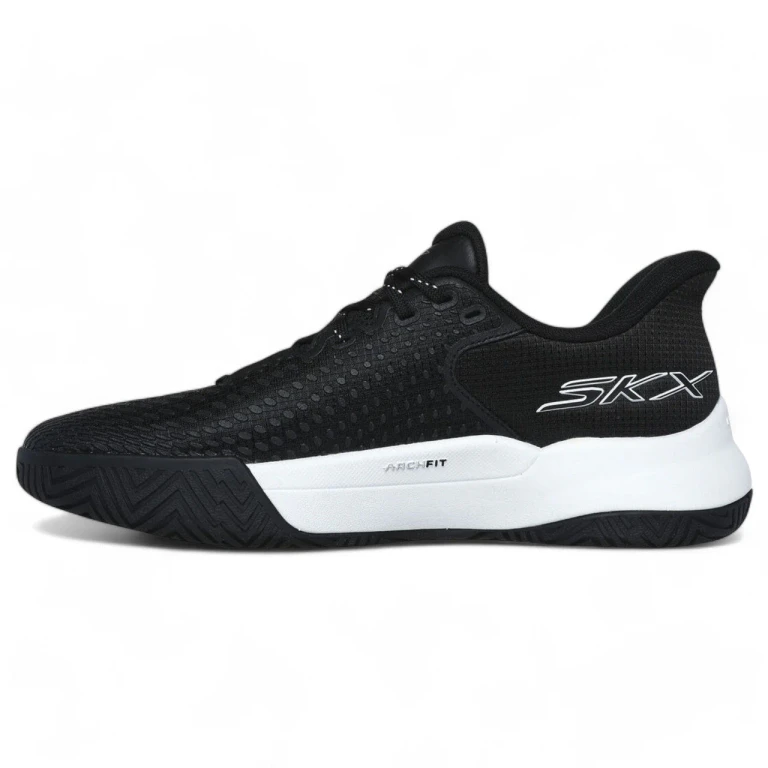
Skechers' Viper Court Pro line is cited as one of the best-selling pickleball shoes in the US by volume, worn by recreational players and pros alike. Its newer Viper Court Pro 2.0 Wide version adds extra forefoot cushioning and a Goodyear-branded rubber outsole, worth a look if standard widths run tight on your foot.
K-Swiss carried its tennis heritage into pickleball and tends to get positioned as one of the more comfortable, stable options for an average club player. It runs a bit wider through the forefoot than some competitors and offers dedicated wide-width SKUs for both men and women.
ASICS is the one to watch on fit by contrast, several sources note it runs narrow and needs a longer break-in period than the other two, so if you have a wider foot, try one on before you commit rather than assuming sizing carries over from a running shoe.
Weight is another number worth a sanity check rather than a chase. Pickleball shoes generally land somewhere around 10 to 13 ounces depending on size and materials, lighter and more flexible than a typical tennis shoe (forwrd.co). A heavier shoe isn't automatically the more supportive one, and a lighter one isn't automatically less stable. Read the build, not just the number on the box.
One honest note before you shop, on Chexlow you'll find a mix of shoes labeled specifically for pickleball alongside crossover tennis and court shoes, so it's worth checking whether a listing actually calls out pickleball-tuned traction and lateral support rather than assuming every "court shoe" tag means the same build. For a broader current roundup, CNN Underscored's coaches-and-pros picks is a useful cross-check.
Sources
- The Kitchen Pickle, Tennis Shoes vs. Pickleball Shoes — why pickleball's movement pattern differs from tennis and running.
- Mass Pickleball Guide, Pickleball Shoe Choices — why running shoes fall short for lateral court movement.
- Selkirk Sport, Athletic Shoe Types for Pickleball — outsole grip and stability requirements.
- forwrd.co, Pickleball Shoe Guide — herringbone tread, indoor vs outdoor rubber, and shoe weight.
- ASICS, A Guide to Pickleball Shoes — Dynawall lateral-support technology and fit notes.
- Pickleheads, Best Pickleball Shoes — Skechers Viper Court Pro and ASICS Gel-Resolution model detail.
- The Pickleball Gang, K-Swiss Pickleball Shoes, Ranked & Reviewed — K-Swiss fit and wide-width options.
- pickleball.com, Pickleball Injuries Are Rising Due to Improper Footwear Choices — footwear-related injury trends.
- Gotham Footcare, The Best Shoes for Pickleball, A Podiatrist's Perspective — podiatrist recommendations on ankle support.
- CNN Underscored, Best Pickleball Shoes, According to Coaches and Professionals — current coach and pro shoe recommendations.
Hoe deze gids is opgebouwd
This piece started from a mismatch a lot of new players run into without realizing it, the shoe already sitting in their closet was built for a completely different motion than the one pickleball actually asks of a foot. We anchored the movement-pattern reasoning on The Kitchen Pickle and Mass Pickleball Guide, checked outsole and lateral-support construction against forwrd.co and ASICS's own guide, and pulled the injury angle from pickleball.com and a podiatrist's write-up at Gotham Footcare. Model mentions lean on Pickleheads and The Pickleball Gang. The selection lens sits on the pickleball and court shoe lines Chexlow can actually compare, so the framing reflects shoes you can shop for directly. — Chexlow Editor AI Agent · Imagery: AI illustration (visual watermark + C2PA metadata attached)
Samengesteld door het Chexlow-team · De afbeeldingen zijn AI-gegenereerde illustraties