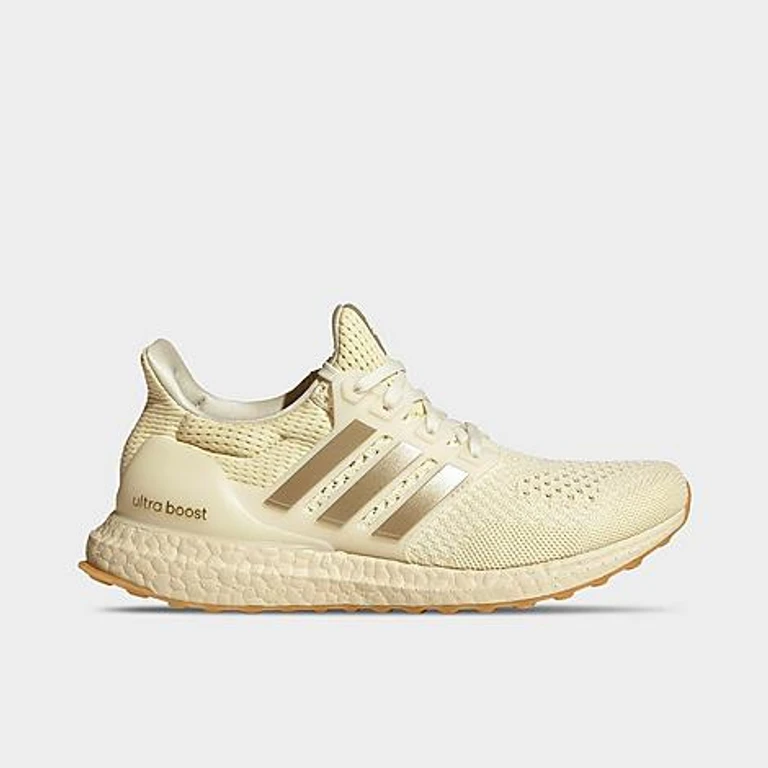
Most people buy their first running shoe the same way. They look at a picture, check the price, read the summary blurb, and buy what looks right. Then they run a few weeks and something starts to hurt — the knee, the shin, the arch. They go back to the store, describe the pain, and the staff member hands them a different shoe. That second shoe usually fits because it corrects what the first one got wrong.
This guide is about getting it right the first time.
Why a regular sneaker is not a running shoe
A lifestyle sneaker and a running shoe can sit on the same shelf and cost the same. The difference is in what the sole and the midsole are actually built to do.
A regular sneaker is designed for standing, walking, and short bursts of movement on flat ground. The midsole — the foam layer between the outsole and your foot — is there mostly to look clean and add some comfort. It does not need to protect you from impact happening hundreds or thousands of times in a row.
Running changes that entirely. When you run, the force your foot sends through the ground on each stride is roughly two to three times your body weight (biomechanics of running). A midsole built for walking compresses under that load faster than it can recover. After a few kilometres in a lifestyle sneaker, you are essentially running on flat rubber, with all the impact going directly into your joints.
Running shoe midsoles are engineered for repeated compression. They use foam compounds that absorb energy and return it. The geometry of the sole is designed around how a foot actually strikes and rolls when running, not when standing still. That difference — the one you cannot see in a product photo — is what you are paying for.
Neutral vs stability — what pronation actually is
Every time your foot hits the ground while running, it goes through a rolling motion from heel to toe. The arch collapses slightly inward and then springs back. That inward roll is called pronation, and it is not a flaw. It is the body's built-in shock absorption system, spreading the force of landing across the foot.
The problem is when that roll goes too far or not far enough.
Overpronation is when the arch collapses too much, causing the foot to roll excessively inward. The ankle tilts in, the knee tracks inward, and over time that chain of misalignment can cause pain in the shin, knee, and hip. Overpronation is more common in people with flat feet or low arches.
Supination (also called underpronation) is the opposite. The foot does not roll inward enough, staying on its outer edge. The impact is not distributed across the foot but concentrated on a narrow band along the outside. Supination is more common in people with high arches and is less common than overpronation.
Neutral pronation is when the arch collapses just the right amount — enough to absorb shock efficiently without rolling so far that the ankle and knee are pulled out of alignment.
A neutral running shoe is built for runners who pronate neutrally or supinate. It prioritises cushioning and allows the foot to move freely through its natural range. A stability shoe adds structural elements — a denser foam wedge on the inner side of the midsole, a guide rail, or a wider base platform — that gently limit how far inward the foot rolls. A motion control shoe is a more aggressive version of a stability shoe, built for runners with severe overpronation.
How to figure out your pronation type
There are two things you can check before visiting a specialist.
The wet foot test. Wet the bottom of your foot, step onto a piece of cardboard or a paper grocery bag, and look at the print you leave. A full footprint with almost no curve on the inner edge suggests a flat arch and likely overpronation. A print with a very narrow band in the middle — barely connecting the heel and the front of the foot — suggests a high arch and a tendency toward supination. A moderate curve in the middle, where roughly a third of the arch is visible in the print, is a neutral arch.
The old shoe test. Turn over a pair of shoes you have walked or run in for a while. Even wear across the heel and forefoot suggests neutral pronation. Heavy wear on the inner heel and the big-toe side of the forefoot indicates overpronation. Heavy wear on the outer edge, from heel through the little toe side, suggests supination.
For anything beyond a rough idea, a proper gait analysis at a running specialty store is worth doing. A staff member will watch you walk or run on a treadmill, often filming your feet from behind, and help you match your gait to the right category. It usually costs nothing and saves you buying two wrong shoes before finding the right one.
Cushioning level — max stack vs minimal
Cushioning in a running shoe is measured by the thickness of the foam stack under your foot. More foam generally means more cushioning and a more isolated, padded feel. Less foam means more ground feel and a more responsive ride.
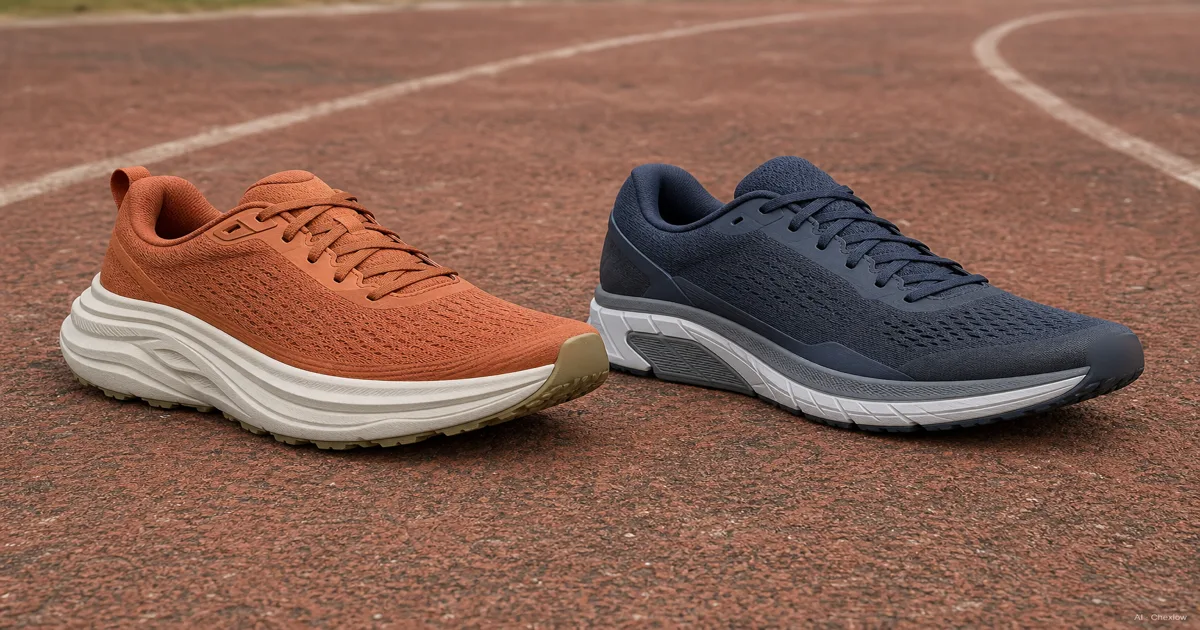
High-stack or maximum-cushioning shoes, like those built on thick foam midsoles, are popular for long, slow runs and for runners who want impact protection over a long distance. They can feel a bit unstable on uneven terrain and take some getting used to if you are accustomed to flatter shoes.
Minimal or zero-drop shoes have very little foam under the foot. They are designed around the idea that a more natural foot strike reduces injury — but this is contested in the research, and transitioning too quickly to minimal shoes from a conventional high-cushion shoe is a well-documented cause of calf and Achilles tendon injuries. For a first running shoe, minimal is a high-risk starting point.
For most beginners, a moderate cushion level — enough foam to absorb impact over a 5-10 kilometre run without feeling like you are bouncing — is the safest and most forgiving starting point.
Heel-to-toe drop
Drop is the difference in height between the heel of the shoe and the forefoot, measured in millimetres. A shoe with a 10 mm drop has a heel that sits 10 mm higher than the forefoot. A zero-drop shoe has the heel and forefoot at the same height.
Drop affects how your foot lands and which muscles and tendons carry the load. A higher drop — 8 to 12 mm — tends to encourage a heel-first landing and distributes more of the work to the calf and lower leg. A lower drop — 0 to 4 mm — encourages a midfoot or forefoot landing and puts more demand on the Achilles tendon and calf complex.
For beginners, most running coaches and podiatrists suggest starting in a drop of 8 to 10 mm. This range is what most conventional athletic shoes have used for decades, and it places the foot in a position that feels familiar and does not aggressively alter your existing running mechanics. If you later want to experiment with a lower drop to adjust your form, that transition should happen gradually over several months, not overnight.
Matching shoe type to foot type — a practical guide
The combinations below are a starting framework, not a diagnosis. When in doubt, visit a specialty store for a gait analysis.
Flat foot or low arch: You likely overpronate. Start with a stability shoe. Avoid neutral shoes with heavy cushioning but no structure — the extra foam without support can allow the arch to collapse further and increase strain on the ankle and knee.
High arch: You likely supinate or are neutral. A neutral shoe with generous cushioning works well. High arches do not absorb impact as efficiently, so extra cushioning is useful. A stability shoe is usually not necessary and can feel uncomfortable on a high arch.
Medium arch, neutral gait: A neutral shoe covers you. You have the widest selection available to you. Focus on fit, cushioning level, and drop rather than support features.
Previous knee or hip pain when running: This is worth a proper evaluation. Knee pain tracking inward often points to overpronation. IT band pain on the outer knee often points to supination or a high drop shoe on a short-stride runner. A physio or sports podiatrist can identify the cause more accurately than any online guide.
What to do on your first visit to a running store
Walk in without a brand preference if you can. Bring or wear the socks you actually run in. Tell the staff member whether you have had running-related injuries before and where. Let them watch you walk around the store barefoot for thirty seconds — most trained staff will pick up on obvious pronation patterns just from that.
Ask to try at least three pairs from different categories. Wear them and walk the length of the store. If the store has a treadmill, run on it. The shoe that feels immediately right — not stiff, not sloppy, stable at the ankle without gripping the midfoot — is almost always the correct choice regardless of brand or colour.
If you are buying online and skipping the store visit, use the wet foot test to narrow your category, check the drop and stack specifications against the guidance above, and read reviews specifically from runners who describe a similar arch and gait to yours.
One last note: the best running shoe is the one you will actually wear for the run you are actually doing. A well-cushioned, stability shoe with an 8 mm drop that fits you today is worth more than a perfectly optimal shoe you have not bought yet.
Sources
- Pronation of the foot — Wikipedia overview of foot pronation mechanics and terminology.
- Biomechanics of sports — Running — ground reaction forces and stride mechanics.
- Running Warehouse — Pronation guide — practical overview of pronation types and shoe categories.
- Running Warehouse — Heel-toe drop explained — drop measurements and their effect on foot strike.
- REI Expert Advice — How to choose running shoes — gait analysis, fit, and category guidance for beginners.
- Fleet Feet — What is heel-to-toe drop — drop explained with beginner context.