Identify what is showing
Before buying another pair, look at the outline under the actual trousers, skirt or dress. Is it a narrow ridge at the leg opening, an indentation where the waistband presses, or the color of the underwear showing through?
Those observations lead to different purchases. A ridge calls for comparing edge construction and position; digging calls for another size or cut; visible color calls for comparing shades. Changing all three at once makes it harder to tell what helped.
Triumph explains that fitted clothes highlight differences in thickness underneath and that elastic waistbands and leg openings can create lines. Use the location of your unwanted line to choose what to inspect next, rather than assuming every visible outline means the underwear is too small.
Compare the edges, not just the label
For more coverage, start by comparing smooth-edged briefs. Inspect close-up photos of the waistband, leg openings and side seams. Ask for a detail photo if the listing only shows the front of the garment: the word “seamless” is not a substitute for seeing the edge you are trying to change.
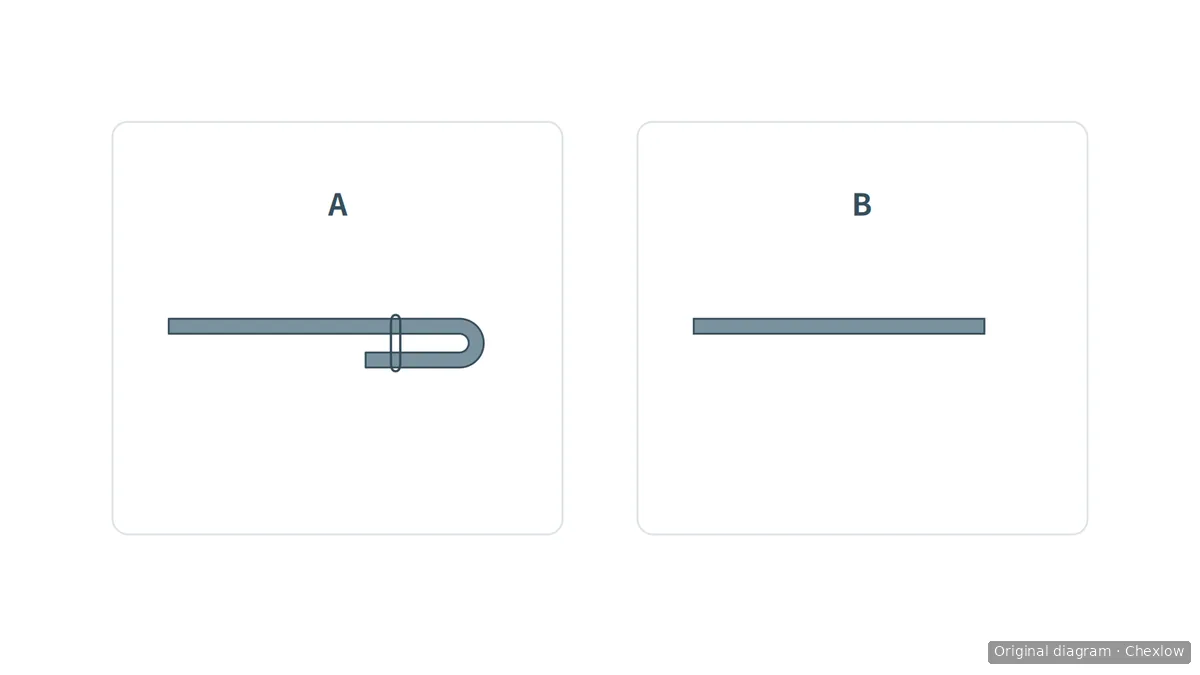
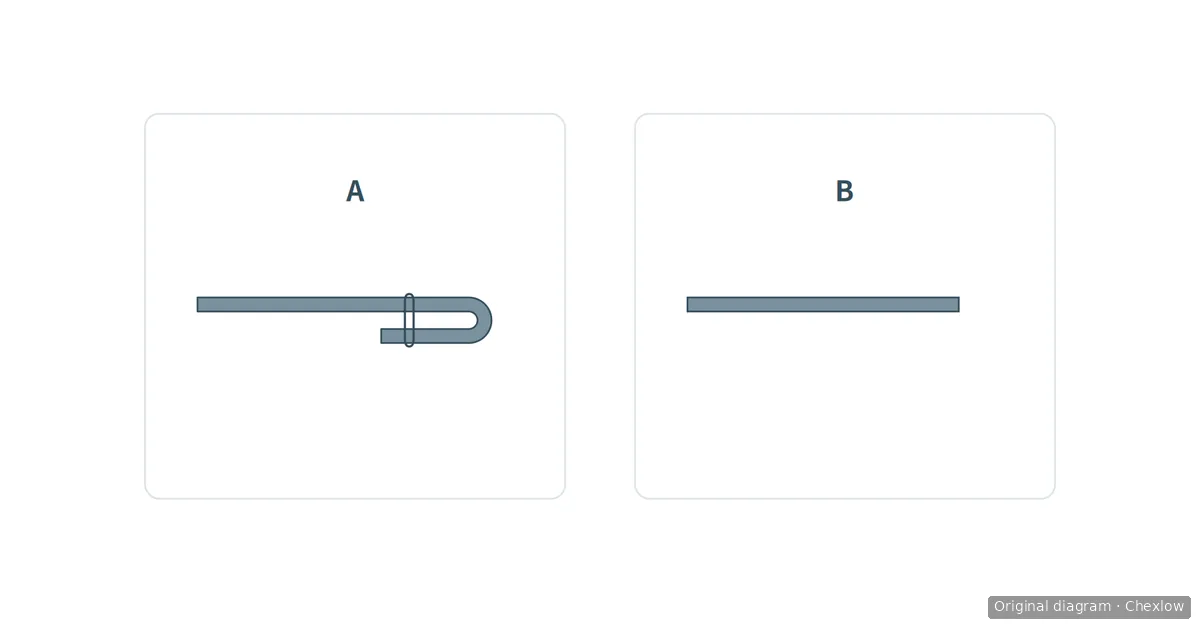
A shows a folded, stitched edge; B shows a single-layer edge without a folded hem. These enlarged examples explain where extra thickness can sit, not how every seamless garment is made or which pair will disappear under your clothes.
Manufacturers use different approaches. Wacoal describes its Perfectly Placed styles as having elastic-free edges, while Soma describes silicone strips in Vanishing Edge underwear to help keep it in position. Those are collection-specific descriptions, not features to assume in another brand's briefs.
A thong is an option if you prefer less rear coverage, not a requirement. Soma distinguishes that minimal coverage from its smoother-edged briefs and hipsters; Wacoal also cautions that a thong is not foolproof if it moves out of place. Keep your preferred coverage on the shortlist and check the construction around it.
Check fit without automatically sizing up
Start with the exact product's size guidance. Triumph notes that too-small underwear can create indentations, while too-large underwear can bunch and shift. Buying a larger size simply to hide lines can exchange one problem for another.
Before ordering, check the seller's underwear try-on and return conditions. Where fitting is permitted, follow its hygiene requirements and use this comparison:
- Stand and sit. Check whether the waist and leg openings press uncomfortably into you.
- Walk and bend. Notice whether the fabric bunches or you want to pull the pair back into position.
- Compare the cut. If one edge still presses while the rest is loose, try a different shape instead of repeatedly increasing the size.
Treat comfortable, stable fit as a buying condition. A pair that looks smoother only while you hold still has not yet passed your outfit check.
Make the final choice with the outer garment
For pale or slightly sheer clothes, compare shades close to your own skin tone. Triumph recommends matching skin tone rather than dress color. That addresses color contrast; it does not remove a raised seam or a tight waistband.
Check the front, side and back in the actual outfit, then sit and move again. Compare candidates under the same lighting and look separately for color showing through, raised edges and displaced fabric. Choose the pair that gives the coverage you want and stays comfortable with that garment.
If several comfortable pairs still show more than you want, reconsider the outer fabric before buying more underwear. Triumph notes that thicker, textured fabrics hide lines better than thin, smooth ones. A different outfit can be a more useful change than another pack of briefs.
If the outer garment is leggings and you are considering replacing them because coverage or fit remains unsatisfactory, continue with choosing leggings by fabric and fit. That is a separate garment decision; an underwear label cannot resolve it.
Hoe deze gids is opgebouwd
This guide was written by AI for Chexlow, using official guidance from Triumph, Wacoal and Soma. It turns their construction and fit explanations into an outfit-based buying checklist; manufacturer no-show claims are not presented as independent wear-test results.
Original SVG diagrams created for Chexlow