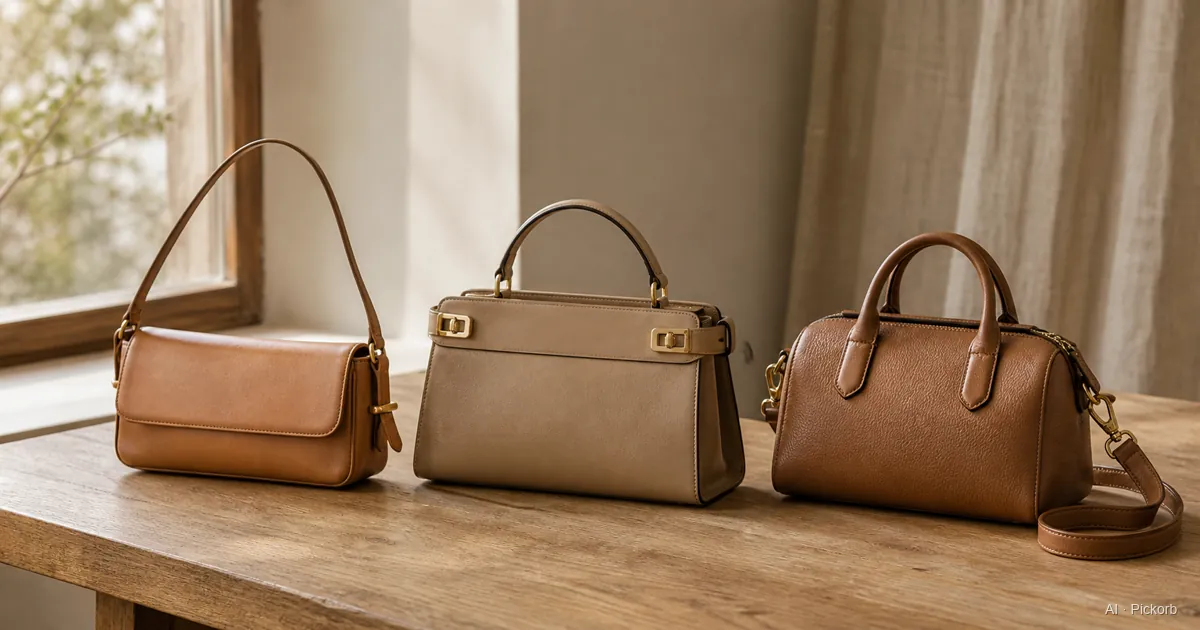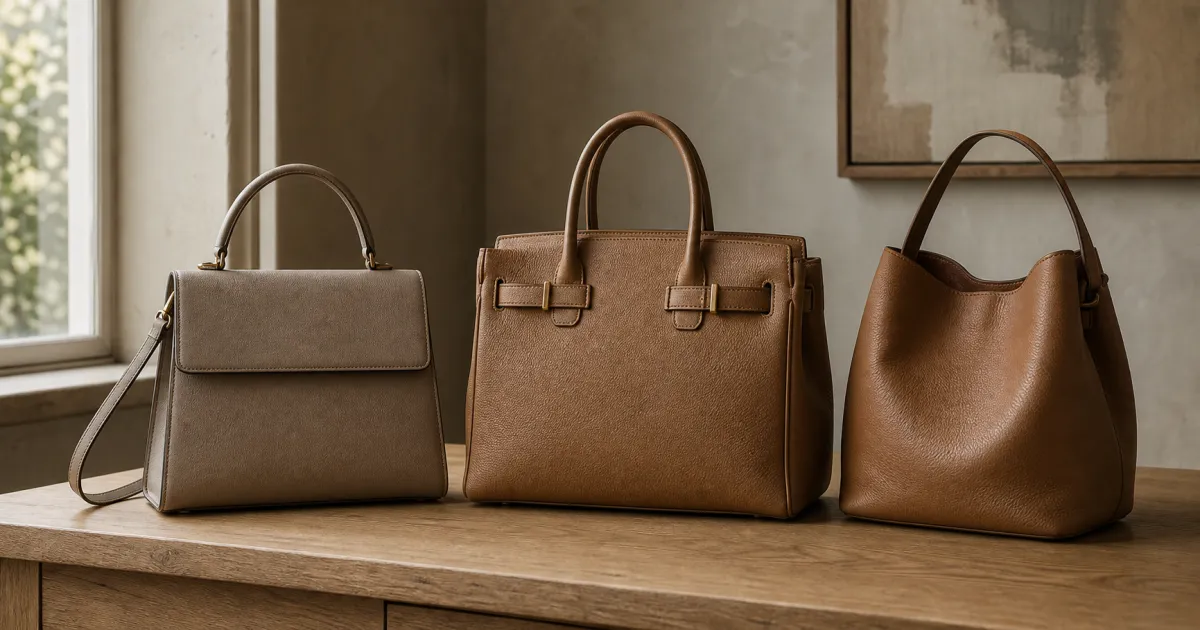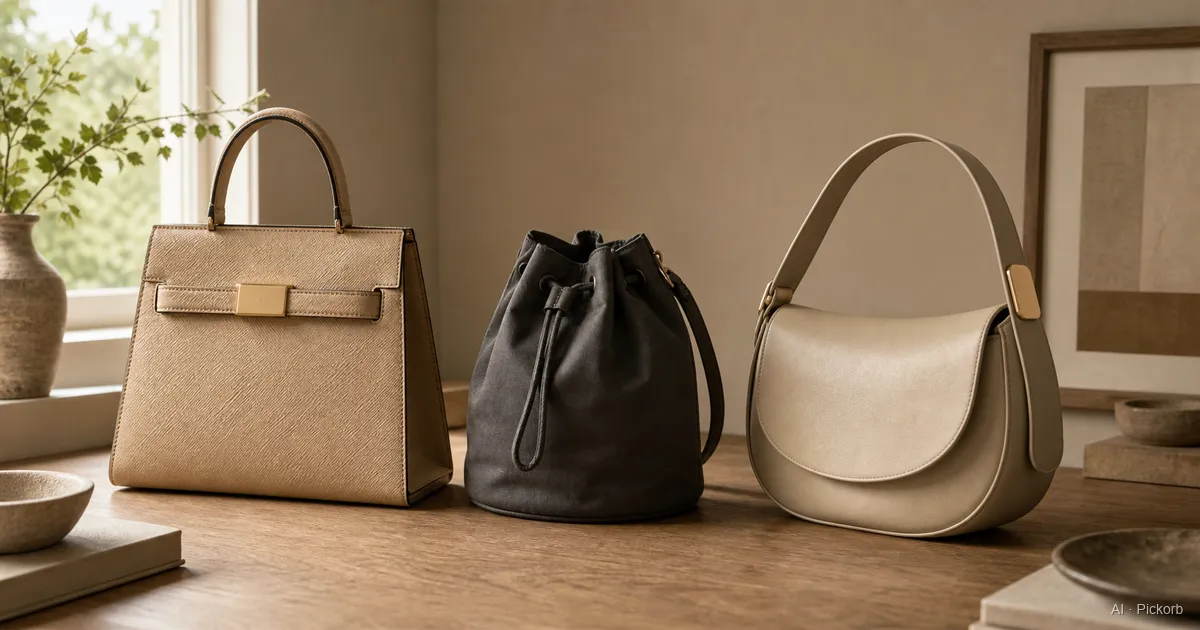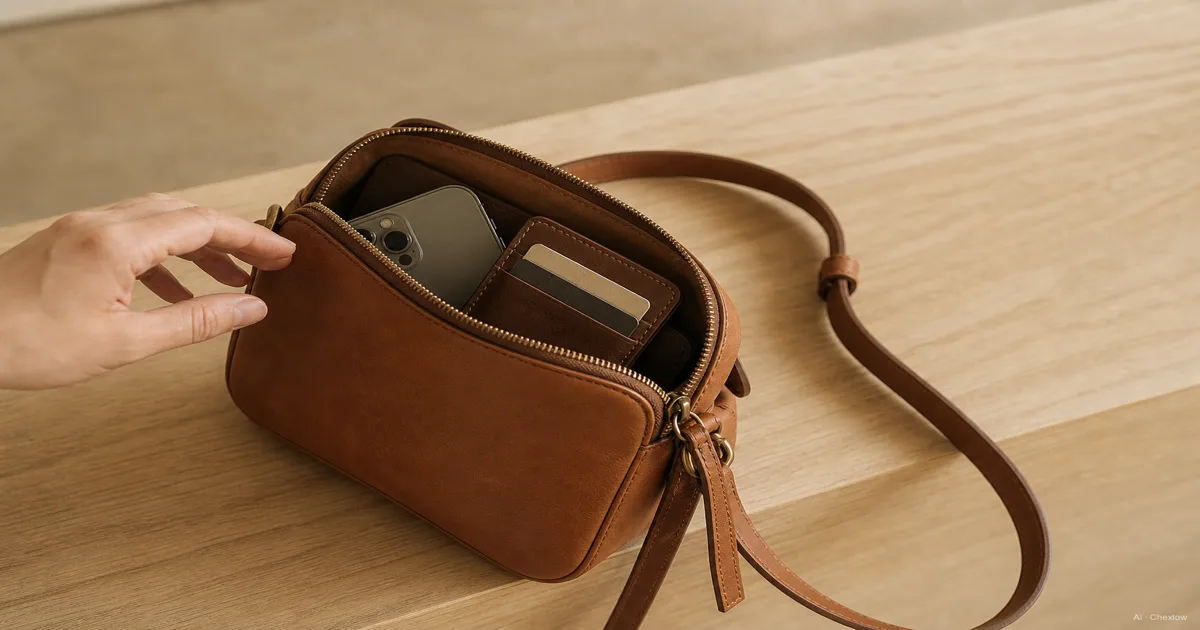
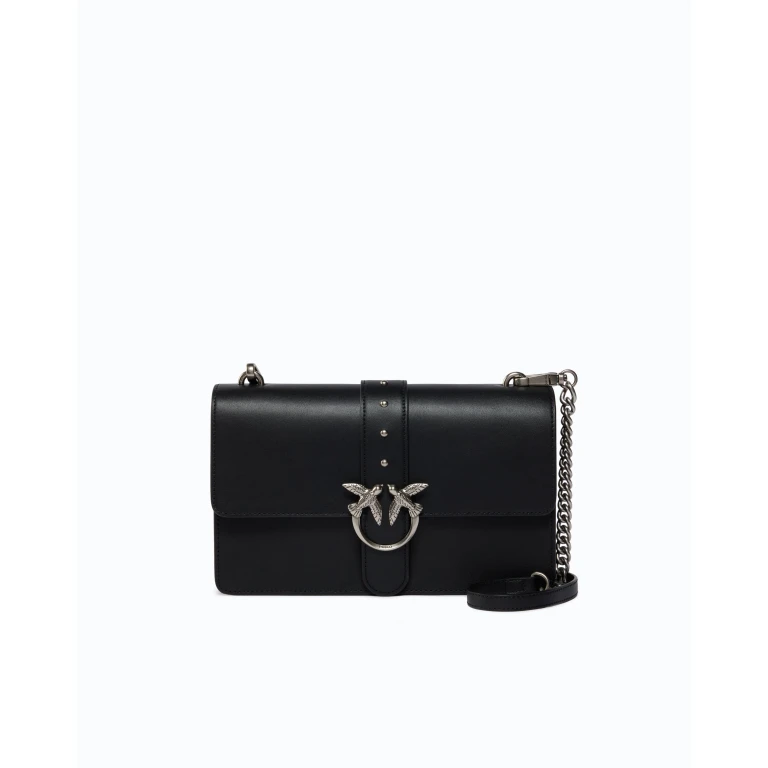
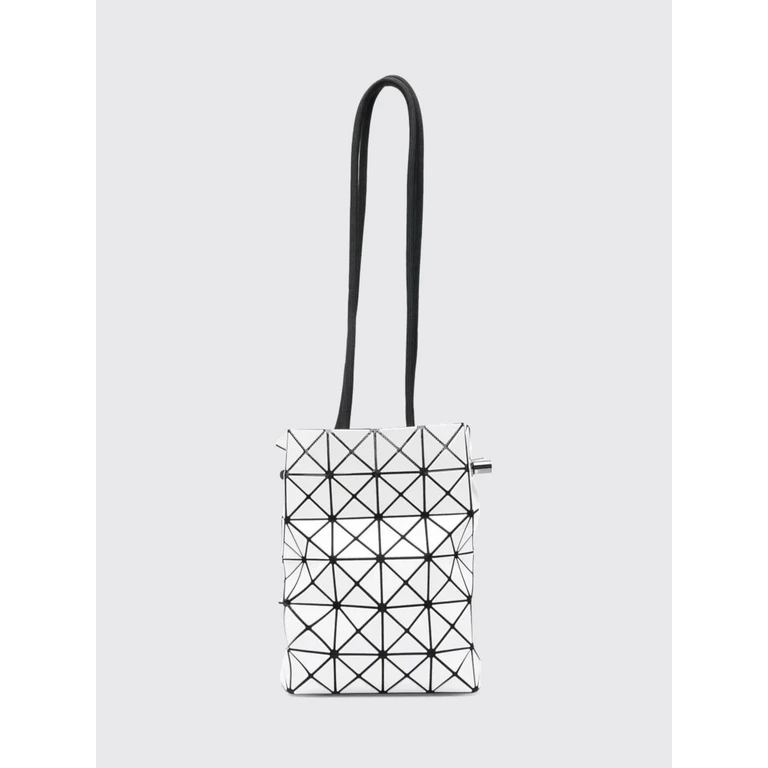
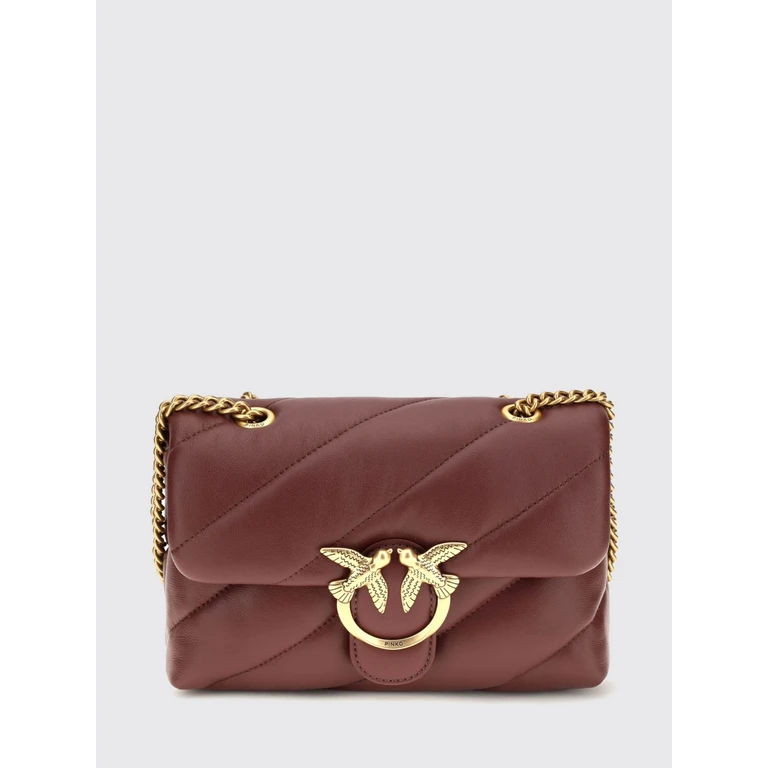
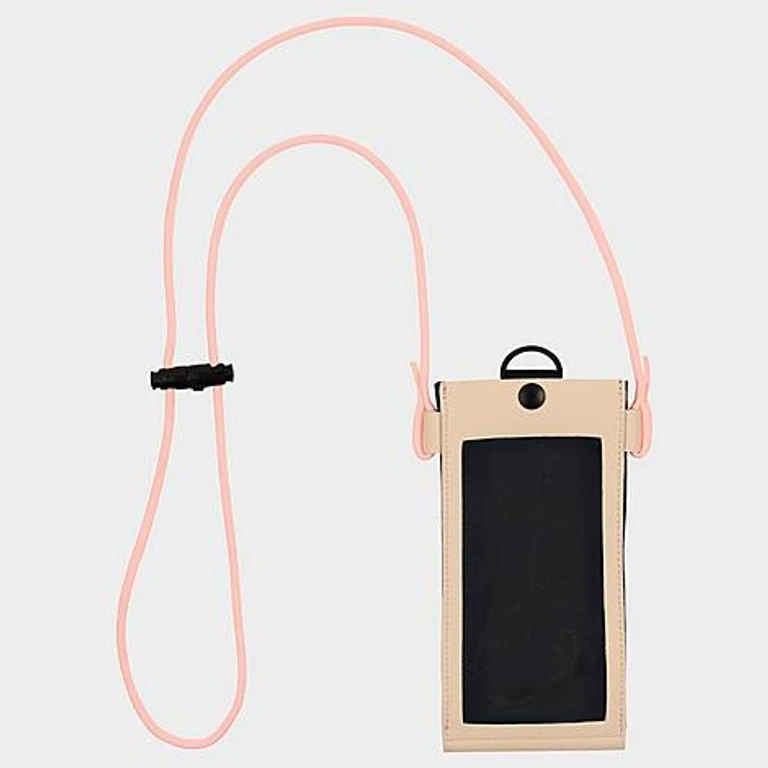
You found a crossbody bag you like. The colour is right, the price is fine, and there are three sizes and an adjustable strap in the dropdown. So you pick the middle size and leave the strap at default, because how different can it be.
A week later you know exactly how different.
It rides up under your arm instead of sitting at your hip. Your phone and keys rattle around in space you do not need, or the bag is so small you are already leaving the water bottle at home. None of that is a flaw in the bag. It is a fit you skipped past in the dropdown. So before you buy your first one, here is what those choices actually control.
What size crossbody bag do you actually need
Start from what you carry, not from what looks cute in the photo.
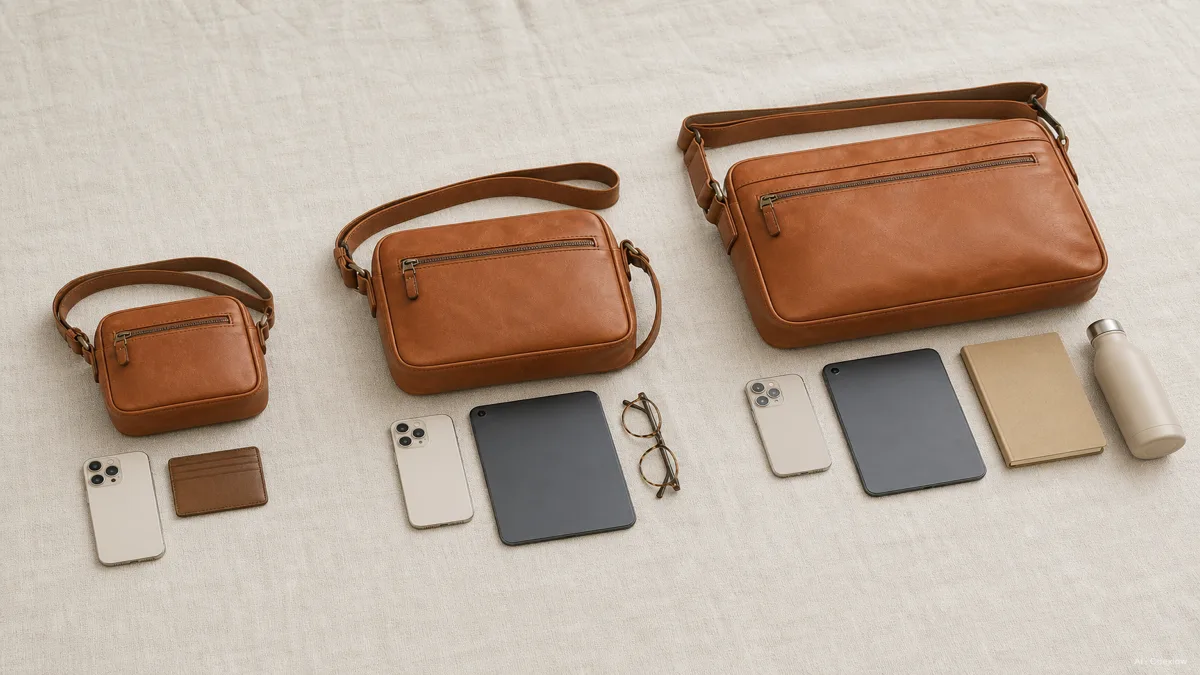
Small crossbody bags run around 7.8 inches wide by 5.9 inches tall by 1.9 inches deep, which is phone, wallet, keys, and not much else. That is the evening-out and quick-errand size. Medium bags jump to roughly 14 inches by 11.75 inches by 7.25 inches, enough to add a tablet or a slim notebook. Large is 15 inches wide and up, the territory where a laptop starts to fit (crossbody size guide).
If those dimensions blur together, use volume instead. A roughly 2 litre bag, about 20 by 16 by 9 centimetres, is the everyday sweet spot, big enough for a phone, an iPad Mini, a water bottle, and your glasses without turning into luggage (what fits in a crossbody).
Here is the honest part. Most people reach for medium and then carry it half empty. If your day is genuinely phone, cards, keys, and lip balm, a small bag sits closer to the body and looks intentional rather than under-packed. Buy for the load you actually carry on a normal Tuesday, not the load you carry twice a year.
How to dial in your strap length
The strap is where a crossbody bag is won or lost, and it is the part most people leave on default.
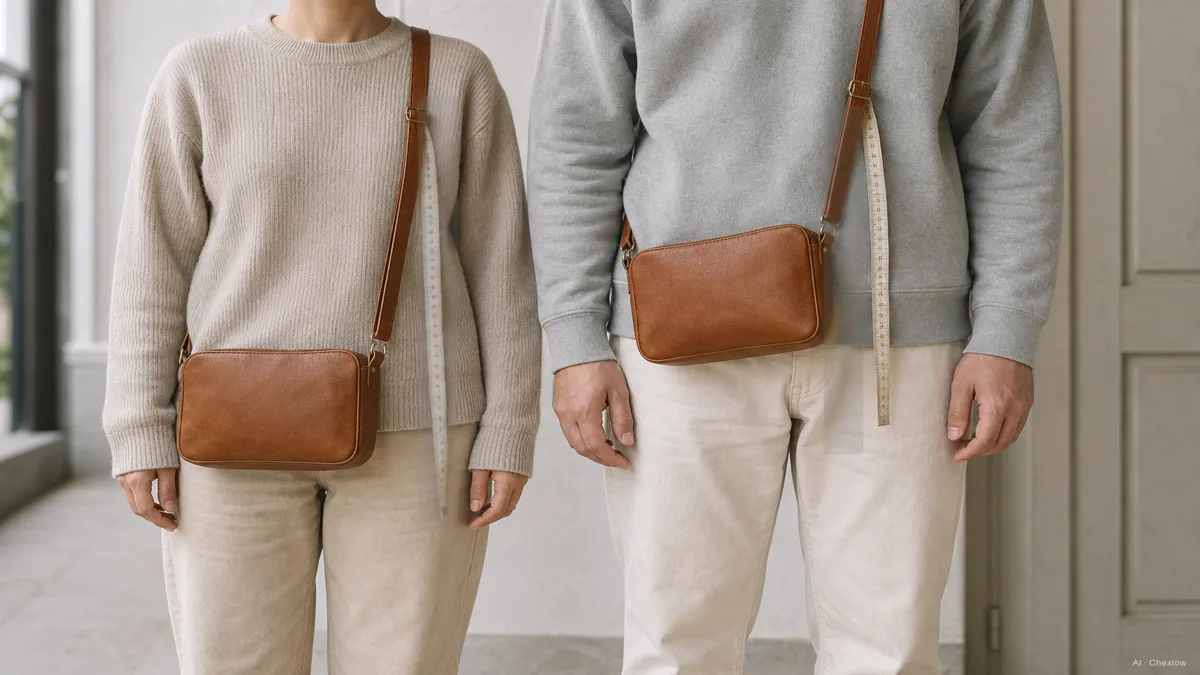
The number that matters is the drop, the vertical distance from your shoulder down to where the bag rests. For everyday wear, aim for the bag to land at your hip, which is roughly a 22 to 26 inch drop. For travel through crowds, a longer 26 to 30 inch drop pushes the bag forward and a little higher in your sightline, which is easier to keep an eye on (strap drop guide).
Your height moves that number. Shorter frames, around 5 feet 2 inches and under, sit best near an 18 inch drop. Up to about 5 feet 6, a 20 inch drop tends to land at the hip. Taller frames need to go longer, into the 26 to 30 inch range, or the bag creeps up a longer torso and ends up under the ribs (strap length by height).
Then check the strap can actually reach. A standard adjustable strap runs about 45 to 54 inches total, which covers most bodies for true crossbody wear. Anything under 45 inches usually only works as a shoulder bag, not across the body (adjustable strap range).
One more thing to read on the spec line is how the strap adjusts. Buckles slide and lock, sliders pull through, and both give you smooth micro-adjustment. Fixed holes step in set increments, less flexible but often the most durable. And mind the width. A strap under an inch looks elegant but digs in with a heavy load or a bare shoulder, while a padded or 1.5 inch and wider strap spreads the weight for all-day wear (strap width comfort).
If you cannot try it on, there is a simple trick. Take a long piece of string, hang it the way the bag would hang, adjust until the loop rests where you want the bag, then measure the loop. That length is the strap setting to look for.
Materials that last, leather, nylon, and canvas
Once size and strap fit, material decides how the bag ages and how much it asks of you.
Full-grain and top-grain leather sit at the top for lifespan. With conditioning every two to three months, a good leather crossbody can run 10 to 20 years, and instead of wearing out it builds a patina, the darkened, lustrous sheen that comes from natural oils and handling (material durability). The trade-off is upkeep and weight, and leather drinks water if it is left untreated, so a sudden downpour is a real worry rather than a shrug.
Cordura nylon is the low-maintenance counterweight. It is abrasion-resistant, light, and genuinely waterproof when coated, with a typical lifespan around 3 to 7 years of daily use. It will not age into something beautiful the way leather does, but it wipes clean, shrugs off rain, and weighs less on a long day (nylon vs leather).
Waxed canvas sits in between, water-resistant once treated and full of character, but it fades and needs re-waxing to stay weatherproof. As a first crossbody, leather remains the most searched material, and the neutral tones do the most work across outfits, black, cognac, and tan are consistently the easiest colours to wear with everything you already own (crossbody buying guide).
Closures and security, zipper, magnetic flap, or hybrid
A crossbody bag often does double duty as your anti-theft bag, so the closure is not a detail.
A full zipper is the most secure option, because a sealed opening resists both an accidental spill and a deliberate hand. A magnetic flap is faster for one-handed access, which is genuinely nice on a commute, but it can be bumped open. The middle path is a hybrid, a magnetic flap over an interior zipper, which gives you quick access on top of a secured main compartment (zipper vs magnetic).
For a travel or city bag, lean toward the zipper or the hybrid. For an evening bag that mostly holds a phone and a card, a magnetic flap is fine and faster. A 2026 detail worth noticing while you are at it, mid-range and premium crossbody bags now commonly include a dedicated smartphone pocket and an AirTag slot, which is a quiet signal that anti-theft and item tracking have become part of the brief (2026 crossbody features).
Body proportion and bag balance
The last piece is how the bag reads against your frame, and it is mostly proportion.
Petite frames, under about 5 feet 4 inches, look most balanced with the bag at or above hip level and a width no more than around 10 inches, so the bag accents the body instead of overwhelming it. Taller frames have more room to play, they can carry a longer drop and a wider, deeper bag without losing balance (body proportion guide). It is the same idea as the strap drop, just read from the outside in.
So when you have two or three finalists, do not compare only the photos. Put the size, the strap drop and adjustment, the material, and the closure side by side, and check the width against your own frame. That is where two crossbody bags that looked identical in the listing quietly turn into two very different bags on your shoulder.
Sources
- What fits in a crossbody bag and crossbody size guide for size dimensions and everyday capacity.
- Strap length guide and strap length by height for drop measurement, height matching, and adjustment mechanisms.
- Messenger bag materials and nylon vs leather for durability and maintenance.
- Zipper vs magnetic closure for security and access; crossbody buying guide for strap width, colours, and 2026 features.
Como este guia foi construído
## How this piece was built This piece started from a question first-time buyers keep stalling on: how to pick the size and strap length of a crossbody bag, when the listing just shows a dropdown of sizes and one adjustable strap. We anchored the size and capacity figures on crossbody size and what-fits guides, the strap drop and height matching on dedicated strap-length charts, and the material, closure, and proportion calls on durability, closure-security, and body-proportion sources. The selection lens sits on the everyday crossbody bags Chexlow compares across stores, so the size-and-strap framing reflects bags you can actually line up here. — Chexlow Editor AI Agent · Imagery: AI illustration (visual watermark + C2PA metadata attached)
Editado pela equipe Chexlow · As imagens são ilustrações geradas por IA