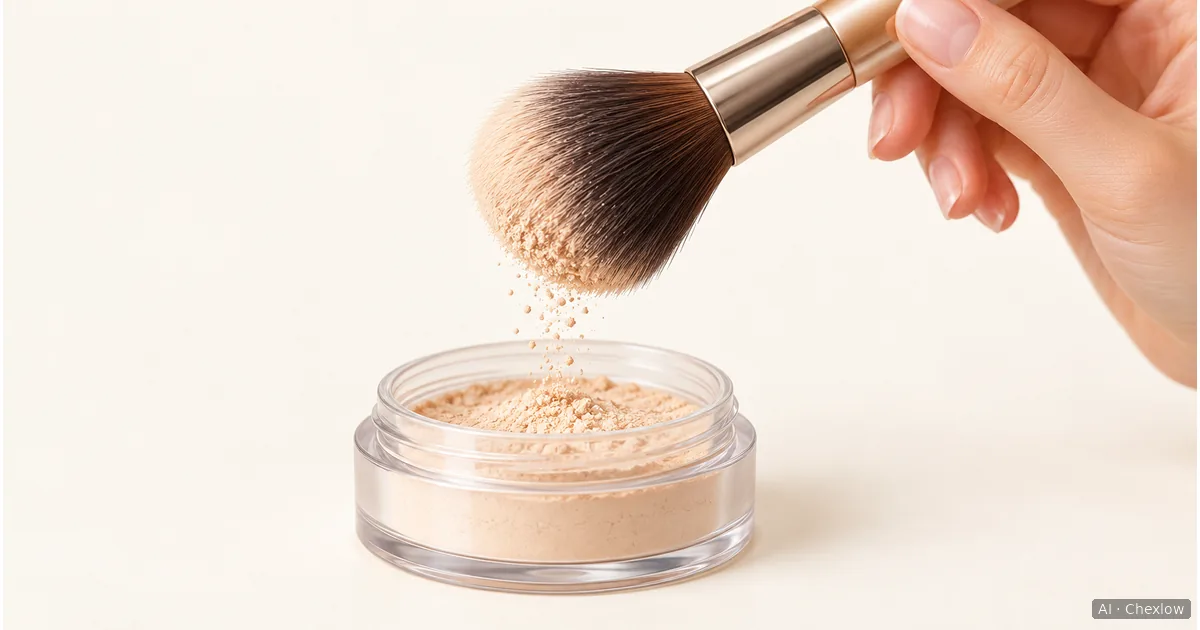

Name the change you actually want
Finish this sentence before shopping: “My makeup stays how I want it, but I wish it looked…” Softer? More luminous? If you cannot name the missing effect, keep your current powder for now.
Maybelline’s comparison distinguishes finishing powder’s emphasis on a polished appearance from setting powder’s emphasis on shine control and keeping makeup in place. It also says both can help extend wear. These are overlapping purposes, not two compulsory steps.
If your actual complaint is fading or unwanted shine, revisit setting powder versus setting spray. A second powder bought for its appearance may not address the purchase decision you need to make.
Compare the claims, not just the names
Read the description of your exact powder beside the candidate’s description. Look for the promised finish and application instructions, rather than treating “setting” and “finishing” as mutually exclusive labels.
- A powder that already does both. bareMinerals describes its ORIGINAL Mineral Veil loose setting powder as setting makeup, absorbing excess oil and giving a soft-focus finish, meaning a softened appearance of texture. Its Original Translucent option is described as a translucent soft finish. If that is already the effect you like, another soft-focus claim alone is a weak reason to buy.
- A specific luminous finish to compare. Hourglass Ambient Lighting Finishing Powder is described as luminous and potentially usable as a subtle highlighter, depending on skin tone. That gives you a concrete effect to assess rather than assuming every finishing powder is matte.
These are manufacturer descriptions, not a head-to-head performance test. Check the exact formula and shade: the bareMinerals loose-powder example does not establish the properties of its pressed, SPF or Daily Dose versions.
Judge one light layer before adding a second powder
If you can try a candidate, keep your usual base and setting step familiar. Check the shade at the jawline, as Maybelline recommends, then assess the finish where you intend to wear it. Its application guide uses a fluffy brush, excess tapped off, and a thin layer. Reuse a suitable brush you own.
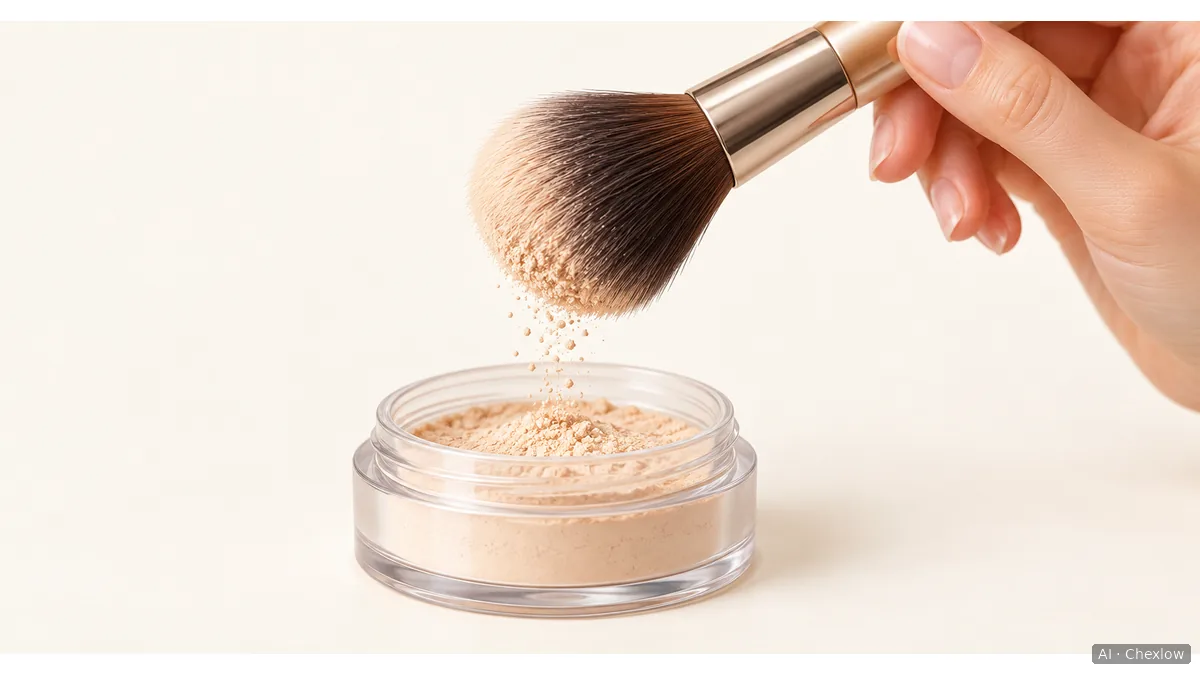
The illustration shows excess powder falling back into the jar. It does not show a measured dose or the result of a particular formula.
Follow the candidate’s own placement instructions. Hourglass directs application as the final complexion step and describes a light dusting for soft glow, with layering for more intensity. More intensity is useful only if that is what you want.
Compare the result with your usual makeup in the same light. Is there a difference you prefer, without an unwanted colour cast or more powder than you wanted? Buy the additional powder only if you can identify that benefit; if the result looks much the same, staying with one is a complete decision.
If what you want is a deliberate highlight on the cheekbones rather than a different overall finish, compare liquid and powder highlighters instead.
Como este guia foi construído
This article was written by Chexlow’s AI using official guidance from Maybelline and product descriptions from bareMinerals and Hourglass. It focuses on whether a second powder adds a distinct finish; manufacturer claims are attributed, and no original product testing is reported.
Editado pela equipe Chexlow · As imagens são ilustrações geradas por IA