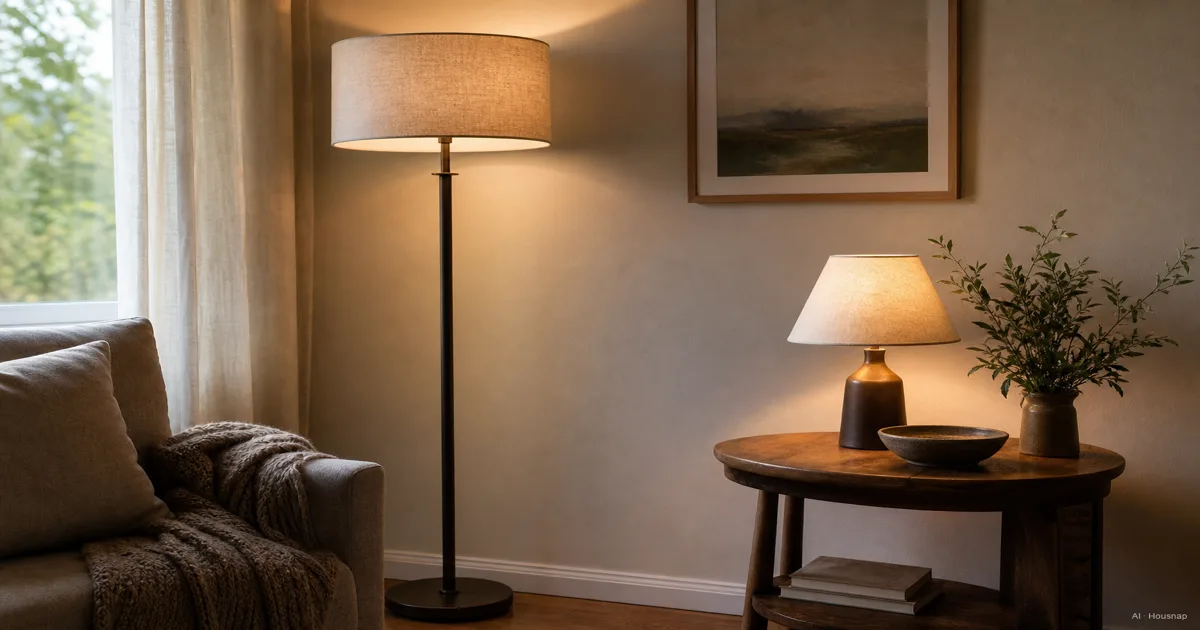
Choose a place before choosing a lamp
Picture the seat where you will use the lamp tonight. A table lamp makes sense when a nearby nightstand or side table already has room for it. Without that surface, a floor lamp avoids buying furniture just to hold a light. These are placement choices, not fixed lighting jobs: Swyft’s comparison describes table lamps as suitable for both focused and ambient light.
- Use an existing surface. Measure the lamp base and shade against the usable tabletop. Leave room for the things you actually keep there, rather than buying a lamp that fits only after everything else disappears.
- Use a floor position. Check the base diameter, shade width and any arm overhang. Mark the proposed footprint, then try walking past and opening nearby doors.
- Check the connection. Trace the route to the outlet and find the switch position. Rule out a placement that puts the cable across your walking route or leaves the control awkward to reach.
For a bedside table lamp, compare the height of the furniture plus the lamp. For a floor lamp, compare the complete lamp height. Neither number alone tells you what you will see from your pillow or chair.
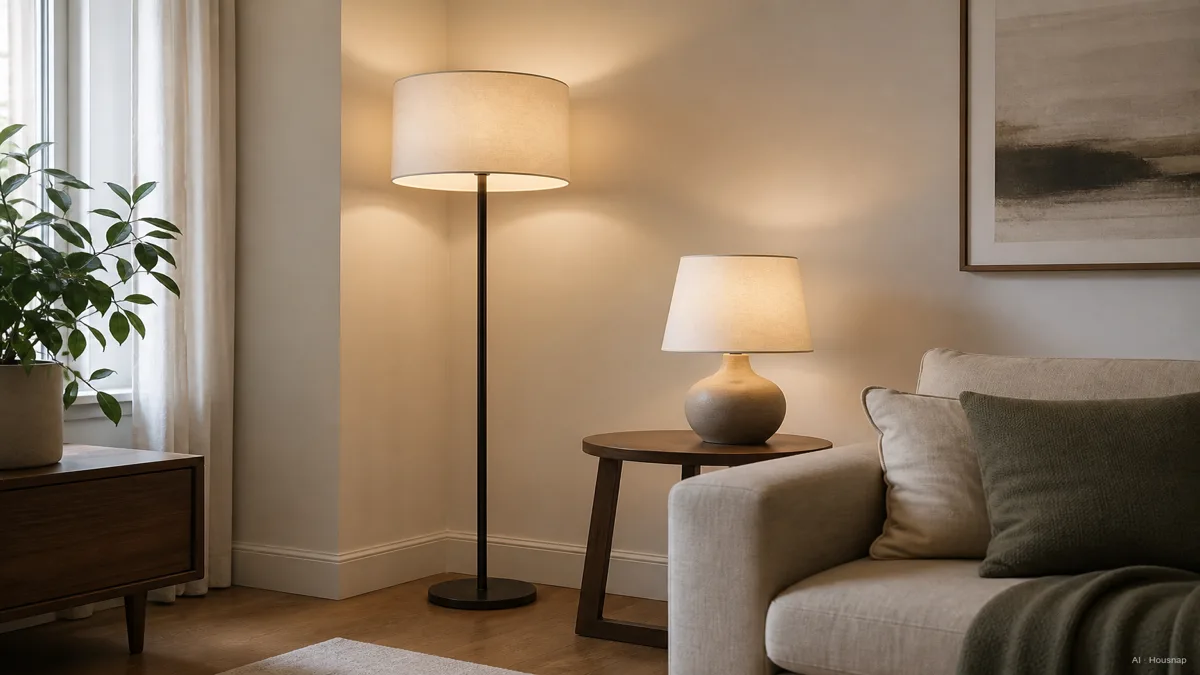
Match the light to the missing job
Sit down with your usual evening lights on. Is the page dark, or do you simply want a softer light beside the sofa? Those are different reasons to buy.
- Reading in one seat. Look for a directional shade and a head or arm you can position over the book. Both floor and table lamps can do this; Swyft explicitly lists both for reading.
- A softer evening setting. Look for diffuse light rather than assuming a tall lamp is necessary. IKEA includes table and floor lamps in mood lighting.
- A room that is dark throughout. Compare the candidate’s light distribution and output with the whole-room job. A tall silhouette is not evidence that one lamp will cover it. Keep general lighting in the plan rather than expecting a decorative lamp to do everything.
Before buying, inspect the shade opening from a seated position if possible. After placing the lamp, check the page and any nearby screen for distracting reflections, then adjust the position or angle.
If the real job is hours of work at a desk, continue with choosing a desk lamp’s light color and features before settling for a decorative table lamp.
Compare brightness and controls separately
Use lumens to compare light output and watts to compare energy use. About 800 lumens matches a traditional 60W incandescent bulb; that is a reference point, not a room-lighting prescription. FTC bulb guide.
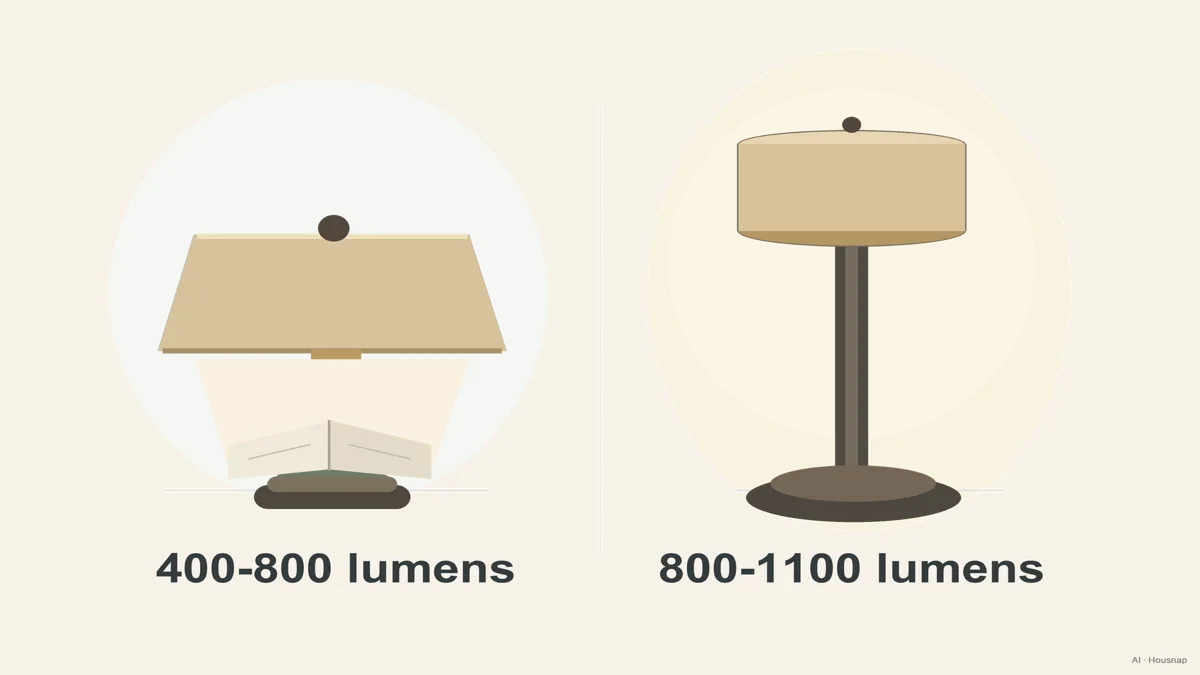
The ranges printed in the illustration below are not universal recommendations. Do not use 400–800 lumens as a reading requirement or 800–1,100 lumens as a guarantee of room coverage. Compare the actual candidate in the position and lighting conditions where you intend to use it.
For a warm evening appearance, consider 2700K as a starting preference. Kelvin describes light color, not output; a higher number does not mean more lumens. Feit Electric’s color guide.
If dimming matters, check the lamp’s control method before ordering. With a replaceable LED bulb and a dimmer, check the bulb’s dimmable label and the manufacturer’s compatibility guidance. A dimmable bulb does not work equally well with every dimmer. ENERGY STAR dimming guide.
For a replaceable-bulb lamp, also confirm the specified bulb base, permitted bulb dimensions and electrical rating in its instructions. For an integrated LED lamp, check the supplied light output and controls instead of assuming you can change the bulb later.
If adjustable white light or app control is part of your plan, explore what to choose in a first smart bulb, then check compatibility with the particular lamp.
Buy for the first gap, then reassess
Make the shortlist concrete: write down the placement, the job and the controls you need. Compare the total setup cost, including any required bulb, shade or supporting furniture.
- Choose the table lamp first when the surface is ready, the switch is accessible and the candidate sends light where you need it. A bedside reading setup is one example, not a rule for every bedroom.
- Choose the floor lamp first when a freestanding position works better and its beam suits the job. That can mean a reading light beside an armchair as readily as a softer light in a corner.
- Pause both options when neither fits the available space or solves the missing light. Buying the wrong shape first does not make the next purchase easier.
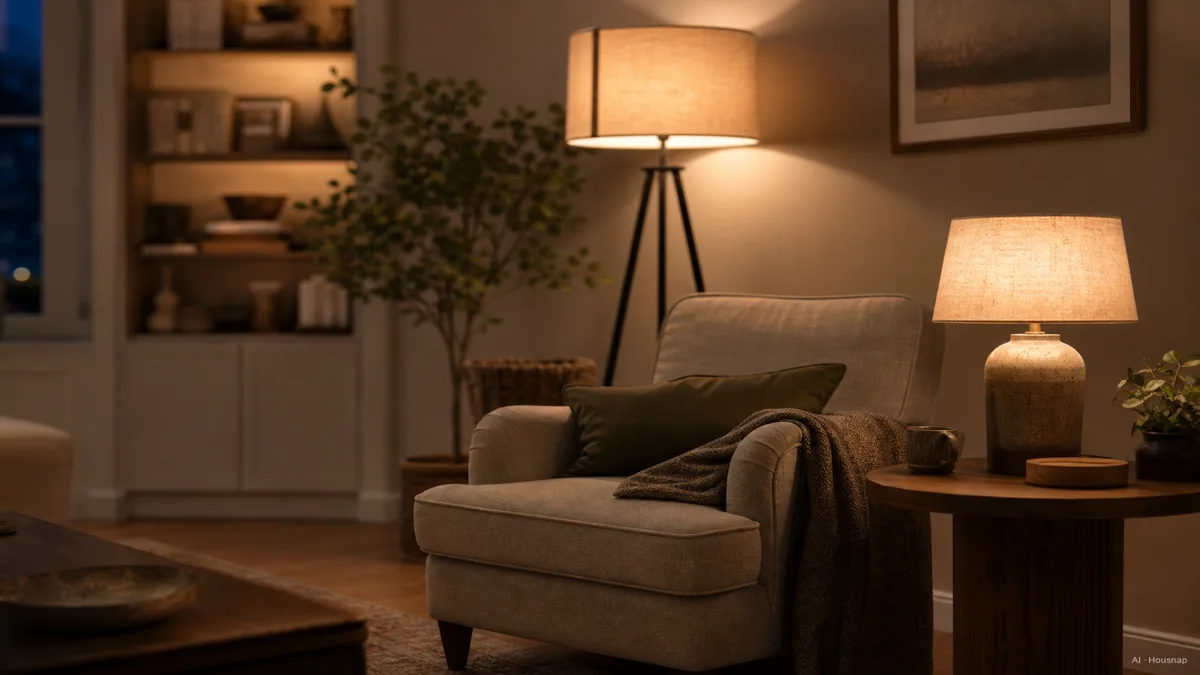
The paired lamps illustrate one possible arrangement, not a two-lamp shopping list. Use the first lamp with your existing lights before adding another. If reading and the surrounding space already work for you, stop there; if a specific gap remains, choose the second light for that gap.
Sources
- Swyft’s floor and table lamp comparison
- IKEA’s guide to lighting functions
- FTC’s guide to bulb labels
- Feit Electric’s color-temperature guide
- ENERGY STAR’s LED dimming guide
Como este guia foi construído
Written by Chexlow’s AI editor using publicly available guidance from Swyft, IKEA, the FTC, Feit Electric and ENERGY STAR. This comparison separates placement, lighting purpose and controls to help you choose a first lamp; the selection sequence is editorial guidance, not a report of product testing.
Editado pela equipe Chexlow · As imagens são ilustrações geradas por IA