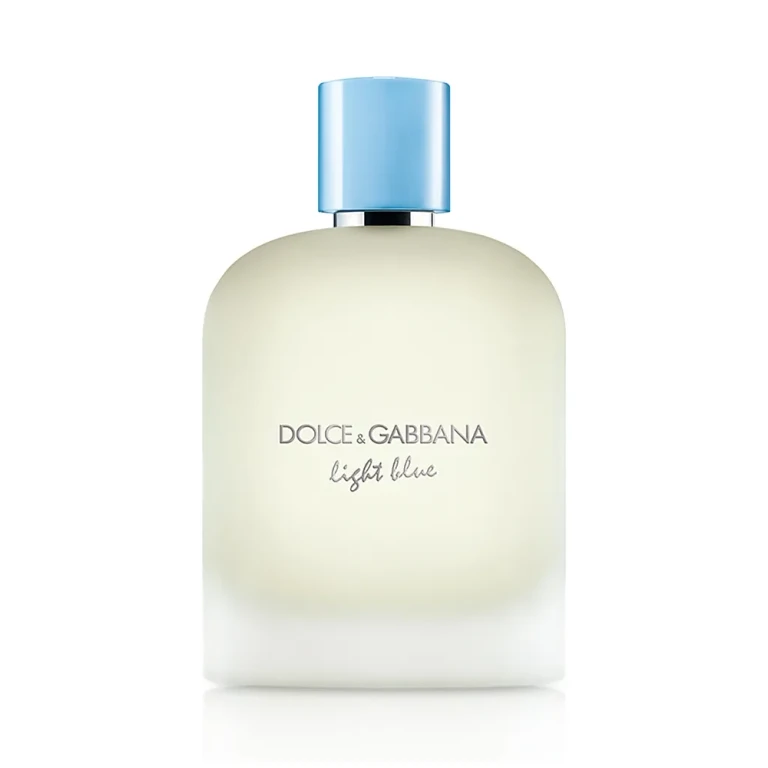
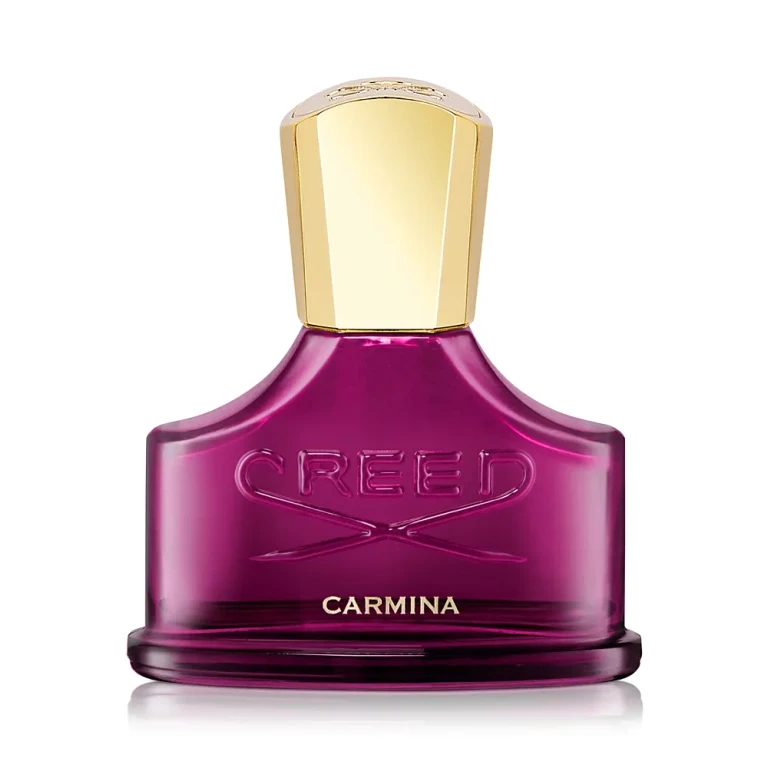
You spray something on a paper strip, the assistant says "it's a woody floral," and you nod like that means anything. For most people it does not, at least not yet.
Here is the good news. Fragrance is not as mysterious as the counter makes it sound. Behind all those adjectives sits a simple, well-organized map, and a handful of families do most of the work. Learn three of them, citrus, floral, and woody, and you can place almost any scent you smell.
This guide is about that map and those three families: what they actually smell like, how long they tend to last, and how to figure out which one fits the life you are spraying it onto.
What are fragrance families? The wheel explained
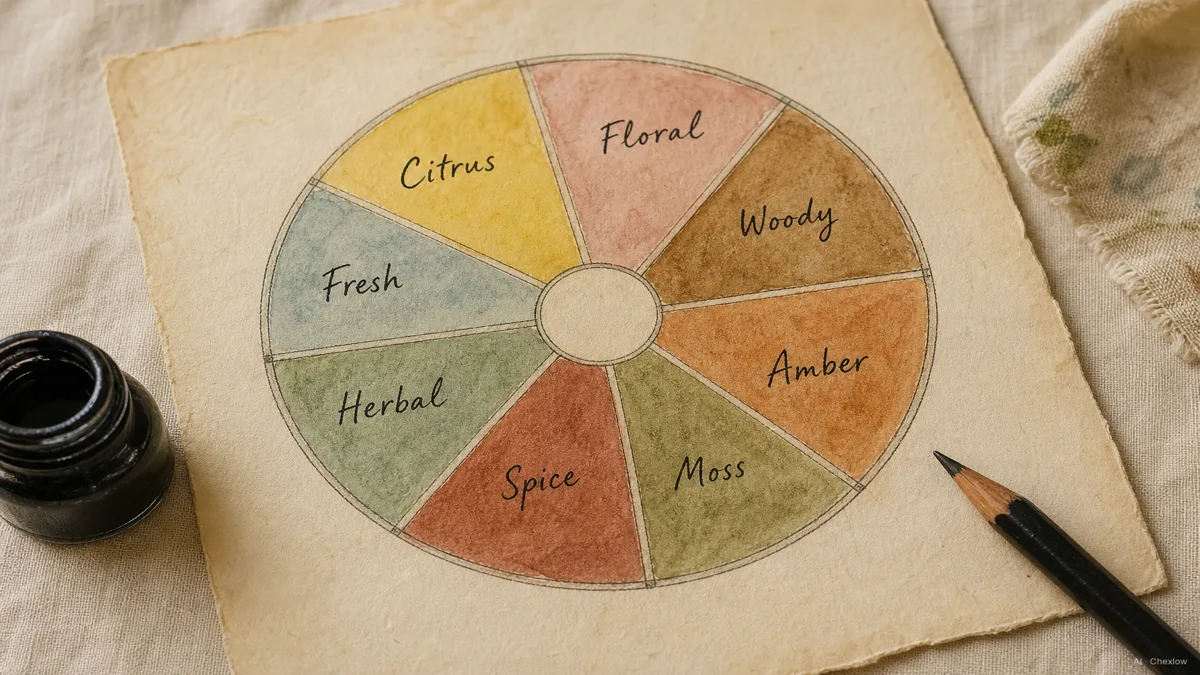
A fragrance family is just a group of scents that share a character. The standard way to organize them is the fragrance wheel, a circular diagram created by the fragrance expert Michael Edwards, first published in his Fragrance Manual in 1984, with the wheel diagram itself arriving in the 1992 edition (Fragrance wheel, Wikipedia). Edwards has since used the system to classify well over fifty thousand fragrances, so it is not a casual chart. It is the working language of the industry.
The wheel has four primary families: Floral, Woody, Amber (often still labelled Oriental), and Fresh. Citrus is not technically a fourth peer; it lives inside the Fresh family as its own bright, zesty subgroup. We are pulling Citrus out here on its own because, in practice, it is where a huge number of people start.
The reason the families sit on a wheel and not in a list is the clever part. Adjacent families share traits, so the wheel doubles as a discovery tool. Citrus and Fresh sit next to the aromatic group, all lavender and herbs. Florals border the softer floral and floral-amber blends. Woods sit between the warm amber families and the fresh cluster (Understanding Fragrance Families, Aroma Country). If you love one family, the neighbours on the wheel are your most reliable next step.
One more thing worth knowing, because it explains a lot. A fragrance is built in three layers, called notes. Top notes are the first impression, gone within five to thirty minutes. Heart notes carry the character for a couple of hours. Base notes are the lasting trail. Citrus tends to live in the top, florals in the heart, woods and musks in the base (Fragrance Notes, FragranceX). That single fact explains why a scent smells different thirty minutes after you spray it, and why the family on the label is really describing where the heart of the fragrance sits.
Citrus fragrances: bright, energizing, and fleeting
Citrus is the easiest family to recognize and, honestly, the easiest to love at first sniff. Think bergamot, lemon, grapefruit, lime, mandarin, the clean zing of orange peel. It reads fresh, awake, a little sparkling.
There is a catch, and it is built into the chemistry. Citrus molecules are small and very volatile, which is exactly why they smell so lively and lift off the skin so fast. As pure top notes they often burn off within fifteen to thirty minutes, and a citrus-forward fragrance frequently lasts only two to three hours on its own (Citrus Perfume Ingredients, Buchart Colbert). That is not a flaw, it is the nature of the family.
Perfumers know this, so good citrus fragrances rarely leave it there. They anchor those fleeting top notes to musks, light woods, or resins, which hold the brightness in place for longer without dulling the opening. So if you adore the first ten minutes of a citrus scent but feel let down by hour two, the fix is often not "citrus is not for me" but "find a citrus built on a sturdier base."
Who is it for? Citrus suits hot weather and daytime almost perfectly. It is the obvious summer family, the thing you reach for when anything heavier would feel like too much. If you are buying your first fragrance and want something nobody will find offensive, a fresh citrus is a famously safe, friendly place to begin.
Floral fragrances: romantic, versatile, and universally loved
Floral is the biggest family on the wheel and the most popular in the world, especially in women's perfumery. If a scent smells like flowers, in any form, it lives here. The core players are rose, jasmine, lily, peony, and violet, but the family stretches from a single soft petal to a lush bouquet.
Florals do the work in the heart of a fragrance, which is partly why they feel so central. They tend to last longer than citrus, usually around four to six hours on skin (Understanding Fragrance Families, FragranceX), so they carry you through most of a day without the fast fade citrus is known for.
The thing to understand about floral is its range. "Floral" on a label tells you the family, not the intensity. A soft, powdery floral and a heady, almost narcotic white floral are siblings, but they behave completely differently in a room. This is where the wheel earns its keep again: soft florals shade toward the gentle, comforting end, while floral-amber blends pull warmer and more sensual. If a straight floral feels too sweet or too pretty for you, the neighbours give you somewhere to go.
Who is it for? Florals are the versatile middle ground, lovely in spring, easy for casual and romantic occasions, and broad enough that almost everyone finds one they like. If citrus feels too fleeting and woods feel too serious, floral is usually where people settle.
Woody fragrances: warm, lasting, and sophisticated
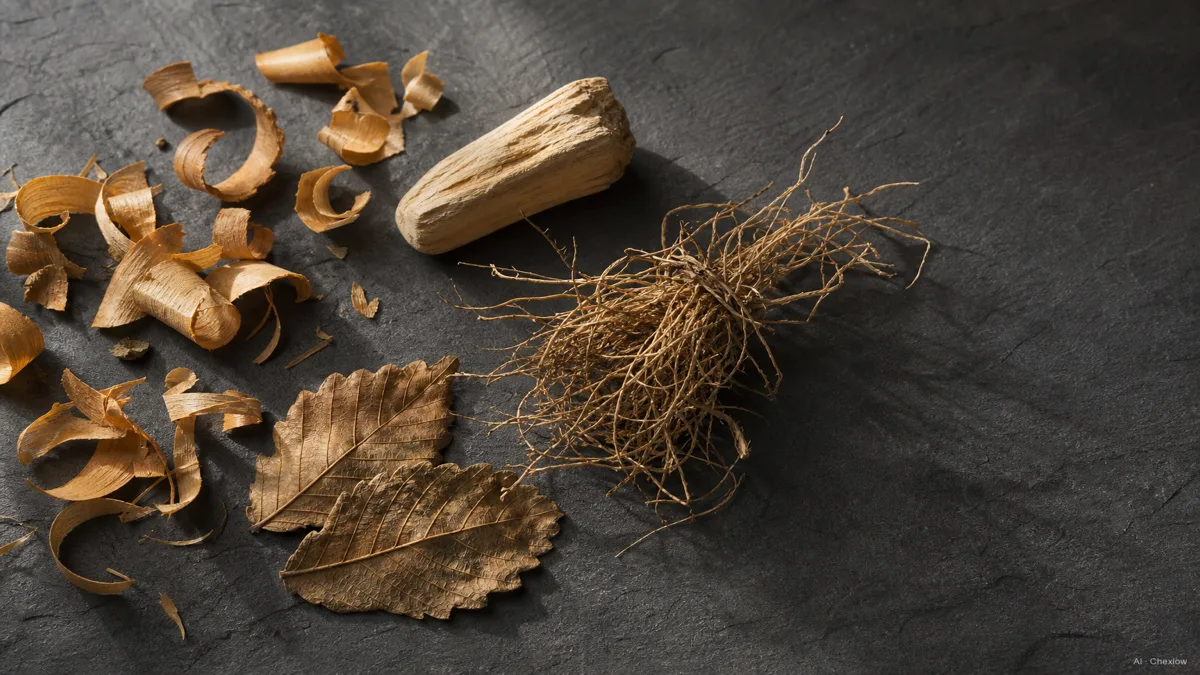
Woody is the family people grow into. It is built on four foundation materials: sandalwood, which is creamy and soft; cedarwood, dry and pencil-shaving sharp; vetiver, earthy and a little smoky; and patchouli, dark and rich (Understanding Fragrance Families, Aroma Country). Together they read as warm, grounded, and quietly sophisticated.
Here is the headline number: woods last the longest of any family, typically eight to twelve hours on skin. The reason is physical. Those heavy, resinous molecules evaporate slowly, which is exactly why woody notes are the base of so many fragrances and why a woody scent is still with you at the end of the day when a citrus one left at lunch.
Woods also split in two on the wheel, which matters when you are choosing. Dry woods, cedar and vetiver and smoky notes, read sharper and are often coded more masculine. Mossy and earthy woods, oakmoss and patchouli, read richer and lean more unisex. Same family, two quite different moods, so "I don't like woody" usually just means you have met one half of it.
Who is it for? Woody suits autumn and winter, evenings, and professional settings where you want presence without shouting. Because woods sit so close to the warm amber families on the wheel, they are also the natural next step if you already love something cozy and sweet and want to move somewhere more grown-up.
How to choose your fragrance family
So how do you actually pick? Three filters do most of the work: season, occasion, and how a scent behaves on your own skin.
Season is the simplest lever. Heat speeds up evaporation and makes everything bloom faster, so light citrus and fresh families stay comfortable in summer while a heavy wood can turn overwhelming. Cool air slows evaporation, so woods and the warmer families unfold slowly and beautifully through autumn and winter. Florals sit happily in the middle, with spring as their home turf (Fragrance Families Explained, Scento).
Occasion is the next filter. Daytime and casual lean citrus and soft floral. Romantic and spring-into-summer lean floral. Evening, work, and anything where you want a lasting, composed impression lean woody. You are really matching the staying power and weight of the family to how long the moment lasts and how close people will be.
A quick way to translate all of this when you are standing at the counter:
- Want fresh and easy, mainly for warm days. Start in citrus, and look for one built on a light woody or musky base so it lasts past the first half hour.
- Want versatile and widely flattering. Start in floral, then drift toward soft floral if you want gentler, or floral-amber if you want warmer.
- Want lasting, grown-up, and present. Start in woody, dry woods for something sharper and crisper, mossy woods for something richer and more unisex.
- Test on skin, never just paper. Your skin chemistry changes how a family lands. Oily, well-moisturized skin holds scent longer; dry skin lets it fade faster. Spray, wait an hour, then judge the heart, not the opening.
And remember the wheel itself is the real cheat code. Once you know which family you love, its neighbours are your safest next purchase. Love citrus? The aromatic herbs next door are a natural step. Love woods? The warm amber families right beside them are waiting. You are not choosing one family for life. You are finding your starting point on a map you can keep exploring.
Sources
- Fragrance wheel, Wikipedia — the wheel's structure, four primary families, and Michael Edwards' history
- Michael Edwards, fragrance expert, Wikipedia) — origin of the classification system and scale of fragrances classified
- Fragrance Wheel Guide, FragranceX — family definitions, floral popularity, and typical longevity
- Understanding Fragrance Families, Aroma Country — woody foundation materials and family adjacency
- Citrus Perfume Ingredients, Buchart Colbert — citrus volatility and short wear time
- Fragrance Families Explained, Scento — season and occasion guidance across families
Como este guia foi construído
This piece started from a question almost everyone hits at the perfume counter: someone calls a scent "citrus" or "woody," and it is never quite clear what that promises on your own skin. We anchored the structure on the fragrance wheel, cross-checking its four primary families and history against Wikipedia and FragranceX, the citrus volatility and short wear against Buchart Colbert, the woody foundation materials and family adjacency against Aroma Country, and the season and occasion guidance against Scento. The aim is to make the wheel readable and help you find a starting family, not to teach perfumery chemistry. The selection lens sits on Chexlow's fragrance catalog across these families.
Editado pela equipe Chexlow · As imagens são ilustrações geradas por IA