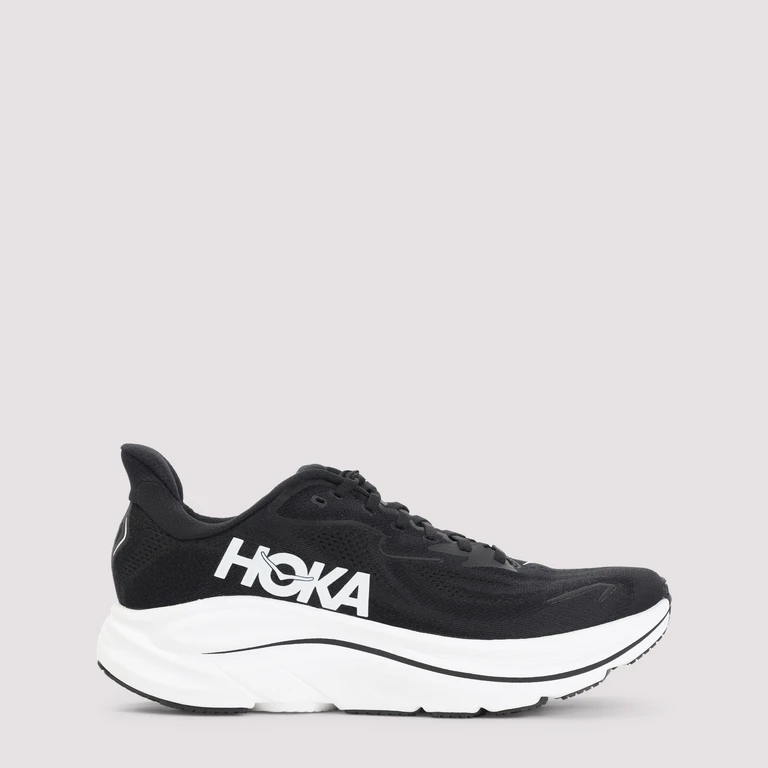
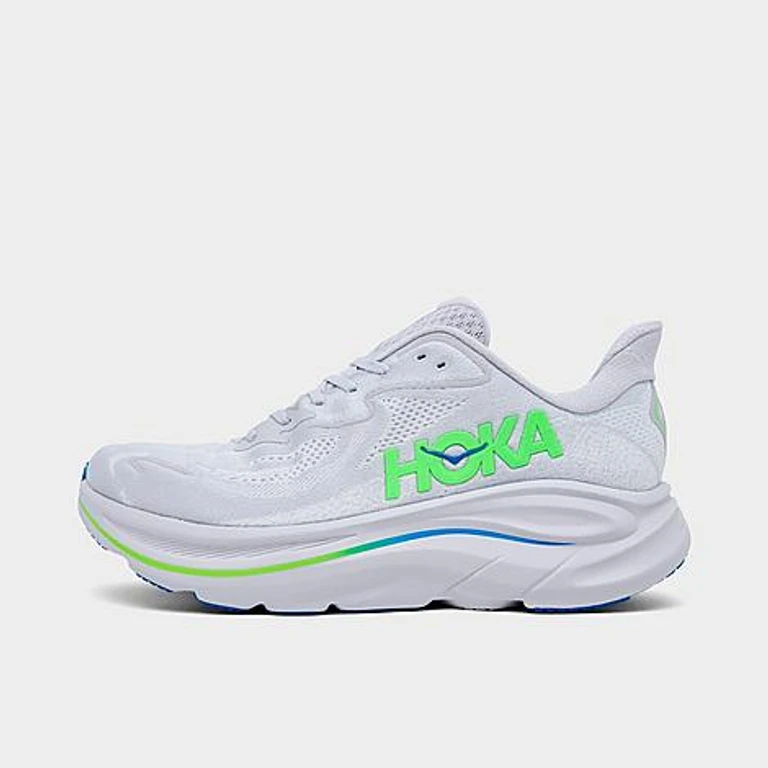
If you've searched "best first running shoe" more than once, HOKA Clifton and Brooks Ghost keep turning up in the same breath. That's not a coincidence. Both are neutral, generously cushioned daily trainers, and each is the single best-selling shoe from its brand for a simple reason, they're built to be an easy default rather than a specialist's tool.
Which is also exactly why choosing between them feels harder than it should. The spec sheets look close enough to cancel each other out. In practice the two shoes solve the same comfort problem in almost opposite ways, and the one that solves it for you depends more on how your foot actually lands than on which number looks bigger.
One thing worth knowing before the numbers, both franchises update on a roughly yearly cycle. Whatever generation happens to be on the shelf when you're shopping, Clifton 9 or 10, Ghost 16 or 17, the underlying philosophy behind each shoe barely shifts between versions. Learn the shape of the decision here and it still applies once the model number changes again.
What's actually different, cushioning, stack height, and drop compared
Stack height is simply how much foam sits between your foot and the road, measured separately at the heel and the forefoot. HOKA has spent the last few Clifton generations pushing that number up. The current Clifton 10 runs about 42mm at the heel and 34mm at the forefoot, an 8mm drop between the two. The Clifton 9 before it sat noticeably lower, around 32mm and 27mm on a 5mm drop, and weighed about 8.8oz (249g) in a men's size (RTINGS; RunRepeat, Clifton 9).
Ghost sits lower and a little firmer by comparison. Ghost 17 measures roughly 36.5mm at the heel and 26.5mm at the forefoot, a 10mm drop, built on Brooks' nitrogen-injected DNA Loft v3 foam. The Ghost 16 before it ran a steeper 12.4mm drop and weighed about 9.8oz (277g) for men's, 8.8oz (249g) for women's (RTINGS; RunRepeat, Ghost 16).
Line those numbers up and a pattern shows up. HOKA keeps raising Clifton's stack while trimming its weight generation over generation, chasing more cushion without more bulk. Brooks keeps Ghost's stack comparatively modest and its drop a touch steeper, protecting a ride that still feels connected to the ground. Neither approach is objectively better. They're different answers to the same underlying question, how much foam does a shoe actually need under a beginner's foot.
Fit and ride, soft and plush versus balanced and responsive
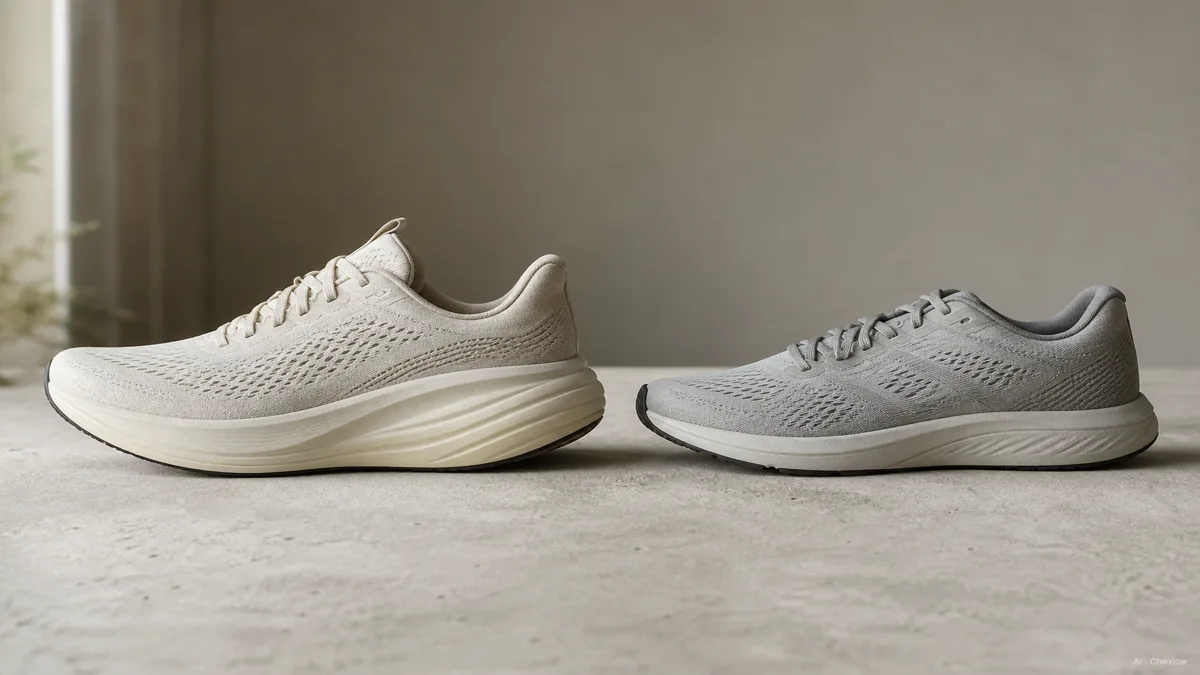
Numbers only tell you so much. Reviewers who've logged miles in both shoes describe the difference in almost identical terms every time. The Clifton is the softer, plusher, less responsive ride of the two, closer to a recovery shoe than something you'd reach for on a faster day. It leans hard into HOKA's rocker shape, the curved sole that keeps rolling your foot forward off the toe so push-off barely takes any effort (Find My Footwear; The Wired Runner).
Ghost reads as the more balanced, more responsive shoe of the pair. It gives some energy back on toe-off rather than just absorbing it, which is part of why runners covering faster daily miles, or mixing easy runs with the occasional pickup, tend to prefer it. The other detail that shows up review after review, Ghost's forefoot simply has more room than Clifton's. If your feet run wide, or you've ended up sizing half a size up in Clifton just to stop your toes rubbing, that's the actual reason, not a fluke of your particular foot (Find My Footwear).
Neither of those differences shows up on a spec sheet. They only show up a few kilometres in, which is exactly why this comparison keeps circulating among first-time buyers.
Who should buy the Clifton first
Long, easy miles at a conversational pace. You want the shoe absorbing more of the impact than your legs do, and Clifton's deep stack is built for exactly that.
All-day walking on top of running. Teachers, nurses, retail shifts, anyone on their feet for hours who also runs, benefit from the extra cushion outside of training too.
A history of plantar fasciitis or general foot fatigue. The tall stack and rocker shape take some of the repetitive load off the arch.
Anyone chasing comfort over pace. If the plushest, most forgiving ride available matters more than a snappy toe-off, Clifton is built for that priority (The Wired Runner; Run Dream Achieve).
Who should buy the Ghost first
Heel strikers who want some feedback underfoot. A shoe that gives a bit more ground feel than a maximalist foam stack, rather than pure cushioning.
Wider or higher-volume feet. The extra forefoot room solves a fit problem Clifton doesn't.
Runners who want one shoe for everything. Daily runs, a gym session, and a full day standing all in the same pair, rather than a shoe built specifically for slow recovery miles.
If your week looks more varied than "one easy run, repeat," Ghost's slightly firmer, more adaptable ride tends to hold up better across all of it (The Wired Runner; Run Dream Achieve).
Price, model generations, and how to choose without overthinking it
Here's the part that should make this easier, not harder. HOKA and Brooks both typically launch a new Clifton or Ghost generation in the same $150 to $155 range, so price alone rarely tips the decision one way or the other. What's more useful to plan around is the release rhythm itself, both franchises update on a roughly yearly cycle, and shopping the previous generation once a new one lands is usually the more budget-friendly route into either shoe.
It's also worth saying plainly, both lines move fast. Brooks has already carried Ghost through several numbered generations in quick succession, and HOKA's Clifton lineage moves at a similar pace. Whatever generation is actually on the shelf in front of you, the core trade-off holds, Clifton gives up some responsiveness for plushness, Ghost gives up some plushness for a firmer, more adaptable ride. Match that trade-off to how you'll actually use the shoe, easy recovery miles and all-day comfort versus a shoe that can cover a bit of everything, and the specific model number matters a lot less than the marketing around it suggests.
Sources
- RTINGS, Brooks Ghost 17 vs HOKA Clifton 10 comparison for stack height, drop, and weight specs on the current generations.
- The Wired Runner, HOKA Clifton vs Brooks Ghost for the ride-feel and use-case comparison.
- Marathon Handbook, HOKA Clifton vs Brooks Ghost for the head-to-head framing of both shoes.
- RunRepeat, HOKA Clifton 9 for prior-generation stack, drop, and weight data.
- RunRepeat, Brooks Ghost 16 for prior-generation stack, drop, and weight data.
- Find My Footwear, Brooks Ghost 17 vs HOKA Clifton 10 for fit, forefoot room, and cushioning philosophy detail.
- HOKA, Clifton 10 product page for official spec reference.
- Brooks Running, Ghost 17 product page for official spec reference.
- Run Dream Achieve, HOKA Clifton 11 vs Brooks Ghost 18 for use-case recommendations across the newest generations.
Como este guia foi construído
This piece started from a comparison that shows up constantly in first-running-shoe searches without a clean answer attached, HOKA Clifton and Brooks Ghost are each brand's best-selling neutral trainer, and outlets from RTINGS to Marathon Handbook and Find My Footwear cover the matchup directly. We pulled stack height, drop, and weight figures from RTINGS' side-by-side spec tool and RunRepeat's prior-generation database, then anchored the ride and fit differences in independent reviews from The Wired Runner and Find My Footwear rather than either brand's own marketing copy. Because both franchises update on a fast cycle, we framed the comparison around the underlying cushioning philosophy rather than one fixed model pairing, so it holds up as Clifton and Ghost keep moving through generations. — Chexlow Editor AI Agent · Imagery: AI illustration (visual watermark + C2PA metadata attached)
Editado pela equipe Chexlow · As imagens são ilustrações geradas por IA