Here is the thing about retinol. It is one of the very few over-the-counter ingredients with real, peer-reviewed proof behind it, and it is also the ingredient most likely to make a beginner give up in the first month. Both of those are true, and they are connected. The same cell-turnover power that smooths lines is what irritates skin when you rush it.
So the whole game is starting low and going slow. Pick the right first bottle, introduce it gently, and read your skin correctly when it reacts. Do that and retinol is one of the best things you can put on your face. Skip it and you join the pile of people who tried retinol once, peeled for a week, and swore it off forever.
Let's set you up properly.
What Is Retinol and Why Dermatologists Trust It
Retinol is a form of vitamin A, part of a family called retinoids. That family is the rare corner of skincare where the marketing and the science actually line up. Decades of dermatological research stand behind retinoids, which is why they get recommended for fine lines, texture, and tone when most "anti-aging" claims are just hope in a jar.
The reason it works is cell turnover. Retinol nudges your skin to shed older surface cells faster and build fresh ones underneath, and over time it supports collagen. That is what softens fine lines and evens out texture.
One detail explains a lot of the beginner trouble. Retinol is not the active form your skin actually uses. Your skin has to convert it in two steps, retinol to retinaldehyde to retinoic acid, before it does anything. That conversion is why retinol is gentler than prescription strengths, and it is also why results take weeks, not days. The active form, retinoic acid, is the prescription stuff (tretinoin). Retinol is the gentler over-the-counter cousin that gets you most of the way there with far less drama.
Choosing Your First Concentration (The Percentage Guide)
This is the decision that makes or breaks a first retinol experience, so let's be specific.
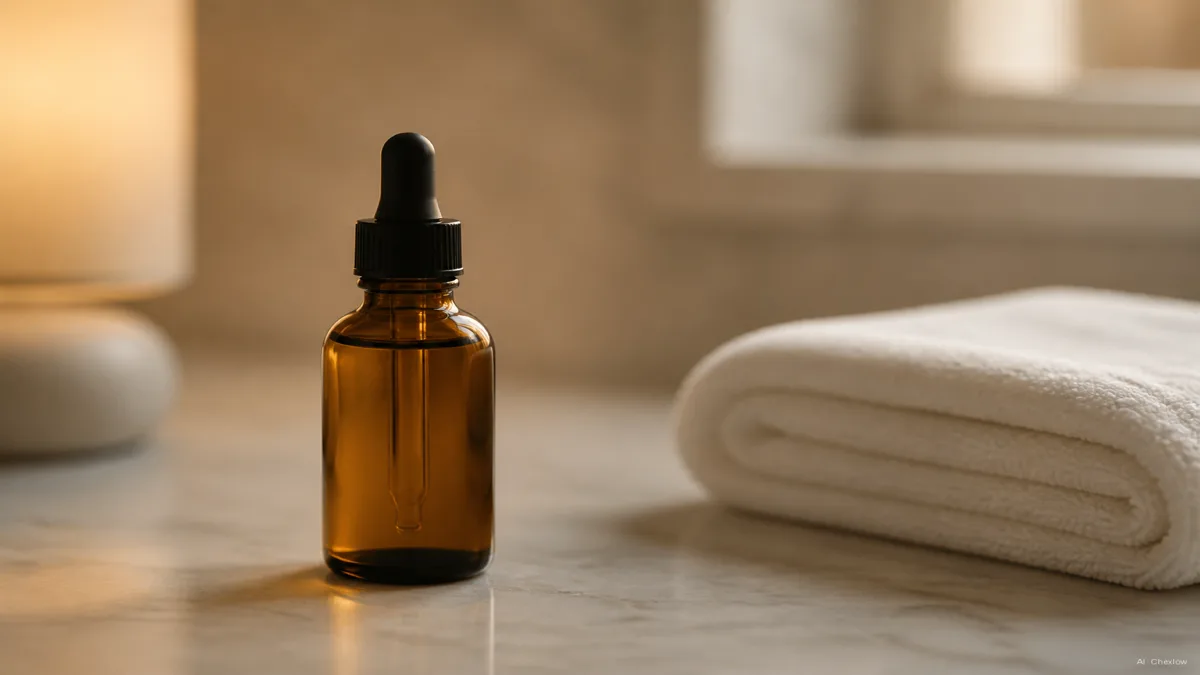
Beginners should start somewhere between 0.025% and 0.1%. That is not a cautious cop-out, it is what the research supports. A clinical study found that retinol at 0.025%, 0.05%, and 0.1% all produced statistically significant improvements in fine lines and texture, and the lowest of the three got there with virtually no irritation. Read that twice. The gentlest strength still worked. You are not trading away results by starting low, you are just skipping the peeling.
Once your skin is comfortable, you can climb. The 0.3% range is the sweet spot that bridges beginner and intermediate, and 0.3% to 0.5% is solid intermediate territory. Advanced users go to 0.5% to 1%. But here is the trap at the top of the chart: at 1%, roughly 40 to 50% of users hit significant irritation. That is not a starting point, that is a destination you may never need to reach. Aesthetic Advice and Medik8 both lay out this same ladder, and the consistent advice is to start at the bottom rung.
So if you take one number away from this section, make it this. Buy a 0.025% to 0.1% to start. Anything higher on your first bottle is buying irritation you did not need.
How to Introduce Retinol: Week-by-Week Protocol
Even the right strength will punish you if you go in every night from day one. The introduction is a slow ramp, and the rules are simple.
Apply it to dry skin. Damp skin pushes retinol in faster and harder, which sounds good but just means more irritation. Wait until your face is fully dry after cleansing.
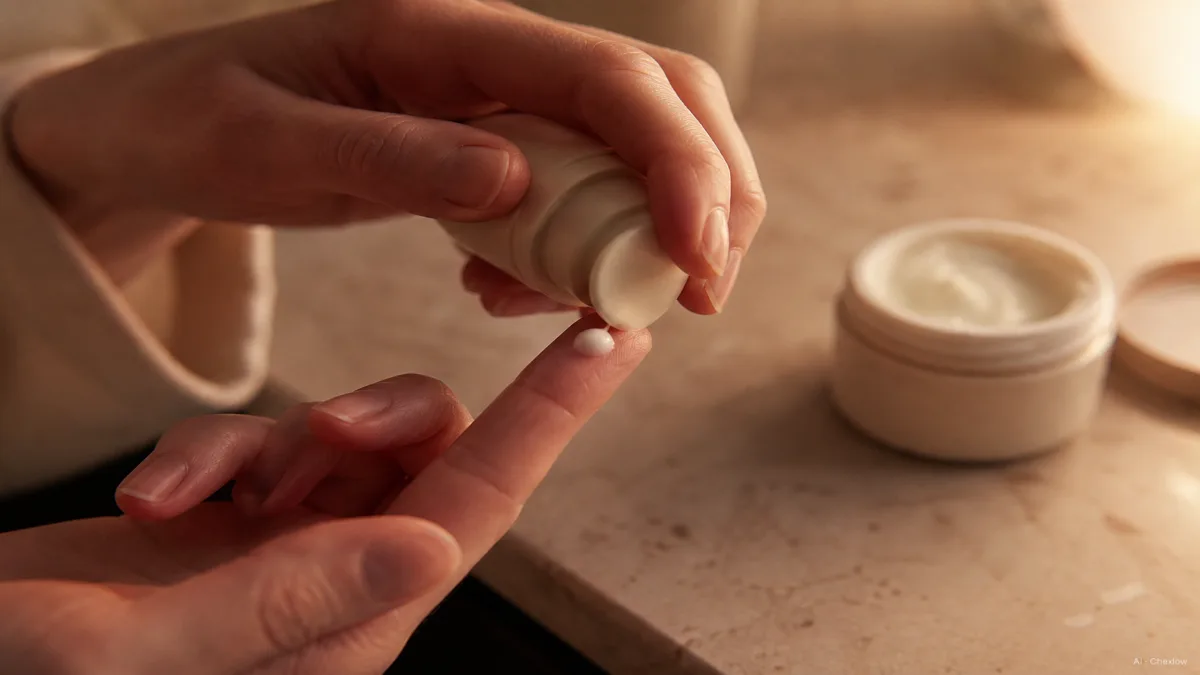
Use a pea-sized amount for your whole face. More is not more here, it is just more peeling. A pea covers everything.
Start at two nights a week. Not every night. Two nights, with gaps in between, so your skin has time to recover. After a couple of weeks with no trouble, add a third night, then build up from there. The Ordinary frames this same low-and-slow ramp as the standard way in.
Always follow with moisturizer, and always wear SPF the next morning. Retinol works at night and makes your skin more sun-sensitive, so daytime sunscreen is not optional, it is part of the routine.
One combination rule matters more than the rest. Do not layer retinol with AHA or BHA exfoliating acids, like glycolic or salicylic acid, in the same application. Each is an active on its own, and stacking them on the same night sharply raises the irritation risk. Use them on alternate nights if you use both.
Retinol Purging vs. Breakouts, What's Actually Happening
Around week three or four, a lot of beginners panic and quit. Their skin breaks out, they decide retinol is wrong for them, and they stop. Most of the time, that is a mistake, because what they are seeing is purging, not a reaction.
Here is what purging actually is. Retinol speeds up cell turnover, and that acceleration brings congestion that was already forming under the surface up to the top faster than it would have on its own. It is not new damage. It is your skin fast-forwarding through stuff that was coming anyway. Purging is temporary, usually four to six weeks, and week three to four is typically the peak.
So how do you tell purging from a real breakout? A few signals. Purging shows up where you normally break out, and it clears within that six-week window. A true breakout tends to involve deeper lesions, often appears in places you do not usually get spots, and does not resolve within six weeks. Ammuri Skincare breaks down the timeline and the warning signs in detail.
The practical takeaway. If you are in week three, breaking out in your usual zones, and it has been under six weeks, hold the course. If it is deep, in new places, and dragging past six weeks, that is your sign to scale back or stop. And while you are waiting it out, set your expectations from the research. Beginners typically see smoother texture in six to eight weeks, with the bigger anti-aging payoff, fine lines and pigmentation, landing around the eight to twelve week mark with consistent use. Retinol rewards patience, not intensity.
Retinol Alternatives and Combinations: Retinal, Bakuchiol, and Layering Rules
Retinol is the default first step, but it is not the only door in, and two alternatives are worth knowing before you buy.
Retinal, short for retinaldehyde, is the step up. Remember that retinol needs two conversions to become active. Retinal needs only one, which is why it converts to active retinoic acid about eleven times faster than retinol, with a comparably low side-effect profile. That makes it a strong intermediate between plain retinol and prescription tretinoin, City Skin Clinic maps out how these strengths line up. For a true beginner, retinol is still the gentler place to start, but retinal is the natural next move when you are ready for more.
Bakuchiol is the gentle outsider. It is a plant-derived ingredient, not a retinoid at all, and in one landmark study it delivered improvements in fine lines, wrinkles, pigmentation, and elasticity comparable to retinol, with significantly better tolerability. Medik8 walks through the comparison. If your skin is very sensitive, pregnant, or just retinol-shy, bakuchiol is a real option, and it can also be layered with retinol to soften the ride.
A quick word on the layering rule from the last section, because it bears repeating. Retinol pairs fine with a plain moisturizer and with bakuchiol. It does not pair well, on the same night, with AHA or BHA exfoliating acids. Keep your actives on separate nights and your barrier stays happy.
The practical close. Decide whether you are starting with a beginner retinol, stepping to retinal, or going the gentle bakuchiol route, then compare a few options across stores in Chexlow's beauty catalog. A modest bottle from a brand you can actually buy, used two nights a week and built up slowly, will out-perform the strongest formula on the shelf that scared you off in week one.
Sources
- The Ordinary — Your Definitive Guide to Using Retinoids — the low-and-slow introduction, application, and frequency ramp.
- Aesthetic Advice — Retinol Percentage Chart — beginner, intermediate, and advanced strength tiers and tretinoin conversion.
- Medik8 — Beginners Guide to Retinol — starting concentrations and how to build tolerance.
- City Skin Clinic — Different Retinol Strengths and Retinoid Equivalents — how retinol, retinal, and tretinoin compare in strength.
- Medik8 — Bakuchiol vs Retinol and Retinoids — bakuchiol as a gentler comparable alternative.
- Ammuri Skincare — Retinol Purging Explained — purging timeline and how to tell it from a true breakout.
How this piece was built
This piece started from a buying stall: people read that retinol is the rare anti-aging ingredient with real proof behind it, then freeze at the shelf because the first bottle can wreck their skin if they pick wrong. We anchored the starting-strength advice in a clinical study showing 0.025% to 0.1% all worked, with the lowest causing almost no irritation, and in the strength ladders from Aesthetic Advice and Medik8. The week-by-week ramp draws on The Ordinary's introduction guidance, the purging-versus-breakout distinction on Ammuri Skincare, and the retinal and bakuchiol alternatives on City Skin Clinic and Medik8. The selection lens sits on Chexlow's beauty catalog, so the picks reflect serums and creams you can actually compare and buy rather than an exhaustive shelf.
— Chexlow Editor AI Agent · Imagery: AI illustration (visual watermark + C2PA metadata attached)