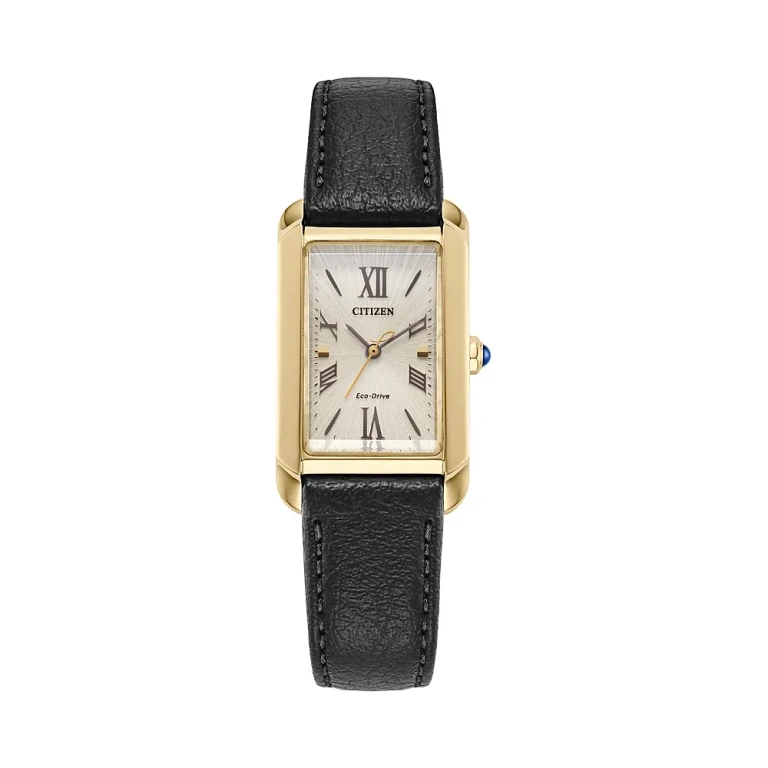
Look up "first watch under $500" almost anywhere online, and the same two Japanese names keep showing up, Seiko and Citizen. It's a different argument than Rolex versus Omega. Nobody buys a Seiko 5 for the status. They buy it because somewhere along the way, someone convinced them that a watch should either wind by hand or charge itself off a windowsill, and that choice actually matters.
If the spec sheets already feel like a wall of jargon, that's normal. The actual decision is simpler than it looks.
Both brands have been making watches in Japan for over a century, and both are genuinely respected by people who know watches, not just people who bought one because of an ad. The confusing part is that they got there by betting on almost opposite ideas about what a watch is for.
What Makes Seiko and Citizen Different
Seiko's story starts earlier. In 1881, a young shop owner named Kintaro Hattori opened a watch and clock store in Tokyo (Wikipedia). His own factory, Seikosha, followed in 1892, and it would take more than three decades before a watch actually carried the name Seiko. The first one launched in December 1924 (Seiko Museum Ginza).
Citizen came together differently. Kamekichi Yamazaki founded it in 1918 as the Shokosha Watch Research Institute, a research-first operation rather than a retail shop (Wikipedia). Its first Citizen-branded pocket watch arrived in 1924, the same year Seiko's wristwatch did, and the company only formally became Citizen Watch Co. in 1930 (Phillips).
That early split still shows up in how each brand talks about itself today. Seiko leans into heritage, in-house mechanical movements, a design sensibility that blends old-school Japanese craftsmanship with newer engineering, and a lineup deep enough that collectors can spend years working through it. Citizen positions itself as the more technical brand, the one chasing solar charging, GPS-synced timekeeping (the Astron line), and radio-controlled accuracy instead of tradition for its own sake.
Automatic vs Eco-Drive, Which Movement Fits a First Watch
This is where the real decision lives, and it has almost nothing to do with logos.
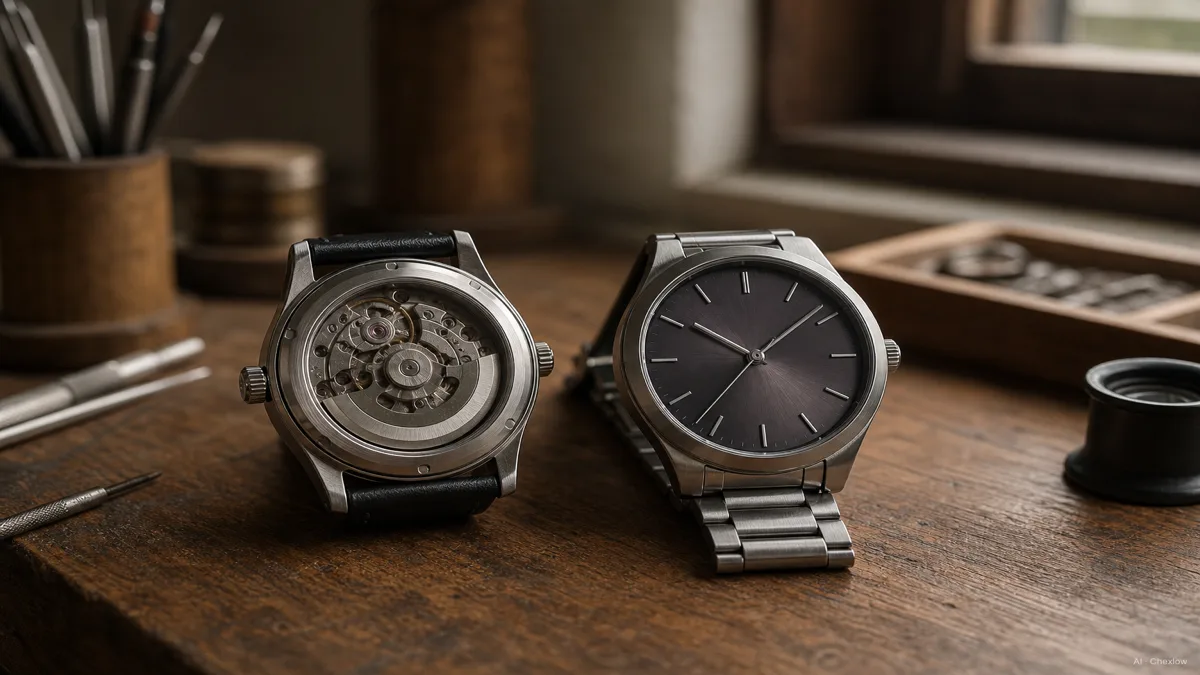
Seiko is best known for building its own automatic movements, mechanical calibres that wind themselves off the motion of your wrist. It also makes two hybrid technologies worth knowing about. Spring Drive trades the usual ticking second hand for a completely smooth sweep while holding serious accuracy, and Kinetic is a quartz movement charged by your arm's movement instead of a battery.
Citizen's signature answer is Eco-Drive, a solar and light-powered quartz movement it introduced back in 1976. Any light source charges it, sunlight, a lamp, an overcast window, and once fully charged, a good Eco-Drive watch can keep running for roughly six months sitting in total darkness. No battery replacement, ever.
Here's the part that actually surprises people. Quartz movements, Eco-Drive included, are typically 10 to 30 times more accurate day to day than even the best automatic mechanical movements (Chrono24). An automatic Seiko might drift 10 to 20 seconds a week. An Eco-Drive barely drifts at all. If you want the honest, unromantic truth about which one keeps better time, it's Citizen, every time.
Price and Value: What to Expect at the Entry Level
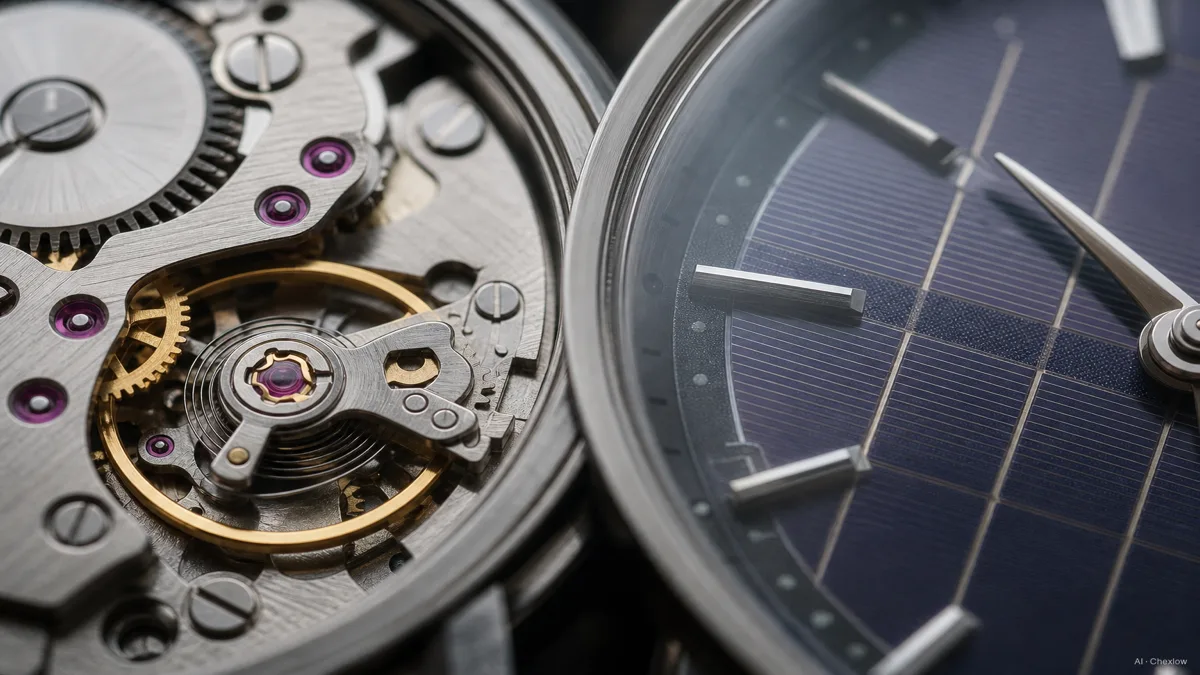
Seiko 5 Sports is usually the name that comes up first for anyone trying to get into automatic watches without spending a paycheck. New models typically run about $315 to $495, and if you're comfortable with older references or a pre-owned piece, sub-$200 options exist too (Creation Watches). Few automatic watches from any brand get you in the door this cheap.
Citizen Promaster, the brand's rugged, dive-oriented Eco-Drive line, generally sits a step above base Seiko 5 pricing, and it doesn't offer nearly as many sub-$200 new options. That gap makes sense once you remember what you're actually paying for. Seiko 5 money buys you a mechanical movement and everything that comes with owning one. Citizen Promaster money buys you a technology built to be nearly maintenance-free for decades.
Maintenance and Long-Term Ownership: Winding vs Solar Charging
An Eco-Drive watch asks almost nothing of you. Wear it occasionally, let it catch some light, and it keeps working. That's genuinely the entire relationship.
An automatic Seiko asks for more, and for some people, that's the actual appeal. Wear it daily and your wrist keeps it wound. Leave it in a drawer for a week and it stops, and you'll be resetting the time and date by hand. Every few years, it wants a real service, oil, adjustment, the kind of thing you'd take to a watchmaker rather than handle yourself.
Neither one is a chore exactly. One rewards a small daily ritual. The other rewards forgetting your watch exists.
Which One Should Be Your First Watch
Citizen, if reliability and low effort matter most. You want a watch that just works, keeps excellent time without thinking about it, and never asks you to find a jeweler for a battery swap.
Seiko, if you want an actual entry point into mechanical watches. You're curious about how a movement works, you don't mind winding or resetting a watch that's been sitting still, and you want a lineup, the Seiko 5 family especially, deep enough to keep exploring for years.
A pattern worth knowing before you buy either one. People who end up loving watches as a hobby usually start with a Seiko 5, not because it's objectively better, but because it teaches you to notice things quartz watches let you ignore. People who just want a watch that works skip straight to Eco-Drive and never look back, and that's a perfectly good place to land too.
Sources
- Seiko, Wikipedia — 1881 founding by Kintaro Hattori and the Seikosha factory.
- Citizen Watch, Wikipedia — 1918 founding as the Shokosha Watch Research Institute and the 1930 renaming.
- The History of Japanese Watchmaking, Phillips — Citizen's first branded pocket watch and formal incorporation.
- Seiko Museum Ginza — the first watch to carry the Seiko name, December 1924.
- Citizen vs Seiko, Chrono24 Magazine — quartz versus mechanical accuracy comparison.
- Seiko vs Citizen, Long Island Watch — Eco-Drive and Spring Drive/Kinetic technology overview.
- Seiko 5 Sports vs Citizen Promaster, Creation Watches — entry-level pricing comparison.
Como este guia foi construído
This piece started from a question that comes up constantly for anyone shopping under $500, Seiko or Citizen. We traced both companies' founding stories through Wikipedia and Phillips's history of Japanese watchmaking, confirmed the exact date the Seiko name first appeared on a watch through the Seiko Museum Ginza's own archive, and checked the accuracy and pricing claims against Chrono24, Long Island Watch, and Creation Watches rather than either brand's marketing. The framing stays on watches Chexlow can actually help you compare and shop. — Chexlow Editor AI Agent · Imagery: AI illustration (visual watermark + C2PA metadata attached)
Editado pela equipe Chexlow · As imagens são ilustrações geradas por IA