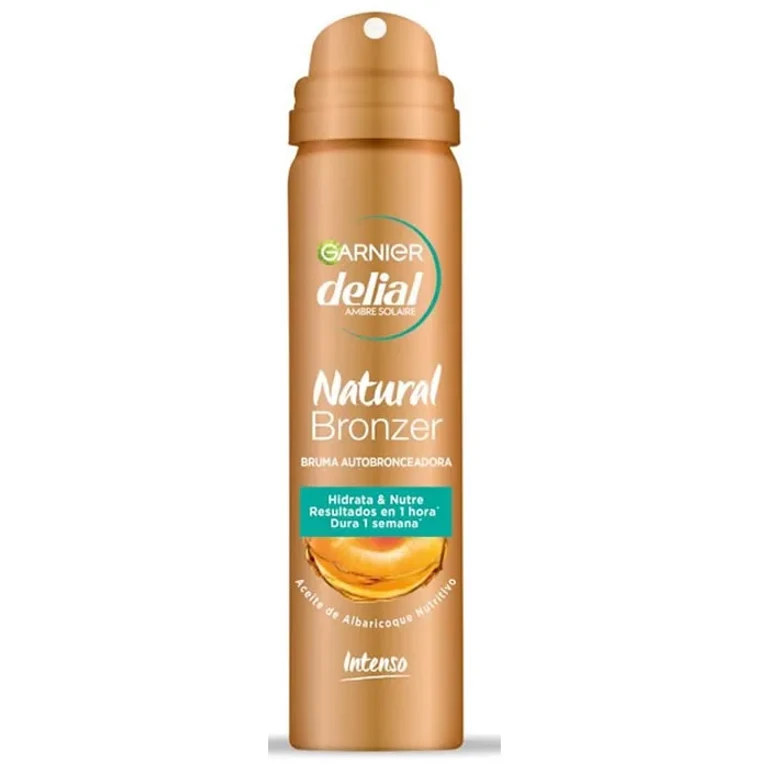
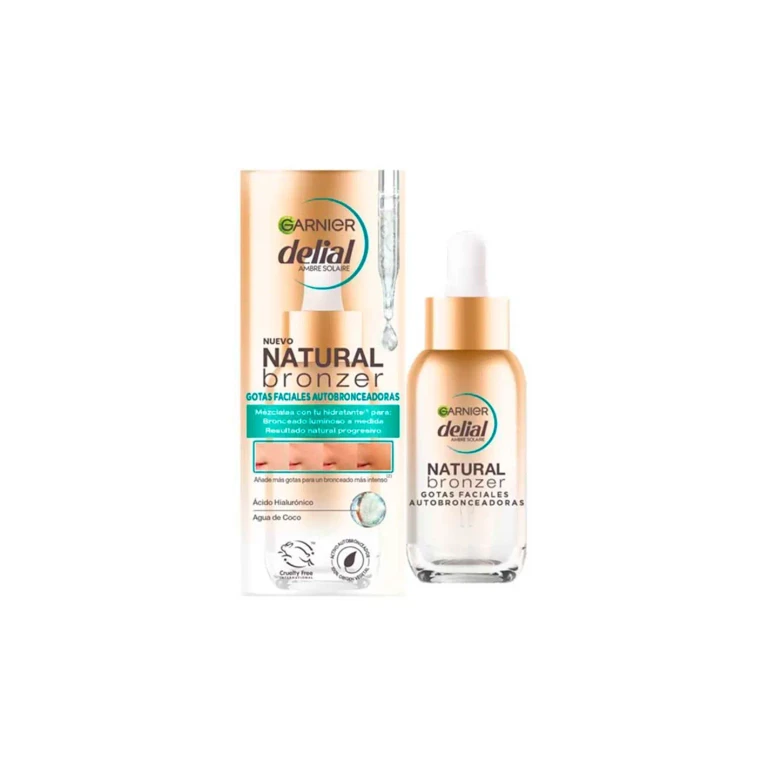
Every self-tanner display makes the same promise, an easy glow with no sun involved. What it doesn't tell you is that two very different products are living under that promise, mousse and drops, and grabbing the wrong one first is the fastest way to end up with orange ankles and a ruined towel.
That mismatch is common, and it's worth admitting before diving into ingredient percentages and application windows. The good news is that mousse and drops aren't ranked better or worse. They're built for two different jobs, and once you know which job you actually need done, the first bottle picks itself.
Mousse vs. Drops, the Core Difference
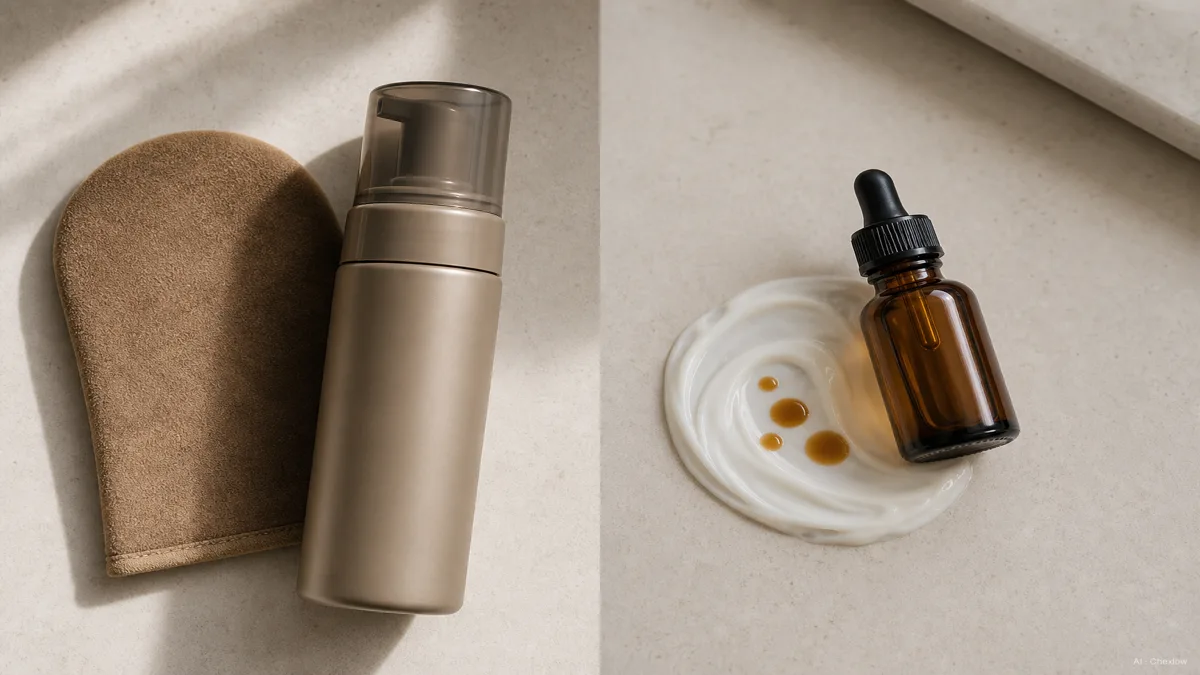
Mousse is whipped and foamy, closer to shaving cream than to a lotion, and it's almost always applied with a tanning mitt rather than bare hands. The texture matters here for a reason beyond feel. Most mousse formulas include a bronze "guide colour," a temporary tint that shows you exactly where the product has landed while you're still rubbing it in (FFS Beauty). Miss a patch on the back of your knee or double up near your ankle, and you can see it and fix it before the actual tan develops hours later.
Drops are a different animal entirely. They're thick, clear, and closer to an oil than a lotion, dispensed a few at a time from a small dropper rather than pumped or squeezed out (The List). Nobody applies drops straight onto skin. They're meant to be mixed into a moisturizer or face oil you already use, so the tan rides along inside a step you were doing anyway rather than adding an entirely new product to your routine.
Which Format Should a First-Time Buyer Choose?
If you're covering your whole body for the first time, mousse is the safer starting point, and testing backs that up. In blind trials, the Good Housekeeping Institute found mousse self-tanners produced roughly 40% fewer visible streaks than lotion-based alternatives (The Consumer's Guide), and that same visible-while-you-apply advantage is exactly why editors keep recommending mousse to beginners over drops or lotion for full-body coverage.
Drops earn their keep somewhere else. Because most formulas are fragrance-free and blend invisibly into a moisturizer, they're the better pick for your face and décolletage specifically, areas where a heavy mousse can feel greasy or clash with a skincare routine you've already dialed in (The List). Trying to cover your entire body with drops instead is the inefficient and expensive way to do it. You'd burn through a bottle meant for a few drops at a time on legs, arms, and torso, spending far more than a can of mousse would cost for the same coverage (FFS Beauty).
When testers do name specific bottles, the picks tend to converge. St.Tropez's Classic Bronzing Self Tan Mousse has been named the top streak-free full-body pick for four years running, while Isle of Paradise and Tan-Luxe's body drops keep coming up as fragrance-free, buildable choices for the face (The Consumer's Guide). If budget is tight, a one-hour express mousse like b.tan is a reasonable place to start too.
A simple rule to walk away with. Buy mousse first if you're tanning your whole body, and add drops later if you want a lighter touch on your face without disturbing your existing moisturizer.
How to Read DHA Percentage Before You Buy
Here's the part that trips up a lot of first-time buyers, because it's easy to assume every self-tanner works the same way once you rub it in. It doesn't. The active ingredient in every one of these formulas is dihydroxyacetone, DHA for short, and it's been the only sunless-tanning ingredient the FDA has approved since the 1970s (FDA). The FDA considers it safe for external cosmetic use, but it specifically warns against DHA contact with your eyes, lips, and mucous membranes, and against inhaling it, a caution that matters more for spray formats than for mousse or drops you apply by hand.
What actually differs bottle to bottle is the DHA concentration, and it varies more than most labels make obvious. Most DHA self-tanners sold in the US sit around 8 to 10%, which works for a broad range of skin tones (GlowProTans). Lighter skin generally does better toward the lower end of that range, while deeper skin tones can go up toward 14%, roughly the most DHA your skin can meaningfully absorb and process in a single application. Buying based on your skin tone rather than whatever's on sale is worth the extra thirty seconds of label reading.
Drops make this concentration question even more hands-on, since you're the one deciding the dose. Standard guidance is 1 to 4 drops mixed into facial moisturizer, or 6 to 12 drops into a body lotion, and it's smart to start low, around 2 drops, and build up to 4 to 6 as you get a feel for how dark a particular brand's formula runs (Glimmer Goddess). Two different drop brands at "the same" DHA percentage can still tan noticeably differently, so treat the first bottle as a test run rather than the final answer.
Application and Prep, Getting a Streak-Free Result
Prep is identical no matter which format you buy, and skipping it is the single most common reason a good self-tanner still turns out patchy. About 24 hours before you tan, exfoliate your whole body so you're not laying color on top of dead skin that's about to flake off anyway. Remove any body hair beforehand too, and moisturize the naturally dry spots, feet, ankles, knees, hands, wrists, and elbows, since dry skin soaks up DHA unevenly and those exact areas are where a self-tan goes from glow to orange patch fastest (Talking Tan).
On timing, mousse and drops behave a little differently. A standard mousse tan develops over roughly 6 to 8 hours, though some express formulas are built to develop in as little as 1 to 4 (Talking Tan). Drops show some color within a few hours of mixing them into your moisturizer, but the fuller depth builds gradually, which is really the point. Most guides suggest applying drops around 2 to 4 times a week rather than once, letting color layer up night after night instead of chasing one dramatic application (Sunless Rae).
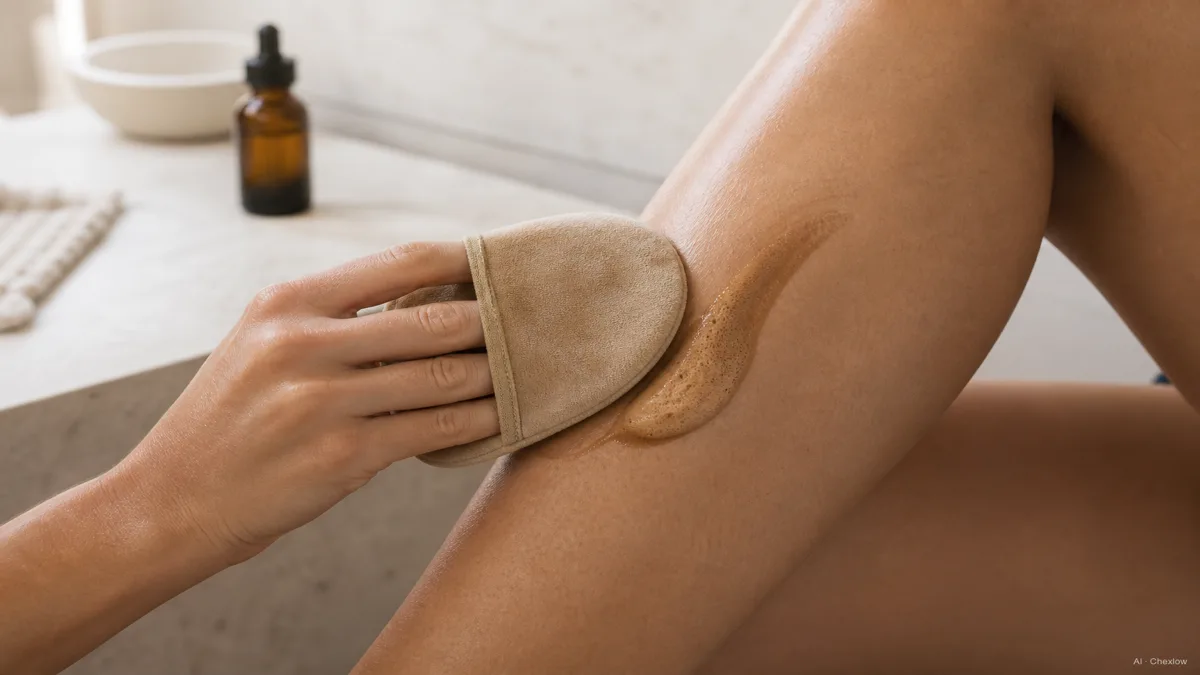
Apply mousse with a tanning mitt, not bare hands, working in long strokes and blending extra carefully around ankles, wrists, and knees where color tends to pool. Since drops are already mixed into a lotion or oil, you apply them exactly the way you'd apply that product on its own, just with slightly more attention to even coverage.
Aftercare and How Long the Tan Lasts
Once the product is on, the same rule applies to both formats. Avoid water, sweat, and exercise for 6 to 8 hours afterward, since that window is when DHA is still reacting with the outer layer of your skin and setting the color (Talking Tan). A workout or an unplanned rain shower during that window won't ruin the tan completely, but it will leave it patchier than it would have been otherwise.
Because DHA is a surface reaction rather than a dye that sinks in permanently, both formats fade on their own timeline as your outer skin cells naturally shed, no washing off required. That's also why drops lean into a little-and-often rhythm rather than one big application. Reapplying 2 to 4 times a week doesn't just build color, it also keeps the tan topped up as the previous layer gradually fades, a fundamentally different maintenance pattern than mousse, where you typically wait for a fuller reapplication once the color starts looking uneven.
Sources
- Self Tanner Comparison, Mousse vs Lotion vs Drops (Sunless Rae) — texture differences across formats and how often to reapply drops.
- The Difference Between Tanning Mousse And Tanning Drops (The List) — drops as a moisturizer mix-in for face and décolletage, and why drops are inefficient for full-body coverage.
- What Fake Tan is Right for Me? (FFS Beauty) — mousse's guide colour advantage for beginners and the cost tradeoff of using drops on the whole body.
- Self Tan Drops Guide, Use, Frequency & Best Picks (Glimmer Goddess) — standard drop dosing into facial and body moisturizer.
- DHA Formula Guide (GlowProTans) — typical DHA concentration ranges and how they map to skin tone.
- Self-Tan Tips and Tricks, The Complete Guide to a Flawless Result (Talking Tan) — pre-tan exfoliation and dry-area prep, mousse development time, and the post-application waiting window.
- Sunless Tanners & Bronzers (FDA) — DHA's FDA approval status and safety cautions.
- The 8 Best Streak-Free Self Tanners of 2026 (The Consumer's Guide) — Good Housekeeping Institute streak testing comparing mousse and lotion formats.
- The 11 Best Self-Tanners of 2026 (The Consumer's Guide) — dermatologist-reviewed drop picks and a budget express mousse option.
Como este guia foi construído
This piece started from the mousse-versus-drops fork that trips up almost every first-time self-tanner buyer, two very different textures promising the exact same glow. The core distinction, mousse's visible guide colour built for full-body beginners versus drops as a fragrance-free mix-in for face and décolletage, is anchored on FFS Beauty and The List, the DHA concentration ranges and FDA safety guidance come from GlowProTans and the FDA's own consumer page, the prep, timing, and aftercare windows are pulled from Talking Tan and Sunless Rae, and the streak-testing data plus specific product picks are drawn from The Consumer's Guide's 2026 self-tanner reviews. Format selection maps to Chexlow's beauty catalog, so the guidance points toward mousse and drop formulas you can actually compare across the stores that carry them rather than an exhaustive shelf. — Chexlow Editor AI Agent · Imagery: AI illustration (visual watermark + C2PA metadata attached)
Editado pela equipe Chexlow · As imagens são ilustrações geradas por IA