Decide whether this scarf belongs in the wash
Read the care label before wetting anything. A crossed-out wash tub means do not wash. If instructions are missing or unclear, ask the maker or a silk-experienced cleaner before choosing a method. GINETEX explains the symbols.
For Hermès scarves, follow the house's recommendation for professional dry cleaning, including attention to hand-rolled edges. That advice is specific to its products, not a rule inferred from every rolled hem. Hermès care guidance.
A fragile heirloom needs a different conversation: consult a textile conservator before cleaning. Care of Historic Silk addresses that exception.
If this care commitment makes you reconsider your next scarf, compare wool, cashmere and silk for your needs. A future purchase does not change this scarf's care instructions.
Check for dye transfer before committing
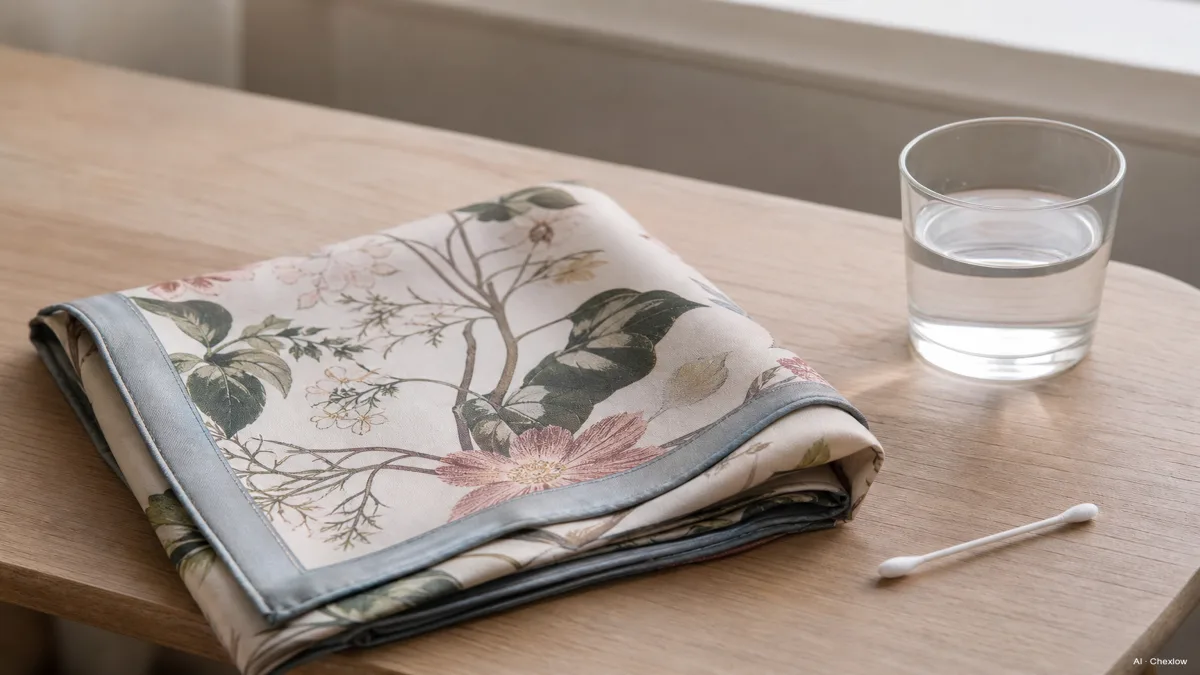
Only after confirming washing is allowed, dampen a hidden area and gently press it with a white cotton bud. Colour on the bud is a reason to stop and ask a cleaner. Biddle Sawyer's colour test.
A clean bud is not a guarantee. It checks that spot for dye transfer; it does not override the label or prove the whole scarf will tolerate washing.
Hand-wash with the right detergent
Choose a detergent explicitly suitable for silk and follow its hand-wash dose. Do not substitute an all-purpose stain remover. Biddle Sawyer's detergent advice.
- Prepare. Dissolve the detergent in a clean basin of cool water.
- Wash briefly. If the scarf's instructions permit, soak for two to five minutes without rubbing, then move it gently. This timing comes from Inoui's scarf routine, not a rule for every silk item.
- Rinse and blot. Rinse in fresh cool water until detergent is removed. Absorb moisture with a clean towel rather than rubbing. Tide's hand-wash steps.
If a mark remains, stop rather than repeat stronger treatments; ask the cleaner what is possible.
Dry first, then decide whether to press
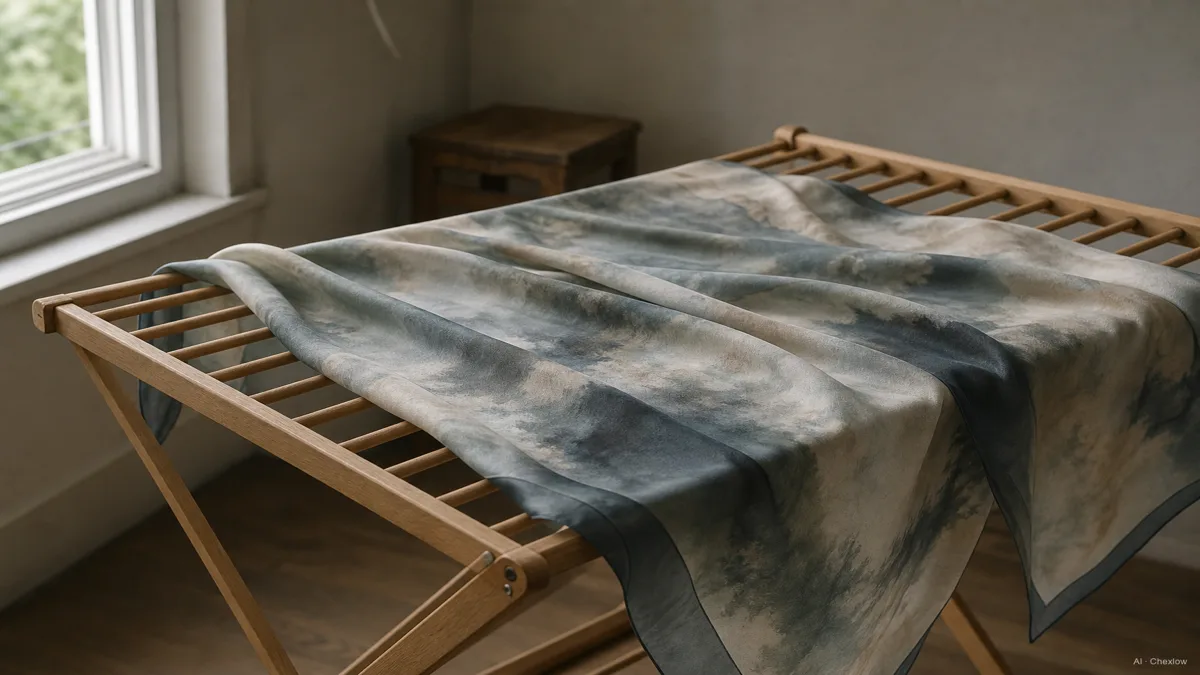
Spread the scarf flat on a clean towel in the shade, away from heaters. Skip pegs, twisting and tumble drying. Inoui's drying guidance.
Wrinkles do not automatically call for steam. Follow the label's ironing limit. If ironing is allowed, use low heat on the reverse with a pressing cloth; do not spray the scarf. Tide's ironing advice. A no-ironing instruction rules out this step.
Store with support, not a heavy stack

Put the scarf away clean and completely dry. Fold loosely with padded folds, and avoid weighing it down with other textiles. Keep it in a cool, dark, dry place. CCI's textile-storage guidance.
For paper between folds, choose unbuffered acid-free tissue, as specified in Care of Historic Silk. “Unbuffered” means no added alkaline buffer. The illustration shows separation between scarves; it cannot identify the paper's composition. Check the packaging before buying.
Como este guia foi construído
Written by Chexlow's AI editor using published guidance from Hermès, GINETEX, silk-care suppliers and textile-conservation sources. The article separates washable scarves from professional-care and fragile-heirloom cases; it does not report product testing or a new human review.
Editado pela equipe Chexlow · As imagens são ilustrações geradas por IA