What the temperature numbers actually mean
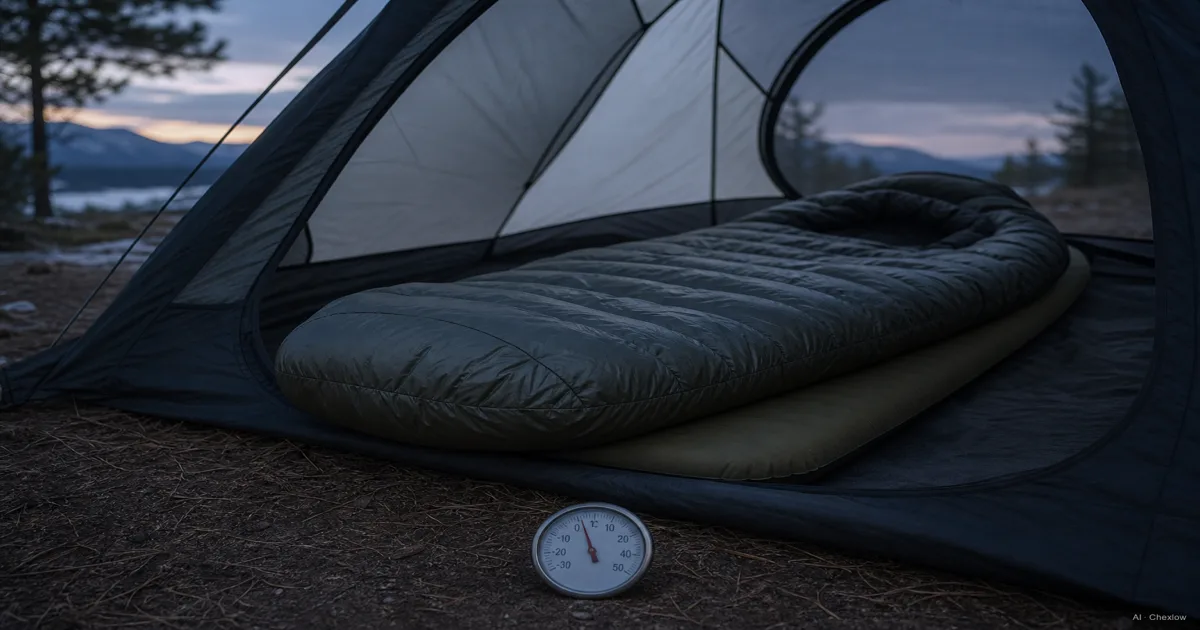
Most reputable sleeping bags are tested under a single international standard. It used to be EN 13537, the European method introduced in 2002. It's now governed by ISO 23537-1:2022, which replaced the older versions. The test is the same in spirit: a heated mannequin, dressed in standardized base layers, is placed in a cold chamber, and sensors measure how much heat it loses. The result is a set of numbers any two brands can be compared against. If a bag carries an EN or ISO tag, you can trust the rating method is consistent.
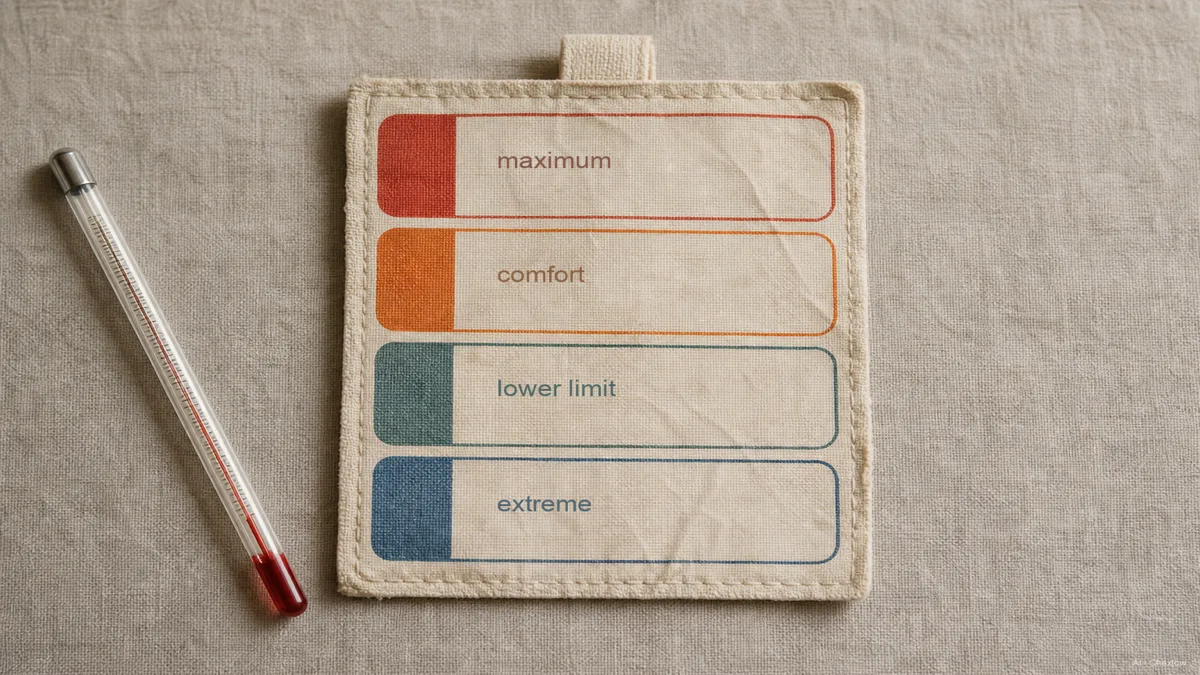
The test produces four values, and this is where the confusion lives.
- Maximum. The warmest temperature you can sleep at without overheating and sweating. Rarely the number you're shopping on, but useful if you camp in mild conditions.
- Comfort. The temperature at which a "cold sleeper" stays comfortable through the night. The standard models this on an average woman in a relaxed posture. This is the rating cold sleepers should actually use.
- Lower limit. The temperature at which a "warm sleeper," modeled on an average man curled up to conserve heat, is just barely not cold. This is the number printed on most tags.
- Extreme (or survival). The point where serious hypothermia risk begins. This is not a sleep rating. It's a do-not-die threshold, and treating it as a usable temperature is how people get into trouble.
The single most important takeaway: the headline number on the label is usually the lower limit, not the comfort rating. Switchback Travel and REI both flag this as the number-one source of buyer confusion. If you sleep cold, find the comfort rating, not the headline number.
How to pick the right rating for your trip
Once you know which number is which, choosing a rating comes down to two questions: how cold will it get, and how do you sleep?
Start with the coldest nighttime temperature you realistically expect, then add a buffer. REI recommends building in roughly 10–15°F of margin below that coldest expected low when you choose a rating. For car camping, where you can throw in an extra blanket and the stakes are low, the smaller end of that buffer is fine. For backpacking, where you're carrying everything and the weather can turn on you with no backup, go larger. Mountain nights run colder than the valley forecast suggests, and you can't add layers you didn't pack.
Now factor in your sleep style. If you're a cold sleeper, shop on the comfort rating and aim for a comfort number 10–15°F below your coldest expected night. If you run warm, you can use the lower limit as your baseline instead. The honest move is to know which you are before you buy. Most people who end up cold in a bag bought it on the lower limit when they should have bought on comfort.
One more practical note. It's almost always better to be slightly too warm than too cold. A bag rated colder than you strictly need can be vented by unzipping; a bag that's not warm enough can't be made warmer past a point. Erring toward more warmth is the safer mistake.
Down vs synthetic, which insulation is right for your first bag
This is the second big fork, and it mostly comes down to weight, weather, and budget.
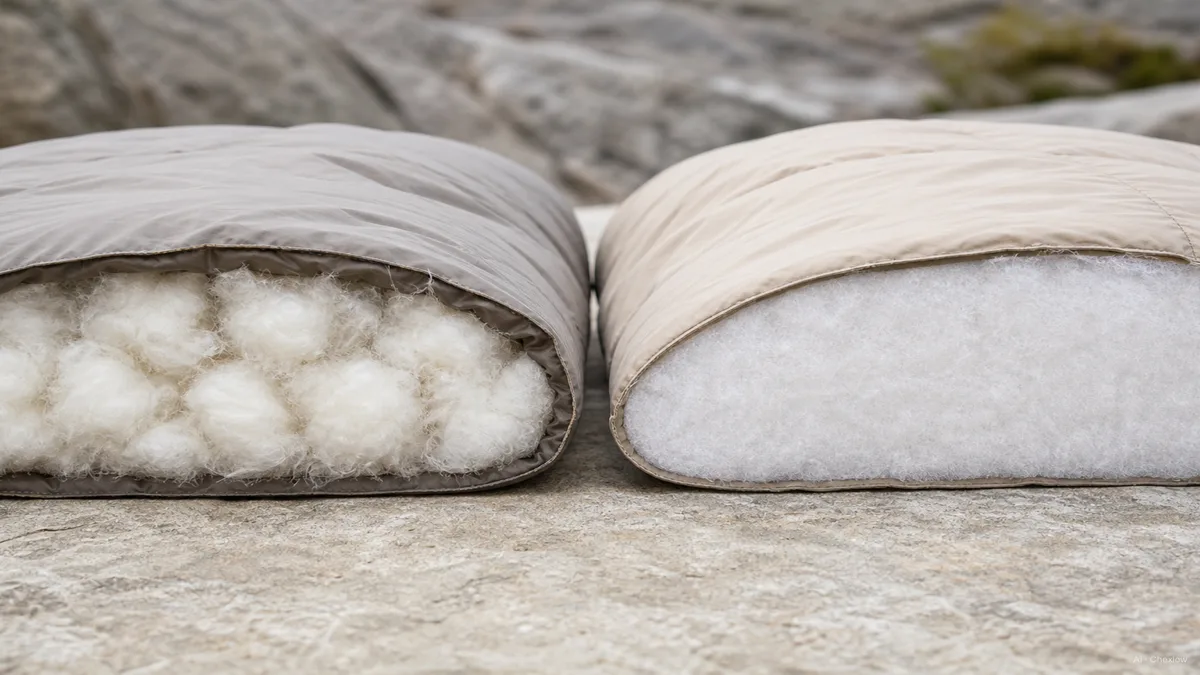
Down insulation is rated by fill power, measured in cubic inches per ounce. Higher fill power (800–900 and up) means the down lofts more per gram, so you get the same warmth at less weight and it packs down smaller. The difference is dramatic: an 800-fill down bag rated to 20°F might use around 3 ounces of down, where a synthetic bag at the same rating needs 8 to 10 ounces of fill. For backpackers counting every gram, down wins on warmth-to-weight by a wide margin.
The classic knock on down is water. When down gets wet, it loses loft and stops insulating, while synthetic keeps most of its warmth even soaked and dries faster. That gap was real, but it's narrowed. Most quality down now comes treated with a durable water repellent (DWR) coating, sometimes called hydrophobic or water-resistant down, which resists light moisture and slows the collapse. It's not waterproof, but it's no longer the liability it once was.
There's also a longevity angle that changes the math. A well-cared-for down bag lasts 10 to 20 years; synthetic insulation typically fades after 3 to 7 years as the fibers break down and lose loft. So even though down costs more upfront, the cost per year of use often lands lower.
The practical read for a first bag: if you're car camping in dry-ish conditions on a budget, a synthetic bag is a sensible, forgiving start. If you're backpacking, or you want one bag to last a long time and you can stretch the budget, treated down is the more efficient long-term choice.
Bag shape 101, mummy, rectangular, and quilt
Shape affects warmth, weight, and how the bag feels to sleep in, so it's worth a moment.
Mummy bags taper from a wider shoulder down to a narrow foot, often with a hood that cinches around your head. The point is to minimize dead air space, the empty room inside the bag that your body has to heat. Less space means a warmer, lighter bag for a given temperature rating. The trade-off is room to move. If you sleep on your side or shift around a lot, a snug mummy can feel confining.
Rectangular bags are the opposite. They give you space to stretch and roll, and many fully unzip to lay flat as a quilt or join with a second bag. They're roomier and more comfortable for casual camping, but they're heavier and less thermally efficient because there's more air inside to warm. For car camping where weight doesn't matter, a rectangular bag is often the more pleasant choice.
Quilts are the ultralight answer. A quilt has no insulation on the bottom, on the logic that the down you'd be lying on gets crushed flat and stops insulating anyway. Instead you rely on your sleeping pad for bottom insulation and drape the quilt over the top. Paired with a good pad, a quilt delivers the best warmth-to-weight ratio of the three, which is why backpackers love them. For a first bag, though, a quilt asks you to get the pad pairing right, so it's more of a step-two purchase than a step-one.
Other factors that affect how warm you sleep
Two people in identical bags on the same night can sleep completely differently, and the rating is only part of the story. A few things quietly move the needle.
- Your sleeping pad's R-value. This is the big one people forget. A lot of body heat is lost into the cold ground, not the air. A pad's R-value measures how well it blocks that loss. A warm bag on a thin, low-R pad will still sleep cold, because the ground is pulling heat straight out of your back.
- What you wear inside. A clean, dry base layer and a hat meaningfully extend a bag's range. The standardized ratings assume a specific base layer, so sleeping in just shorts changes the math against you.
- Food and water before bed. Your body generates heat by burning calories, so going to sleep underfed or dehydrated leaves you colder. A snack before bed is a real warmth strategy, not a camping myth.
- Body size and metabolism. Smaller bodies and slower metabolisms tend to sleep colder, which is exactly why the comfort rating is modeled on an average woman and the lower limit on an average man. Know where you fall.
- Shelter and altitude. A tent traps a pocket of warmer air around you; an open bivouac doesn't. And higher altitude means colder nights, so the same bag performs differently at 2,000 meters than at sea level.
None of these replace choosing the right rating. They're the reasons two people can disagree about whether the "same" bag is warm, and the levers you can pull on a cold night without buying anything new.
Sources
- Understanding Sleeping Bag Temperature Ratings — REI Expert Advice on the four EN/ISO ratings, the comfort vs lower limit distinction, and the safety buffer recommendation.
- Sleeping Bag Temperature Ratings Explained — Switchback Travel's breakdown of why the lower limit is the most misread number and how sleep style changes the choice.
- Understanding ISO 23537-1:2022 — Alton Goods guide to the current governing standard and how it supersedes EN 13537.
- Down vs. Synthetic Insulation — REI Expert Advice on fill power, wet-weather performance, treated down, and longevity.
- Sleeping Bags vs. Quilts — REI Expert Advice on quilt construction, pad pairing, and warmth-to-weight trade-offs.
- EN 13537 — Wikipedia overview of the standard that established the four-value rating system.