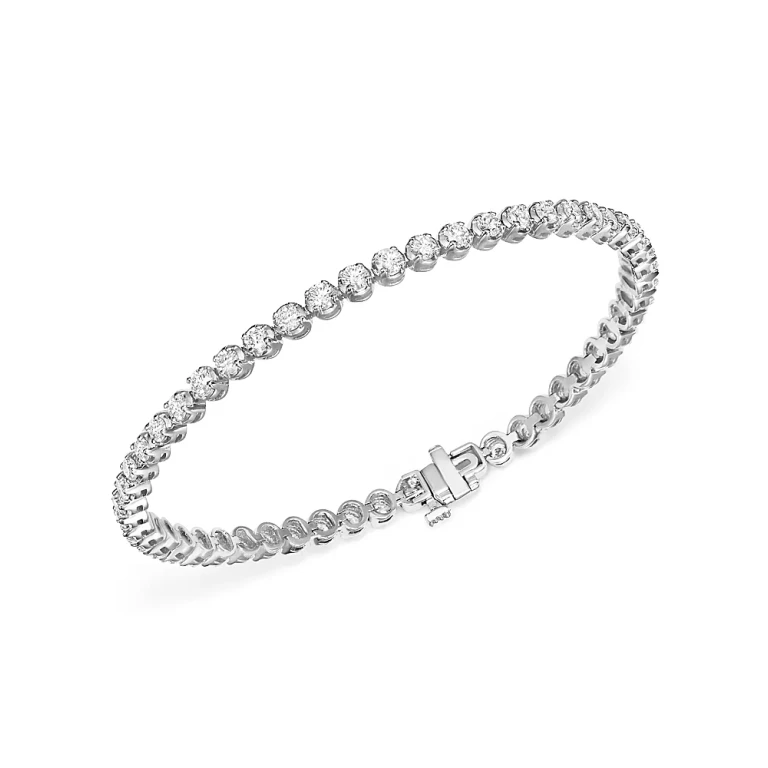
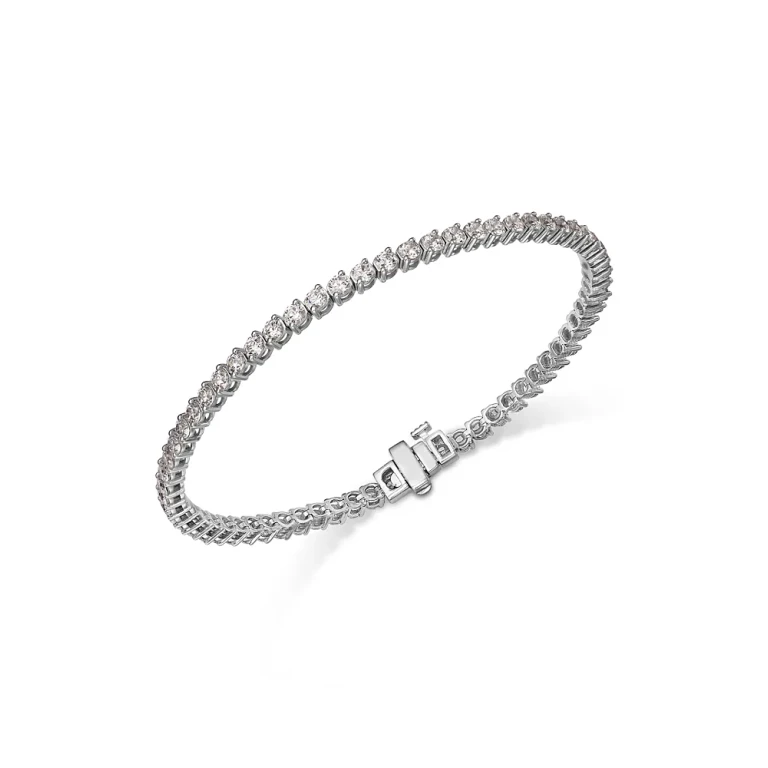
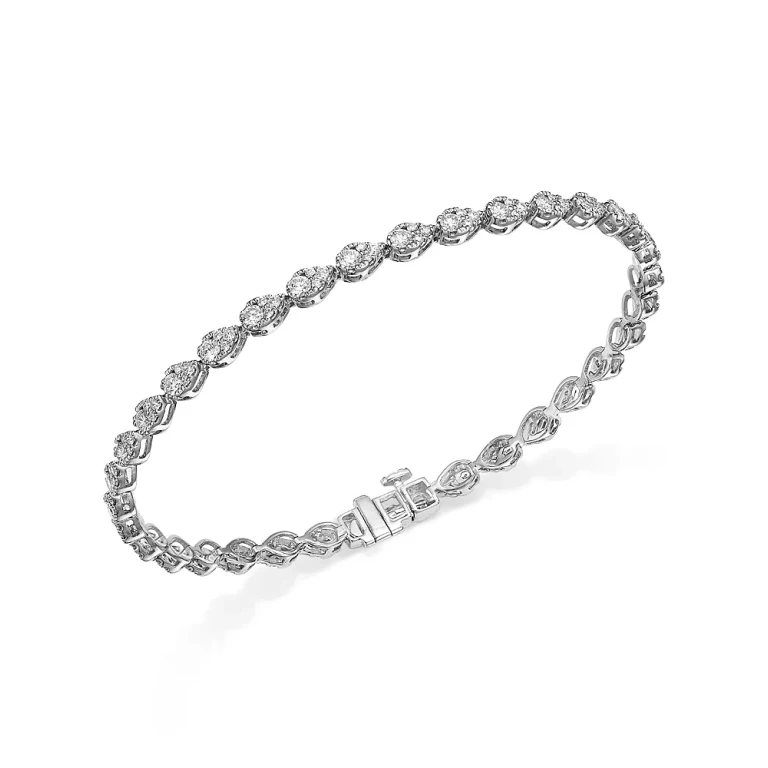
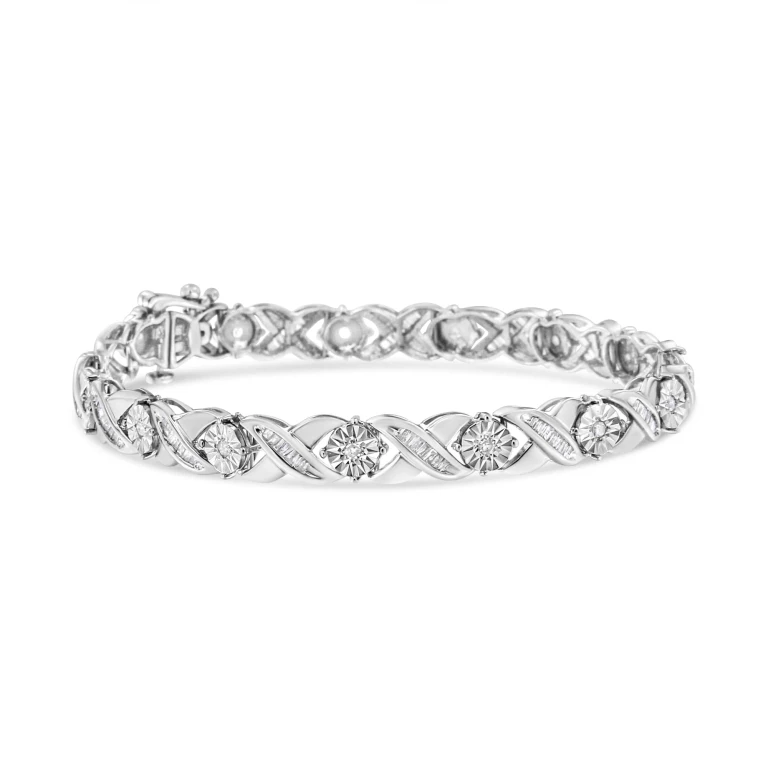
A tennis bracelet looks like one of the simplest pieces of fine jewelry you can buy. It is just a line of stones in a row. Then you open a product page and see CTW, cut grade, color grade, clarity grade, and three different stone types, and the simple bracelet suddenly feels like a research project.
That overwhelmed feeling is normal for a first purchase this size. The good news is that once you understand five things, carat weight, the 4Cs, stone type, metal, and the clasp, the choice gets a lot more concrete.
What a tennis bracelet actually is, and where the name comes from
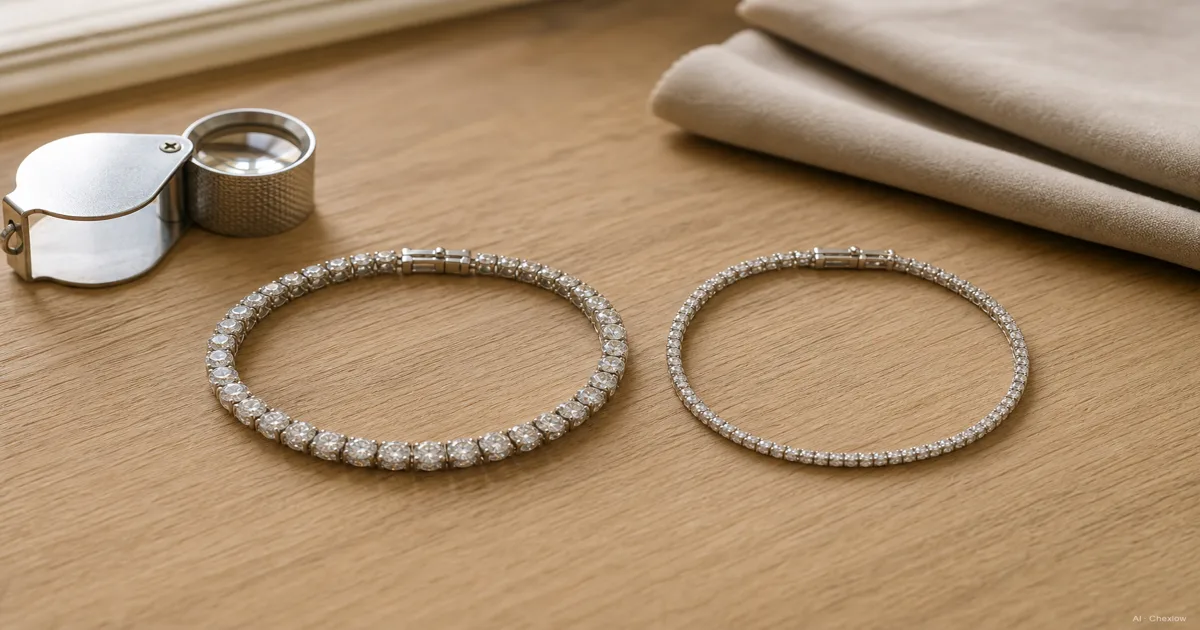
A tennis bracelet is a flexible line of uniformly matched diamonds, or other gems, set edge to edge in a continuous chain of gold, white gold, or platinum (GIA 4Cs). Before 1978, jewelers called the same design a line bracelet or an eternity bracelet, and you will still see both names used today (diamonds.pro).
The name change has a specific story behind it. At the 1978 US Open, tennis champion Chris Evert was mid-match when her diamond line bracelet came loose and fell off her wrist. Play stopped while she and the officials searched the court for it. Press coverage of the moment stuck, and the piece has been called a tennis bracelet ever since (GIA 4Cs). Evert herself confirmed the 1978 date decades later, in a collaboration with designer Monica Rich Kosann (Monica Rich Kosann journal).
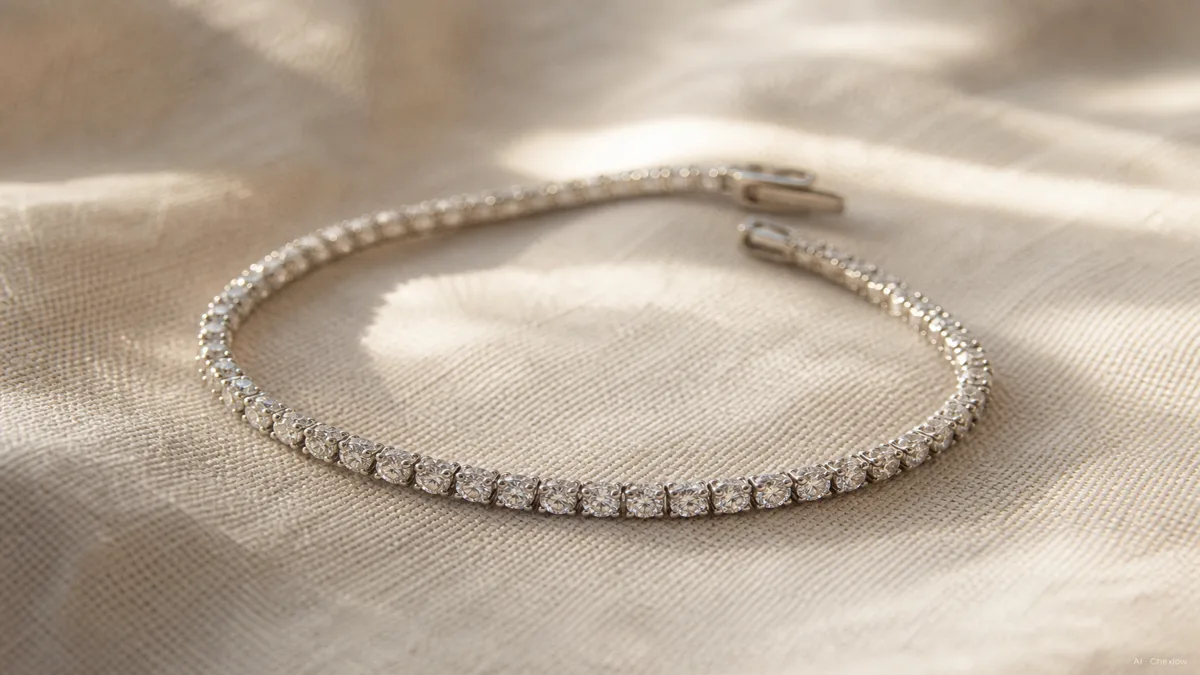
Choosing carat weight, how much CTW fits your wrist and your budget
This is usually where the spec sheet starts to blur together, so let's slow down and take it one number at a time.
Every tennis bracelet lists a CTW, or carat total weight. That number is not the size of one stone, it is the sum of every stone in the line added together (diamonds.pro). A 3 CTW bracelet with 40 small stones and a 3 CTW bracelet with 20 larger stones both say "3 CTW" on the tag, even though the stones look completely different in person.
For a first tennis bracelet, 1 to 2 CTW is the range most guides point to. It reads as an everyday piece you can stack with other bracelets and wear without a second thought, rather than a statement piece you reserve for occasions (diamonds.pro). If you want something that reads more as a statement from across the room, 3 to 5 CTW is the most popular range for that look.
Wrist size changes how any given CTW actually looks on you. A narrower wrist, under about 6 inches around, tends to suit 1 to 3 carat bracelets best. An average wrist, roughly 6 to 7 inches, carries 3 to 7 carats comfortably. A larger wrist, over 7 inches, often needs 5 carats or more just to avoid looking thin and lost against the width of the wrist (diamonds.pro). Measure your own wrist before you shop. CTW and wrist size make the decision together, not separately.
The 4Cs that matter most on a line of diamonds
Cut, color, clarity, and carat get most of the attention on a single diamond ring. On a bracelet with dozens of stones, the order of importance shifts a little.
Cut matters more than most first-time buyers expect. According to GIA, cut quality affects sparkle and brilliance more than carat weight does, and a well-cut 3 carat bracelet can genuinely outsparkle a poorly cut 5 carat one (GIA 4Cs). A bigger number on the tag does not automatically mean more sparkle on the wrist.
For a bracelet on a normal budget, the practical target most jewelers recommend is an excellent or very good cut grade, G to H color, and SI clarity or above (diamonds.pro).
One more thing single-stone rings do not need to worry about, match. A tennis bracelet is a line, so the stones need to look consistent next to each other, close in color and clarity across the whole piece, not just individually graded. A bracelet with mismatched stones reads as uneven the moment it catches light, even if every individual stone graded well on paper.
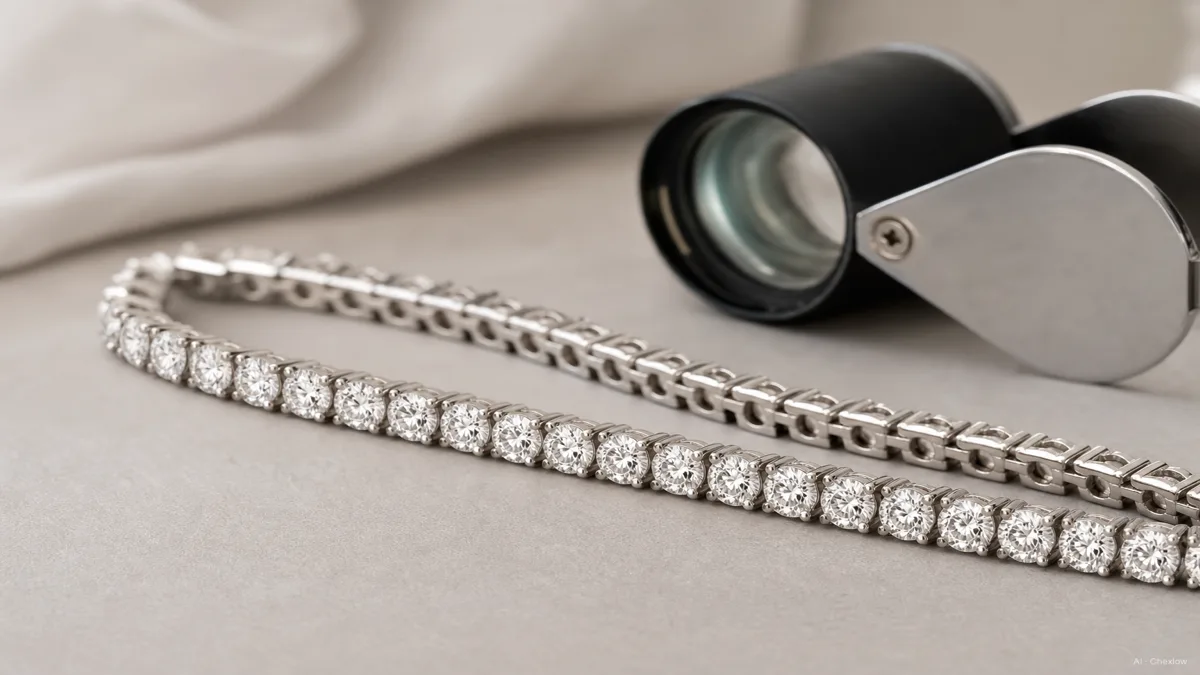
Diamond vs lab-grown diamond vs moissanite, price and durability compared
Once you know your carat range and your 4Cs target, the next fork in the road is what the stones are actually made of. There are three real options, and each one changes the price by a lot.
Moissanite is silicon carbide, not diamond, and it runs roughly 80 to 90 percent cheaper than a diamond of comparable size and appearance. A full moissanite tennis bracelet typically lands somewhere between about $300 and $3,000 (Ice Cartel). It scores 9.25 on the Mohs hardness scale against a diamond's 10, close enough for daily wear, but it throws off more rainbow-colored fire than a diamond does. On smaller stones that extra sparkle reads as lively. On larger stones it can start to look less like a diamond and more like, well, moissanite.
Lab-grown diamonds are chemically identical to mined diamonds, same carbon structure, same 10 on the Mohs scale, and they typically cost 40 to 70 percent less. As a rough guide, a 1 to 2 carat lab-grown bracelet in 14K gold often runs under about $1,500, and 3 to 5 carats in 14K white or yellow gold lands somewhere between $1,500 and $3,500.
If durability and looking exactly like a mined diamond matter most, lab-grown is the closer match. If price is the deciding factor and you are comfortable with a bit more colored sparkle, moissanite gets you the most bracelet for the least money.
Metal and clasp safety, gold, white gold, platinum, and the double-lock clasp
The stones get most of the attention, but the metal and the clasp decide whether the bracelet actually survives being worn.
18K gold is a popular middle ground, enough purity for rich color, enough alloy mixed in for daily durability. White gold gets its bright white finish from a rhodium plating layer, and that plating wears down over time, so a white gold tennis bracelet needs periodic re-plating to stay looking new (Leon Diamond).
Platinum costs more, but it earns that price. It is denser and more scratch-resistant than gold, it is naturally hypoallergenic, and it holds diamonds securely without tarnishing or losing color over a lifetime of wear (Leon Diamond; With Clarity). For a bracelet you plan to wear daily for years, platinum is the stronger, if pricier, choice.
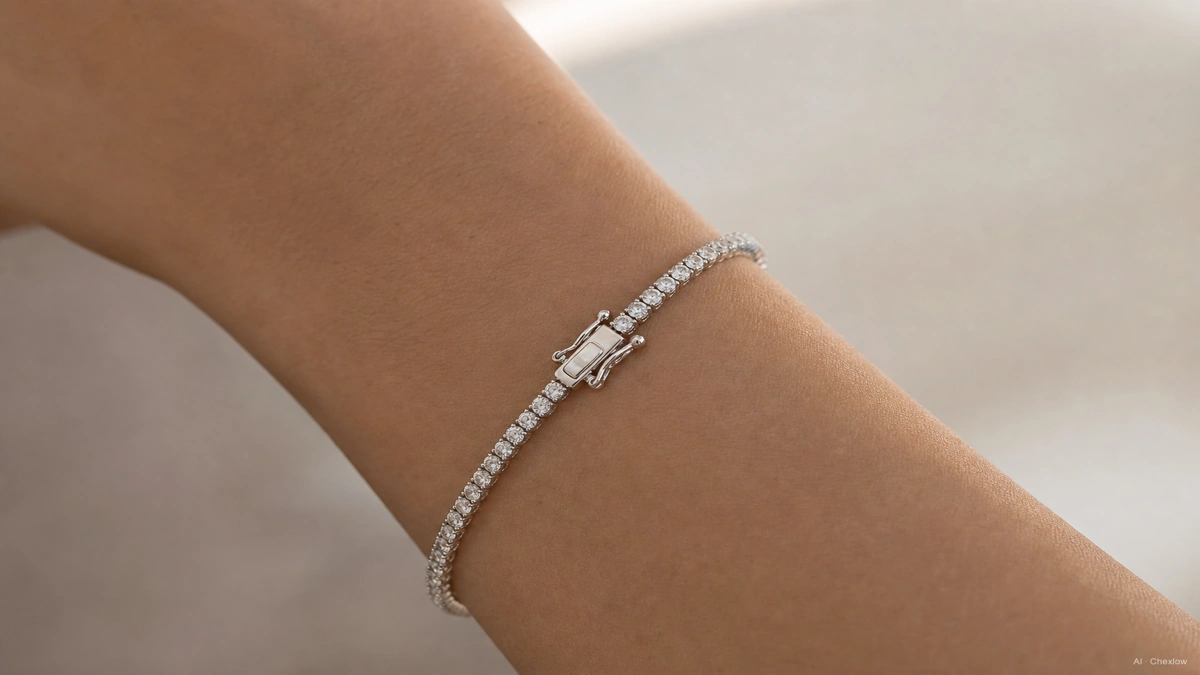
The clasp matters as much as the metal, arguably more, since a failed clasp is how tennis bracelets go missing in the first place. Look for a box clasp with a safety latch or a double-lock mechanism, and consider adding a separate safety chain as backup in case the main clasp ever fails (GIA 4Cs; Ross-Simons). Before you wear any new bracelet out the door, close the clasp a few times and listen for a firm click. Chris Evert's bracelet did not have a bad clasp, but every line bracelet since has had a good reason to double-check one.
Sources
- Tennis Bracelet Buying Guide, Diamonds & Gemstones, GIA 4Cs — definition, cut versus carat sparkle, 4Cs guidance, clasp basics
- How the Tennis Bracelet Got Its Name, GIA 4Cs — the 1978 US Open origin story
- Our Ultimate Tennis Bracelet Buying Guide, diamonds.pro — CTW, carat ranges, wrist size fit
- Moissanite vs. Diamond Tennis Bracelet, Ice Cartel — moissanite price, hardness, and fire
- Story of Chris Evert & The Tennis Bracelet, Monica Rich Kosann — Evert confirming the 1978 date
- What Is the Best Metal for a Tennis Bracelet, Leon Diamond — gold, white gold, and platinum comparison
- Types of Jewelry Safety Clasps, Ross-Simons — clasp types and safety chains
- Tennis Bracelet Buying Guide, With Clarity — platinum durability and buying basics
Como este guia foi construído
This piece started from a recurring first-buyer question, how a tennis bracelet's CTW, cut, and stone type actually translate into a specific fit for a specific wrist and budget. We cross-checked the origin story and 4Cs guidance against GIA's own tennis bracelet coverage, sized carat weight and wrist proportions against diamonds.pro, and compared moissanite pricing and hardness against Ice Cartel's research. Metal and clasp durability drew on Leon Diamond, With Clarity, and Ross-Simons. The selection lens sits on Chexlow's jewelry catalog, spanning diamond, lab-grown diamond, and moissanite tennis bracelets.
Editado pela equipe Chexlow · As imagens são ilustrações geradas por IA