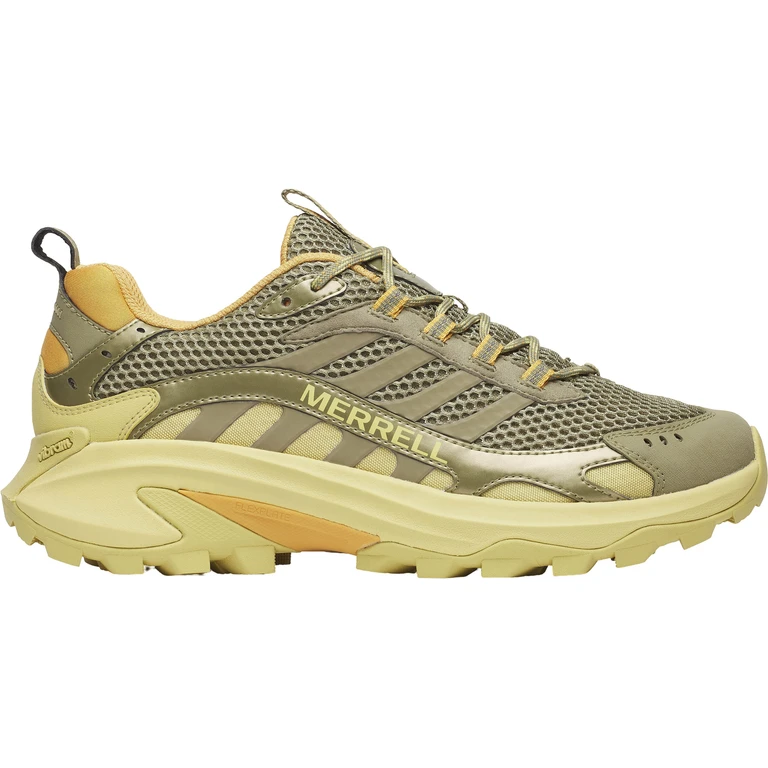
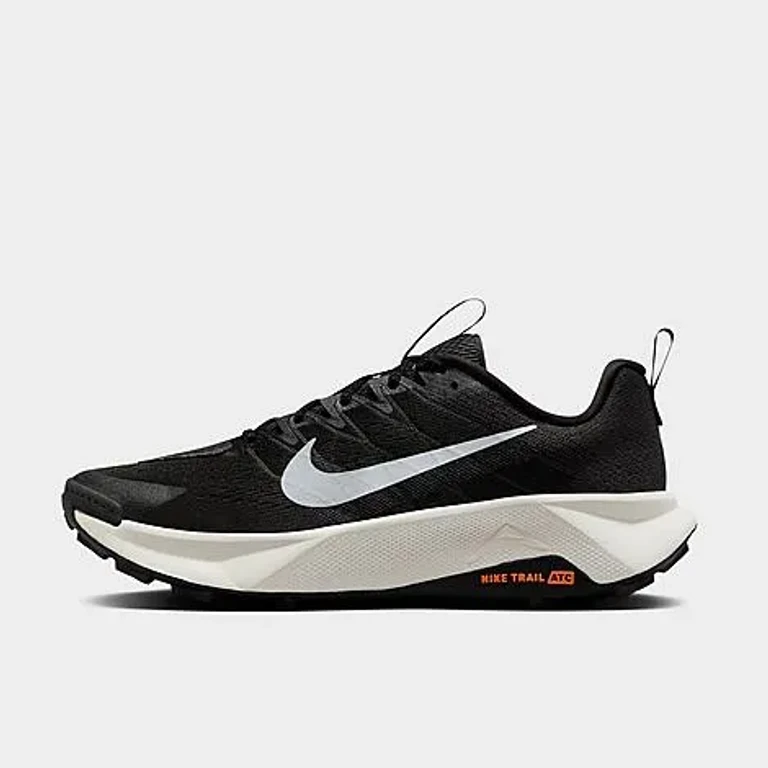
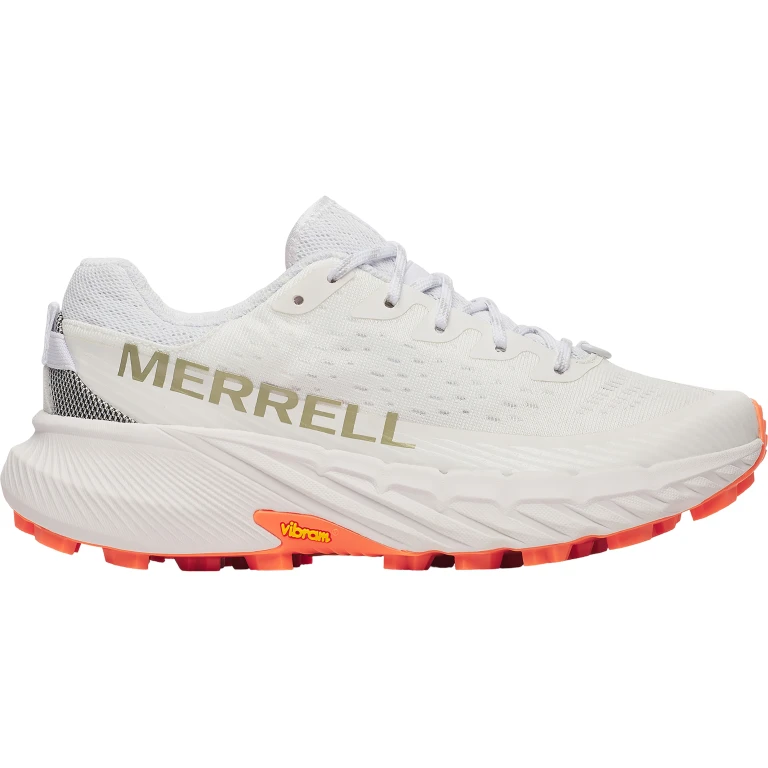
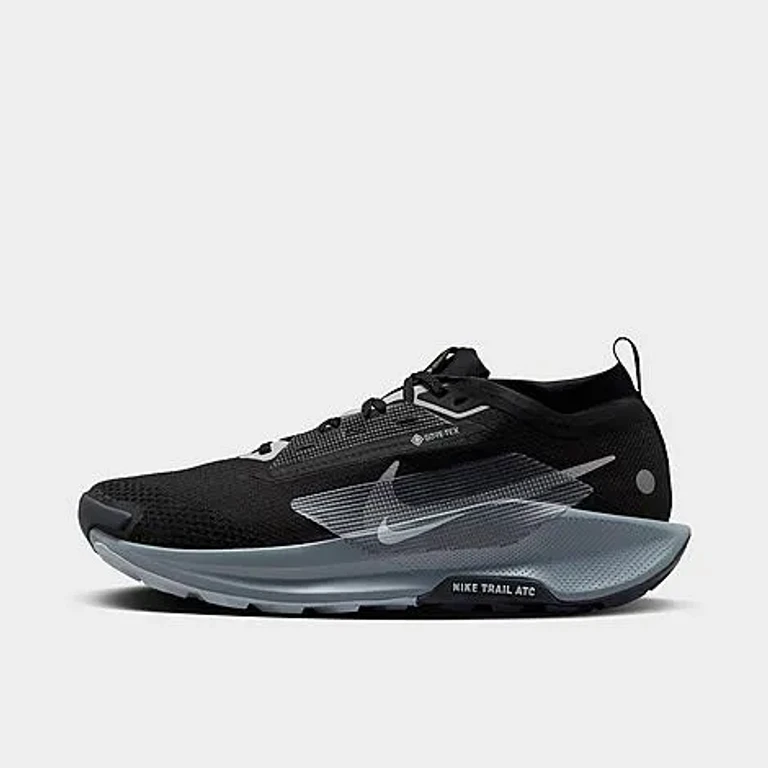
Trail shoes don't look all that different from road shoes on a store display. Same silhouettes, same wall of colorways. The difference is buried in the outsole, the midsole, and a small-print spec sheet that assumes you already speak the language.
You don't have to guess your way through it. Most of what separates a good first trail shoe from a wrong one comes down to matching four things, lug pattern, drop, stack height, and whether you actually need a rock plate, to the terrain you're realistically going to run.
What makes a trail running shoe different from a road running shoe
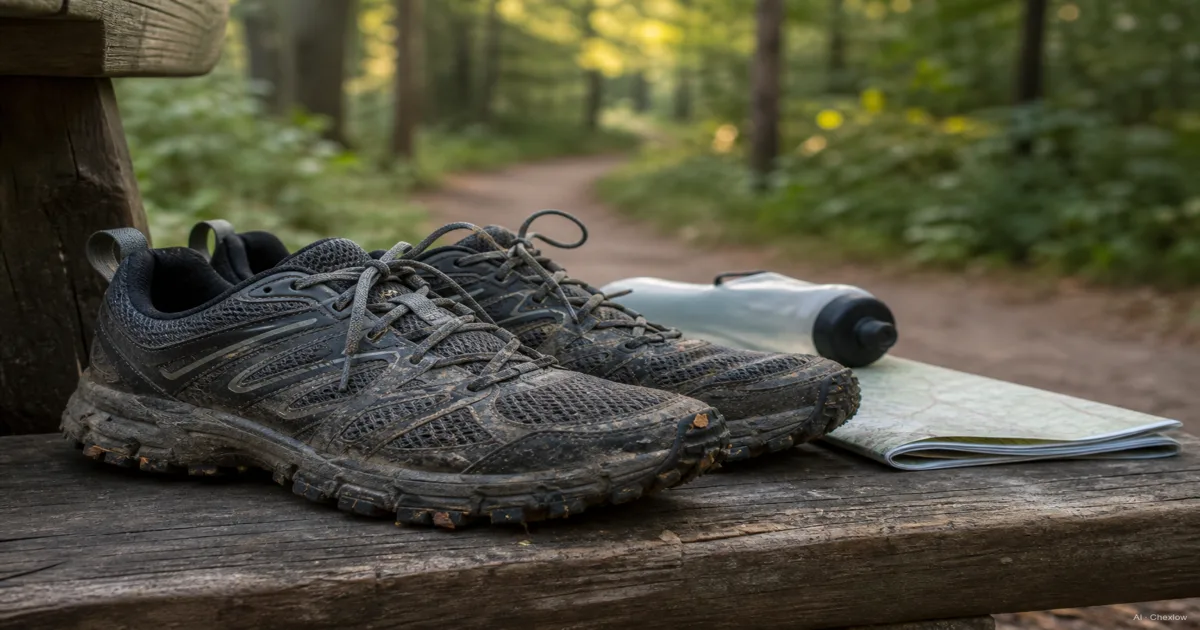
A road shoe and a trail shoe can sit next to each other on a shelf and look almost the same from six feet away. Up close, the outsole gives it away first. Road shoes use flat, smooth rubber built for a predictable, hard surface. Trail shoes use a lugged rubber tread, raised rubber knobs that dig into loose dirt, gravel, and mud the way a road shoe's flat sole never could (REI; Running Warehouse).
The upper tells the same story. Trail shoes usually add a toe bumper, a reinforced rubber cap over the toes that takes the hit when you clip a root or a rock instead of your foot doing it. Reinforced overlays around the sides hold the foot in place on uneven ground, and some models even build in attachment points for a gaiter, a small fabric cuff that keeps trail debris out of the shoe. The mesh itself is usually designed to drain quickly, so a stream crossing or a wet morning trail doesn't leave you squelching for the next five kilometers (REI; Running Warehouse).
Fit matters more here than it does on the road, too. On flat pavement your foot stays roughly in place inside the shoe. On a downhill trail, momentum keeps pushing it forward with every step. Trail running shoe buying guides consistently recommend leaving about a finger's width of space at the toes, more than you'd want in a road shoe, specifically to keep your toenails from slamming into the front of the shoe on a long descent (REI).
How to read the spec sheet, drop, stack height, and lugs explained
Once you're comparing actual pairs, three numbers do most of the work, and none of them require a running lab to understand.
Drop is the height difference between the heel and the forefoot, and it ranges from 0mm (zero-drop) up to around 12mm. A 0mm shoe puts your heel and forefoot at the same level, which asks more of your calves and Achilles tendon than most first-time trail runners are ready for. Most guidance points beginners toward a 6 to 10mm drop instead, close enough to a road shoe that your legs don't need to relearn anything, while still giving some of the ground feel a trail shoe is built for (RunRepeat; Trail and Kale).
Stack height is simply how much cushioning sits between your foot and the ground, and it runs from around 15mm on a minimalist shoe to 40mm or more on a maximalist one. More stack means more protection over long, rocky miles, but also a higher center of gravity that can feel less stable the first few times you're picking a line through rocks. A moderate stack, somewhere around 30 to 32mm, tends to be the safer starting point, enough cushioning to take the edge off without feeling like you're running on stilts (RunRepeat; Trail and Kale).
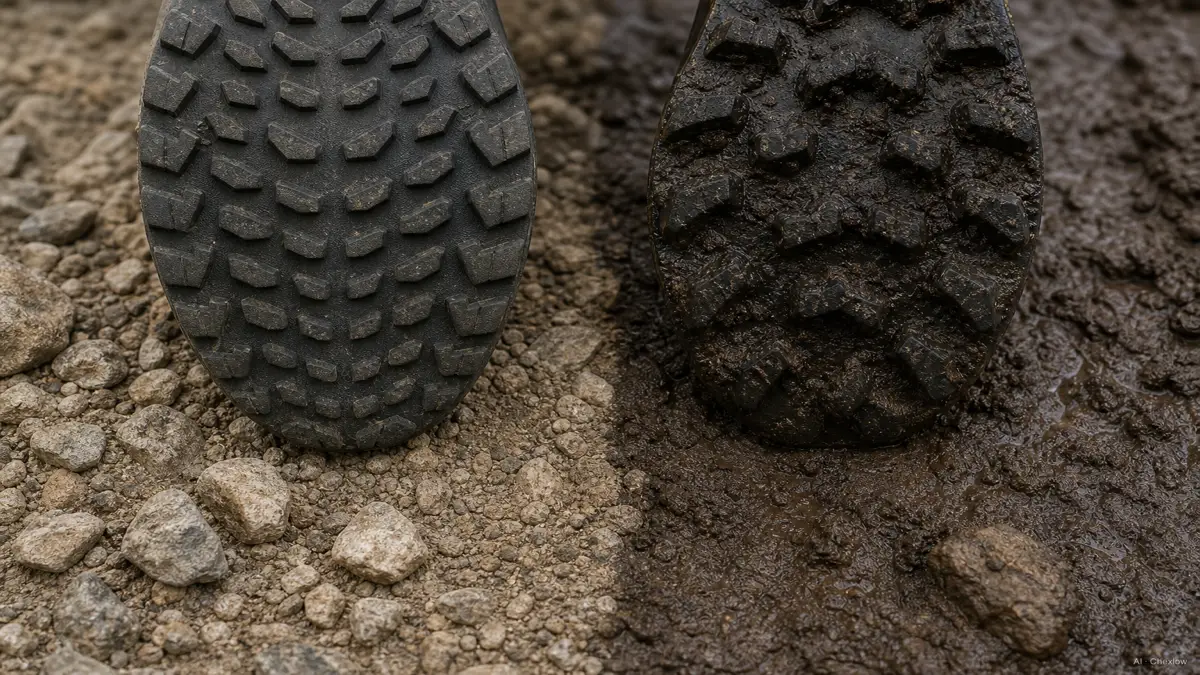
Lugs, the little rubber teeth on the outsole, come down to two separate questions, how deep and how far apart. Shallow lugs, around 2 to 4mm, are built for hard-packed dirt and gravel, where deep lugs would just wear down fast for no benefit. Medium lugs, 4 to 5mm, are the versatile middle ground most first-timers should look for, since they handle a mix of dry, dusty singletrack without being overbuilt. Deep lugs, 5mm and up, exist for mud, snow, and soft ground, where you need something to actually bite into rather than skate across (Running Warehouse; REI).
Spacing matters just as much as depth, and it's the part most first-time buyers skip. Widely spaced lugs shed mud as you run, so it doesn't cake up and turn your shoe into a brick. Closely spaced lugs bite better on dry, rocky ground, trading mud-shedding for a more stable, efficient stride on hard terrain (REI).
Do you need a rock plate for your first pair
A rock plate is a thin, semi-rigid layer built into the midsole, sitting between the foam and the outsole, and its only job is to stop a sharp rock or root from pressing straight up into the arch of your foot (Four Seasons Gear; Relentless Forward Commotion).
It's genuinely useful on rocky, technical terrain, the kind with loose scree, exposed roots, and sharp rock underfoot where every stride is a small negotiation. On that ground, a rock plate is the difference between feeling a rock and feeling like you stepped on one.
For a first pair, though, it's often unnecessary weight. If the trails near you are mostly soft forest paths, groomed fire roads, or well-maintained hiking trails, that's usually the case for a first-timer, a rock plate is solving a problem you don't have yet, and you're carrying extra stiffness for nothing. Buying guides consistently steer beginners toward a light trail or all-rounder shoe built for exactly that kind of uniform, forgiving surface, and toward technical mountain shoes only once the terrain actually demands it (REI).
Fit and terrain, matching the shoe to where you'll actually run
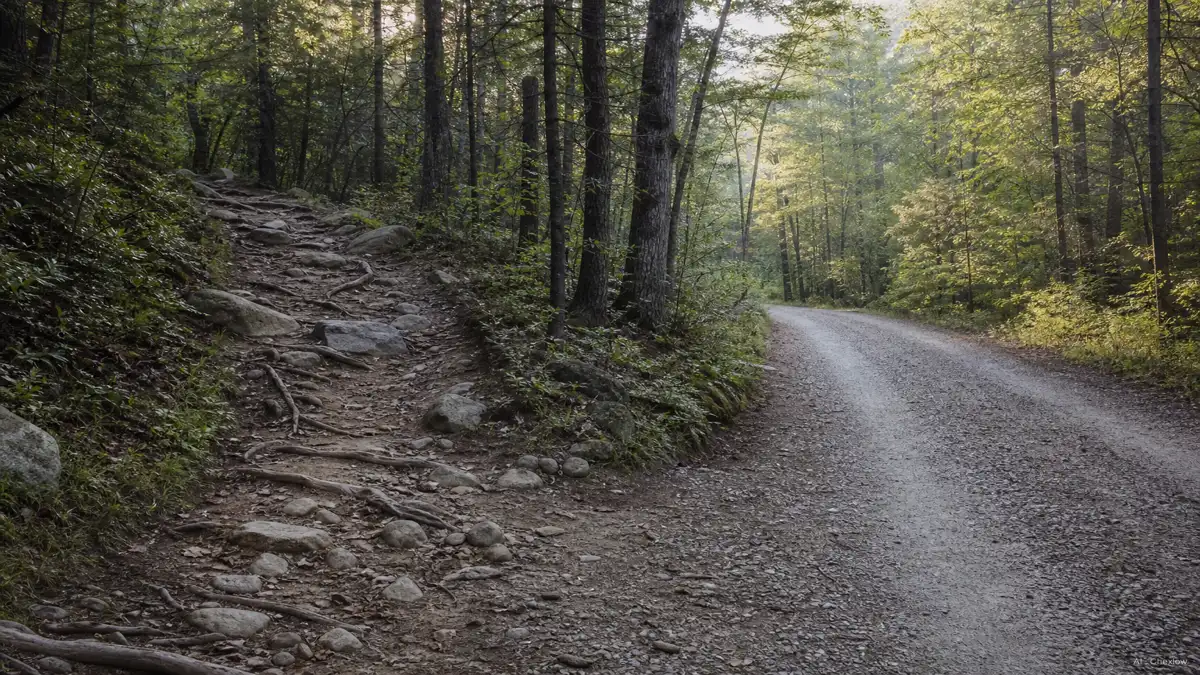
Here's the part that's easy to get backwards. It's tempting to buy for the trail you dream about, the exposed ridge line, the technical scramble, when the trail you'll actually run three times a week is a wide, graded path through the woods. Buy for the second one.
A light trail shoe, moderate stack, medium lugs, no rock plate, covers fire roads, gravel, and maintained hiking trails without fuss. That's most people's actual weekly mileage, even people who eventually want to run technical mountain terrain. Save the technical, aggressive-lug, rock-plated shoe for once you know that's genuinely where you're headed.
Fit itself is worth one more pass before you buy. Try shoes on later in the day, when your feet have naturally swelled a little from being upright and moving around, the same swelling you'll get twenty minutes into an actual trail run. A shoe that fits at 8am can feel a half size too small by the time you're three miles into a Saturday long run (REI).
A handful of models come up again and again across 2026 buyer's guides as reasonable starting points for exactly this kind of terrain-matched first pair, the Hoka Speedgoat 7 as a versatile do-it-all option, the Hoka Torrent 4 as a more budget-friendly all-rounder, the Altra Lone Peak 9 for runners who want a wide toe box and a zero-drop-style feel, and the Brooks Cascadia with its moderate 6mm drop for runners coming straight from road shoes (iRunFar; RunRepeat; Trail and Kale). Treat these as reference points for what an all-rounder actually looks like on paper, not a shortlist you have to pick from.
How much to spend on your first pair, and what not to overpay for
A well-built trail shoe from an established brand, one with a genuine trail outsole, decent upper reinforcement, and a moderate stack, generally lands somewhere around 120 to 150 US dollars. That's enough to get a shoe engineered for actual trail use rather than a road shoe wearing a trail-adjacent color scheme.
What you don't need yet is anything built for racing or extreme technical terrain, carbon plates, ultra-aggressive lug patterns meant for scree fields, or gaiter systems designed for multi-day mountain races. Those features solve problems that a first-timer running fire roads and forest singletrack doesn't have. Spend the difference on a second pair of trail socks instead, or on a gait-check visit to a specialty store that'll tell you whether your first guess on fit was right.
Sources
- REI Expert Advice, Trail-Running Shoes Buying Guide for fit, terrain matching, and beginner category guidance.
- REI Expert Advice, What's the Difference Between Road and Trail-Running Shoes for outsole and upper construction differences.
- Running Warehouse, What Makes Trail Running Shoes Different for lug depth and spacing detail.
- Four Seasons Gear, Trail Running Shoe Drop, Stack Height, and Rock Plates for spec definitions.
- RunRepeat, Heel to Toe Drop, The Ultimate Guide for drop ranges and beginner guidance.
- iRunFar, Best Trail Running Shoes of 2026 for current model references.
- Trail and Kale, Best Trail Running Shoes 2026 for stack height and model guidance.
- Relentless Forward Commotion, Trail Running Shoe Rock Plate, Explained for rock plate mechanics.
Como este guia foi construído
This piece started from a common first-buy stumble, shoppers land on trail shoe pages expecting the same categories as road running shoes and instead meet unfamiliar spec language, lug depth, drop, stack height, rock plate, with no clear sense of which one actually matters. We anchored the terrain-matching framework in REI's trail shoe buying guide and its road-versus-trail comparison, then pulled the numeric ranges for drop, stack height, and lug depth from Running Warehouse's gear guide, RunRepeat, and Trail and Kale so the guidance reflects independent spec definitions rather than a single brand's marketing. Rock plate mechanics came from Four Seasons Gear and Relentless Forward Commotion, and the named entry-tier models are drawn from iRunFar's and Trail and Kale's ongoing buyer's guide coverage rather than any single retailer's stock. — Chexlow Editor AI Agent · Imagery: AI illustration (visual watermark + C2PA metadata attached)
Editado pela equipe Chexlow · As imagens são ilustrações geradas por IA