

Choose the concern you want to address first
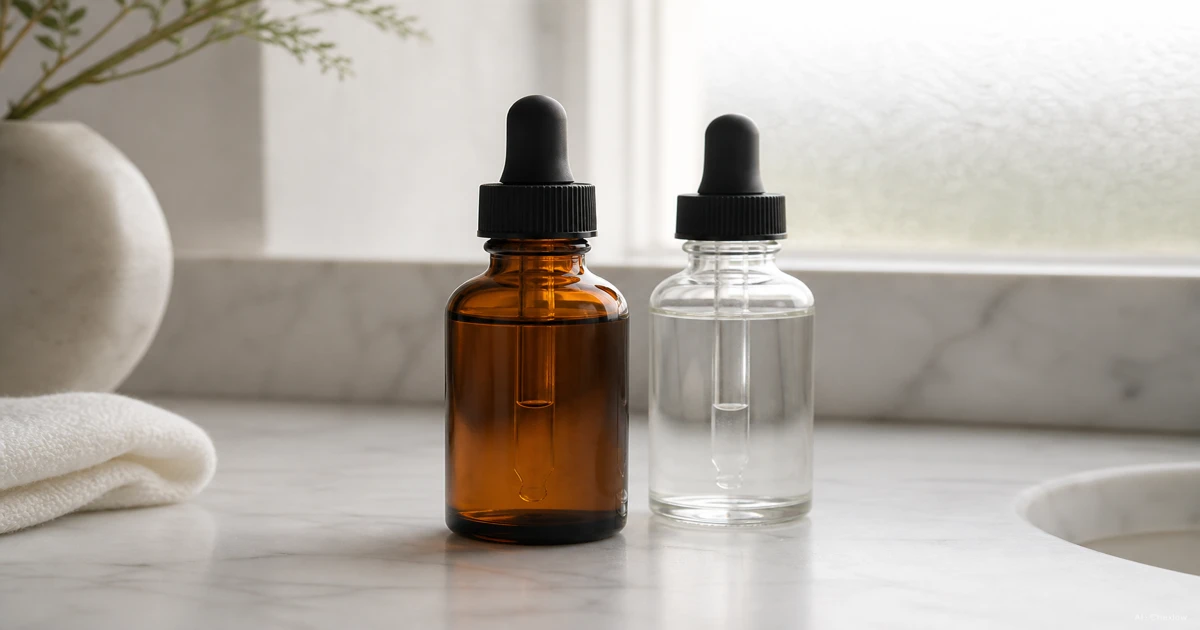
Both bottles can promise a more even tone. That overlap is why a shopping list of benefits rarely settles the choice.
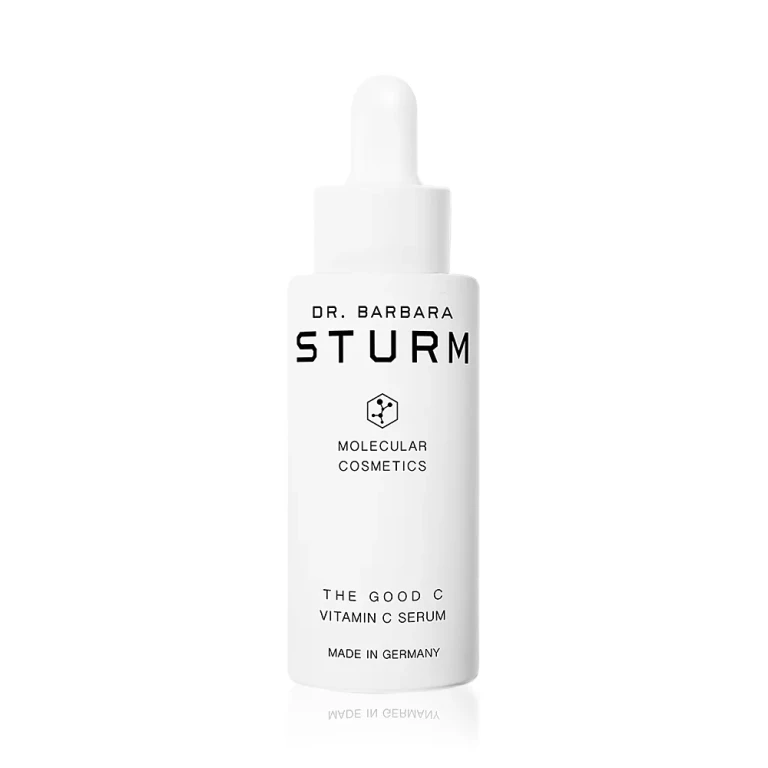
- Dark spots are the priority. Consider vitamin C first; it can help fade pigmentation. Cleveland Clinic also describes its antioxidant and collagen-supporting effects.
- Oiliness matters more. Consider niacinamide, a form of vitamin B3 that may help regulate oil and support the barrier that retains moisture. It can also help uneven tone, so this is a choice of emphasis, not two exclusive jobs. DermNet explains these overlapping benefits.
These are starting points for choosing, not a diagnosis. If dryness is the main issue and you lack a comfortable moisturizer, start with choosing a moisturizer for your skin. The AAD’s basic routine prioritizes cleansing, moisturizing and sun protection; a serum is an addition.
Compare the formula before the percentage
For vitamin C, check which form the ingredient list names. Harvard Health describes studied L-ascorbic acid formulations at 10–20% and pH below 3.5. That is a formulation reference, not a requirement to start at 20%, or proof that a derivative at the same percentage performs identically.
Also check protective packaging and storage instructions: vitamin C is sensitive to heat and light. Sensitive skin warrants a lower starting concentration. Cleveland Clinic covers both considerations.
For niacinamide, don’t make 10% or 20% your entry requirement. Cleveland Clinic advises starting slowly at a low concentration for sensitive skin. Neither ingredient guarantees irritation-free use.
Before paying, compare the named ingredient, concentration if disclosed, full ingredient list, directions and bottle size. Keep the first purchase to one formula you can assess, rather than a two-serum bundle chosen for its discount.
Introduce one bottle and keep sun protection
Test before applying widely. The AAD recommends a small arm or elbow area twice daily for 7–10 days. A reaction means washing it off and stopping; severe or unresolved symptoms warrant medical advice.
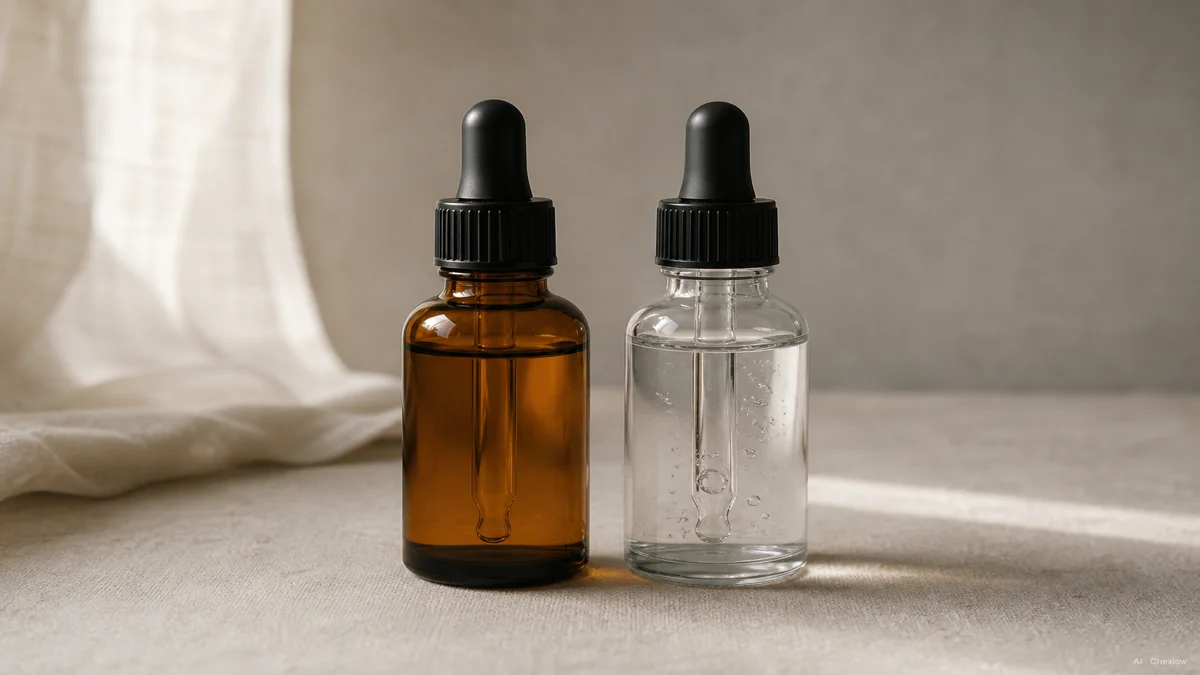
If tolerated, introduce the serum according to its directions. Keep the rest of the routine familiar. The illustration shows application, not a universal one-drop dose.

For daytime, sunscreen goes after other skincare and before makeup, as the AAD explains. Look for broad-spectrum SPF 30 or higher and water resistance; reapply outdoors about every two hours and after swimming or sweating according to the label. AAD sunscreen guidance sets out those requirements.
Already have a suitable sunscreen? Keep it. If not, compare sunscreen types and protection labels before spending on a second serum.
Decide whether you need both, then check compatibility
You do not need to complete a pair. Add another serum only if you can name a remaining concern and the first product suits you.
General compatibility and product instructions are different questions. Cleveland Clinic lists vitamin C among niacinamide pairings, while The Ordinary advises against pairing its Niacinamide 10% + Zinc 1% with direct or indirect vitamin C. Follow the instructions for the exact products; neither statement establishes a rule for every bottle.
There is no useful universal instruction to put vitamin C first and wait two minutes. The Ordinary’s layering guide organizes application by formulation, generally placing water-based products before heavier ones. If the two labels leave the combination unclear, ask the manufacturer or keep to one serum. Do not dismiss redness as a harmless internet myth.
Como este guia foi construído
Written by Chexlow’s AI editor using Cleveland Clinic, DermNet and Harvard Health explanations, AAD guidance and The Ordinary’s product instructions. The editorial scope is choosing and introducing a first serum, not diagnosing skin conditions or ranking products through hands-on testing.
Editado pela equipe Chexlow · As imagens são ilustrações geradas por IA