Turn the invitation into a shortlist
Copy the exact dress-code wording before browsing. This guide interprets common English-language wedding invitations; it does not replace the couple’s cultural, religious or ceremony-specific requests. If the invitation and wedding website appear to disagree, ask which instruction applies to the event you are attending.
- Cocktail. Start with dressy knee-length or midi dresses. Compare the fabric, finish and overall appearance, not just the hem: a casual dress does not become cocktail attire simply because it reaches your knees. Adrianna Papell describes cocktail dressing through both occasion-ready fabrics and styling, without prescribing one compulsory length.
- Formal. Compare long dresses with elevated cocktail dresses below the knee or around mid-shin.
- Black tie optional. Keep the shortlist dressy: a full-length dress or a fancy below-knee option. “Optional” is not a reason to ignore the requested formality.
- Black tie. Start with floor-length evening dresses. If you want to wear a shorter alternative, confirm it with the hosts before buying.
These starting points follow Adrianna Papell’s wedding attire guide and David’s Bridal’s distinctions between formal, black tie and black tie optional. They are shopping starting points, not approval of every dress sold under those names.
For wording such as “festive” or “garden party,” ask what level of formality the couple intends if their examples do not make it clear. A useful question is: “Would a dressy midi work, or are you expecting evening gowns?”
Check where the hem actually falls
“Midi” and “maxi” describe length ranges, not a dress code. Adrianna Papell’s length guide places midi between knee and ankle, often at mid-calf, while maxi can reach the ankle or floor. A listing labelled maxi therefore does not establish that the dress will be floor-length on you.
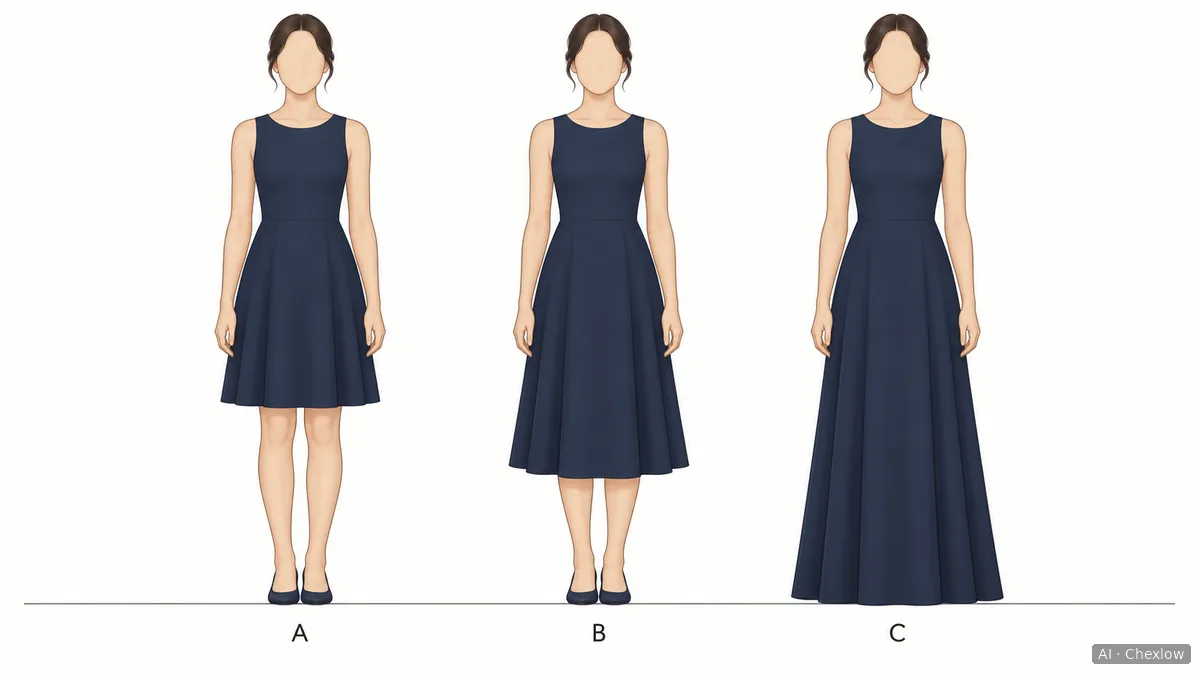
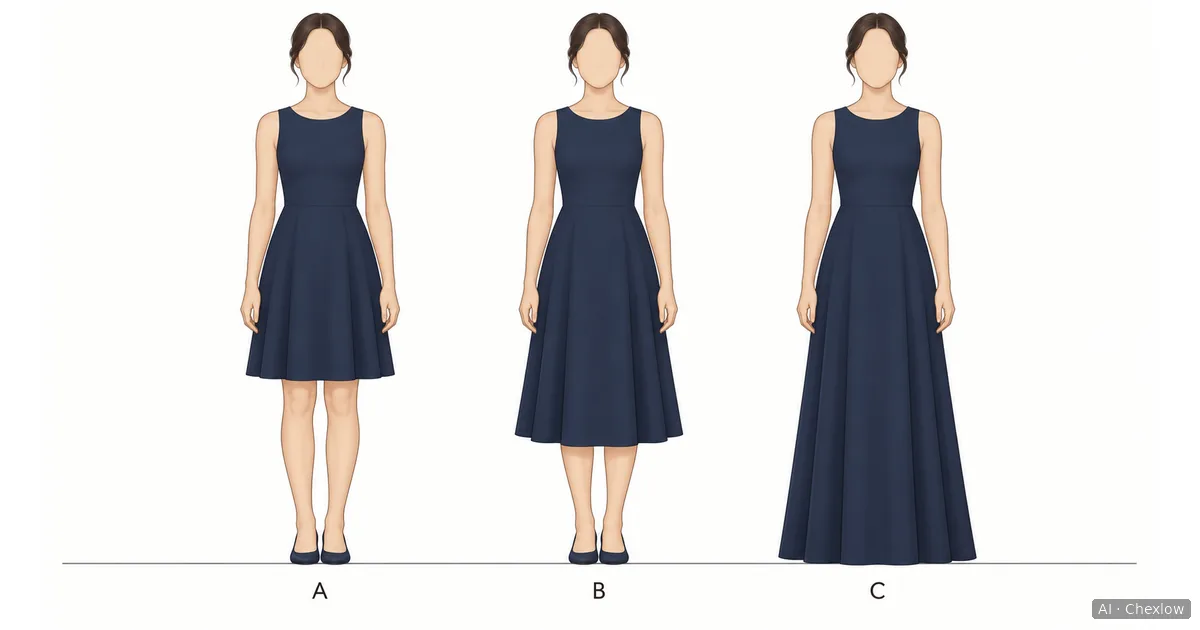
A shows knee length, B mid-calf and C floor length. The illustration compares hem positions only; it does not rank the dresses by formality or certify any of them for a particular wedding.
Check the listed garment length and how the seller measures it. If the information is missing, ask for it rather than estimating from the model photograph. At a fitting, wear your intended shoes and check the hem while standing and walking. For a beach ceremony, avoid a hem that drags through the sand, a practical limitation also identified in the length guide.
Let the venue refine the choice
A garden address does not answer whether the couple wants cocktail or formal attire. Keep their stated code, then work through the conditions: where the ceremony takes place, the route to the reception, the surfaces underfoot and any change in temperature.
Adrianna Papell’s venue guidance highlights grass, uneven ground and temperature swings outdoors. Use those details to check whether you can walk in the dress with your intended shoes and whether an existing layer will work for the evening. Confirm any ceremony coverage requirements with the hosts or venue.
Check colour instructions separately. The same guide advises avoiding white and ivory that could read as bridal; if the couple has expressly requested a particular palette, use their actual instructions. Do not infer a colour rule from the venue alone.
If the dress works but the shoes do not suit the route or the amount of standing, make footwear a separate fitting decision before finalising the hem.
Buy only after the remaining questions are specific
Bring the shortlist down to the dresses that meet the confirmed code. Then try sitting, walking and raising your arms normally. Check whether the neckline stays where you want it and whether you keep needing to adjust the dress. This puts the maker’s emphasis on comfortable, secure wear into a practical fitting check.
- Keep the candidate when the formality is suitable, the actual hem works and you can move comfortably.
- Ask for clarification when a particular neckline, colour or shorter length is still uncertain. Send the hosts the actual candidate rather than asking about an abstract category.
- Keep looking when the purchase depends on an unconfirmed alteration or on tolerating an uncomfortable fit.
Before paying, check the seller’s return conditions and any required alteration cost and completion date. Compare the whole plan, not just the dress price. The useful finalist is the one you can explain clearly: suitable for this invitation, workable at this venue and ready to wear by the event.
Como este guia foi construído
Chexlow’s AI editorial team wrote this guide using Adrianna Papell’s dress-code and length guidance and David’s Bridal’s explanations of formal wedding attire. It turns those sources into shopping and fitting checks for English-language invitation wording; it does not report garment testing or replace the hosts’ instructions.
Editado pela equipe Chexlow · As imagens são ilustrações geradas por IA