Identify the finish before choosing a treatment
Start with the receipt, product label and original care sheet. Look for the exact model and finish option, then check whether the piece has been refinished or repaired. Ask the previous owner if its history is unclear.
“Oak,” “solid wood” and “veneer” do not identify the surface coating. Veneer describes thin wood attached to a backing; the finish is a separate part of the care decision. DWR’s wood guide distinguishes wood construction from finishes such as oil, lacquer and polyurethane.
Photograph the ring and surrounding surface before doing anything else. Note whether the area is smooth, cracked, lifting or flaking, without scraping it to find out. Record what spilled and anything already applied.
The Canadian Conservation Institute’s guidance on finishes calls for identifying the coating, its stability and previous alterations before cleaning. Repairs can be difficult to see, and repaired areas may respond differently. This guide therefore uses records and professional identification rather than home solvent tests.
Separate spill cleanup from ring removal
If liquid is still sitting on an intact surface, remove the drink and gently take up the liquid with a clean, dry, soft cloth. DWR’s wood-care instructions call for wiping spills immediately. If the finish is lifting or flaking, avoid dragging a cloth across it and seek advice.
A suitable lint-free white cotton cleaning cloth is a useful supporting tool, but check what you already have before buying one. CCI includes suitable pieces of white cotton clothing among possible cleaning cloths. A cloth is for taking up liquid or permitted routine care; it is not a water-ring treatment.
Only move on to damp cleaning if the instructions for the identified furniture and finish allow it. Follow the specified method and drying step. DWR pairs slightly damp, lint-free dusting with wiping dry, but that guidance is not permission to wet an unidentified antique. CCI’s basic-care guidance says unfinished wood should not be wet-cleaned.
If you need a new cloth for several household tasks, the microfiber and cotton cleaning-cloth guide helps compare the options. Keep the furniture’s own requirements as the deciding condition.
Stop when the next step would be repair
A white ring is not a finish identification. CCI describes cloudy white patches caused by water spills, but that observation does not tell you which coating is present or which remedy it will tolerate.
If the mark remains after permitted routine care, stop and send your photographs, model details and treatment history to the maker. Ask whether the proposed method is suitable for that exact finish and its present condition. For an antique, an unidentified altered finish or a valuable inherited piece, consult a furniture conservator.
- Loose or flaking coating: stop wiping or rubbing it. CCI recommends conservator advice for loose or flaking varnish.
- Degraded natural resin finish or Asian lacquer: CCI refers cleaning to an experienced conservator.
- A remaining ring that would require heat, abrasion or chemicals: this guide stops before that work. Do not escalate to an iron, hair dryer, abrasive paste, sanding or solvent experiments.
Oil is not a neutral rescue step either. CCI records darkening and disfigurement from applying linseed oil to old furniture that was not originally finished with it. DWR also ties oil and wax use to each product’s recommendations. Preserving an original finish can matter more than making the ring disappear immediately.
Prevent the next ring without treating this one
Use a drink coaster where cups normally sit. CCI and DWR both recommend coasters to limit water contact; an existing suitable coaster may be all you need.
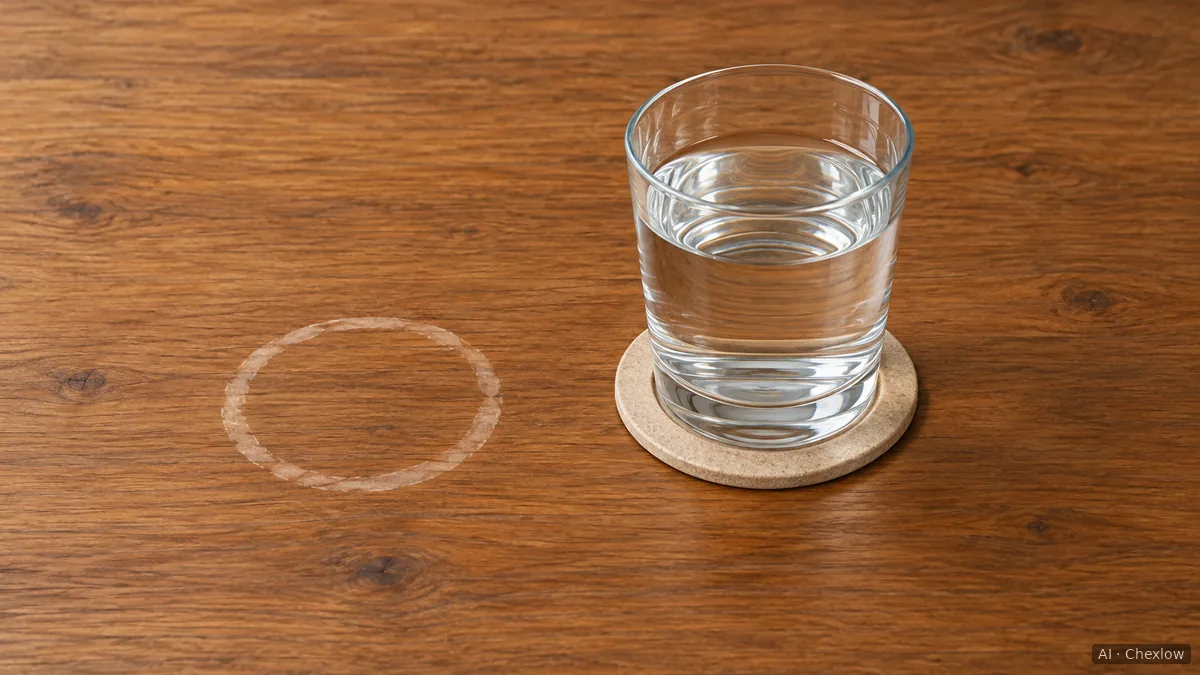
The coaster in the illustration prevents direct cup contact; it does not remove the nearby mark. Keep the damaged area available for assessment instead of covering it with polish.
CCI also advises against placing potted plants on furniture and recommends keeping furniture out of direct sunlight and away from heaters, fireplaces and heat vents. Change the source of repeated exposure while you arrange finish-specific advice.
Como este guia foi construído
This article was written by AI for Chexlow, using Canadian Conservation Institute guidance and DWR’s published wood-care instructions. Its scope is identifying an unknown finish, limiting routine care to permitted methods and deciding when to seek professional assessment; it does not report original restoration testing.
Editado pela equipe Chexlow · As imagens são ilustrações geradas por IA