


Check the shirt before choosing the pair
Look for cufflink holes on both edges of the opening, not simply two adjustment holes beside each other.
- French or double cuff: folds back and takes cufflinks.
- Convertible cuff: has buttons plus dedicated cufflink holes. A sewn-on button does not rule it out; Eton shows both options.
- Ordinary button cuff: does not take cufflinks as supplied. Sayers London explains the distinction.
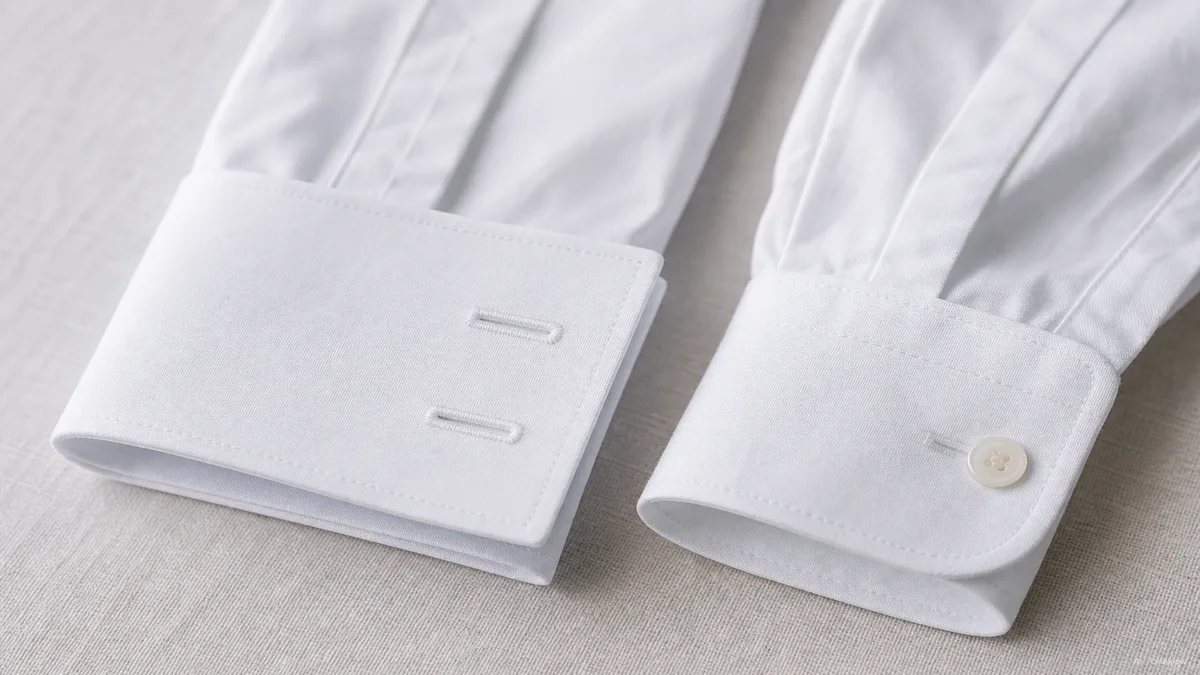
If no shirt qualifies, decide whether you want a French-cuff shirt before buying the links. If you do, compare dress-shirt weaves, then check the cuff specification separately: a fabric name does not establish compatibility.
Choose one occasion to buy for
For office use, a small, plain round or oval face is a useful starting brief. Pick silver tone if it suits the accessories you wear most; gold tone is equally worth considering if that is your preference. Treat coordination as a styling shortcut, not an obligation to replace your watch.
For black tie, start with restrained metal, black onyx or mother-of-pearl. If your shirt uses studs, coordinate their finish with the cufflinks, as BlackTie.com's guide recommends. Gemstones and a higher price are not requirements.
For relaxed wear, consider fabric knots. Despite the name, “silk knots” are often made with other fabrics and elastic; read the composition. Keep them for casual outfits rather than your conventional black-tie pair, following Trendhim's distinction.
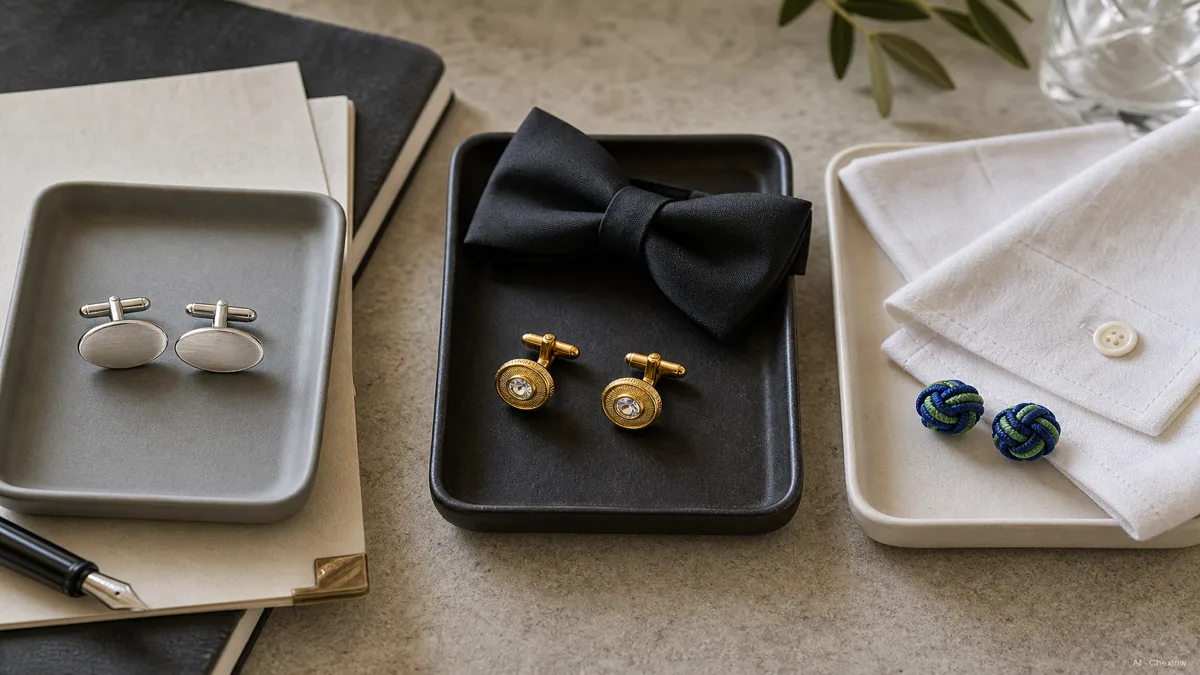
The illustration shows possible looks, not three compulsory purchases. Its jeweled pair is an option, not the black-tie minimum. If the next question is how to finish the jacket, explore pocket-square fabrics and folds.
Compare the backs, then try fastening them
A front-only product photo leaves the practical question unanswered. Ask for a rear view or a demonstration.
- Bullet-back: a capsule-shaped bar turns in line with the post for insertion, then across it to fasten. Cufflinks.com explains the movement.
- Whale-back: a flatter rotating bar uses a similar movement.
- Chain-link: two faces are connected by a flexible chain; threading a face through can take more practice. OTAA illustrates these constructions.
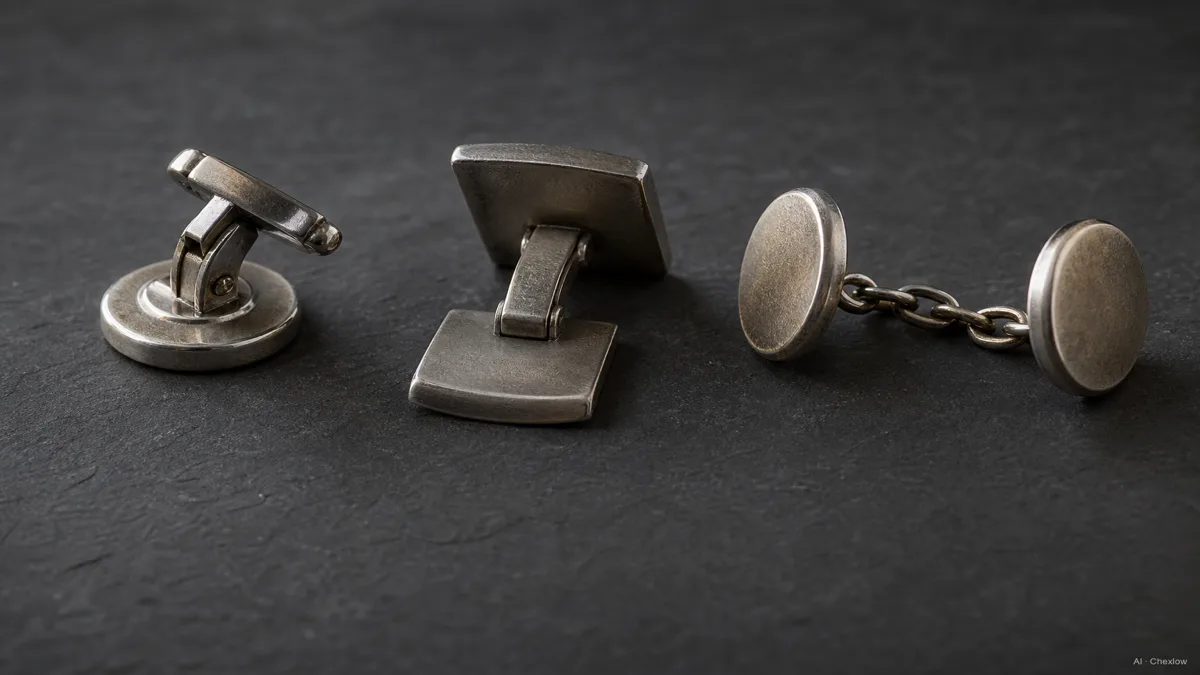
For a first pair, shortlist either rotating-back type and try both wrists. Choose chain links if you prefer their two-sided appearance and can manage the fastening. Neither toggle name guarantees durability: Trendhim notes wear risks for both.
Read the material, not just the color
“Silver-tone” describes appearance. It does not establish silver content. Sterling silver contains 92.5% silver, differs from silver plate and can tarnish; Deakin & Francis explains these distinctions. Sterling is also an option for business wear, not a material reserved for ceremonies.
Check three separate details: the underlying metal, any plating, and the face material. Cufflinks.com distinguishes plated base metals from its other metals. If a listing says only “gold” or “silver” without clarifying finish or composition, ask before paying a precious-metal premium.
Your buying brief can now be specific: one pair, suitable cuff, chosen face, usable closure and disclosed material. There is no need to upgrade to precious metal merely because it is your first formal event.
Do the shirt-and-jacket check before keeping them
For French cuffs, fold back the cuff, bring its inner faces together, align all four holes and insert the link with its decorative face outward. Secure the back only after it clears the fabric. Sayers London's fitting instructions cover this sequence.
Try the actual shirt and jacket together. Check whether you can fasten both cuffs, move your wrists comfortably and slide the cuffs inside the jacket sleeves. If the fabric pulls or the mechanism will not close, stop and check compatibility instead of forcing it. Online, check dimensions and return conditions before ordering.
Keep the care instructions with the pair. Cufflinks.com warns against using cleaning solutions or tarnish removers on stones, fabric and oxidized finishes. Use care products only when suitable for the complete piece, and store the links separately so they do not rub against each other.
How this guide was built
Written by AI for Chexlow, using shirtmaker guidance from Eton and cufflink construction, material and care information from the linked makers and specialist retailers. The recommendations turn those sources into a first-purchase checklist; they are editorial judgments, not hands-on product tests.
Edited by the Chexlow team · Images are AI-generated illustrations