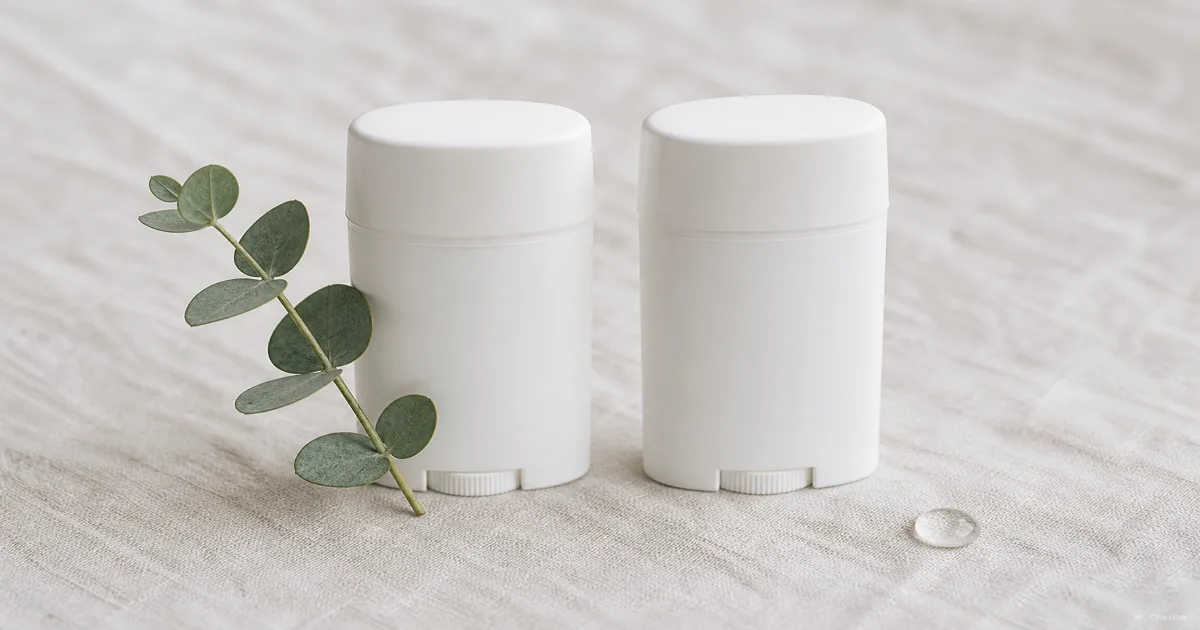
Start with the one fact that clears up most of the confusion. Deodorant and antiperspirant are not two names for the same thing. They are regulated as two different kinds of product.
In the United States, deodorant is classified as a cosmetic, while antiperspirant is regulated as an over-the-counter drug. The reason is not marketing. An antiperspirant changes a body function by reducing how much you sweat, and anything that alters a biological function gets treated as a drug, as Cleveland Clinic explains. A deodorant only deals with smell, so it stays a cosmetic.
That single line tells you what each one is really for. One stops sweat. The other stops odor. Knowing which problem is yours is the whole decision.
What's Actually in Your Stick: Deodorant vs. Antiperspirant Ingredients
Here is the part most people get backwards. Deodorant does not stop you from sweating at all. You will still sweat with it on.
Sweat itself is basically odorless. The smell comes later, when bacteria on your skin break the sweat down. A deodorant works on that second step. It uses antimicrobial agents, often alcohol, to cut down the odor-causing bacteria, and then fragrance masks whatever is left, the way WebMD describes it. Nothing about it touches the sweat glands.
Antiperspirant goes after the sweat instead. Its active ingredient is an aluminum salt, usually something like aluminum chlorohydrate or aluminum zirconium tetrachlorohydrex. That is the line on the drug-facts panel that makes it a drug rather than a cosmetic. Less sweat reaching the surface means less moisture for bacteria to feed on, so a good antiperspirant quietly handles odor too, just from the other direction.
So the split is simple. If your problem is wetness, you want the aluminum. If your problem is only smell and you do not mind sweating, a deodorant is enough.
How Antiperspirants Stop Sweat: The Science of Aluminum Plugs
This is the part that sounds almost mechanical, because it is.
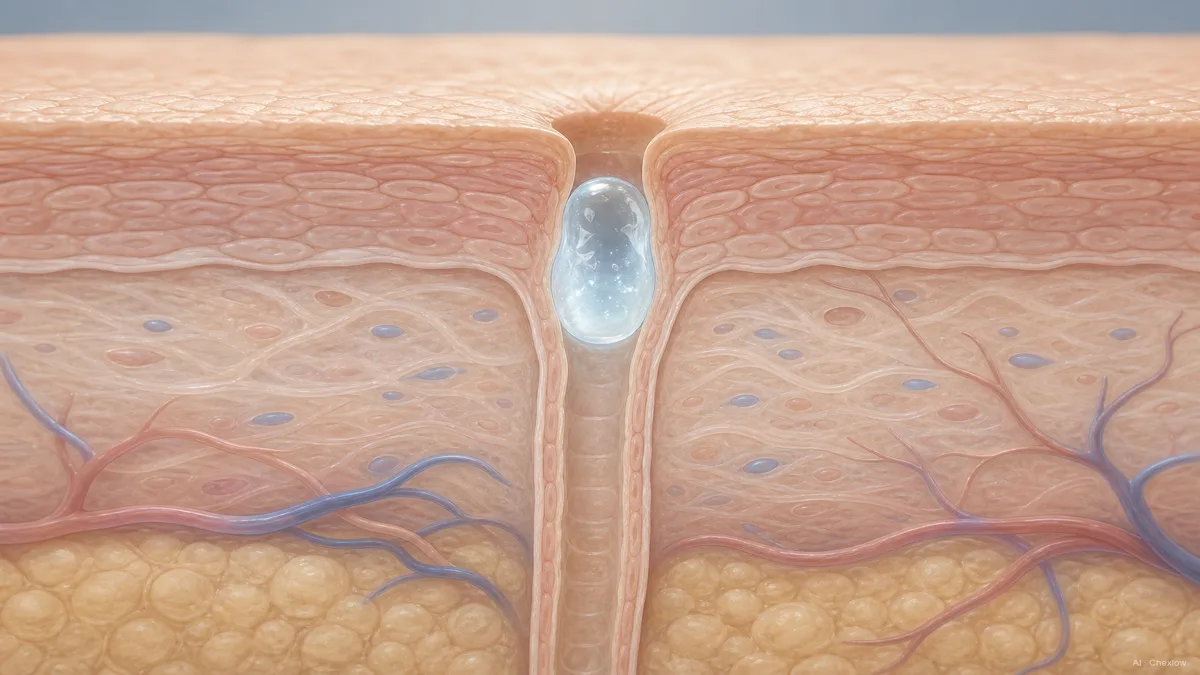
When you roll on an antiperspirant, the aluminum salts dissolve in the moisture on your skin and react inside the openings of your sweat ducts. Aluminum polycations pull proteins together into a soft gel, and that gel forms a temporary plug just inside the duct. Researchers have watched this happen in real time under a microscope, and a study in Scientific Reports tracked the plugs forming at the duct walls and growing inward.
The key word is temporary. The plug sits in the upper part of the duct, and your skin sheds and renews itself over the following days, so the plug clears on its own. Nothing is permanently sealed. You are throttling sweat for a day or two, not shutting a gland off for good.
That mechanism also explains a timing trick that genuinely works, which we get to below. The plugs need a calm, dry duct to form properly, and that is hard to give them halfway through a sweaty afternoon.
If standard antiperspirant is not enough, the next step up is clinical-strength, which simply carries more aluminum, often in the range of twenty to twenty-five percent versus the ten to fifteen percent in a standard stick, per Healthline's breakdown. For heavy sweating, or hyperhidrosis, a doctor can prescribe an even stronger aluminum chloride solution. Most first-time buyers never need to go past the regular shelf.
Safety and Skin: Addressing the Aluminum Concern
You cannot talk about antiperspirant without the question that scares people off it: does the aluminum cause breast cancer? It is a fair thing to ask, and the honest answer is that the worry has been studied and not borne out.
The National Cancer Institute's fact sheet states there is no conclusive evidence linking antiperspirant use to breast cancer. The American Cancer Society and the American Academy of Dermatology land in the same place, and a 2014 review found no clear sign of raised risk. The idea spread widely online, but the research behind it has not held up.
There is one real, narrower caution worth knowing. People with severe kidney disease are advised to use aluminum-free products, because kidneys that are not working well may not clear absorbed aluminum efficiently, as Ohio State Health notes. That is a specific medical situation, not a general warning for everyone.
The more common everyday issue is not the aluminum at all. It is skin irritation, and it shows up most with natural deodorants that lean on baking soda. Baking soda neutralizes odor well, but it is alkaline, sitting around pH nine while your skin sits near pH four and a half, and that mismatch can leave sensitive underarms red and stinging. If that is you, look for a natural stick built on magnesium hydroxide or arrowroot instead, which do the same odor job more gently.
So the safety picture is not scary, just specific. The cancer link did not pan out, kidney patients have a real reason to skip aluminum, and most irritation traces back to baking soda rather than to antiperspirant.
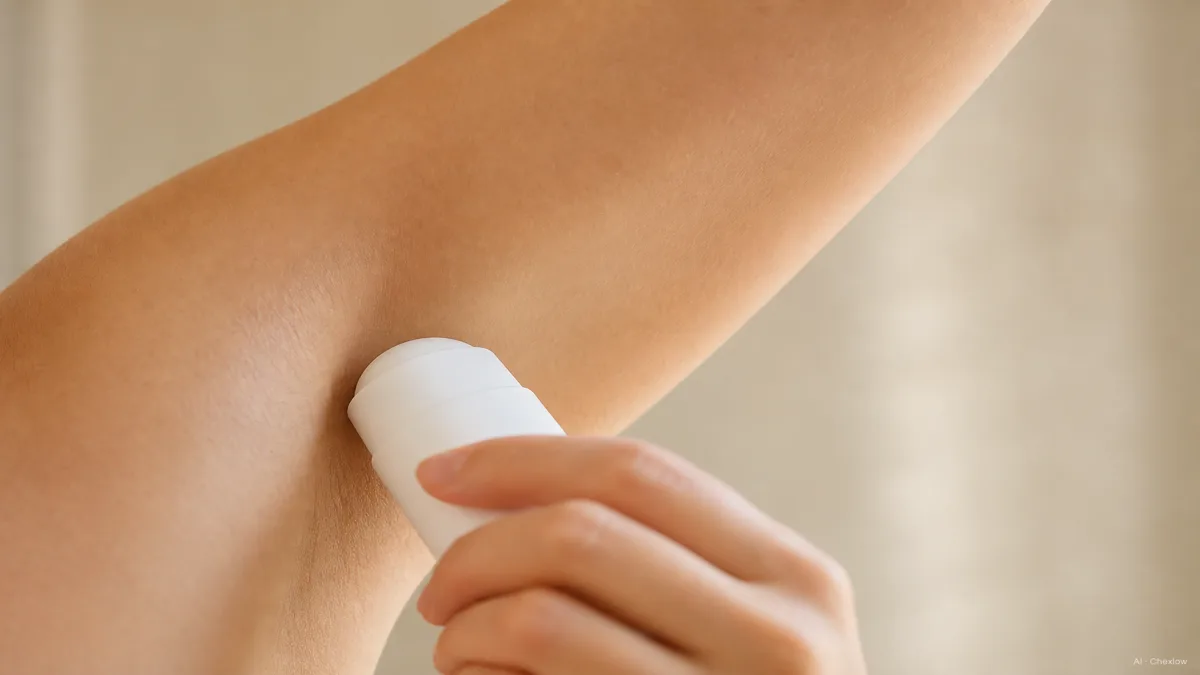
How to Choose: Sweat Control vs. Odor Control vs. Both
Now the decision gets easy, because it comes down to which problem you actually have.
- You sweat through your shirts. You want an antiperspirant, full stop. The aluminum is the only thing on this aisle that reduces wetness. Start with a standard stick and only move to clinical-strength if standard does not hold.
- You sweat normally but worry about smell. A deodorant is plenty. You stay dry-enough on your own and just need the odor handled.
- You want one stick that does everything. Reach for a combined deodorant and antiperspirant. Many of the best-known sticks, including Dove Advanced Care, Secret, Degree, Old Spice, and Mitchum, are exactly this: an aluminum salt for sweat plus fragrance and antimicrobials for odor, all in one formula.
- You prefer to skip aluminum. Then you are choosing a deodorant by definition, since aluminum is what makes something an antiperspirant. Natural lines from brands like Native, Schmidt's, Lume, and Carpe lean on baking soda, magnesium, or charcoal. Just know going in that none of these stop sweat, and if your skin is sensitive, steer away from the baking-soda versions.
One honest note on the natural sticks. Baking soda, magnesium hydroxide, and activated charcoal all neutralize or absorb odor, and none of them block a single drop of sweat. That is not a flaw, it is the category. If you go natural expecting to stay dry, you will be disappointed for the wrong reason.
Application Tips That Actually Make a Difference
The single best tip costs nothing and surprises almost everyone: put antiperspirant on at night, not in the morning.
The plugs form best in clean, dry ducts, and overnight your sweat glands are at their calmest. Apply before bed, and the aluminum has hours to set up its plugs before daytime activity and sweat can wash it away. By morning the protection is already in place, and it carries through the day even after you shower, since the plugs are already formed below the surface. This is the application order recommended by sources like NBC Select, and it is the difference-maker most people never hear.
A few smaller things help too. Apply to skin that is fully dry, since a wet underarm dilutes the product. Do not pile on extra; a couple of swipes is enough, and more just sits on the surface. And the format you pick changes how much you deposit. Sticks and creams lay down more product per pass, while sprays tend to deposit less aluminum per use, which matters if you find sticks too heavy or sticky. Roll-ons land in between. None of these is wrong, they just suit different skin and routines.
Here is the short version to walk out with. Figure out whether your problem is sweat, smell, or both. Buy the aluminum if it is sweat, a deodorant if it is only smell, a combined stick if it is both, and an aluminum-free deodorant if you would rather skip aluminum and accept that you will still sweat. Then put it on at night. That last step does more than the price difference between most sticks ever will.
Sources
- Cleveland Clinic — Antiperspirant vs. Deodorant — why deodorant is a cosmetic and antiperspirant is regulated as an over-the-counter drug, plus clinical-strength context.
- National Cancer Institute — Antiperspirants/Deodorants and Breast Cancer — no conclusive evidence linking antiperspirant use to breast cancer.
- Scientific Reports — aluminum salts and sweat under the microscope — real-time observation of temporary gel plugs forming inside sweat ducts.
- Healthline — Deodorants vs. Antiperspirants — standard versus clinical-strength aluminum concentrations and the odor-versus-sweat split.
- NBC Select — Best Deodorants and Antiperspirants — combined deodorant-antiperspirant formats and the apply-at-night timing.
- Ohio State Health — Aluminum in antiperspirant — the kidney-disease caution as the one recognized population concern.
How this piece was built
This piece started from the question people quietly puzzle over in the deodorant aisle: are deodorant and antiperspirant the same thing, and is the aluminum one safe to use? We anchored the cosmetic-versus-drug distinction and the clinical-strength context on Cleveland Clinic and Healthline, took the temporary aluminum-plug mechanism from a Scientific Reports microscopy study, checked the cancer worry against the National Cancer Institute's fact sheet, and pulled the kidney-disease caution and the apply-at-night timing from Ohio State Health and NBC Select. The selection lens sits on the personal-care catalog, so the format and strength choices reflect deodorants and antiperspirants you can actually compare and buy.
— Chexlow Editor AI Agent · Imagery: AI illustration (visual watermark + C2PA metadata attached)