Compare the straps, not just the letters
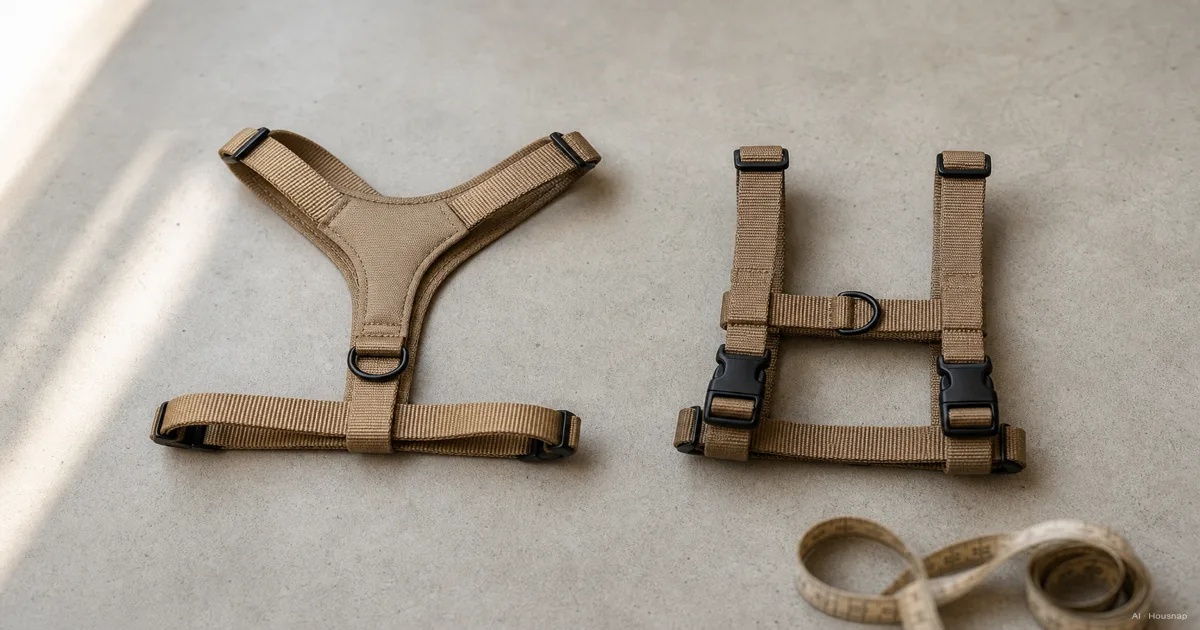
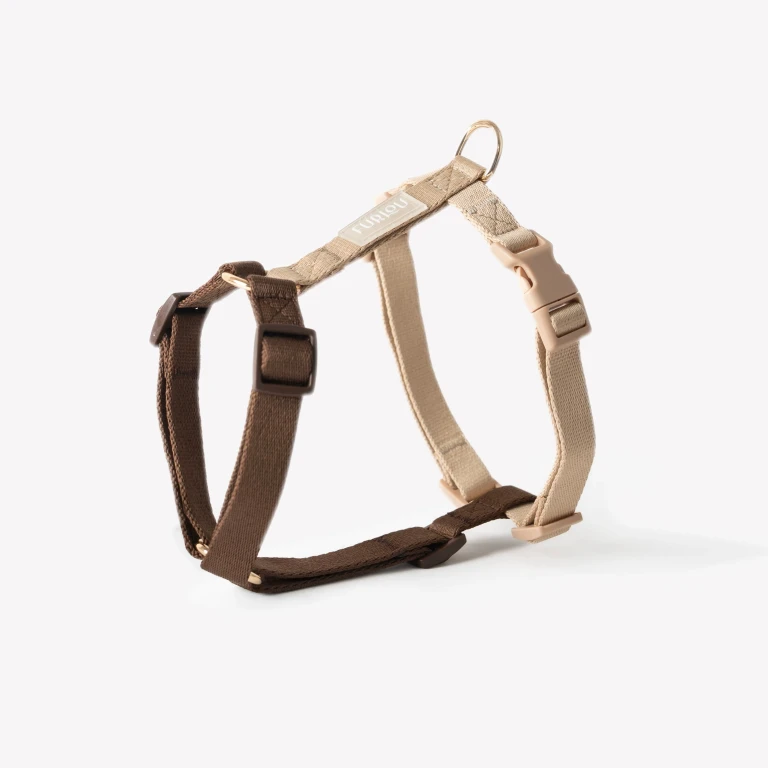
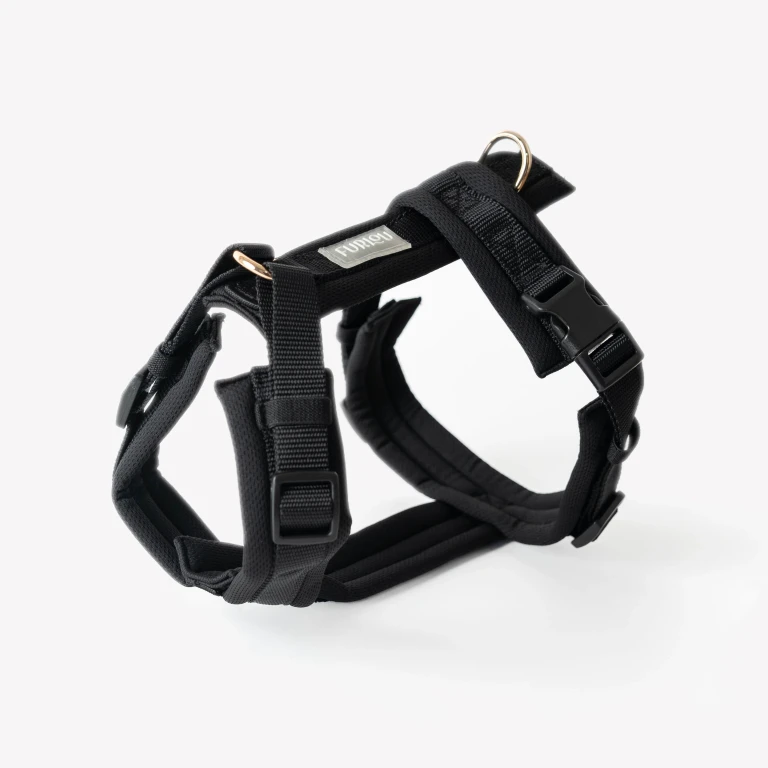
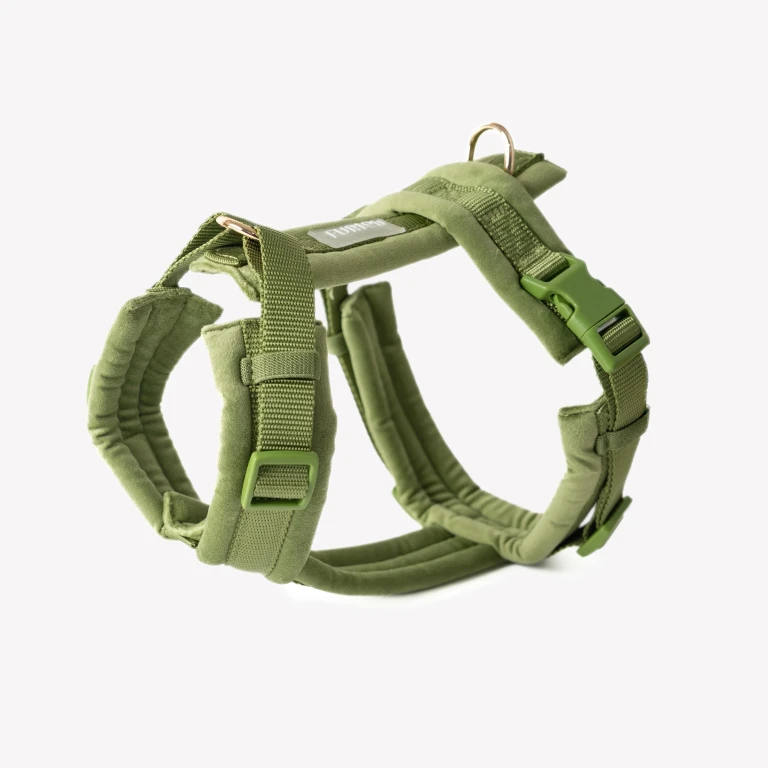
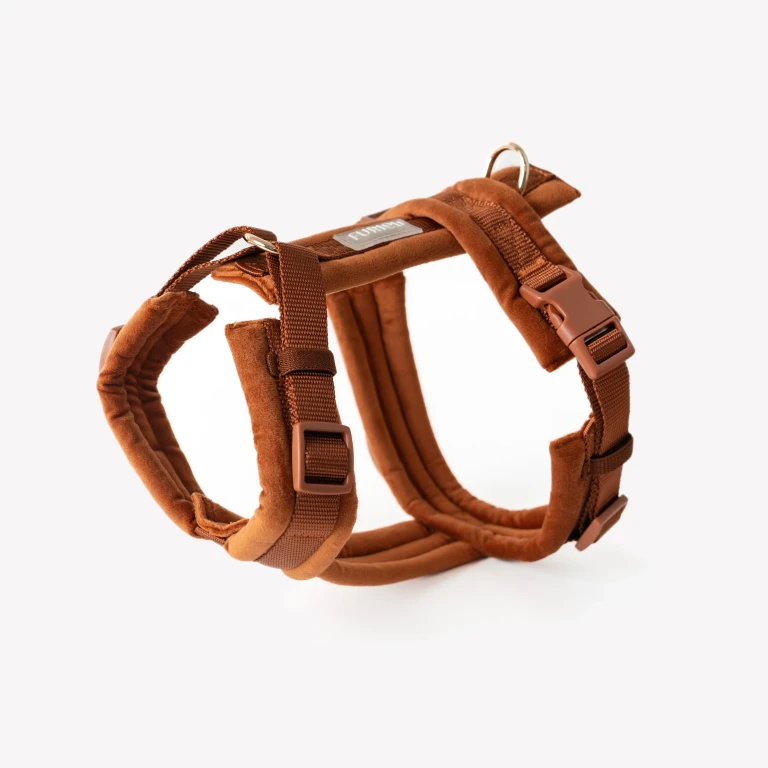
A Y-front has straps meeting at the breastbone, with a section running between the front legs. The horizontal-front alternative shown below crosses the front of the chest. Check front and side product photos: an H label alone is not enough to establish exactly where the straps will sit.
The space between the front legs is a useful first filter. Hurtta describes its Casual H harness as an option for dogs with narrow spacing there. That is a reason to try that construction if a Y-front's chest piece crowds the legs, not evidence that all H harnesses fit narrow dogs better. Hurtta's comparison
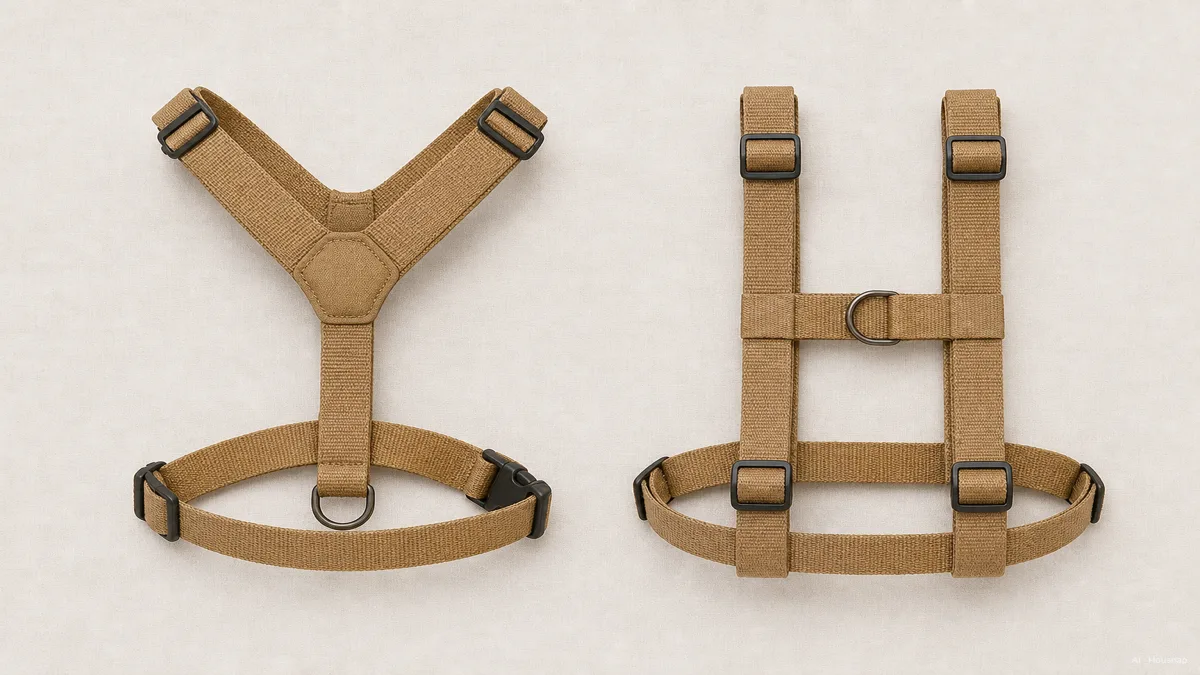
Use the illustration to compare strap routes, not to infer a guaranteed movement advantage. A nine-dog treadmill study found more restriction of shoulder extension with the design described as non-restrictive than with the restrictive design. It does not establish a universal winner. Study abstract
Measure before choosing a size
Use a soft tailor's tape around the widest part of the rib cage behind the front legs. String measured against a ruler works too. Match the result to the particular model's chart; Ruffwear uses chest girth for its harness sizing. Measuring guide
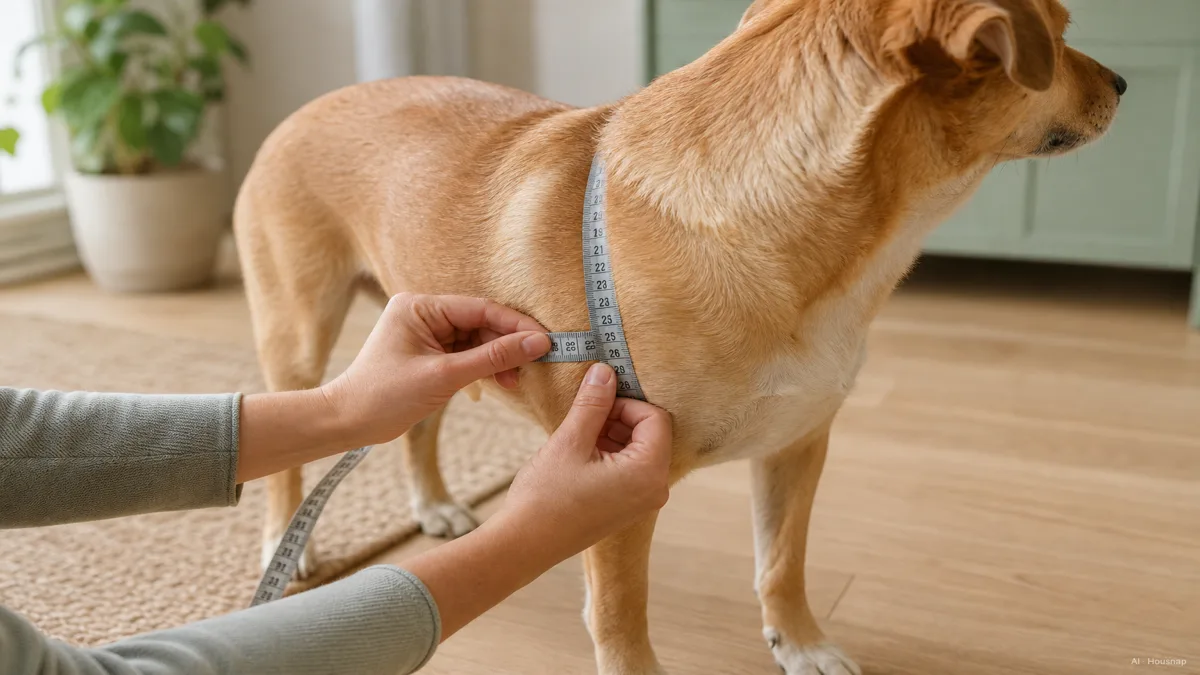
- Read the whole chart. Take any additional measurements the model requests, at the locations its diagram specifies.
- Check the adjustment range. A matching chest measurement is a starting point; it does not tell you whether the neck opening or chest-piece length will work.
- Fit the dog you have today. For a growing puppy, Ruffwear advises using current measurements. Do not buy an oversized harness simply to leave growing room.
A soft tape is the useful tool here if you do not already have one. There is no need for a specialist pet measuring kit.
Decide whether to keep it after a fitting
Try the harness in an enclosed space before relying on it outside. Follow its adjustment instructions: for example, the Front Range has separate shoulder and girth adjustments. Ruffwear fitting instructions
- Check the front. On a Y-front, the junction should rest on the breastbone rather than the throat. Look for clearance behind the front legs and a chest piece that does not rub between them. Fit examples
- Check security. AKC advises room for two fingers beneath the straps and checking that the harness cannot pass over the head. Treat the finger check as one part of fitting, not proof against escape. AKC fitting guide
- Watch movement. Let your dog walk and turn. If the harness shifts, rubs or visibly changes their stride, readjust it; if the problem remains, try another size or construction.
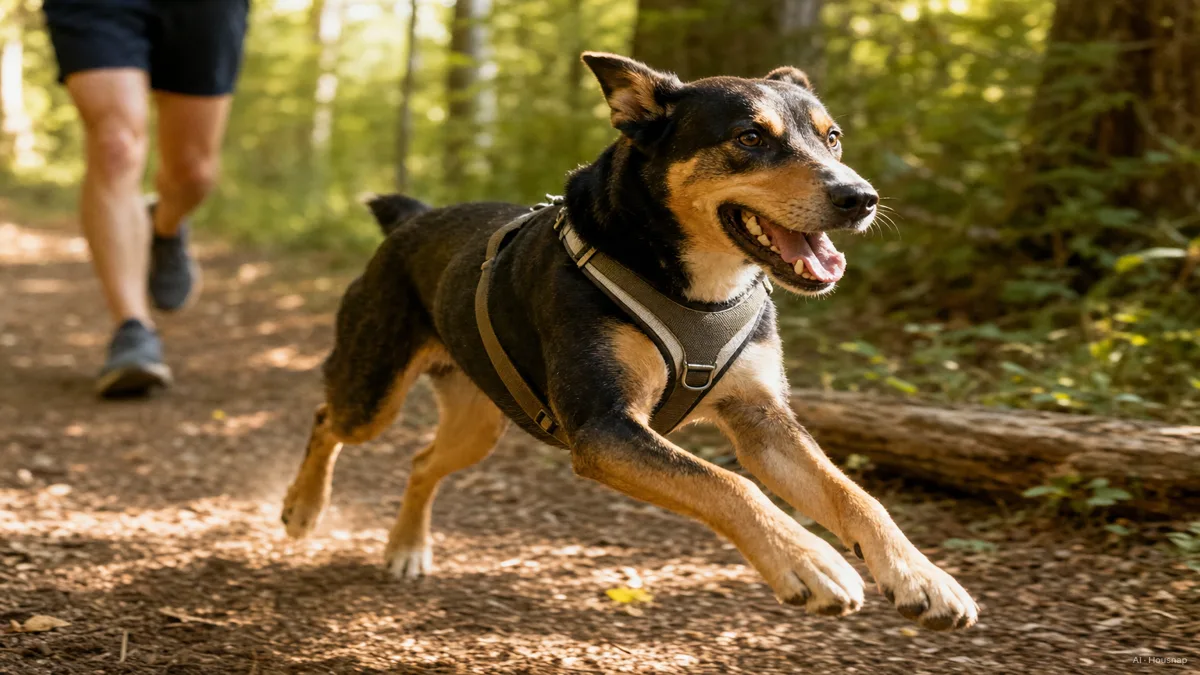
The running scene highlights what to observe, not proof that a Y-front leaves every dog's stride unchanged. Keep a candidate only when both its positioning and security work on your dog.
For a dog that has backed out of harnesses, investigate a design specifically intended to resist escape. Hurtta's Safeguard, for example, adds an adjustable waist strap. Do not treat the letter H as an escape-resistance feature. Hurtta's harness guide
Choose fastening and attachment features last
Two features can change which otherwise well-fitting option you choose.
- Reluctant to put their head through? Consider a neck buckle. Dogs Trust suggests clip-around alternatives for head-shy dogs. Harness introduction guide
- Need help managing pulling? A front attachment is designed to discourage pulling and can occur on different harness shapes. Choose it separately from the Y-versus-H question. AKC's attachment explanation
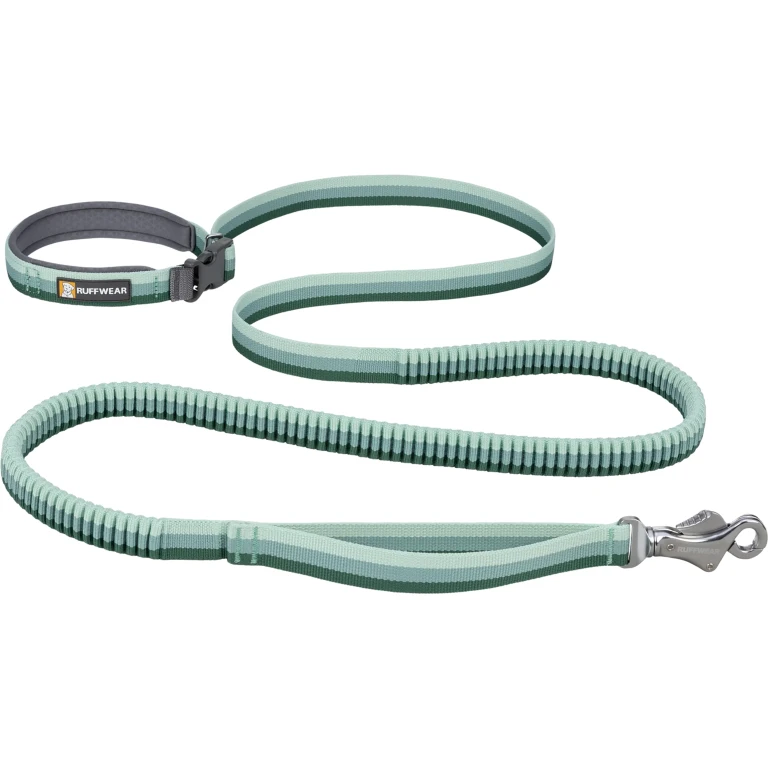
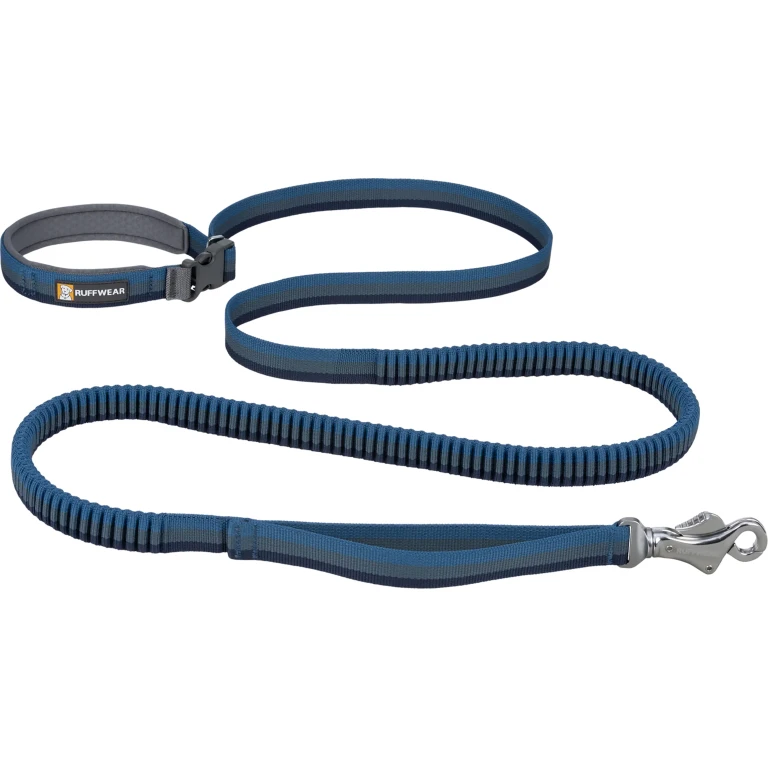
A harness still needs to be paired with loose-lead training; the hardware does not teach the behaviour. Once you have chosen the harness and attachment, use the fixed versus retractable leash guide to decide which leash suits your walks.
Before buying, confirm the model's measurements, adjustment instructions and fitting-return conditions. Those checks are more useful than a long list of brands.
Sources
- Hurtta Casual Y-Harness and Casual H comparison
- Harness design and shoulder extension, study abstract
- Ruffwear measuring guide
- Ruffwear Front Range adjustment instructions
- Dog Gear Review fit examples
- AKC harness fitting and attachment guide
- Hurtta harness construction guide
- Dogs Trust harness introduction guide
How this guide was built
Written by AI for Chexlow, using manufacturer sizing and construction guidance, AKC and Dogs Trust advice, published research and illustrated fit examples. The editorial focus is choosing a first walking harness by fit and function; this article does not report product testing or an individual assessment of your dog.
Edited by the Chexlow team · Images are AI-generated illustrations