Choose the interior before the name
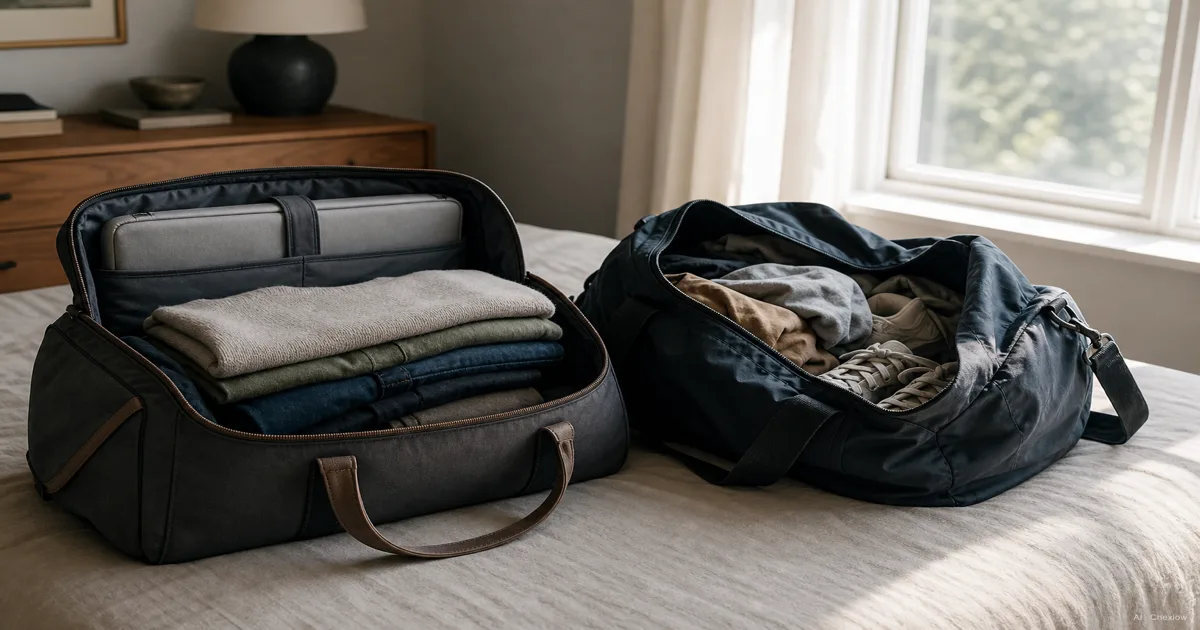
Picture the awkward item in your next trip: spare shoes, a laptop or a bulky jacket. Use that item to compare two actual bags.
- Start with a duffle when you want one flexible packing space. Check that the opening admits your largest item without forcing it.
- Start with a compartmented weekender when you want shoes separated from clothes. Check the compartment’s usable dimensions, rather than counting pockets.
- Keep both on the shortlist if either layout works. Let packed size and carrying comfort settle the choice.
These are shopping rules, not rigid definitions. The BÉIS Weekender has a separate bottom compartment; Patagonia’s Black Hole Duffel 40L has side and mesh lid pockets. A duffle need not be an empty sack, and a weekender label is no substitute for an interior photo.
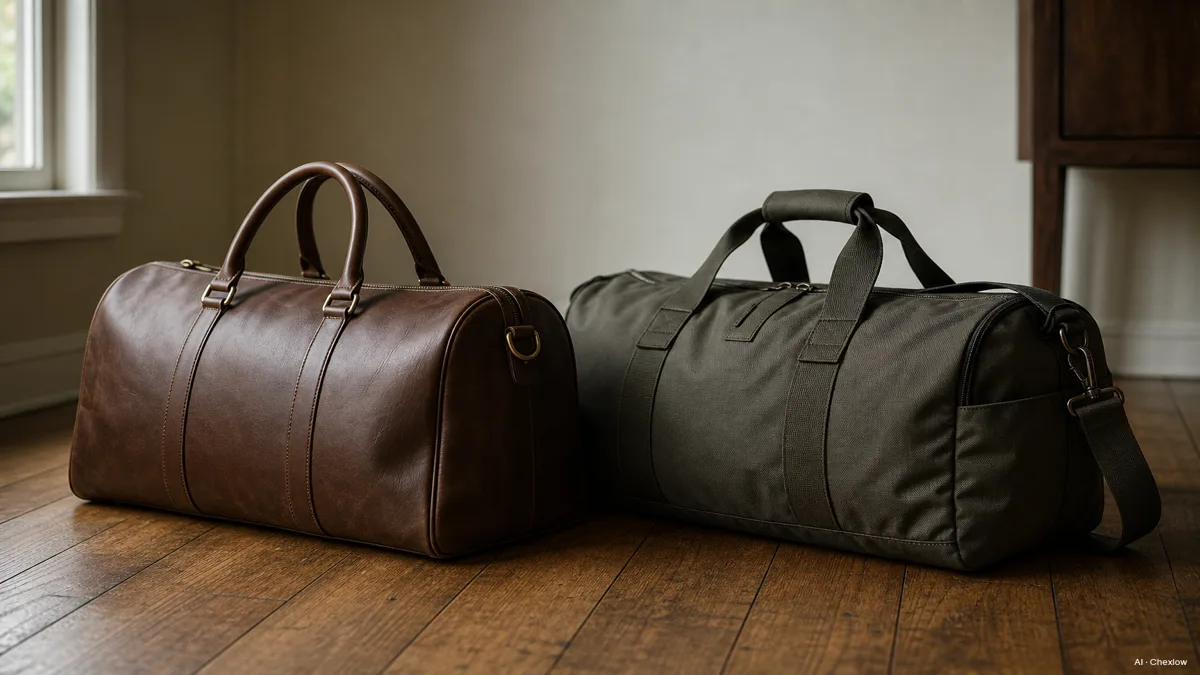
Use the illustration to compare shape and base structure, not to infer features or performance of a particular product.
Check your packing list, then the travel limits
REI suggests roughly 30–50L for weekend trips, with packing habits affecting the space needed. Treat that as a browsing range, not a promise that your clothes will fit. BÉIS lists 49L for its standard Weekender and 33L for its Mini, so “weekender” does not mean one fixed capacity.
Lay out your actual clothes, shoes, toiletries and electronics. Try that load in the candidate bag if possible. Close every compartment without forcing the zip, then check whether you can retrieve what you need without unpacking.
For flights, record three things before buying:
- Bag allowance. Decide whether this must be an under-seat item or an overhead bag, and check the allowance for your booking.
- Packed dimensions. Compare each external dimension with the operating airline’s limits. Include bulging pockets and projecting handles.
- Loaded weight. Weigh the whole load, including the bag and its straps, against any applicable limit.
British Airways distinguishes under-seat and overhead bags and includes handles and wheels in cabin-bag dimensions. Use your own airline’s rules; a liter figure or “carry-on” label does not complete this check.
Inspect the construction, not a promised lifespan
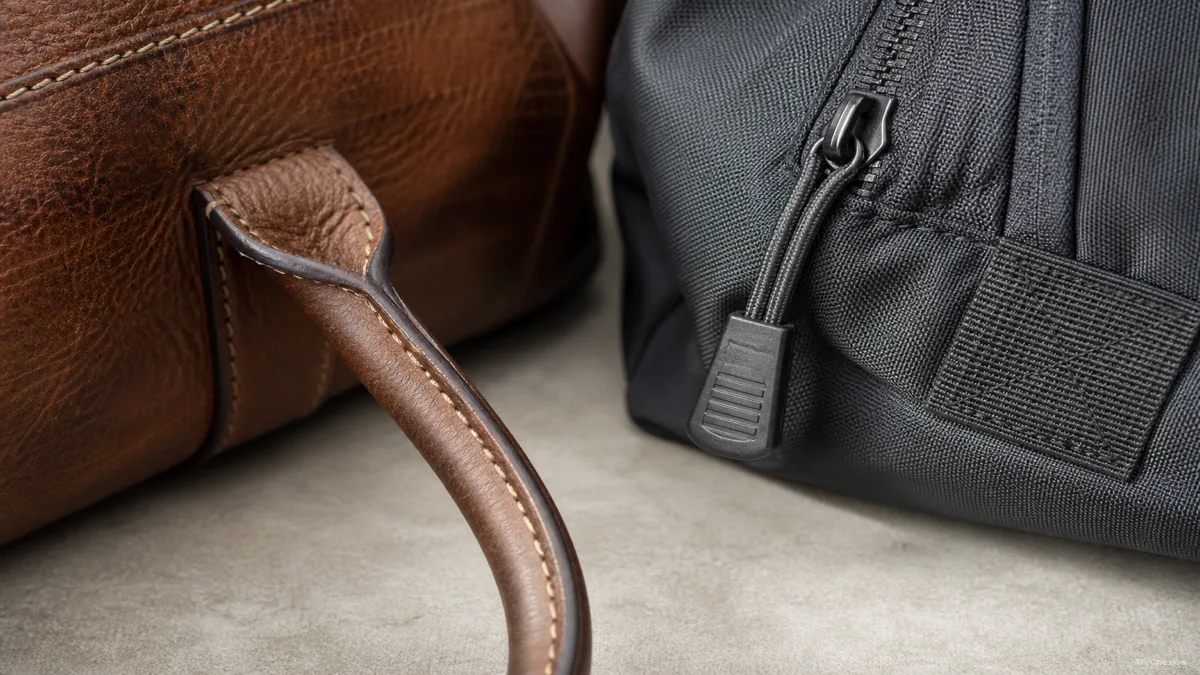
The illustration below highlights two places to examine: where a handle joins the bag, and how the zip operates. Ask for close-up photos when these details are missing online.
Do not restrict your search to leather weekenders and nylon duffles. For example, Patagonia specifies polyester ripstop with a TPU-film laminate for the Black Hole 40L, describing it as weather-resistant. The laminate is a film layered onto the fabric; weather resistance alone is not a waterproof guarantee.
For a bag you expect to use in rain, ask what protection the complete bag offers, including its seams and closure. For leather, request the exact material and care instructions rather than treating a high price as a lifespan promise. If the terminology is holding up your choice, read what leather labels such as full grain and nubuck mean.
Before paying, check the seller’s return conditions and the maker’s repair options. Choose a finish you like, but make construction and upkeep part of the decision.
Carry the packed bag before making the final choice
Try the handles and every carry mode you intend to use. Walk, turn and sit down with a realistic load; notice whether the strap slips, the bag hits your leg or reaching your ticket becomes awkward.
Features are worth prioritizing only when they solve your route. Patagonia’s Black Hole 40L has removable padded backpack straps; the BÉIS Weekender has a trolley pass-through, which slips over a suitcase handle. Check the latter against your own suitcase.
- Choose the duffle if its open space fits your awkward items and it passes the loaded carry check.
- Choose the weekender if you actually use its separate compartments and it passes the same size and comfort checks.
- Keep looking if both require overstuffing or feel uncomfortable. Extra capacity alone is not a solution.
If this purchase is mainly for a laptop commute with only occasional overnight trips, compare backpacks and messenger bags for daily travel before committing to a larger travel bag.
How this guide was built
This guide was written by AI for Chexlow, using REI’s luggage guidance, BÉIS and Patagonia product information, and British Airways baggage guidance. It turns those sources into checks for a first travel-bag purchase; the shortlist rules are editorial judgments, not hands-on product tests.
Edited by the Chexlow team · Images are AI-generated illustrations