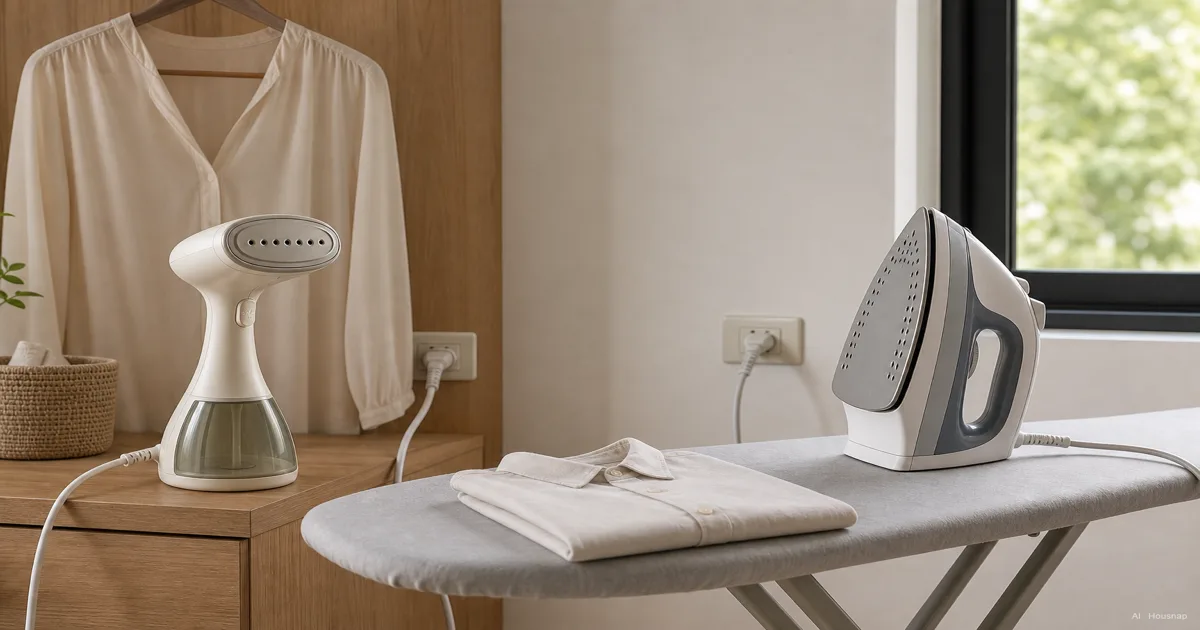
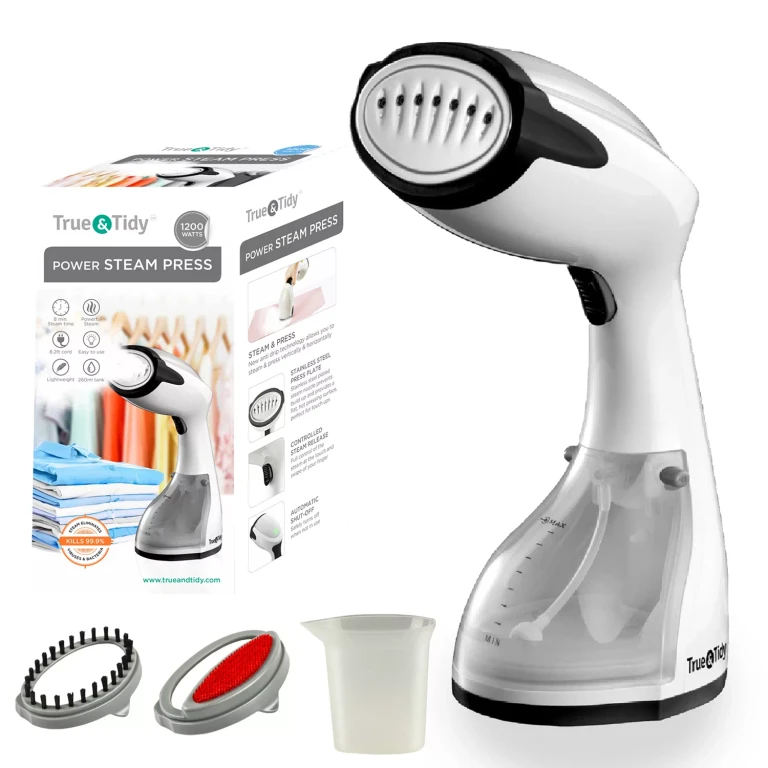


Choose the finish you actually want
Take out the clothes you most often struggle to get ready. Is the problem a rumpled surface, or a collar and trouser crease that need pressing?
- Choose an iron first. Make this your starting point when a crisp finish matters more than avoiding setup.
- Choose a steamer first. Start here when you want to smooth hanging garments without setting up an ironing board.
That distinction follows Rowenta’s comparison of irons and steamers. The first-buy recommendation is an editorial judgment about your routine, not a rule that beginners should always buy a steamer.
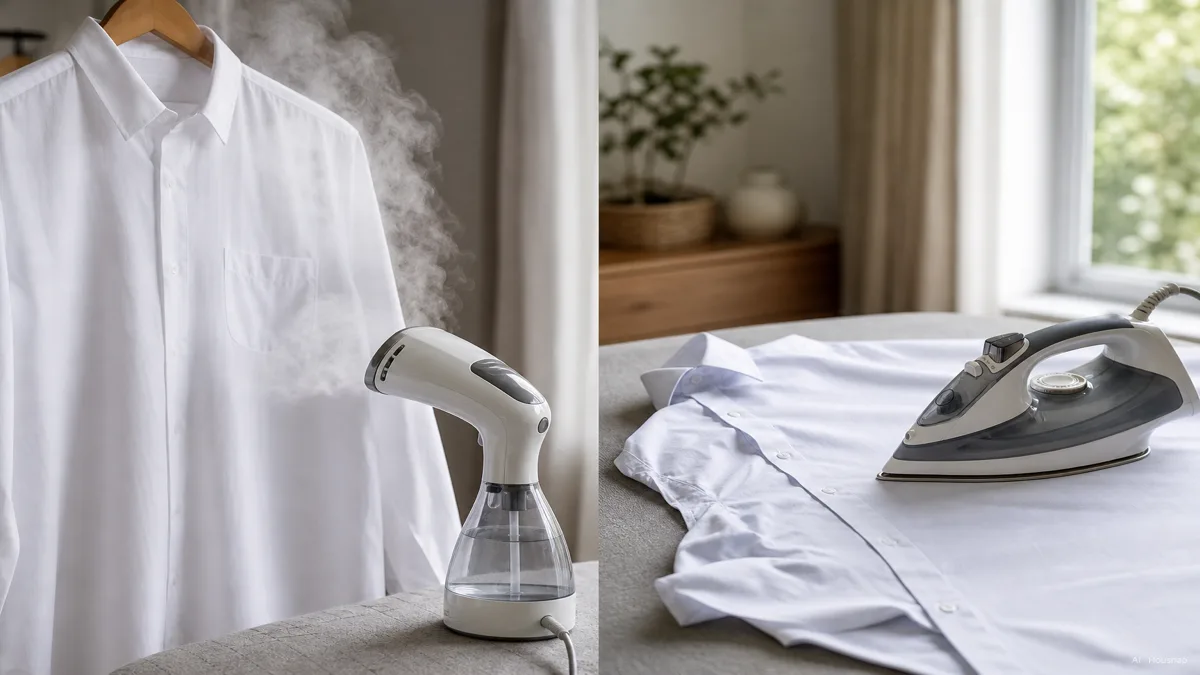
There are exceptions to the simple split. Some steamers have creasing attachments, as Conair explains. If you want one device for both jobs, check its actual pressing mode and accessories rather than assuming every steamer can replace an iron.
Let the garment label narrow the choice
A fabric name alone does not settle compatibility. GINETEX says ironing temperature should follow the care label, not fibre content. Respect no-steam instructions; if the label is unclear, ask the garment maker before applying heat.
Nor are all steamers non-contact tools: the Philips GC363/30R1 has a heated plate intended to contact ironable fabrics. Follow the particular appliance’s instructions instead of using one universal distance.
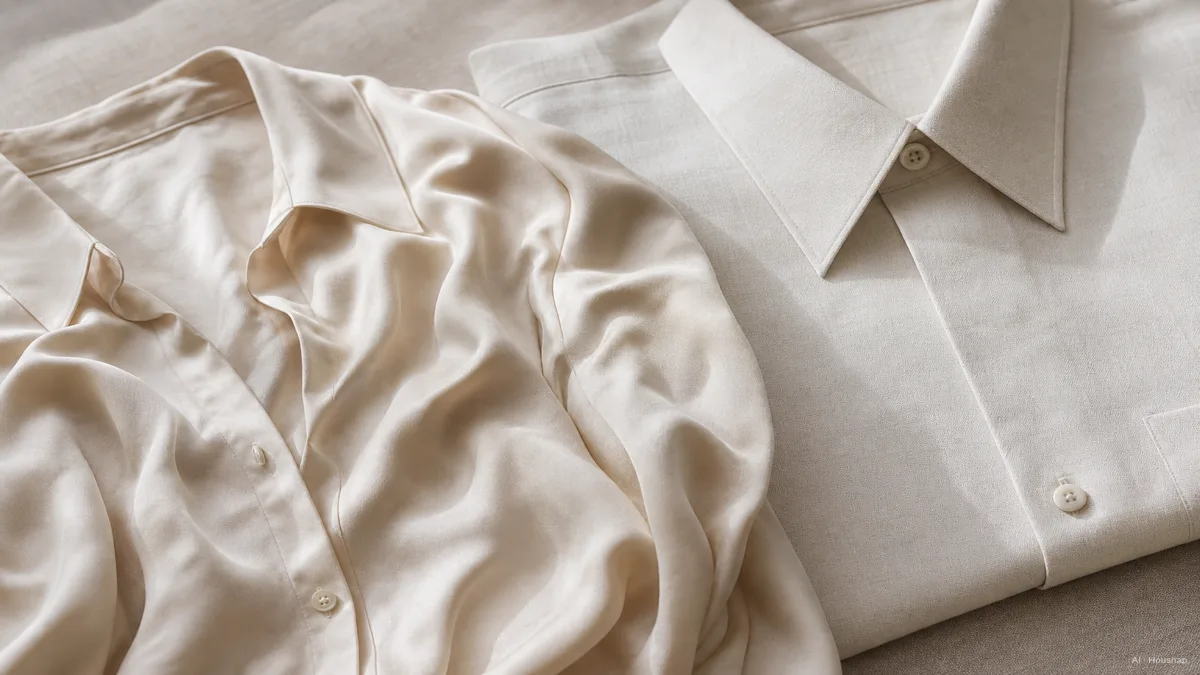
The illustration shows different finishes, not permission to steam every silk blouse or press every linen shirt. For a silk scarf that also needs cleaning, continue with the silk scarf care guide, keeping its own label as the starting point.
Plan the space and supporting equipment
Before comparing power ratings, decide where you will work and where the cooled appliance will live.
- Handheld steamer. Shortlist this format for occasional touch-ups and compact storage. Check filled weight, cord reach and stated steaming time, not just the size of the empty device.
- Standing steamer. Consider it for a dedicated steaming spot and longer sessions. For example, the Philips STE1020/40 combines an integrated hanger with a 1.8-litre tank. Those are model-specific features, not promises for every upright.
- Iron. Include a suitable ironing board in the space and budget calculation if you do not already have one. Look for stability, steam flow, an iron rest and manageable folded dimensions, consistent with Rowenta’s board guidance.
The board supports the ironing choice; it is not a third alternative to the two appliances. If you have nowhere to open it comfortably, revisit how much a pressed finish matters before buying.
Buy for one recurring job, then prepare the first use
You do not need to buy both immediately. Write down the job the first appliance must do. Add a second only if an important task remains awkward after you have learned the first device’s intended technique.
Before using a steamer, try an inconspicuous area where the garment’s instructions permit steaming, as Conair recommends. Its GS51 manual also warns against steaming clothes while worn or putting a hand in the steam path. Let the appliance cool before storage.
Check the water instructions too. Philips’ guidance for the listed models permits tap water, addresses hard-water scale and prohibits additives such as perfume and vinegar. Use your own model’s directions rather than treating that advice as universal.
If your real goal is cleaning floors or grout, switch to the steam-cleaner buying guide before choosing an appliance.
How this guide was built
AI wrote this guide for Chexlow using manufacturer product information, operating instructions and GINETEX care-label guidance. It compares the first-buy decision by finish, garment compatibility and setup; the recommendations are editorial judgments, not hands-on product test results.
Edited by the Chexlow team · Images are AI-generated illustrations