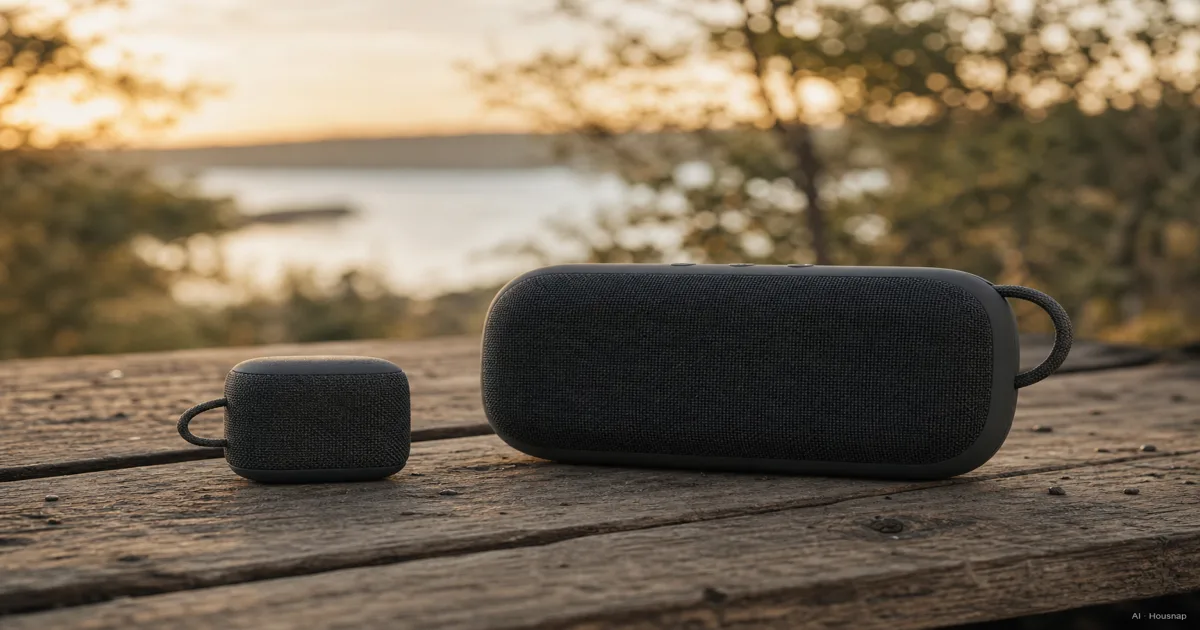

Start with what you want to carry
Picture your usual trip, including the walk home. A speaker that stays on a picnic table can justify more weight than one you carry all afternoon.
- Flip 7: JBL's specification sheet lists 560 g. Its PushLock system includes a loop and carabiner for different carrying options. Flip 7 specifications
- Charge 6: The manual lists 990 g with the handle, or 960 g without it. Decide whether that weight fits your normal bag before moving on to battery life. Charge 6 manual
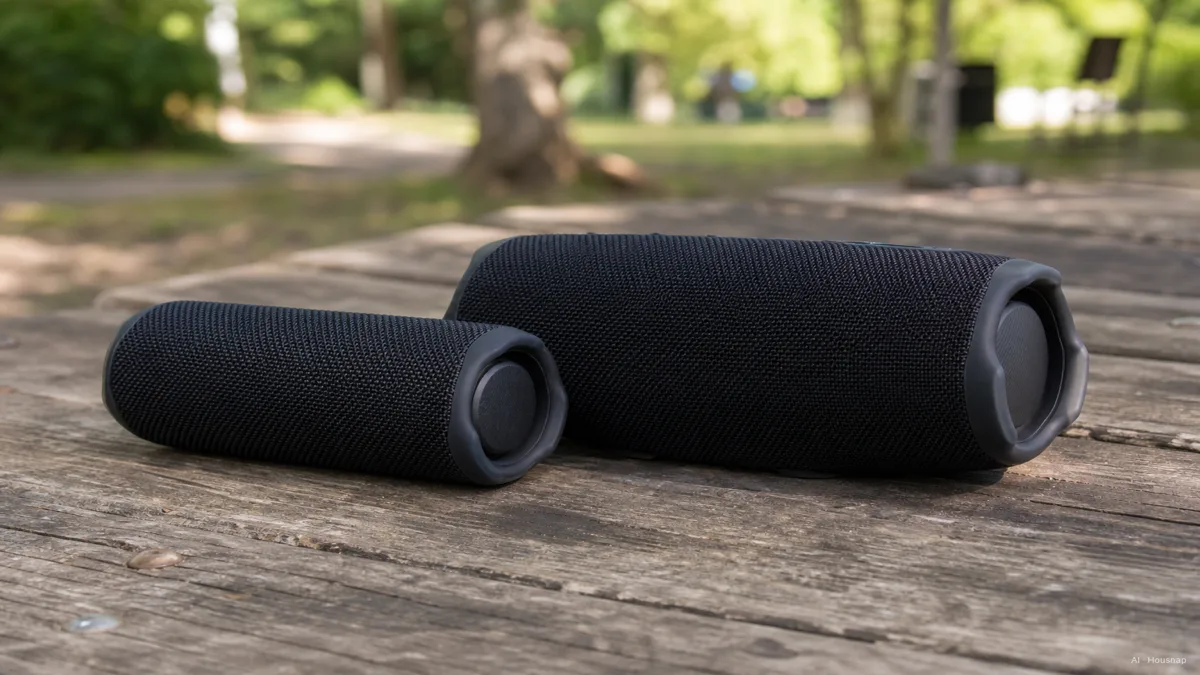
The illustration helps frame the size choice; use the documented weights rather than estimating from the picture.
Decide how much time you need between charges
Compare the same mode on both models:
- Normal playback: Up to 14 hours for Flip 7 and 24 hours for Charge 6.
- Playtime Boost enabled: Up to 16 and 28 hours respectively.
These are JBL's maximum claims, dependent on volume and audio content, not guaranteed trip lengths. Check your longest listening session against the normal figures first. Flip 7 manual, Charge 6 specifications
Charge 6 also charges a mobile device while playing music; JBL explicitly excludes laptop charging. If that backup matters, it is a concrete reason to choose Charge. Plan conservatively when sharing its battery with your phone rather than expecting maximum playback and phone charging together. JBL Charge 6
Treat water protection as a shared feature
Both models carry IP68. JBL specifies laboratory immersion in fresh water up to 1.5 m for 30 minutes, so the rating does not give Charge an advantage here. JBL Flip 7, JBL Charge 6
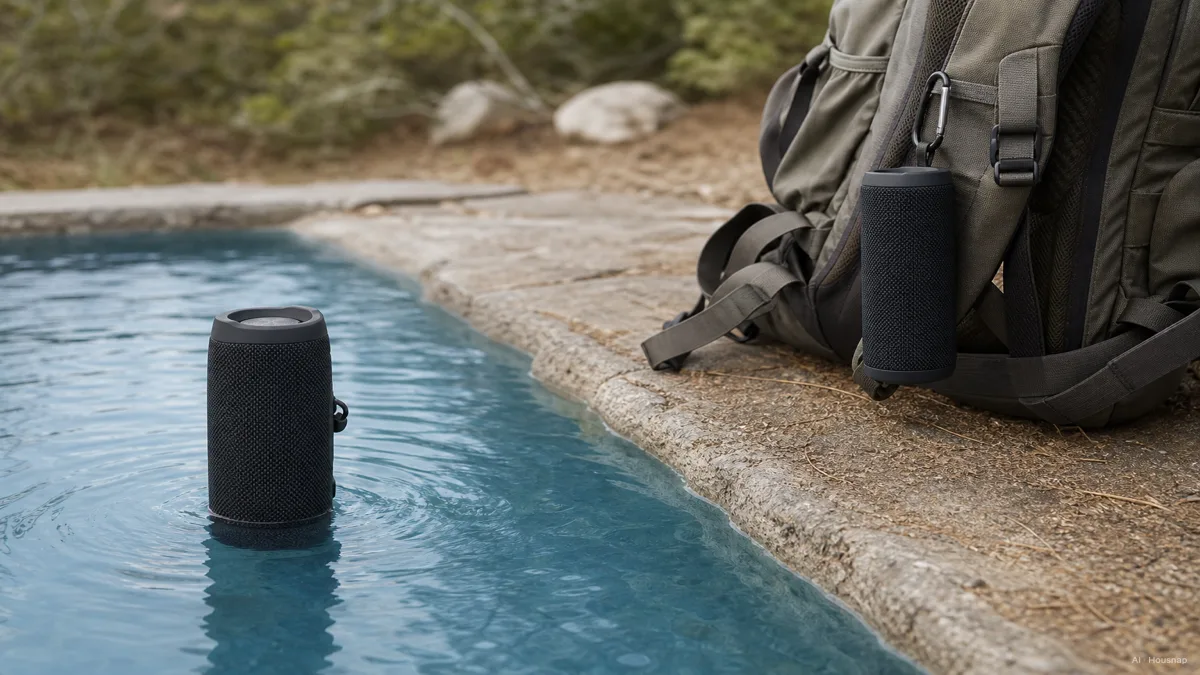
This is an illustration, not a flotation test or an instruction to leave a speaker in a pool. Keep your buying decision separate from that depiction. Before charging either speaker, let its charging port dry completely, as JBL instructs.
Still comparing protection labels or considering a different size? Read the waterproof speaker and size guide before narrowing your shortlist.
Make the final choice around features you will use
JBL lists 25 W + 10 W for Flip 7 and 30 W + 15 W for Charge 6: 35 W versus 45 W in total. Those component ratings are not a listening verdict. If sound is your reason to spend more, compare the same track at your intended listening level. Flip 7 specifications, Charge 6 manual
Planning a second speaker? JBL describes Auracast for shared playback across compatible JBL speakers, but its stereo setups use two Flip 7s or two Charge 6s. Buy the same model if separate left and right channels are your goal. Flip 7 connectivity, Charge 6 connectivity
- Choose Flip 7 when the lighter carry solves your main problem and you do not need Charge's extra battery allowance.
- Choose Charge 6 when longer sessions or backup phone charging are worth the added weight.
- Before ordering, compare the exact model, delivered price and return terms. If Charge costs more, name the feature that earns that difference for you.
How this guide was built
Written by the Chexlow AI editorial team using JBL's official product pages, specification sheets, manuals and charging guidance. This guide interprets those specifications to help first-time buyers choose between Flip 7 and Charge 6; it does not report hands-on listening, battery or flotation tests.
Edited by the Chexlow team · Images are AI-generated illustrations