Identify what actually remains
Look at the clothes and the machine separately: lingering foam, white clumps on fabric and powder left in the drawer are different observations. Note the detergent, amount, programme and whether automatic dispensing was enabled.
Whirlpool's top-load guidance lists several possible causes of white residue, including lint, detergent, washer buildup and water conditions. Undissolved detergent can form white clumps, but a white mark or slippery feel is not enough to identify the cause.
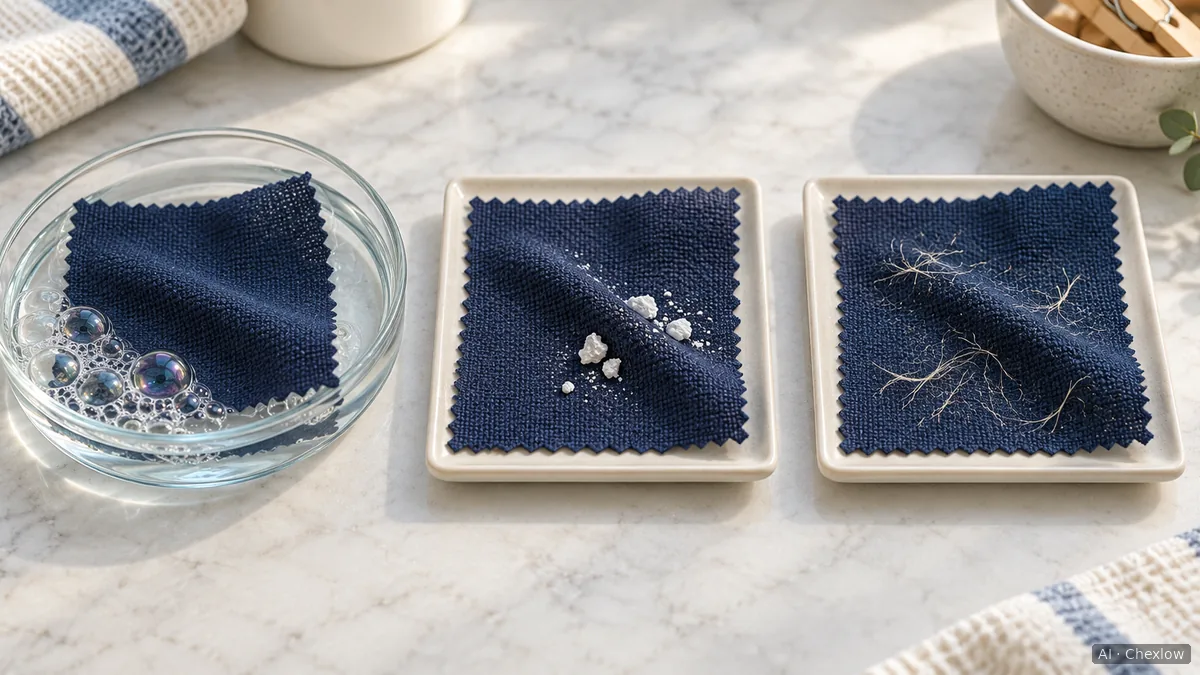
The illustration separates things to look for; it is not a chemical test or a before-and-after result. If the remaining material is loose lint or attached pills, continue with choosing between a lint roller and a fabric shaver.
Use an extra rinse for the current suds
LG explains that excessive detergent can hinder rinsing and that additional rinses can remove excess suds. For machine-washable items, check that the garment instructions and the selected programme allow the rinse option before using it. Do not add another detergent dose for a rinse-only step; check what your automatic dispenser does in that mode.
If the machine is already managing a suds warning, follow its manual before starting another operation. On the Whirlpool washers covered by its SUD/SD guidance, automatic suds removal can extend the cycle. Extra time alone does not establish a new fault.
Treat the rinse as help for this load. If every load needs rescuing, move to the checks below rather than setting an arbitrary number of extra rinses.
Correct the next dose and the dispensing route
Use the actual detergent label and washer manual together. Check the formula's concentration, the load size and the soil level; a familiar capful is not a transferable dose when the product changes. If you exceeded the labelled amount, correct that first instead of blindly halving every dose.
- Detergent type: where the washer requires HE, meaning high-efficiency detergent, use a product marked accordingly and suitable for the clothes. Keep a suitable detergent you already own; buy a replacement only if the existing one is incompatible.
- Automatic dispensing: compare its concentration setting with the detergent and check whether you also added a manual dose.
- Single-dose operation: use the machine's documented method for switching away from automatic dispensing.
For example, Whirlpool's top-load Load & Go instructions require HE liquid detergent, the correct concentration setting and no simultaneous single-dose addition. These are instructions for that system, not universal button sequences for other dispensers.
Check the drawer and the temperature choice
Residue in the drawer deserves its own check: LG notes that buildup can restrict water flow. Follow your model's instructions for removing and cleaning only user-accessible parts. Its guidance uses lukewarm water, a soft brush and a cloth; an existing suitable soft cleaning brush is enough if your manual permits it. Do not force out a drawer that releases differently.
White clumps also call for a look at the detergent's temperature instructions. Whirlpool describes cold-water dissolution trouble as more common with powder, yet separately says warmer water can worsen residue caused by body soils interacting with detergent. There is no single hotter-or-colder fix for every white mark.
Choose a programme and temperature allowed by both the garment and washer instructions. If the label does not permit machine washing, this guide is not permission to run another machine cycle.
Judge the next load and know when to stop
For a comparable next load, record the corrected dose, dispensing setting and programme alongside the result. This is a practical troubleshooting record, not a test proving that all detergent has been removed.
If the problem clears after correcting an excessive dose or duplicate dispensing, keep that correction. If white marks remain without excess suds, return to the other possible causes instead of repeatedly cutting detergent or adding rinses.
Persistent suds codes or dispensing problems need the model's troubleshooting guidance and manufacturer support. Stop experimenting if there is leakage or damage; internal repair is outside this guide. Extra rinsing should not become a substitute for finding out why the problem keeps returning.
How this guide was built
AI wrote this guide for Chexlow using Whirlpool and LG support documentation. The troubleshooting order is an editorial synthesis, with named dispenser and error-code instructions kept within their stated scope; no hands-on laundry testing was performed.
Edited by the Chexlow team · Images are AI-generated illustrations