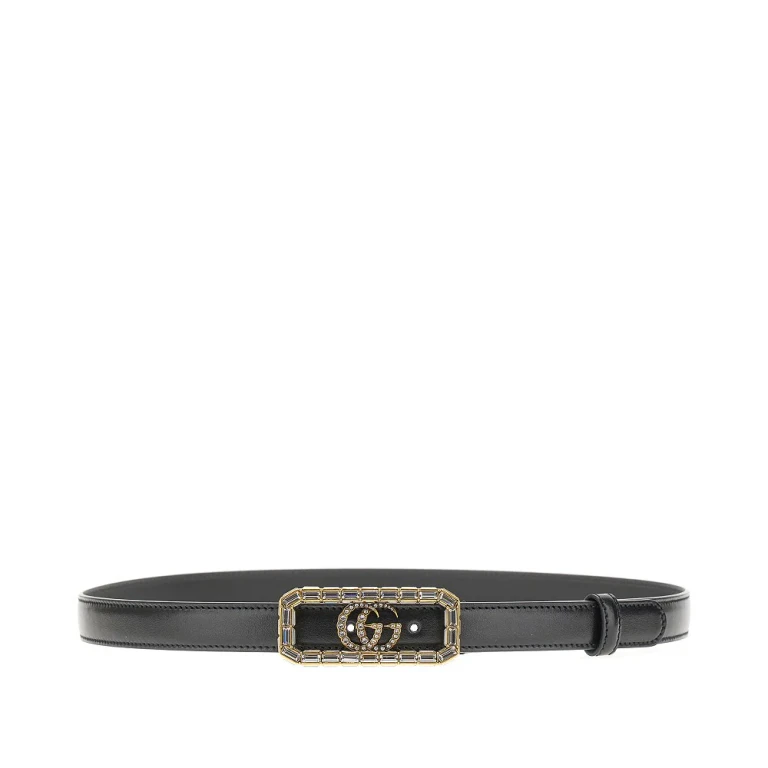
Measure before choosing a size
Don't order from your trouser label alone. Buckle’s sizing guide measures from the leather’s junction with the buckle to the hole you use, excluding the buckle and tail. Nicks uses the buckle end and offers a pants-plus-four-inch estimate. A universal “add two inches” rule cannot cover both.
- Have a belt that fits? Wear it with the intended trousers, note the comfortable hole, then measure between the points specified by the new belt’s maker.
- No belt to measure? Use a flexible sewing tape through the trouser loops, following Cipriani’s measuring method. Record that circumference and ask the seller which size it corresponds to.
- Between sizes? Ask for the usable fastening range. Prefer a fit that leaves adjustment in both directions rather than automatically buying larger.
A tape you already own is enough. Keep your measurement and its starting point together; a number without the measuring method is easy to misapply.
Choose the trousers, then the width and color
Put your most-used trousers and shoes beside you. For a first shortlist, try roughly 30–32mm for tailored outfits or around 38mm for jeans. These are starting points, not guaranteed loop dimensions. Measure the available opening and, when possible, try the actual strap through it.
For mixed use, consider 35mm with restrained hardware. Trafalgar’s Orion is a documented example of a 35mm belt intended for both suits and jeans; that does not make every 35mm design equally versatile.
For dress outfits, coordinate the belt with your shoes’ color and sheen, following the convention described by Art of Manliness. Buy the color that serves your actual outfits first. Black and brown do not need to arrive together.
If one belt must cover several trousers, compare the compromises in the dress and casual belt width guide before settling on a width.
Decide how you want to fasten it
Start by trying a plain pin buckle. If its available holes leave you choosing between too tight and too loose, compare a micro-adjustable leather belt instead.
These systems still have defined adjustment steps. Anson’s FAQ specifies quarter-inch increments and interchangeable buckles and straps within its own matching-width system. Neither that spacing nor that compatibility should be assumed for another brand.
Before buying separate components, ask whether the buckle detaches and which strap width and attachment it accepts. For the differences between frame, plate and other mechanisms, use the belt buckle guide.
Ask what the leather description actually covers
Full grain retains the grain surface without corrective mechanical removal; corrected grain has part of that surface mechanically removed and refinished. Those are material definitions in the Leather Working Group glossary, not promises about a finished belt’s lifespan.
“Genuine leather” can simply mean real rather than synthetic leather, as The London Leather Workshop explains. Treat that wording as a reason to ask for detail, not an automatic rejection.
Ask what the front, backing and any inner layer are made from, and request an edge photo if the construction is unclear. For this first purchase, favor a clear description over a premium-sounding label. Set your budget after the size, width and construction meet your needs; price alone cannot answer those questions.
Make the order conditional on a comfortable fit
Before paying, write down the candidate’s size and measuring method, actual width, color, buckle system and material description. An unanswered fit question is a reason to contact the seller first.
- Check the return conditions. Confirm whether trying on, shortening or personalizing the belt affects eligibility.
- Try it with the intended trousers. Fasten it gently, sit down, stand up and check that the tail can be secured without an awkward excess.
- Keep alterations for later. If it is uncomfortable or only just fastens, resolve the size before cutting or adding holes. Ask for the model’s instructions if shortening is intended.
Read the care instructions before adding care products to the order. For example, Nicks advises drying a wet belt fully at room temperature without heat. Keep product-specific advice with the belt it applies to rather than adopting a fixed treatment schedule for every leather.
How this guide was built
Written by AI for Chexlow, using belt makers’ sizing and construction information, Leather Working Group terminology, and published style guidance. The selection advice focuses on measurement, everyday outfits and questions to ask before ordering; it is not based on hands-on product testing.
Edited by the Chexlow team · Images are AI-generated illustrations