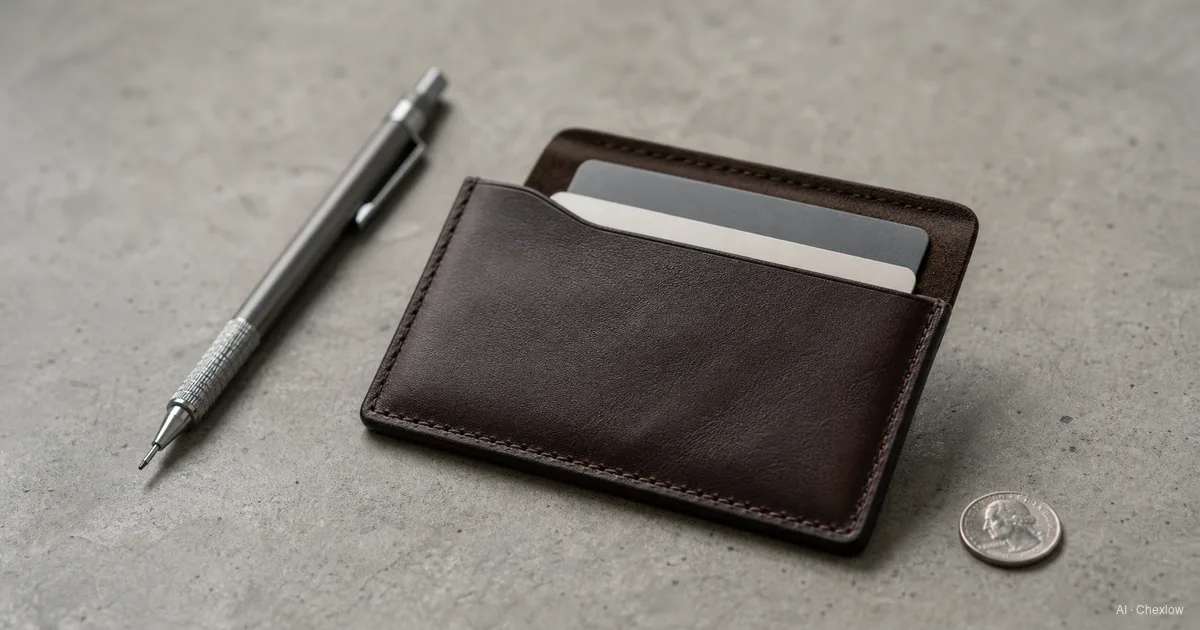
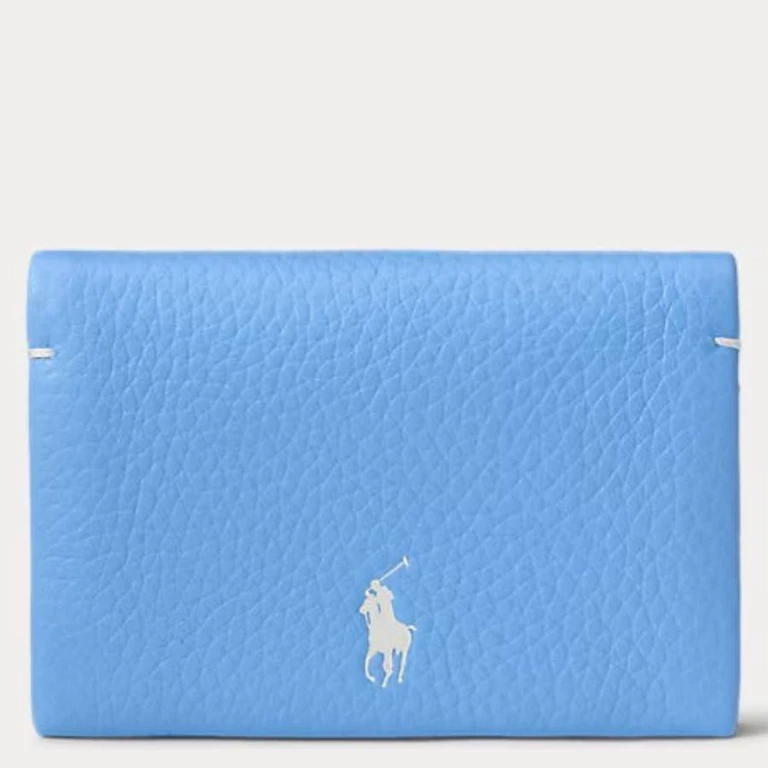
Decide what must come with you
Empty your wallet before comparing cases. Make a list of payment cards, ID, access cards and any essential backup. Review a normal workday and a weekend outing; a card can still be necessary even if you rarely use it.
- Cards only. Look for a layout that gives your most-used card its own accessible slot.
- Cards plus occasional cash. Check for a designated note pocket and how your own currency fits. Bellroy’s Slim Sleeve, for example, needs different folds for different banknote sizes. “Holds cash” is not enough detail. (Bellroy)
- Coins or frequent cash payments. Pause the card-case search and compare a card holder with a zip wallet, checking the actual coin and note compartments.
Try the proposed selection in your existing wallet first. Keep necessary originals until you have confirmed any digital alternative is accepted where you need it. There is no target card count you need to achieve.
Judge capacity with your cards inside
Ask to try your intended load, within the maker’s stated capacity. Include the notes you would actually carry, then check the result in the pocket you plan to use, both standing and sitting.
- Access. Can you remove and replace the everyday card without unloading the others?
- Retention. Over a table, gently change the case’s orientation and check that cards stay put.
- Construction. Look for separated seams, loose thread ends and lifting edge finish. Ask about anything doubtful before buying.
For a leather-covered case with a rigid core, check the core separately: Secrid’s Cardprotector holds 4–6 cards depending on their thickness and embossing. That is a model-specific rating, not a rule for leather sleeves. (Secrid)
Do not calculate finished thickness from card count alone. Compare the loaded cases directly; your useful limit is the one that remains comfortable and easy to use.
Choose the finish you want to live with
Separate the leather’s surface from its tanning method. Full grain means the grain surface has not been mechanically corrected. Vegetable tanning and chrome tanning describe processing, while aniline and pigmented describe finishes that reveal or cover the natural grain. These are different questions on a product specification. (Leather Working Group)
If changing colour and surface character appeal to you, ask for worn examples of the exact leather and colour. Horween describes vegetable-tanned leather as developing patina, but the categories overlap: its Chromexcel combines chrome and vegetable tanning. Its temporary lightening when flexed, called pull-up, comes from moving oils and waxes, rather than years of wear. (Horween)
Prefer a more uniform appearance? Compare the finish and care instructions rather than assuming all chrome-tanned leather looks or ages alike. If the surface terms are still confusing, explore full grain, corrected grain, nubuck and suede before narrowing your shortlist. An unspecified tanning method is something to ask about, not something to guess.
Match RFID blocking to how you use cards
RFID blocking limits wireless reading; it is not a promise against every kind of fraud. Visa contactless payments use a one-time transaction code, making intercepted information difficult to reuse fraudulently. That does not make a lost card harmless. (Visa)
If you want shielding, check which pockets it covers and how you extract a card. Secrid, for example, says communication is blocked when cards are fully inside its Cardprotector. (Secrid)
For commuting, easy removal matters even without shielding. London’s TfL asks users to separate Oyster and contactless cards at readers to avoid card clash. Check your own operator’s instructions rather than assuming you can tap the whole case. (TfL)
Set a purchase threshold, not a break-in deadline
Buy when the intended load fits, the everyday card is accessible and the loaded case is comfortable. If inserting a card requires bending it or pulling hard at the seams, ask the seller about fit or exchange before treating the problem as normal break-in.
Read the return conditions before adding oils or trying to stretch the slots. Do not plan on a universal number of weeks to fix a poor fit.
Tanner Goods recommends conditioner for its leather goods. Treat that as maker-specific advice: check the instructions for your exact case before buying a care product. (Tanner Goods)
Let the appearance change through normal use. Asphalte warns that sun can fade its Card Holder and heat can affect its shape, so a sunny windowsill is no shortcut to a better-looking case. (Asphalte)
How this guide was built
AI wrote this guide for Chexlow using manufacturer information from Bellroy, Secrid, Horween, Tanner Goods and Asphalte, leather terminology from Leather Working Group, and guidance from Visa and TfL. The buying checks are editorial suggestions for everyday carry, not hands-on product tests or guarantees about every leather finish.
Edited by the Chexlow team · Images are AI-generated illustrations