Choose the flavor you want in your food
Think of the next meal you will actually make. Tomatoes with a drizzle of oil and a cake that needs a neutral cooking oil point toward different bottles.
- For dressing, dipping, and finishing: start with extra virgin olive oil, often shortened to EVOO. Within that grade, flavor intensity varies; you do not have to choose the strongest-tasting bottle.
- For a milder result: consider regular or light-tasting olive oil. These are genuine alternatives when olive flavor would distract from the dish. Taste and budget are useful deciding factors. NAOOA olive oil guide
Extra virgin also works for cooking, including frying. Needing to heat the oil does not automatically mean you need a second bottle. NAOOA cooking guidance
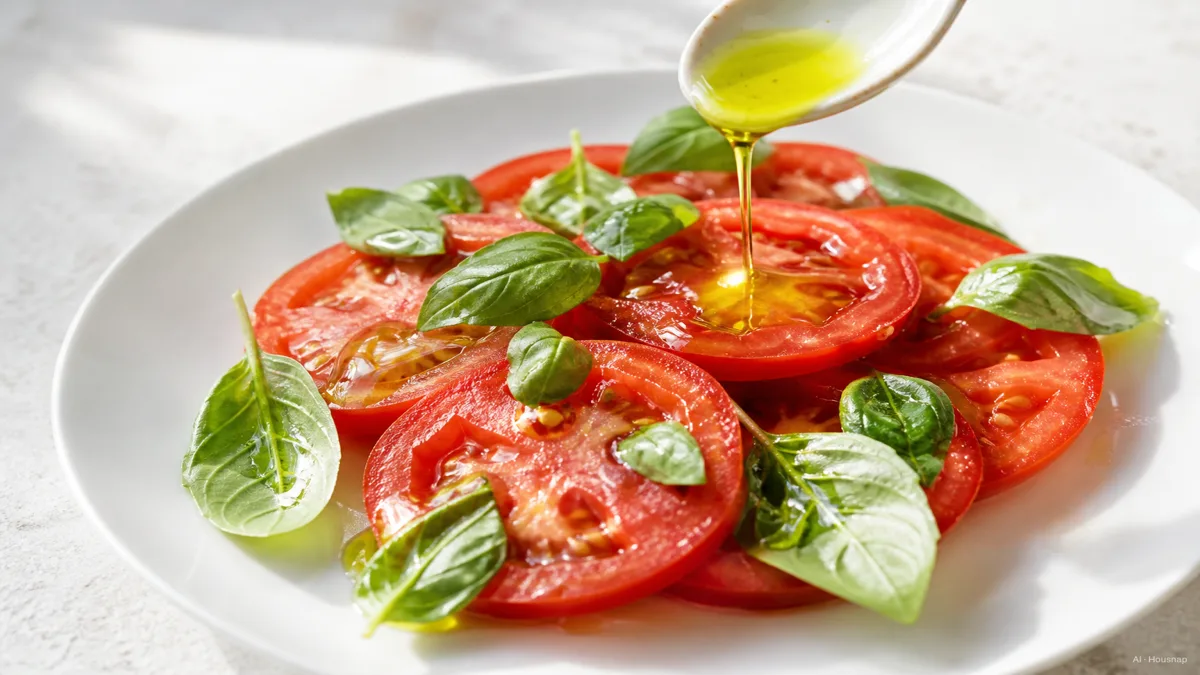
For tomatoes or a salad finished with oil, the next choice may be the seasoning: which salt belongs in cooking and which is useful at the table?
Read the grade, not just the impressive words
Extra virgin and virgin are quality grades. Under USDA standards, extra virgin requires fruitiness, no sensory defects, and free fatty acids no higher than 0.8%. Virgin permits limited defects and up to 2.0%. Acidity is therefore only part of the assessment. USDA grade definitions
Virgin oils are extracted by mechanical or physical means under conditions that do not alter the oil. That is more precise than saying no heat is ever involved. Refined olive oil has an acidity limit of 0.3%, so the smallest acidity number does not identify the best extra virgin. International Olive Council definitions
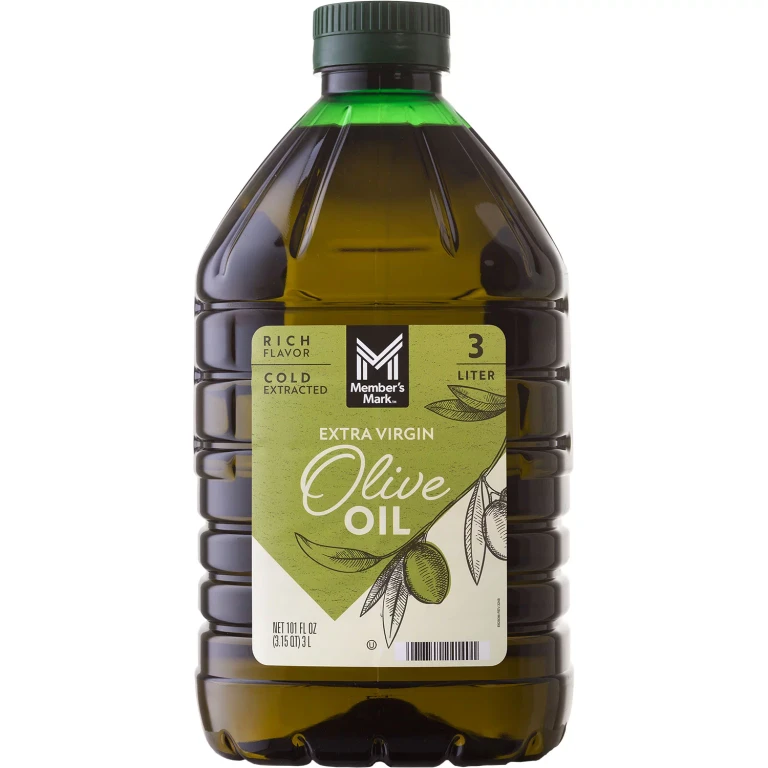
Pure or classic commonly describes a blend of refined and virgin olive oils. Light-tasting describes a milder version, not an extra virgin grade. Read the product description rather than treating “pure” as a quality upgrade. NAOOA explanation of these labels
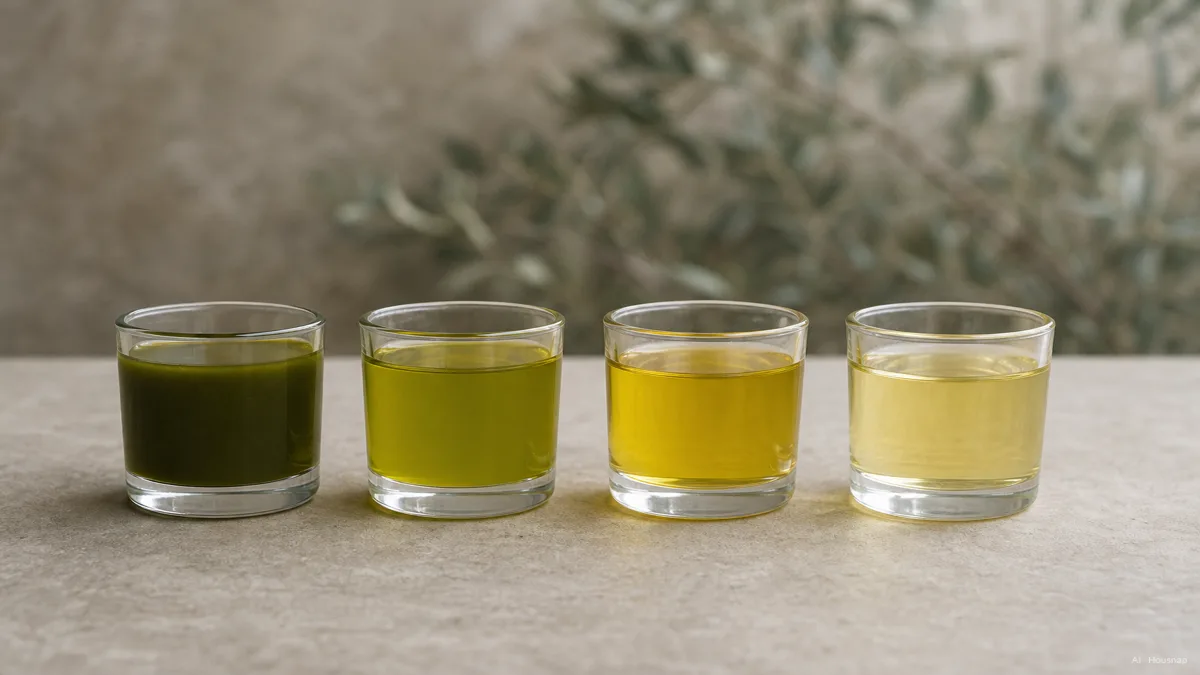
These colors are not a grade chart. Green is not proof of better quality, and “light” does not mean fewer calories. NAOOA label and color facts
Compare the dates and the protection around the oil
Check both dates when available. Harvest date tells you when the olives were picked; best-before is the producer's estimate under suitable storage conditions. A missing harvest date alone does not prove poor quality. NAOOA date guidance
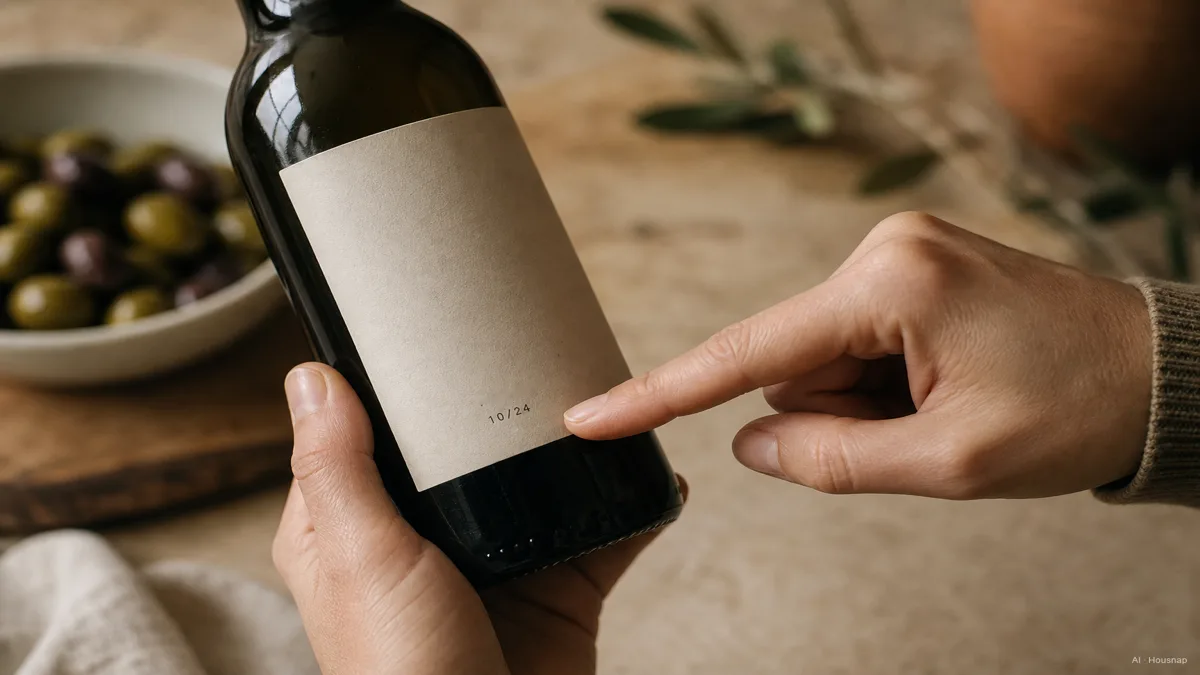
Then check protection from light. Dark glass and tins are useful; clear glass can also be protected by substantial label coverage or a box. Packaging helps preserve freshness but does not certify the contents. University of California buying tips
Do not reject a bottle solely because it lists several countries of origin. Legitimate blends can combine oils from different regions. NAOOA buying tips
Pick a size you can finish and a place to keep it
Before comparing value sizes, estimate your actual use. At an illustrative 30 ml per week, 250 ml lasts about eight weeks; 500 ml lasts about seventeen. That is a shopping calculation, not a recommended serving size.
NAOOA suggests buying an amount you can finish within two to three months after opening for quality, and keeping it tightly capped in a cool, dark place. Treat that as a freshness guide, not a universal expiry date. NAOOA storage and size guidance
For an uncertain first purchase, choose one smaller bottle and note whether you enjoy its flavor in your usual food. Buy a larger size next time only if your use supports it. Put the bottle in a cupboard away from stove heat, rather than making the cooking counter its permanent home.
How this guide was built
Written by AI for Chexlow, using USDA and International Olive Council grade definitions, University of California buying guidance, and consumer guidance from the North American Olive Oil Association, an industry association. This guide turns those sources into a first-bottle choice based on flavor, labeling, and likely use; it does not report product testing or certify individual bottles.
Edited by the Chexlow team · Images are AI-generated illustrations